
I’ve made this veggie pasta more times than I can count — on slammed weeknights, for picky eaters, and on those “there’s nothing in the fridge” nights — and it has never let me down. Thirty minutes, one skillet, and vegetables that stay bright and crisp-tender instead of collapsing into the sad, soggy pile most veggie pasta recipes hand you. The secret isn’t a fancy ingredient. It’s the order the vegetables go into the pan, and once you learn it, you’ll use it in every stir-fry and skillet dinner you make.
This is my signature weeknight veggie pasta: penne tossed with broccoli, bell peppers, zucchini, and burst cherry tomatoes in a garlic-butter and olive-oil sauce that clings to every piece. No jarred sauce, no roasting pan, no second pot to wash. Just real vegetables, cooked right.
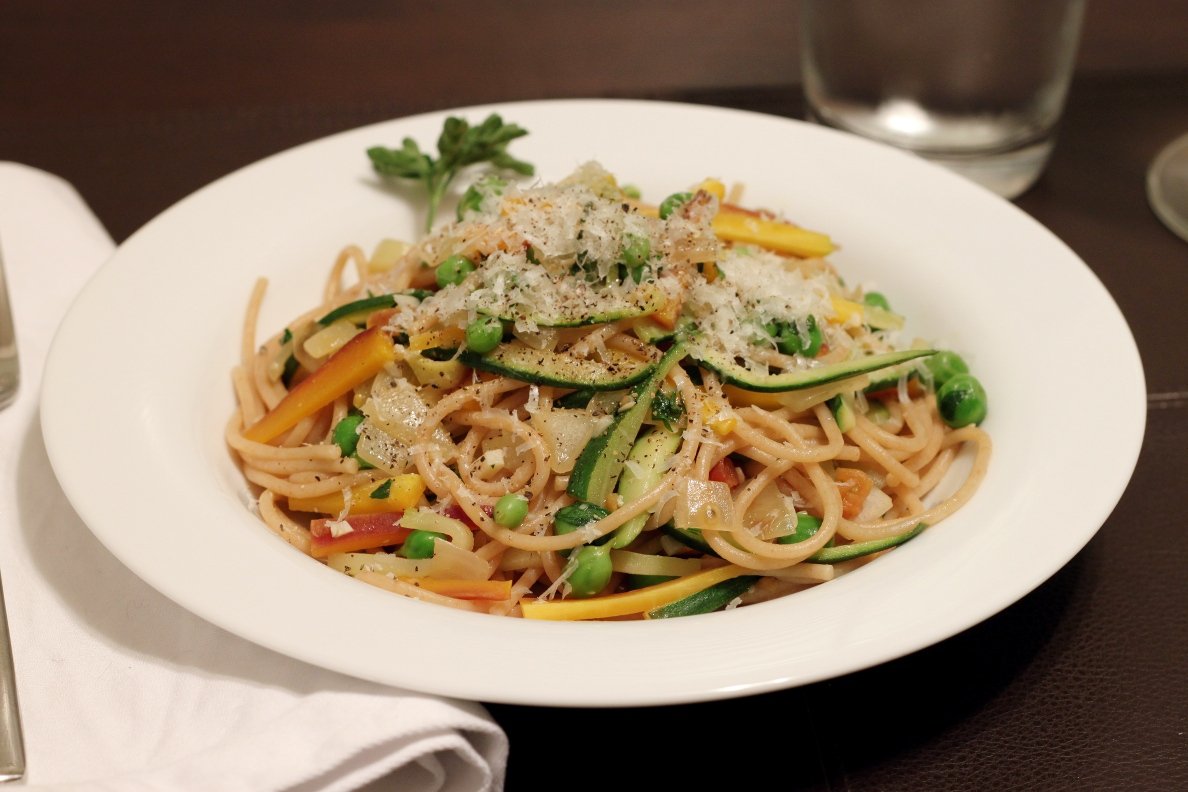
Stacy Spensley, CC BY 2.0 via Wikimedia Commons
What Is Veggie Pasta?
Veggie pasta is a pasta dish where vegetables are the main event, not a garnish — a full serving (or three) of them, sautéed and tossed with pasta in a light sauce. Think of it as pasta primavera’s practical weeknight cousin: same spirit, less fuss, and built around whatever vegetables you actually have.
What it is not: a bowl of plain pasta with a few sad peppers sprinkled on top, or a heavy cream-sauce casserole. This veggie pasta keeps things light — olive oil, butter, garlic, lemon — so the vegetables taste like themselves.
Why You’ll Love This Veggie Pasta
- Ready in 30 minutes flat. The pasta boils while the vegetables sauté, so everything lands on the table at the same time.
- One skillet plus one pot. No roasting sheets, no blender, no pile of dishes waiting for you after dinner.
- Vegetables stay crisp-tender. The layering technique below means broccoli with bite, zucchini with structure, and tomatoes that burst instead of dissolving.
- Endlessly flexible. Swap in whatever’s in season or in your crisper — the timing chart in this post tells you exactly when to add each vegetable.
- Kid-approved and meatless. Hearty enough to serve as dinner on its own, and it reheats well for lunches.
The Trick That Makes This Veggie Pasta Work
Here’s the thing none of the popular veggie pasta recipes talk about: vegetables have different densities, so they can’t all go into the pan at the same time. Broccoli needs five or six minutes of heat. Zucchini needs two. Cherry tomatoes need about ninety seconds. Throw them all in together and you get two choices — raw broccoli, or zucchini mush. Neither is dinner.
So this recipe layers the vegetables by density. Broccoli goes in first with a splash of water to steam-sauté. Peppers join next. Zucchini and tomatoes go in last, just long enough to soften and shine. Every vegetable finishes at the same moment, each one at its best texture. I tested this the wrong way first (everything in at once, like most recipes tell you), and the difference is night and day.
The second trick is the sauce. There’s no jarred sauce here — instead, you build a light garlic-butter sauce right in the skillet and loosen it with starchy pasta water. That cloudy water is liquid gold: the starch turns oil and butter into a silky coating that actually sticks to the pasta instead of pooling at the bottom of the bowl. Reserve a full cup before you drain; you’ll use most of it.
Veggie Pasta Ingredients
- 12 oz penne or fusilli — Short, twisty shapes trap the sauce and vegetable bits. (Spaghetti works, but you’ll chase the vegetables around the plate.)
- 3 tablespoons olive oil — For sautéing; it can take the heat better than butter alone.
- 2 tablespoons butter — Added with the garlic for richness. The oil-butter combo gives you flavor without burning.
- 4 garlic cloves, thinly sliced — Sliced (not minced) garlic perfumes the oil without scorching in seconds. This is the backbone of the whole dish.
- 2 cups small broccoli florets — Cut them small, about 1 inch, so they cook through in the sauté time. They go in first.
- 1 red bell pepper and 1 yellow bell pepper, sliced — Two colors make the bowl gorgeous; red is sweeter, yellow is milder.
- 1 medium zucchini, halved lengthwise and cut into half-moons — Half-moons hold up better than diced pieces. Goes in near the end so it stays firm.
- 1 pint cherry tomatoes, halved — They burst into a quick fresh sauce. Grape tomatoes work the same.
- 1/2 teaspoon red pepper flakes — Warmth, not real heat. Skip if the kids object.
- 1 teaspoon Italian seasoning — Dried herbs bloom in the hot oil and season everything evenly.
- 1 cup reserved pasta water — Your sauce-builder. Don’t skip reserving it.
- 1/2 cup freshly grated Parmesan, plus more for serving — Freshly grated melts; the pre-shredded kind stays gritty.
- 2 tablespoons fresh lemon juice — Added off the heat. It wakes up every vegetable in the pan.
- 1/4 cup chopped fresh basil or parsley — Stirred in at the very end for fresh color and flavor.
- Salt and black pepper — Salt the pasta water generously (about 1 tablespoon per 4 quarts); it should taste like the sea.
How to Make Veggie Pasta
- Boil the pasta. Bring a large pot of generously salted water to a rolling boil and cook the penne 1 minute shy of the package directions (you want it truly al dente — it finishes in the skillet). Before draining, scoop out 1 cup of the pasta water and set it aside.
- Start the broccoli. While the pasta cooks, heat the olive oil in a large, deep skillet over medium-high heat. Add the broccoli florets, 1/4 cup of water, and a pinch of salt. Cover and steam-sauté for 3 minutes (the water jump-starts the dense florets so they don’t need extra oil or time).
- Add the peppers. Uncover, add the sliced bell peppers, and cook, stirring, for 3 minutes. The broccoli should be bright green and nearly tender; the peppers should still have crunch.
- Bloom the aromatics. Push the vegetables to the edges, drop the butter into the center, and add the sliced garlic, red pepper flakes, and Italian seasoning. Cook 30 to 60 seconds, stirring the garlic in the butter, just until fragrant. (If the garlic browns past golden, pull the pan off the heat for a minute — burnt garlic turns the whole dish bitter.)
- Finish with the soft vegetables. Add the zucchini and cherry tomatoes, season with salt and pepper, and cook 2 to 3 minutes, just until the zucchini turns glossy and the tomatoes slump and burst. You’re warming them through, not stewing them.
- Build the sauce. Add the drained pasta to the skillet with 3/4 cup of the reserved pasta water. Toss everything over medium heat for 1 to 2 minutes, until the water reduces into a light, glossy sauce that coats the pasta. (If it looks dry, splash in more pasta water a little at a time — that’s what it’s there for.)
- Finish and serve. Take the pan off the heat. Stir in the Parmesan, lemon juice, and fresh herbs. Taste and adjust salt. Serve immediately with extra Parmesan at the table.
Prep time: 10 minutes | Cook time: 20 minutes | Total time: 30 minutes | Servings: 4 | Calories: about 490 per serving (estimate)
Also Read: Easy Pasta Recipes
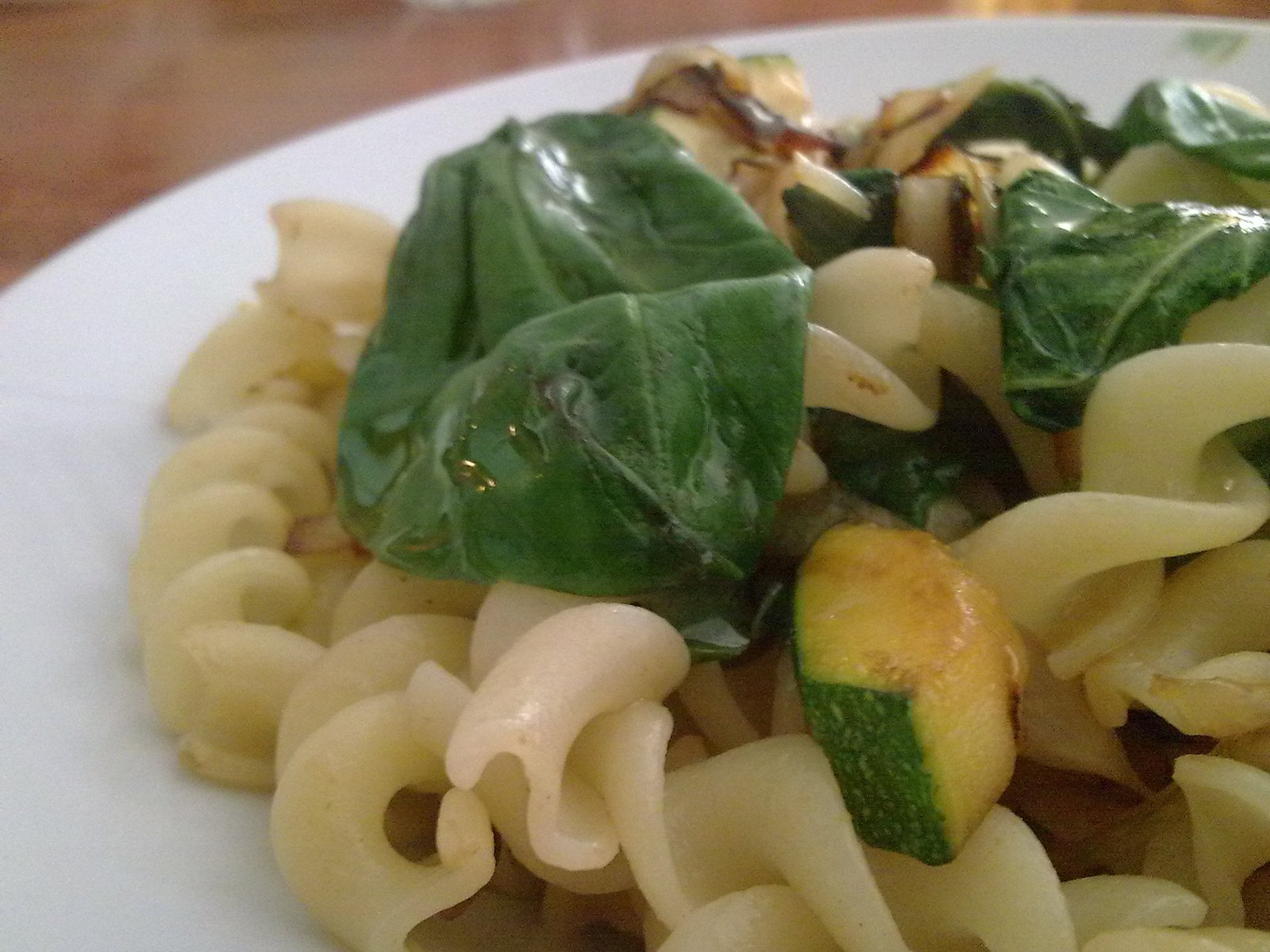
Lablascovegmenu, CC BY 2.0 via Wikimedia Commons
Easy Garlic-Butter Veggie Pasta
Ingredients
Method
- Boil the pasta. Bring a large pot of generously salted water to a rolling boil and cook the penne 1 minute shy of the package directions (you want it truly al dente — it finishes in the skillet). Before draining, scoop out 1 cup of the pasta water and set it aside.
- Start the broccoli. While the pasta cooks, heat the olive oil in a large, deep skillet over medium-high heat. Add the broccoli florets, 1/4 cup of water, and a pinch of salt. Cover and steam-sauté for 3 minutes (the water jump-starts the dense florets so they don't need extra oil or time).
- Add the peppers. Uncover, add the sliced bell peppers, and cook, stirring, for 3 minutes. The broccoli should be bright green and nearly tender; the peppers should still have crunch.
- Bloom the aromatics. Push the vegetables to the edges, drop the butter into the center, and add the sliced garlic, red pepper flakes, and Italian seasoning. Cook 30 to 60 seconds, stirring the garlic in the butter, just until fragrant. (If the garlic browns past golden, pull the pan off the heat for a minute — burnt garlic turns the whole dish bitter.)
- Finish with the soft vegetables. Add the zucchini and cherry tomatoes, season with salt and pepper, and cook 2 to 3 minutes, just until the zucchini turns glossy and the tomatoes slump and burst. You're warming them through, not stewing them.
- Build the sauce. Add the drained pasta to the skillet with 3/4 cup of the reserved pasta water. Toss everything over medium heat for 1 to 2 minutes, until the water reduces into a light, glossy sauce that coats the pasta. (If it looks dry, splash in more pasta water a little at a time — that's what it's there for.)
- Finish and serve. Take the pan off the heat. Stir in the Parmesan, lemon juice, and fresh herbs. Taste and adjust salt. Serve immediately with extra Parmesan at the table.
Pro Tips for the Best Veggie Pasta
- Cut everything before the burner goes on. This recipe moves fast once the skillet is hot — there’s no time to chop a pepper while the garlic is in the pan. (I learned this the smoky way.)
- Don’t crowd the skillet. Use your biggest, deepest skillet. Vegetables piled on top of each other steam instead of sear, and steamed broccoli is exactly the mush we’re avoiding.
- Salt in layers. A pinch on the broccoli, a pinch with the peppers, a pinch at the end. Vegetables seasoned only at the finish taste flat; seasoning as you go builds flavor all the way through.
- Slice the garlic, don’t mince it. Minced garlic burns in under a minute in a hot skillet. Thin slices give you a wider window and a sweeter, mellower flavor.
- Serve it right away. Veggie pasta waits for no one — the vegetables keep softening in the residual heat. Have the bowls (and the Parmesan) ready before the pasta hits the skillet.
Easy Veggie Pasta Variations
This recipe is a template, not a rulebook. Keep the technique — dense vegetables first, soft ones last, pasta water for the sauce — and change anything else:
- Make it vegan: Swap the butter for 2 more tablespoons of olive oil and use nutritional yeast or a vegan Parmesan instead of the cheese. The pasta water still makes the sauce silky.
- Make it gluten-free: Use your favorite gluten-free penne. Reserve extra pasta water — GF pasta water is even starchier, which actually helps the sauce.
- Add protein: A can of drained white beans or chickpeas, tossed in with the zucchini, makes it heartier without a second pan. Grilled chicken or shrimp on top works too.
- Go seasonal: Spring — asparagus and peas (add with the peppers). Summer — corn kernels and yellow squash (add with the zucchini). Fall — butternut squash, cut small and added with the broccoli. Winter — cauliflower and kale (kale goes in with the tomatoes, just to wilt).
- Make it creamy-ish: Stir in 1/4 cup of ricotta or mascarpone with the Parmesan for a richer finish — still lighter than a cream sauce.
- Turn up the heat: Double the red pepper flakes and finish with a drizzle of chili crisp.
Also Read: Healthy Pasta Recipes
Storage and Reheating
Store leftovers in an airtight container in the refrigerator for 3 to 4 days — the USDA Food Safety and Inspection Service gives the same window for all cooked leftovers, and pasta is no exception. I don’t recommend freezing this one; the zucchini turns watery when thawed.
Reheat in a skillet over medium heat with a splash of water (a tablespoon or two per serving) to loosen the sauce back up — the microwave works, but the vegetables stay firmer in the pan. Add a fresh squeeze of lemon and a shower of Parmesan after reheating and it tastes close to fresh.
Common Veggie Pasta Mistakes to Avoid
- Adding all the vegetables at once. The #1 reason homemade veggie pasta disappoints. Dense vegetables need a head start; soft ones need a short finish. Layer them by density and everything lands perfectly.
- Skipping the pasta water. Without it, the oil and butter slide right off the pasta. With it, you get a glossy sauce that clings. Reserve the cup before you drain — once it’s gone, it’s gone.
- Cooking the pasta fully in the pot. Pasta that goes into the skillet already soft turns mushy in the final toss. Pull it 1 minute early; it finishes in the sauce.
- Burning the garlic. Garlic goes from golden to bitter in seconds. Slice it thick, keep the heat at medium when it goes in, and don’t walk away.
- Forgetting the acid. A rich garlic-butter sauce with no lemon tastes flat and heavy. The lemon juice at the end isn’t optional garnish — it’s what makes the vegetables pop.
Also Read: Vegetarian Pasta Recipes
Veggie Pasta at a Glance
| Vegetable group | Examples | When to add | How long |
|---|---|---|---|
| Dense (go in first) | Broccoli, cauliflower, carrots, butternut squash | With a splash of water, covered | 5–6 minutes |
| Medium (go in second) | Bell peppers, asparagus, green beans, mushrooms | After the dense veg softens | 3–4 minutes |
| Soft (go in last) | Zucchini, yellow squash, corn | Near the end | 2–3 minutes |
| Quick finishers | Cherry tomatoes, spinach, kale | Very last | 1–2 minutes, just to burst or wilt |
Use this chart with any vegetable combination and the layering technique works every time. It’s the most useful thing in this post — screenshot it for grocery day.
Veggie Pasta FAQs
Can I use frozen vegetables in veggie pasta?
You can, with one adjustment: thaw them first and pat them dry. Frozen vegetables release a lot of water, and that water will steam everything into mush and dilute your sauce. Thawed, dried broccoli or peppers follow the same timing as fresh.
How do I keep zucchini from getting soggy in pasta?
Two rules: add it in the last 2 to 3 minutes of cooking, and don’t salt it early. Salt draws water out of zucchini, so season it with the tomatoes at the end. Cut it into half-moons rather than small dice — bigger pieces hold their shape.
What pasta shape is best for veggie pasta?
Short shapes with texture — penne, fusilli, rotini, or farfalle — catch the sauce and trap small vegetable pieces in their ridges. Long pasta like spaghetti works, but the vegetables slide off instead of mixing in.
Can I make this veggie pasta vegan?
Easily. Replace the butter with extra olive oil and swap the Parmesan for nutritional yeast or your favorite vegan Parmesan. Everything else in the recipe is already plant-based, and the pasta-water sauce technique works exactly the same.
How long does veggie pasta last in the fridge?
Three to four days in an airtight container, per USDA food safety guidance. The vegetables soften a bit by day three but the flavor holds up. Reheat in a skillet with a splash of water rather than the microwave for the best texture.
Can I add protein to veggie pasta?
Yes — a can of drained chickpeas or white beans stirred in at the end is the easiest option and keeps it meatless. Grilled chicken, shrimp, or Italian sausage on top all work too. Add cooked protein at the very end so it just warms through.
Is veggie pasta healthy?
It’s one of the better weeknight dinners you can make: roughly four different vegetables per bowl, olive oil instead of heavy cream, and about 490 calories per serving (estimate). Use whole-wheat pasta and go lighter on the cheese if you want to lean it out further.
Can I meal prep this veggie pasta?
Yes, with a small tweak: slightly undercook the vegetables (pull them a minute early) since they’ll soften more when reheated. Portion into containers, refrigerate up to 4 days, and reheat in a skillet with a splash of water. Add the fresh herbs and lemon only after reheating.
Final Thoughts
This veggie pasta earned its permanent spot in my weeknight rotation because it respects both the cook and the vegetables — fast enough for a Tuesday, thoughtful enough that every vegetable tastes like itself. Learn the layering trick and the pasta-water sauce, and you’ll never look at a bag of random crisper vegetables the same way again.
Try it this week, and let me know how it turned out — especially which vegetable combination you landed on. My current favorite is the fall version with butternut squash, but the classic above is the one I make when I don’t want to think.

Founder of NestFlavors — sharing tested recipes and honest home ideas, made for real life.