
The best paint colors for bathrooms do one job above all else: they make a small, steamy room feel clean, bright, and calm. I have repainted enough bathrooms to know the shade on the chip rarely looks the same on four walls under bathroom lighting.
This guide to the best paint colors for bathrooms cuts through the guesswork. You will find colors that work in real bathrooms, organized by the light and size of your room, plus the finish and prep steps that keep the paint looking good in humidity.
I also cover the angle most color lists skip: how to match your paint to the finishes you already have, like chrome, brass, or black fixtures, and how to test a color properly before you commit to a full gallon.
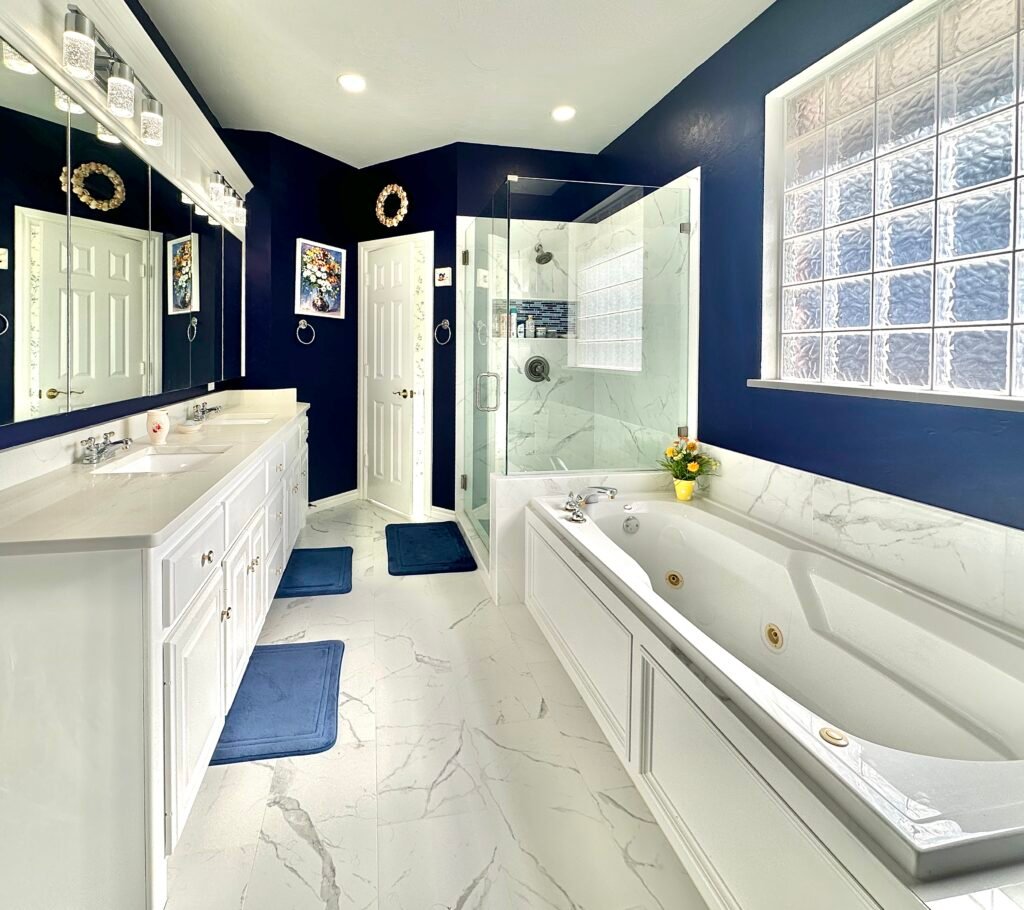
What Is the Best Paint Color for Bathrooms?
The best paint colors for bathrooms are shades that hold up in humidity, reflect enough light to keep the room feeling open, and flatter your tile, vanity, and fixtures. That usually means soft whites, pale blues, gentle greens, warm greiges, and a few deep accent shades used with care.
There is no single shade that wins in every bathroom. The right pick depends on your light, your room size, and the undertones of the finishes already in place.
Why You’ll Love These Best Paint Colors for Bathrooms
- They work in real light. Every pick below is chosen for how it behaves in north-facing, windowless, and sun-filled rooms alike.
- They suit small rooms. Light, reflective shades keep a tight bathroom from feeling closed in.
- They pair with common finishes. White tile, marble, wood vanities, chrome, brass, and matte black all get options here.
- They survive steam. Paired with the right finish, these colors resist moisture, mildew, and wipe-down wear.
- They are easy to live with. Soft, livable shades age well, so you will not tire of them in a year.
- They fit any budget. A fresh coat of paint is one of the cheapest ways to change a whole bathroom.
Soft Whites That Brighten Any Bathroom
White is the safest bet among the best paint colors for bathrooms, but not all whites behave the same. A cool white can look icy next to cream tile, while a warm white can turn yellow under warm bulbs. Test before you buy.
1. Warm White for a Clean, Spa-Like Feel
A warm white with a soft creamy undertone flatters marble, brass fixtures, and wood vanities without looking stark. It reflects light well and makes a small bathroom feel open.
It also forgives imperfect walls better than a bright, pure white, which shows every bump and patch. Keep the trim a shade brighter for a crisp edge.
Try it: Paint walls warm white, trim bright white, and add natural wood accents for warmth.
2. Bright White for Small, Dark Bathrooms
When a bathroom has no window or only a tiny one, a bright, clean white is your best friend. It bounces every bit of light around the room and keeps corners from going shadowy.
Pair it with a large mirror and light-colored tile so the room reads as one bright space rather than a white box. Add texture through towels, a woven basket, and a wood stool.
Try it: Use bright white on walls and ceiling alike to remove visual breaks and stretch the room taller.
3. Soft Greige for Warmth Without Color Commitment
Greige, the mix of gray and beige, suits people who want warmth but are not ready for an obvious color. It looks calm beside both cool chrome and warm brass.
Watch the undertone: a greige with a pink cast can look muddy under warm bulbs, while one with a green cast can feel cool. Sample it next to your floor tile first.
Try it: Pair soft greige walls with white tile and black fixtures for a clean, current look.
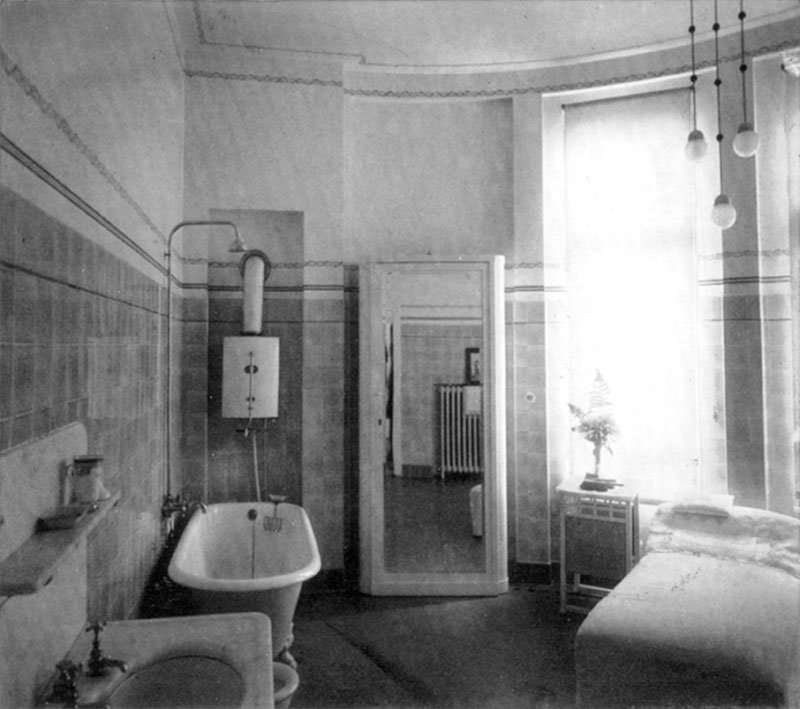
Blues and Greens for a Calm, Coastal Feel
Blue and green are classic picks among the best paint colors for bathrooms for a reason. They read as clean and watery, and they calm a room down fast. The trick is picking the right depth for your light.
4. Pale Blue for an Airy, Coastal Bathroom
A pale coastal blue adds color while still feeling light. It works with white cabinetry, marble or quartz counters, and natural textures like rattan and linen.
In a south-facing room, pale blue stays fresh all day. In a north-facing room, pick a blue with a warm undertone so it does not go icy gray.
Try it: Pair pale blue walls with white trim, a rattan mirror frame, and brushed nickel fixtures.
5. Soft Sage Green for a Relaxed, Natural Look
Sage green brings the outdoors in without shouting. It suits wood vanities, stone counters, and cream tile, and it hides water spots better than white.
Sage also plays well with brass, which warms it up, and with matte black, which sharpens it. Keep towels in white or cream so the green stays the star.
Try it: Paint the walls sage, keep the vanity natural wood, and add a small potted plant on the counter.
6. Deep Teal as a Bold Accent Wall
Deep teal gives a bathroom real personality. Used on one wall, often behind the vanity or the tub, it adds depth without swallowing the room.
Balance it with plenty of white elsewhere: white tile, white trim, and a light countertop. In a large primary bath, you can take teal onto all four walls and it still feels rich, not dark.
Try it: Paint one accent wall deep teal and leave the other walls soft white for contrast.
Warm Shades for Cozy, Inviting Bathrooms
Cool colors are not for everyone. If your bathroom faces north or you simply like warmth, these warm shades are among the best paint colors for bathrooms for adding glow without feeling heavy.
7. Warm Beige for a Timeless, Neutral Base
Warm beige suits traditional bathrooms, cream tile, and wood tones. It feels calm and lived-in rather than stark or clinical.
Keep the beige light to medium in depth. A dark beige in a small room can feel muddy, especially under warm bulbs. White trim keeps it crisp.
Try it: Pair warm beige walls with a white vanity, cream towels, and oil-rubbed bronze fixtures.
8. Soft Peach for a Gentle Pop of Color
Soft peach sits between pink and orange, and it flatters skin tones in the mirror, which is a real plus in a bathroom. It pairs well with white, warm neutrals, and natural stone.
Nudge peach toward terra-cotta for an earthier feel or toward blush pink for a softer one. Either way, keep it pale so it reads as a glow, not a shout.
Try it: Use soft peach on the walls and white on the ceiling and trim for a fresh, sunny feel.
9. Buttery Yellow for a Sunny Morning Bathroom
A soft, buttery yellow adds energy to a morning routine, especially in a bathroom that gets little natural light. It feels sunny without the punch of a bright yellow.
Pair yellow with white trim and a mid-tone blue accent, like hand towels or a shower curtain, to keep it from feeling flat. Avoid pairing it with gold fixtures, which can push the whole room too warm.
Try it: Paint the walls buttery yellow and add white trim plus a soft blue bath mat.
Dark and Moody Shades for Drama
Dark shades are a bold move among the best paint colors for bathrooms, and they pay off in the right room. Large primary baths and small powder rooms both handle drama well, for opposite reasons: one has space to carry it, the other is a jewel box you visit briefly.
10. Charcoal Gray for a Modern, Sophisticated Bath
Charcoal gray looks sharp with white tile, marble, and chrome. It gives a bathroom a tailored, hotel-like feel that light colors cannot match.
Use it on all four walls only if the room has good light or a large mirror. In a small, windowless bath, try charcoal on the vanity wall only and keep the rest light.
Try it: Pair charcoal walls with a white freestanding tub and chrome fixtures for strong contrast.
11. Deep Navy for a Classic, Timeless Look
Deep navy is a classic bathroom shade that never feels trendy. It works with brass fixtures, white trim, and marble counters, and it makes white towels look crisp.
Navy reads darker than it looks on the chip, so sample it on a large board and check it at night under your actual bulbs before committing.
Try it: Paint the vanity wall navy, keep the other walls white, and add brass sconces.
12. Forest Green for a Rich, Nature-Inspired Bath
Forest green brings depth and a sense of calm to a bathroom, especially one with wood tones and natural stone. It feels rich without the formality of navy.
Balance it with light counters and plenty of mirror. A wood vanity and green walls are a pairing that feels collected rather than decorated.
Try it: Use forest green on the walls, a wood vanity, and white towels for a grounded, natural room.
Choosing by Light, Size, and Fixtures
The shade matters less than the match. When choosing the best paint colors for bathrooms, start with your room’s light and scale, then pick within the palettes above. A shade that glows in a south-facing primary bath can go flat and gray in a small interior powder room.
13. Match the Paint to Your Room’s Light Direction
North-facing rooms get cool, gray light, so warm undertones help: warm whites, soft greige, and warm beige counter the chill. South-facing rooms get warm sun, so cooler mineral tones like pale blue and soft gray stay balanced.
Windowless rooms need a different plan. Commit to atmosphere instead of fighting the dark: either luminous warmth with a soft white, or full moody drama with a deep shade and good lighting.
Try it: Note which way your bathroom faces, then pick a shade whose undertone pushes the opposite way.
14. Match the Paint to Your Fixed Finishes
Your tile, countertop, and flooring are not changing, so your paint must get along with them. A cool white can clash with cream tile, while a warm beige can look muddy beside cool gray flooring.
Hold your sample against the tile, grout, countertop, and flooring together, not just against a white wall. The combination is what you will actually live with.
Try it: Tape large samples beside the tub surround, the floor, and the vanity, then check them in daylight and at night.
15. Match the Paint to Your Fixture Finish
Chrome and brushed nickel suit cool shades like pale blue, soft gray, and bright white. Brass and gold warm up sage, greige, and deep navy. Matte black sharpens almost anything, but it looks best against light walls where it can stand out.
If your fixtures are mixed, pick a neutral wall color that does not fight either finish, then let the fixtures be the accent.
Try it: List your fixture finishes first, then shortlist only shades that flatter all of them.
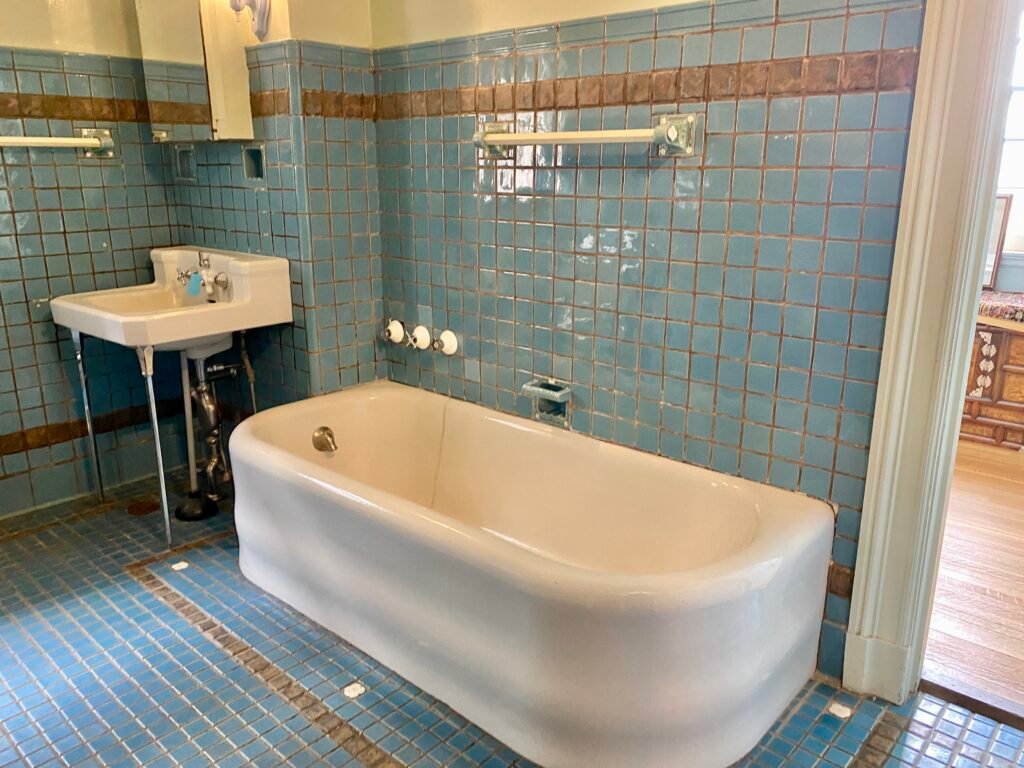
Paint Finishes and Prep That Survive Humidity
Color gets the attention, but when you pick the best paint colors for bathrooms, finish and prep decide whether the paint lasts. Bathrooms are wet rooms, and standard flat paint will not hold up on walls that see daily steam.
16. Pick Satin or Semi-Gloss for Bathroom Walls
Satin and semi-gloss are the best finishes for a bathroom. For more shade ideas, browse the Benjamin Moore paint color collection and compare undertones before you sample. Both repel moisture and wipe clean, and semi-gloss is the more scrubbable of the two for a shower wall or a busy family bath.
Skip flat or matte on wet walls. Flat paint soaks up humidity, and even the best paint colors for bathrooms fail early in the wrong finish. and is prone to mildew, and it marks easily when wiped. Save matte for a ceiling in a well-ventilated room only.
Try it: Use satin on the walls, semi-gloss on trim and doors, and a ceiling paint made for bathrooms overhead.
17. Use a Bathroom Formula in Steamy Rooms
A paint labeled for bathrooms and kitchens adds mildew-resistant agents built for high humidity. It holds up far better than standard wall paint in a small or poorly ventilated room where steam lingers.
It matters most around the shower and in baths without a window or a strong fan. If your fan is weak, fix the ventilation too, since no paint can outrun constant damp.
Try it: Buy a bathroom formula for the shower wall zone at minimum, and run the fan during and for 20 minutes after every shower.
18. Test Large Swatches Before You Buy Gallons
Choosing from a tiny paper chip is one of the easiest ways to end up with the wrong shade. Bathroom lighting changes how paint looks, especially in windowless rooms.
Paint two coats on a large poster board, move it around the room, and check it in morning light, evening light, and under your bulbs. Live with it for at least two days before you commit.
Try it: Test three finalists on separate boards, lean them against different walls, and pick the one that looks good in every light.
What to Paint Besides the Walls
Walls are only part of the job. The ceiling, trim, and vanity all affect how the best paint colors for bathrooms read in the room, and painting them with intent makes the whole space feel finished.
19. Paint the Ceiling Lighter Than the Walls
A lighter ceiling, usually white or a paler tint of the wall color, makes a bathroom feel taller and more open. A darker ceiling does the opposite, wrapping the room in a cozy feel that suits a large bath or a small powder room you want to feel dramatic.
For most bathrooms, the lighter ceiling is the safer pick. It lifts the room and hides nothing, which is what you want overhead.
Try it: Use the wall color mixed at half strength on the ceiling, or plain ceiling white for a clean break.
20. Let the Vanity Carry a Bold Color
If a deep wall color feels like too much, put the bold shade on the vanity instead. A navy, forest green, or charcoal vanity against soft walls gives you the drama with an easy exit if you tire of it.
Vanity paint takes more wear than wall paint, so use a cabinet-grade enamel and let it cure fully before you stack toiletries on it.
Try it: Paint the vanity deep navy, keep the walls soft white, and swap the hardware to brass for a finished look.
Common Mistakes to Avoid
Most regrets with the best paint colors for bathrooms come from rushing the choice, not from the color itself. These fixes cover the mistakes I see most often.
- Picking from a tiny chip. The fix: test large boards in your own room, in daylight and under your bulbs, for at least two days.
- Ignoring your fixed finishes. The fix: sample against tile, grout, flooring, and countertop together, not on a blank wall.
- Using flat paint on wet walls. The fix: choose satin or semi-gloss, and a bathroom formula near the shower.
- Matching every surface too closely. The fix: build in contrast between walls, vanity, trim, and tile so each surface stands out.
- Going dark in a small, dim bath. The fix: use deep shades on one accent wall or the vanity, and keep the rest light.
- Skipping ventilation. The fix: run the fan during and after showers, and fix a weak fan before you repaint.
Best Paint Colors for Bathrooms at a Glance
Use this table to compare the best paint colors for bathrooms side by side before you buy samples.
| Color family | Best for | Pair with |
|---|---|---|
| Warm white | Any bathroom, marble and brass | Bright white trim, wood accents |
| Bright white | Small or windowless baths | Large mirror, light tile |
| Soft greige | Neutral warmth, mixed fixtures | White tile, black fixtures |
| Pale blue | Coastal, airy feel | White cabinetry, rattan, nickel |
| Soft sage | Natural, relaxed rooms | Wood vanity, brass, plants |
| Deep teal | Accent wall drama | White tile and trim |
| Warm beige | Traditional baths, cream tile | White vanity, bronze fixtures |
| Soft peach | Gentle color, flattering light | White trim, natural stone |
| Buttery yellow | Sunny mornings, low light | White trim, soft blue accents |
| Charcoal gray | Modern, hotel-like baths | White tub, chrome fixtures |
| Deep navy | Classic drama | Brass sconces, marble |
| Forest green | Rich, nature-inspired rooms | Wood vanity, white towels |
Frequently Asked Questions
What is the best paint color for a small bathroom?
Among the best paint colors for bathrooms, light, cool colors make a small bathroom look bigger because they reflect more light and soften the edges of the room. Soft white, pale blue, light greige, and sage are reliable picks. Carrying one color from the walls up onto the ceiling removes visual breaks and stretches the space further.
What paint finish is best for bathrooms?
Satin and semi-gloss are the best finishes for a bathroom. Both repel moisture and wipe clean, and semi-gloss is the more scrubbable choice for a shower wall or a busy family bath. Skip flat or matte on wet walls, since those finishes soak up humidity and are prone to mildew.
Do I need special paint for a bathroom?
Special bathroom paint is worth it in most baths, whatever the best paint colors for bathrooms you choose. A bathroom and kitchen formula adds mildew-resistant agents built for high humidity, so it holds up far better than standard wall paint. It matters most in a small or poorly ventilated room where steam tends to linger.
Should the ceiling be lighter or darker than the walls?
A lighter ceiling, usually white or a paler tint of the wall color, makes a bathroom feel taller and more open. A darker ceiling wraps the room in a cozy, enclosed feel that suits a large bath or a small powder room you want to feel dramatic. For most bathrooms, lighter is the safer pick.
What colors should I avoid in a small bathroom?
Very dark shades can feel heavy in a room with limited natural light. If you love a dark color, use it as an accent wall or on the vanity instead of covering every wall, and balance it with plenty of white tile or trim. That way you get the drama without shrinking the room.
How do I pick a paint color for a bathroom with no windows?
Start by deciding on atmosphere. A soft white with warm undertones keeps a windowless bath feeling bright, while a deep shade with good lighting turns it into a moody jewel box. Either way, test large swatches under your actual bulbs, since artificial light is the only light the color will ever be seen in.
Can I paint bathroom tiles or just the walls?
Walls are the easy win, but tile can be painted with a tile-specific primer and paint made for the job. It is a bigger commitment than wall paint, since prep and cure time matter more, and it suits a budget refresh better than a forever fix. For most people, fresh wall paint plus new grout color delivers the change with far less risk.
How often should a bathroom be repainted?
A well-prepped bathroom paint job with a satin or semi-gloss bathroom formula usually lasts several years, even with daily showers. Repaint sooner if you see peeling near the shower, mildew that returns after cleaning, or yellowing around the fan. Fixing ventilation first keeps the next coat lasting longer.
Final Thoughts
The best paint colors for bathrooms are the ones that suit your light, your finishes, and the way you actually use the room. Start with light and size, sample large swatches, and pick a finish built for steam. That is how you land on the best paint colors for bathrooms for your room, not someone else’s.
When the color, the finish, and the prep all line up, a single weekend of painting can change how the whole bathroom feels every single morning.
Also Read:
18 Best Bathroom Wall Art Ideas for a Stylish Refresh
14 Best Bathroom Counter Organizer Ideas That Work
18 Best Boho Shower Curtain Ideas for a Dreamy Bathroom

Founder of NestFlavors — sharing tested recipes and honest home ideas, made for real life.