
The fastest way to make your living room feel finished has nothing to do with new furniture.
I learned this the expensive way. Years ago I furnished my first real living room — decent sofa, rug I actually liked, art I didn’t hate — and every evening it still felt flat. Cold, somehow. Then a friend came over, looked around, and said the thing nobody had told me: “You have one light source. That’s why it feels like a waiting room.” She was right. The right living room lamps changed that room more than anything I’d bought for it, and they cost a fraction of the sofa.
This guide gives you 21 living room lamps worth considering — floor lamps, table lamps, and the quirky accent pieces that make a room feel like someone with taste lives there. I’ve grouped them by type, added the placement and bulb tricks I actually use, and finished with the mistakes I see in almost every living room I walk into. No showroom fantasy. Just lamps that work in real rooms.
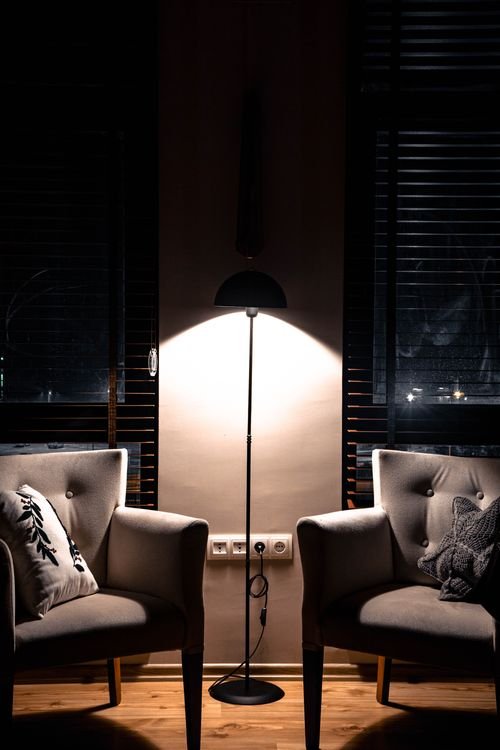
Floor Lamps That Anchor the Room
Floor lamps are the backbone of living room lighting. They fill the corners overhead lights can’t reach, they give you reading light exactly where you sit, and a good one reads as furniture in its own right. If your living room currently has zero floor lamps, start here — one floor lamp does more for evening atmosphere than any other single purchase.
1. The Arc Lamp That Bends Over Your Sofa
The arc lamp is the drama queen of living room lamps, and I mean that as a compliment. Its long curved arm sweeps out from a heavy base and hangs the light directly over your seating — no side table required, no ceiling wiring, no electrician. It’s the closest thing to a pendant light you can get without touching your ceiling.
Arcs work best behind a sofa or beside a chaise, with the shade hovering over the middle cushion. Give it room: the base usually sits two to three feet behind the furniture, so it suits medium and large living rooms better than tight ones. And check the arc’s reach before you buy — some barely clear a standard sofa depth.
Try it: Pair an arc lamp with a dimmable warm bulb and use it as your main evening light. With the overheads off and the arc on low, the whole seating area feels like a restaurant booth.
2. The Classic Torchiere (Yes, Really)
Torchieres — the tall lamps that throw light straight up — got a bad reputation from a decade of ugly halogen versions. The modern ones are a different animal: slim profiles, linen or glass shades, LED bulbs that don’t double as space heaters. What they do brilliantly is bounce light off the ceiling, which makes the whole room feel taller and more evenly lit.
This is the lamp for dark corners that swallow light. Tuck one into the corner farthest from your windows and watch the ceiling glow. It won’t give you reading light — the light goes up, not down — so think of it as atmosphere, not task lighting.
Try it: Put a torchiere in the darkest corner of your living room first, before buying anything else. You’ll be shocked how much bigger the room feels.
3. The Tripod Floor Lamp
Three legs, one shade, endless charm. The tripod floor lamp brings a relaxed, slightly Scandinavian energy that softens rooms full of hard edges and rectangles. Wooden tripods warm up modern spaces; black metal ones sharpen up traditional rooms. Either way, the shape itself is the decoration.
Tripods have a wider footprint than single-pole lamps, so they need a real corner or a generous spot beside an armchair — don’t wedge one into a walkway. The payoff is a lamp that looks intentional from every angle, which matters in open-plan rooms where you see the back of your furniture.
Try it: Use a tripod lamp to anchor a reading chair that floats in the middle of the room. It gives the chair its own little zone without a single piece of extra furniture.
4. The Pharmacy Floor Lamp
The pharmacy lamp — slim stem, adjustable metal shade you can aim — started life on apothecary counters and grew up into one of the most useful living room lamps ever designed. The directional shade puts light exactly on your book, your knitting, your crossword, while the rest of the room stays dim and moody.
I love these next to armchairs because they respect everyone else in the room. Your partner can watch TV in soft light while you read in a proper pool of brightness. Look for one with a solid weighted base and a shade that actually stays where you aim it — cheap ones droop within a month.
Try it: Aim the shade down at a slight angle toward your lap, not straight at the page. You’ll get bright, even light with zero glare in your eyes.
5. The Tree Lamp With Three Heads
A tree lamp — one pole, three or more adjustable heads branching off at different heights — is the overachiever of living room lamps. Each head aims independently, so one lamp can wash a wall, spotlight a plant, and light your reading chair all at once. It’s essentially three lamps sharing one outlet.
These shine in rooms with multiple jobs: a corner that holds both a reading chair and a bookshelf, or beside a sectional where people sit at different angles. The look skews mid-century, especially in brass or matte black, so it fits right into rooms with vintage-leaning furniture.
Try it: Aim one head at the ceiling, one at the wall art, and one down at your seat. Three directions from one lamp is the cheapest layered lighting you can buy.
6. The Slim Minimalist Stick Lamp
Some rooms don’t need a statement — they need light without visual noise. The minimalist stick lamp is a single slim pole with a small shade or bare bulb, barely there by day and quietly glowing by night. In a small or busy living room, this is the living room lamp that adds the light layer without adding clutter.
The trick with minimal lamps is placement: because they’re visually light, you can tuck them into spots a chunkier lamp would crowd — the six-inch gap between sofa and wall, the edge of a bookshelf, beside a floor-length curtain. They disappear into the architecture and just leave the glow.
Try it: Slide a slim stick lamp into the dead gap between your sofa and the wall. Dead space becomes a light source, and the wall behind the sofa gets a soft wash of light.
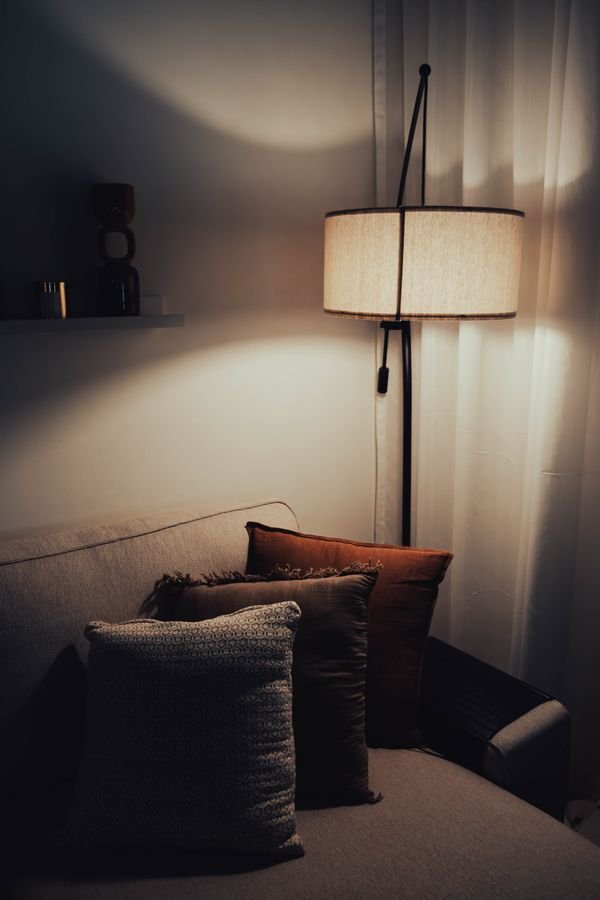
Table Lamps That Finish the Seating Area
Table lamps are the jewelry of living room lighting — smaller, closer to eye level, and the ones guests actually notice. Every seat in your living room deserves light within arm’s reach, and that’s the table lamp’s whole job. A sofa with lit lamps on both ends looks finished in a way no amount of throw pillows can fake.
7. The Linen Drum Classic
If you only buy one style of table lamp in your life, make it this one: a simple base with a natural linen drum shade. Linen diffuses light softly in every direction — no harsh hotspots, no weird shadows — and the texture looks good with literally everything from farmhouse to modern. It’s the white t-shirt of living room lamps.
Size matters more than style here. The bottom of the shade should sit roughly at your eye level when you’re seated, which usually means a 24- to 30-inch lamp on a standard side table. Too tall and you see the bare bulb; too short and the light pools uselessly on the tabletop.
Try it: Buy two matching linen drums for either end of the sofa. Symmetry at the ends of a couch is the oldest designer trick there is, and it still works every time.
8. The Ceramic Statement Base
A glazed ceramic base — deep blue, terracotta, sage, cream — turns a table lamp into a sculpture that happens to glow. Ceramic catches and holds light differently than metal; the whole base seems to warm up under a 2700K bulb, and the glaze gives you color and texture in rooms that feel flat.
This is my pick for beige-on-beige living rooms that need one confident color move. Pull the glaze color from something already in the room — a pillow, a piece of art, the rug’s border — and the lamp looks like it was chosen by a professional. Mismatched color just looks like a random lamp.
Try it: Match the ceramic glaze to your curtain color or an accent pillow. Repetition is what makes a room feel designed rather than assembled.
9. The Brass-and-Glass Modern Pair
Brass bases with clear or smoked glass shades are the current sweet spot between traditional and modern — warm metal, airy glass, nothing heavy. They read expensive without trying too hard, and the transparency keeps them from adding visual weight on small side tables.
Glass shades need the right bulb: a clear vintage-style LED filament bulb looks intentional, while a standard frosted bulb inside clear glass just looks like you forgot the shade. This is one of those details that separates a styled room from a furnished one.
Try it: Use a matching pair on the console behind your sofa. Matching table lamps on a sofa console is the fastest way to make the back of a floating sofa look deliberate.
10. The Paper Lantern Table Lamp
A rice-paper or parchment shade gives the softest light of any living room lamp on this list. Paper diffuses so gently that the lamp almost disappears and only the glow remains — it’s the closest thing to candlelight you can plug in. In the evening, a paper-shade lamp makes every living room feel calmer.
The honest trade-offs: paper dents, yellows over the years, and hates humidity. Keep them away from high-traffic edges and direct sun. But for pure coziness per dollar, nothing beats them — they’re usually the most affordable real lamps you’ll find.
Try it: Put a paper lantern lamp on a bookshelf instead of a table. The shelf glows from within and your books get the most flattering light in the house.
11. The Buffet Lamp for the Console
Buffet lamps — tall, slim table lamps, usually 30 inches or more — were designed for sideboards and they’re perfect for the long console behind a sofa or against a dining-room-adjacent wall. Their height lets them rise above the clutter of trays, vases, and frames instead of drowning in it.
On a console, go for a pair. One tall slim lamp looks like an afterthought; two frame whatever sits between them and turn the whole console into a composed vignette. Keep the shades simple — drum or tapered linen — so they don’t fight with your decor.
Try it: Flank a large piece of art or a mirror on your console with two buffet lamps. The symmetry does the styling work for you.
12. The Vintage Banker’s Glow
The emerald-glass banker’s lamp brings a library mood that no other table lamp can touch. That green glass shade throws a warm, focused pool of light downward — perfect for a side table that doubles as a reading spot — and the brass base adds a shot of traditional character.
This lamp has opinions, so give it a room that can handle them: leather chairs, wood tones, books everywhere. In an ultra-modern all-white room it can look like a costume piece. In a warm, layered living room it looks like it’s always belonged.
Try it: Put a banker’s lamp on the side table next to your reading chair and skip the overhead light entirely on reading nights. The focused pool of light is genuinely easier on tired eyes.
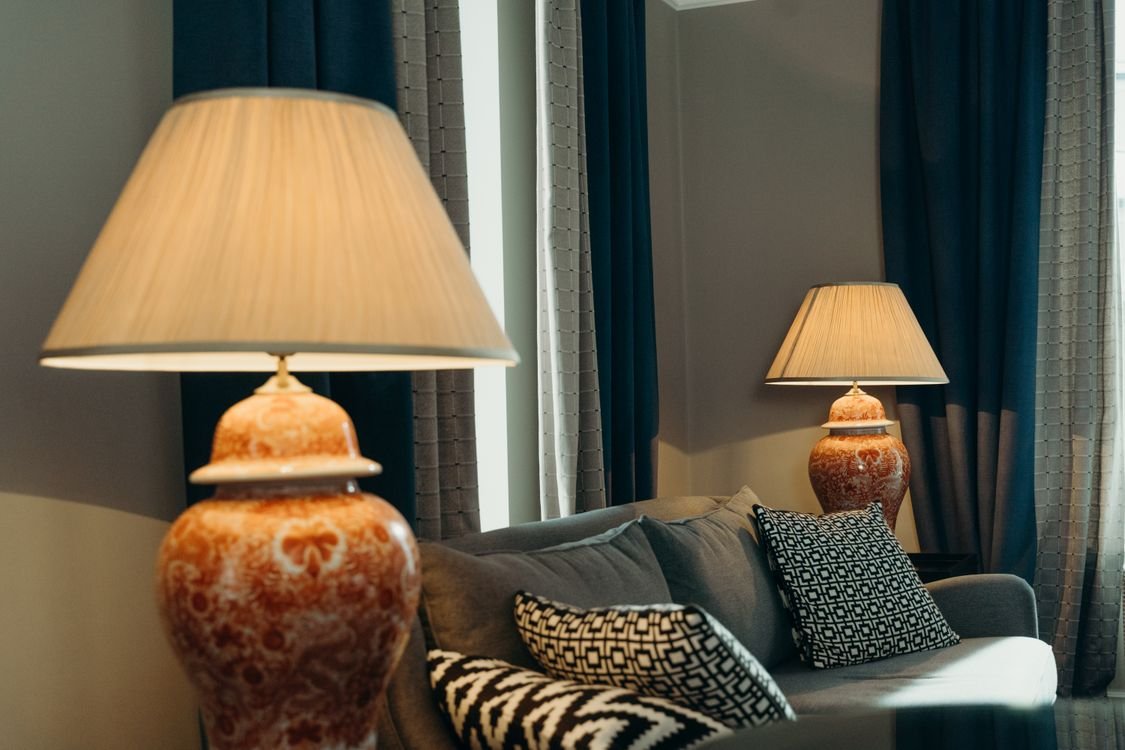
Statement Lamps With Real Personality
Not every lamp has to blend in. These are the ones guests ask about — the lamps that make a living room feel collected rather than decorated. They work best as a second or third lamp in the room, while a calmer lamp handles the everyday lighting nearby.
13. The Sculptural Paper Globe Floor Lamp
A big paper globe on a slim stand — the sculptural kind with an organic, slightly uneven shape — is equal parts lamp and art object. Off, it’s a soft white sculpture in the corner. On, it glows like the moon and throws the most forgiving light of all the living room lamps here: no glare, no harsh edges, just warmth.
These need breathing room to look right. Give a globe lamp its own corner or the end of a low credenza, with nothing crowding it for at least a foot in every direction. Crowded, it looks like clutter; given space, it looks like a gallery piece.
Try it: Use a paper globe floor lamp as your only light source for movie nights. The diffuse glow won’t wash out the TV screen the way a directional lamp does.
14. The Rattan Table Lamp
Woven rattan, cane, or wicker shades bring texture that no fabric or metal shade can match. Light filters through the weave and throws the most beautiful patterned shadows on the walls — your lamp becomes a light show, not just a light source. In rooms that feel flat or overly polished, rattan adds instant soul.
Rattan lamps lean coastal and boho, but one rattan shade in an otherwise tailored room is a classic designer move — it keeps the room from feeling stiff. Just keep the bulb warm (2700K); cool light through rattan looks harsh instead of glowy.
Try it: Put a rattan table lamp where its shadows will land on a plain wall. The woven pattern projected large on the wall is genuinely stunning after dark.
15. The Crystal Statement Lamp
Crystal lamps — cut-glass stems, beaded shades, the full sparkle — are unapologetic glamour, and in the right room they’re magnificent. When the bulb is on, every facet throws tiny rainbows; when it’s off, the lamp still catches daylight and acts as a jewelry box on your table.
Commitment is required: a crystal lamp in a minimalist room looks confused, and it needs regular dusting to keep the sparkle. But in a traditional or glam living room, nothing else delivers this much presence per square inch of tabletop. One is a statement; two is a chandelier’s opening act.
Try it: Let the crystal lamp be the star of its table — no competing decor, just the lamp and maybe one small object. Sparkle needs a clean stage.
16. The Oversized Mushroom Lamp
The mushroom silhouette — a soft dome shade on a short stem — grew up. The oversized floor and large table versions are having a real moment, and unlike most trends, this one earns it: the dome shape throws light downward in a perfect reading pool while the curved shade glows softly all around. Function and sculpture in one object.
Scale is the whole game here. A true oversized mushroom (shade wider than a dinner plate) needs a corner or side table with presence — don’t perch one on a dainty plant stand. In the right spot, it’s the piece people photograph.
Try it: Choose the mushroom in a saturated color — burnt orange, deep green, oxblood — and let it be the one bold color moment in a neutral room.
17. The Industrial Cage Floor Lamp
Exposed bulb, black metal cage, Edison-style filament — the industrial floor lamp brings an edge that softens beautifully in the right setting. Here’s the secret: industrial lamps look best in rooms that are NOT industrial. Against a floral sofa or beside a velvet chair, the contrast is what makes it interesting.
Bulb choice makes or breaks this lamp. A visible filament LED at 2700K gives you the vintage look with modern efficiency; a standard bright-white bulb in a cage shade just looks like a construction site. And dimmers are nearly mandatory — bare bulbs at full blast are nobody’s friend.
Try it: Pair an industrial cage lamp with something soft and traditional nearby — a floral pillow, a knit throw. The tension between rough and soft is the entire design trick.
Clever Lamps for Small Living Rooms
Small living rooms don’t need fewer lamps — they need smarter ones. Every lamp in this section solves a real small-space problem: no floor space, no nearby outlet, or a roommate situation where your light can’t be everyone’s light.
18. The Cordless Table Lamp
Rechargeable cordless living room lamps are the breakout stars of recent years, and small living rooms are exactly why. No outlet behind the sofa? No problem. Want a lamp on the coffee table, the bookshelf, the windowsill — all places outlets fear to reach? Charge it, place it, done. Most run for many hours on a charge and dim with a touch.
Be honest about how you’ll use it: a cordless lamp you light every evening should be rechargeable (USB-C is the standard now), not battery-powered — swapping batteries gets old fast. And check the brightness before committing; many cordless lamps are mood lighting, not reading lighting.
Try it: Put a cordless lamp on your coffee table for dinner parties. A glowing centerpiece that isn’t a candle changes the whole table, and there’s no cord to trip over.
19. The Clip-On Shelf Lamp
When there’s genuinely no surface for a lamp — a floating shelf, a bookcase edge, the back of a sofa console — a clip-on lamp clamps on and aims where you need it. Most are rechargeable with flexible necks, and they put real, usable light exactly on your reading spot.
The best use I’ve found: clipping one to a bookshelf beside the sofa to create a reading light where no side table fits. It’s the ultimate renter hack too — no holes, no wiring, and it moves with you.
Try it: Clip one to the top of a bookshelf and aim it down at the shelves. Your books get gallery lighting and the room gets a warm glow, all from one tiny lamp.
20. The Smart Bulb in a Dumb Lamp
Here’s the cheapest upgrade on this list: take any lamp you already own and screw in a smart bulb. Suddenly you have dimming without a dimmer switch, warm-to-cool shifting for day versus night, and schedules that fade the lamp on before your alarm and down to candle-warm at bedtime. The lamp stays; the light gets intelligent.
The real win is the evening wind-down. Program your living room lamps to dim gradually after dinner and your body starts getting the message that the day is ending — no willpower required. It’s the closest thing to a lamp that takes care of you.
Try it: Set one schedule: lamps at full warm brightness until 9 PM, then fading to 20% by 10:30. You’ll feel the difference in a week.
21. The Plug-In Swing-Arm Wall Lamp
A swing-arm wall lamp gives you the function of a hardwired sconce with zero electrician: it mounts with a couple of screws (or even adhesive brackets for renters) and plugs into the nearest outlet, with the cord dressed down the wall. The arm swings out over your reading chair and folds flat when you don’t need it.
This is the answer for the chair that’s stuck in a corner with no room for a side table — which, in small living rooms, is half the seating. Mount it so the shade sits at about shoulder height when you’re seated, and the light falls over your shoulder onto your book.
Try it: Mount a swing-arm lamp on each side of a loveseat instead of using table lamps. You free up both side tables for drinks and books, and the lighting is better aimed anyway.
How to Layer Living Room Lamps Like a Designer
Here’s the part that actually transforms rooms: designers don’t think in lamps, they think in layers. Three layers, specifically — and once you see them, you can’t unsee them. Getting your living room lamps arranged in layers is the difference between a room that’s merely lit and a room that glows.
Layer one: ambient. This is the general, all-over light — your torchiere bouncing off the ceiling, a pair of table lamps with the shades glowing, the arc lamp on low. Ambient light should be soft and shadowless. If your room has only this layer, it feels flat; if it’s missing, the room feels cave-like.
Layer two: task. Light with a job: the pharmacy lamp aimed at your book, the buffet lamp bright enough to find the remote, the swing-arm over the reading chair. Every seat where someone reads, works, or does a puzzle needs task light within arm’s reach. This is the layer most living rooms are missing.
Layer three: accent. Light that shows off the room: the clip-on washing your bookshelves, a small lamp inside a dark bookcase, the rattan lamp throwing shadows on the wall. Accent light is pure atmosphere — it’s what makes guests say “this room feels amazing” without knowing why.
The magic number I come back to: three to four living room lamps in a standard living room, mixing the layers. A common winning combo is two table lamps (ambient + symmetry), one floor lamp by the reading chair (task), and one accent somewhere unexpected. Bigger rooms or open plans can take five or more; the rule is one light source per seating zone, minimum.
Bulb Temperature: The 2700K Rule
If you take one technical thing from this guide, make it this: use 2700K warm-white bulbs in your living room lamps. Color temperature, measured in Kelvin, is what makes identical lamps look cozy or clinical. At 2700K, light glows warm and amber — candlelight-adjacent. At 4000K and above, it goes blue-white and your living room starts feeling like an office.
Here’s my cheat sheet: 2700K for every ambient and accent lamp in the living room — this is the cozy default. 3000K if you want things a touch brighter and crisper while staying warm (good for task lamps). Anything labeled “daylight” (5000K+) belongs in a garage or a craft room, not next to your sofa. And wherever you can, choose dimmable bulbs — a dimmer turns one lamp into five different moods.
One more thing: make all the visible bulbs in the room match. Mixed temperatures — one warm lamp, one cool lamp — make a room feel subtly wrong in a way people can’t name but definitely feel. Pick 2700K and commit.
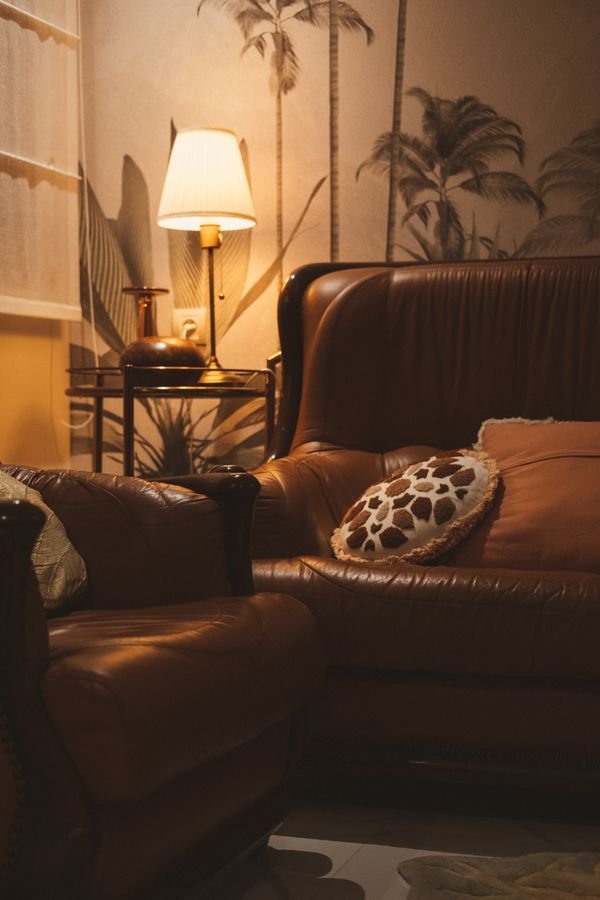
Common Mistakes to Avoid
I’ve walked into hundreds of living rooms, and the same lamp mistakes show up again and again. The good news: every one of these is fixable in an afternoon.
1. Relying on a single overhead light. The boob light or recessed cans alone create harsh downward shadows and zero atmosphere. The fix: turn the overhead off in the evening and let three or four lamps do the work. You’ll never go back.
2. Using cool-white bulbs in the living room. That 5000K “daylight” bulb makes skin look sallow and fabric look flat. The fix: swap every living room bulb to 2700K warm white. It’s the cheapest room makeover that exists.
3. Lamps at the wrong height. A table lamp so tall you see the bare bulb from the sofa, or so short the light dies on the tabletop. The fix: the bottom of the shade should sit at about your eye level when seated — usually a 24- to 30-inch lamp on a standard side table.
4. Every lamp the same height. Three table lamps all at 28 inches looks like a hotel lobby — tidy but lifeless. The fix: vary your heights: a tall arc, a medium table lamp, a low accent glow. Different heights create the depth that makes lighting feel designed.
5. Ignoring the cord situation. A beautiful lamp with its cord stretched across a walkway is a tripping hazard and an eyesore. The fix: plan lamp placement around your outlets before you buy, use cord covers along baseboards, or go cordless where outlets don’t reach.
6. Buying the lamp before measuring the spot. The number one return reason for living room lamps is scale — a floor lamp that overwhelms the corner, a table lamp that eats the whole side table. The fix: measure your table height, your available floor space, and your sofa arm height first. Tape the footprint on the floor with painter’s tape if you’re unsure.
Living Room Lamps at a Glance
| Category | Best Pick | When to Use It |
|---|---|---|
| Floor lamp | Arc or pharmacy lamp | Reading corners and beside sofas where you need real light |
| Table lamp | Linen drum or ceramic base | Both ends of the sofa and any console for balanced glow |
| Accent lamp | Paper globe or rattan | Bookshelves, dark corners, and anywhere that needs atmosphere |
| Statement lamp | Mushroom or crystal | As the room’s conversation piece alongside calmer lamps |
| Small-space lamp | Cordless or clip-on | Spots with no outlet or no surface — shelves, coffee tables, tight corners |
Frequently Asked Questions
How many lamps should a living room have?
Three to four living room lamps suit most standard living rooms: typically two table lamps for balance, one floor lamp for task light, and one accent lamp for atmosphere. Larger or open-plan rooms can take five or more — aim for at least one light source per seating zone rather than a fixed number.
What color temperature is best for living room lamps?
2700K warm white is the sweet spot for living room lamps — it glows amber and cozy, like candlelight. 3000K works if you want things slightly brighter while staying warm. Avoid 4000K+ “daylight” bulbs in the living room; they read blue-white and make the space feel like an office.
How tall should a living room table lamp be?
The bottom of the lampshade should sit roughly at your eye level when you’re seated, which usually means a 24- to 30-inch lamp on a standard-height side table. Too tall and you’ll see the bare bulb from the couch; too short and the light pools on the table instead of reaching you.
Where should I put a floor lamp in the living room?
The highest-impact spots for living room lamps are beside a reading chair (slightly behind the arm, so light falls over your shoulder), in the darkest corner (a torchiere works beautifully here), and behind one end of the sofa. Avoid placing floor lamps where their cords cross walkways or where the shade blocks the TV sightline.
Are LED bulbs good for living room lamps?
Yes — modern LEDs are the best choice for living room lamps. They run cool, last for years, come in true 2700K warm white, and dimmable versions work with most dimmer switches. Just check that the bulb is labeled dimmable if your lamp or switch dims; non-dimmable LEDs will flicker.
Can I mix different lamp styles in one living room?
Absolutely — in fact, you should. The designer look comes from mixing: a modern arc lamp with a traditional ceramic table lamp, for example. The trick is repeating one element across the room — the same warm bulb temperature, a shared metal finish, or similar shade shapes — so the mix feels intentional rather than random.
What is layered lighting and why does it matter?
Layered lighting means combining three types of light: ambient (general glow), task (light for reading and activities), and accent (light that highlights features or creates mood). Rooms with all three layers feel rich and inviting; rooms with only one layer — usually a harsh overhead — feel flat no matter how nice the furniture is.
Should my living room lamps match each other?
Matching pairs work beautifully in symmetrical spots — two identical table lamps at either end of a sofa is a classic for a reason. Beyond that, variety is better: mix floor, table, and accent lamps in complementary (not identical) styles. A room where every lamp matches looks like a showroom; a room with coordinated variety looks like a home.
Final Thoughts
If there’s one thing I want you to take from these 21 living room lamps, it’s this: lighting is not the finishing touch — it’s the foundation. I spent years rearranging furniture trying to fix rooms that were really just under-lit. The evening I finally turned off my overhead light and let four warm lamps do the work, my living room felt like a different house.
You don’t need all 21, and you definitely don’t need them all at once. Start with the biggest gap: no floor lamp? Get the arc or the pharmacy lamp. Dark corners? A torchiere. Flat beige room? One ceramic table lamp in a color you love. Then swap every bulb in your living room lamps to 2700K, put the lamps on dimmers if you can, and watch what happens after sunset.
The best living room lamps aren’t the most expensive ones — they’re the ones that get turned on every single night. Pick the lamp you’ll actually reach for, and your room will thank you daily.

Founder of NestFlavors — sharing tested recipes and honest home ideas, made for real life.