
The average living room has 47 things on the coffee table that don’t belong there. I counted once. It was not my proudest afternoon.
Remotes, chargers, half-read books, the board game nobody put away, three throw blankets — the coffee table is where living rooms go to get messy. A storage coffee table doesn’t just hold your coffee; it swallows the clutter whole and gives you back a room that looks calm.
In this guide I’m sharing 12 storage coffee table ideas across every type — lift-tops, drawers, shelves, ottomans, trunks, and budget hacks — plus how to match the storage type to what you actually need to hide, the sizing rules, and the mistakes that turn a storage coffee table into an expensive junk drawer.

Naudefj, CC BY-SA 3.0 via Wikimedia Commons
What Is a Storage Coffee Table?
A the table is a coffee table with built-in storage — hidden compartments, drawers, lift-top surfaces, open shelves, or a hollow interior — designed to hold living room clutter inside the table itself instead of on top of it. It does everything a regular coffee table does, plus the job of a small cabinet: remotes, chargers, blankets, games, and magazines get a home within arm’s reach.
The storage comes in two philosophies: hidden (lift-tops, drawers, trunks — clutter invisible) and open (shelves, cubbies, baskets — clutter organized but visible). Neither is better; they just serve different households and different tolerance levels for seeing your stuff.
Why You’ll Love a Storage Coffee Table
- It ends the flat-surface pileup. Everything currently stacked on your coffee table gets a designated home inside it — the tabletop stays clear without a daily tidying ritual.
- It’s a cabinet that doesn’t look like one. You gain the storage of a small dresser without adding another piece of furniture to the room.
- Small rooms gain the most. In apartments and family rooms, a storage coffee table replaces a side table’s worth of clutter without using a single extra square foot.
- It adapts to real life. Lift-tops become work-from-sofa desks; ottomans become extra seating; trunks become blanket chests. One piece, multiple jobs.
- Guests see calm, you keep convenience. Everything stays within arm’s reach but out of sight — the rare furniture win that’s both tidy and practical.
Storage Coffee Tables with Hidden Compartments
Hidden storage is for people who want the clutter gone, not organized. These four storage table types conceal everything behind lids, drawers, and tops.
1. The Lift-Top Storage Coffee Table
The lift-top is the most popular storage table for a reason: the top surface rises and angles toward you on a spring mechanism, revealing a deep compartment underneath — and the raised top becomes a desk-height surface for laptops, dinner, or puzzles. It’s a coffee table, a storage box, and a work surface in one.
Check the mechanism before you buy: it should lift smoothly with one hand and lock without slamming. Cheap gas springs fail within a year, and a lift-top that won’t stay up is just a heavy lid. Try it: measure your seated elbow height — the raised top should land near it, or laptop sessions get uncomfortable fast.
2. The Drawer Storage Coffee Table
Drawers are the most civilized storage coffee table option: everything categorized, nothing stacked, no digging. A row of shallow drawers holds remotes, chargers, coasters, and reading glasses exactly where you sit — the small stuff that otherwise migrates across the entire living room.
Look for drawers on real glides, not just wooden runners — cheap ones stick within a year and you’ll curse them daily. Two wide drawers beat four tiny ones for actual usefulness. Try it: assign each drawer a category (tech, reading, games) on day one — unassigned drawers become junk drawers by week three.
3. The Flip-Top Storage Coffee Table
A flip-top (or pop-up) storage table has hinged sections that flip open from either side, revealing a huge divided compartment — some hold over 50 gallons. Farmhouse versions with barn-door styling are everywhere, and the flip mechanism is simpler and sturdier than a lift-top spring.
The trade-off is clearance: you need room above the table to flip the lids, so keep the tabletop styling minimal and liftable. Angle-controlled hinges that stop at 90 degrees are worth seeking out. Try it: store bulky items here — spare throw blankets, board games, the guest bedding — the deep well swallows what drawers can’t.
4. The Storage Ottoman Coffee Table
A storage ottoman as a coffee table is the softest option: lift the upholstered lid and there’s room for blankets, pillows, and toys inside. Add a rigid tray on top and you have a stable surface for drinks; remove the tray and it’s a footrest or extra seat for guests. No sharp corners, no hard edges — the family-room favorite.
Choose a firm lid that sits flush when closed (a wobbling lid drives you mad) and safety hinges if you have kids. Size it like a coffee table: roughly two-thirds the sofa length. Try it: use a deep-rimmed tray on top so drinks can’t slide off the upholstered edge — the tray lifts off in one move for feet-up movie night.
Storage Coffee Table Ideas with Open Storage
Open storage is for people who’d rather see their stuff organized than hide it. These four the table ideas keep things visible, reachable, and — with a little discipline — good-looking.
5. The Open-Shelf Storage Coffee Table
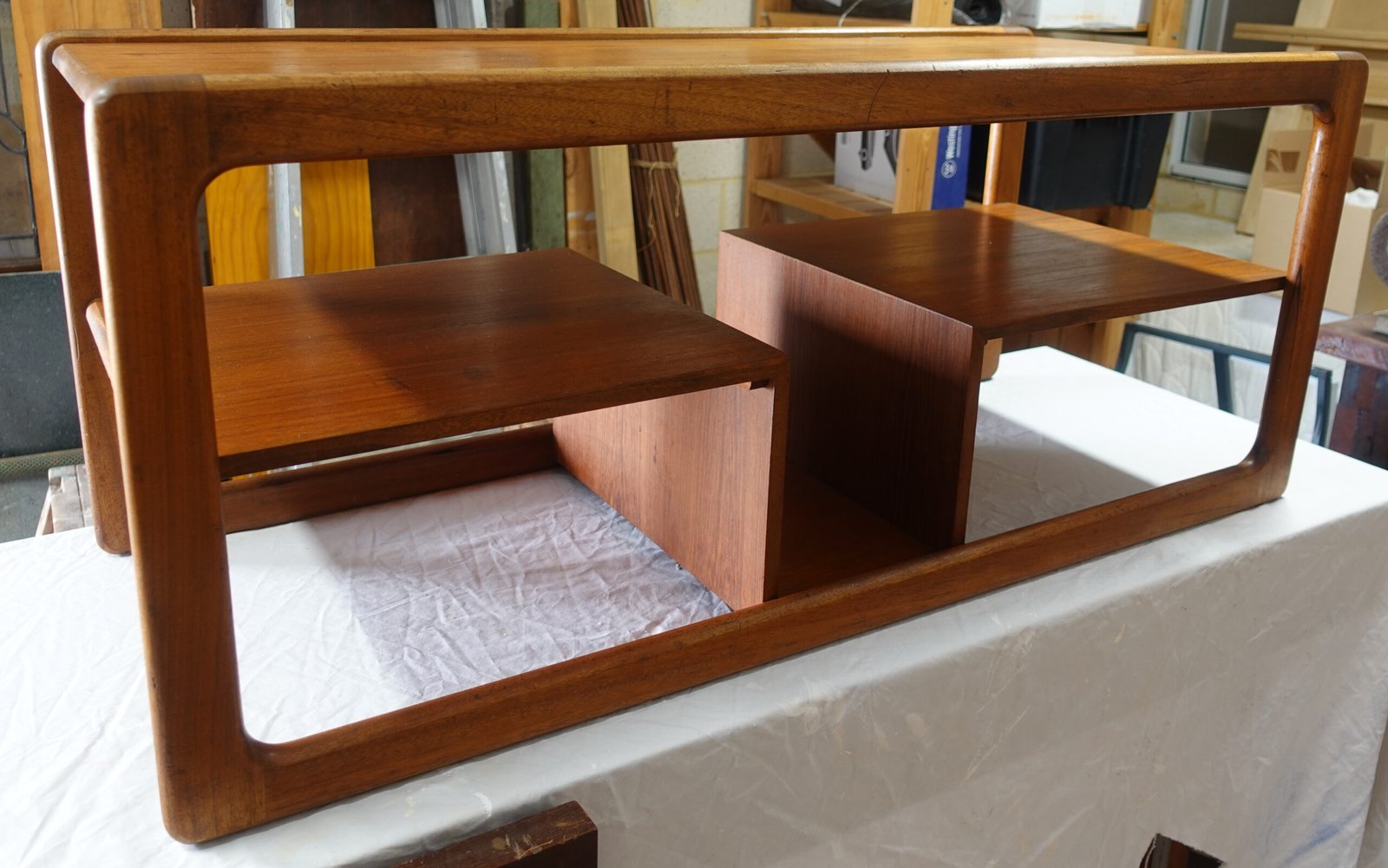
A lower open shelf doubles your table’s surface: books and magazines below, drinks and decor above. It’s the simplest storage coffee table there is — no mechanisms, nothing to break — and it suits every style from mid-century teak to modern metal frames.
The shelf only works if you curate it: a row of books, one basket, done. An open shelf crammed with random objects looks worse than no storage at all. Try it: use the shelf for the beautiful stuff (books, a lidded box) and hide the ugly stuff elsewhere — open storage is display, not a junk drawer.
Samwilson, CC BY-SA 4.0 via Wikimedia Commons
6. The Basket-and-Cubby Coffee Table
Cubbies fitted with baskets are the storage table for the organizationally ambitious: each basket is a category — one for remotes and chargers, one for the kids’ coloring supplies, one for the dog’s toys. Pull out the basket, use it, slide it back. The system maintains itself.
Measure the cubbies before buying baskets; “standard” cube sizes vary by brand and a half-inch gap looks sloppy. Woven baskets add texture; fabric cubes look cleaner. Try it: label the baskets for the first month — once the household learns the system, the labels can come off.
7. The Trunk or Chest Coffee Table
A wooden trunk or steamer chest as a coffee table is the highest-capacity a storage table on this list — it holds spare bedding, seasonal decor, or an entire board game collection. Vintage trunks add character no new furniture can fake, and new ones come with safety hinges so the lid doesn’t slam.
Put a tray on top so you still have a stable surface for drinks, and check that the lid opens without hitting the sofa (you need clearance behind it). Keep bulky, infrequently-used items inside — this isn’t the spot for the daily remote. Try it: a trunk coffee table plus a floor cushion turns the living room into guest-ready sleeping space in minutes.
8. The Nesting Storage Coffee Tables
Two or three tables that tuck under each other give you storage through flexibility: nested, they’re one compact unit; pulled apart, they’re extra surfaces exactly where you need them. Some nesting sets include a smaller table with its own shelf or drawer, multiplying the storage.
Buy a set where the smallest table is genuinely usable — some include a tiny third piece that’s basically decorative. Mixed materials (wood and metal) keep the nested stack interesting. Try it: separate the set for gatherings — one as the coffee table, one as a drink station — then nest them back when the room needs to breathe.
Small-Space & Budget Storage Coffee Table Ideas
Tight rooms and tight budgets need storage the most. These four storage coffee table ideas deliver it without the footprint or the price tag.
9. The Round Storage Drum
A round drum with a lift-off lid or hinged top is the small-room storage table: no corners to bruise shins on, one clean shape from the outside, and a surprising amount of space inside for throws, chargers, and the remote graveyard. Upholstered versions double as extra seating.
Confirm the lid sits flush — a lid that rocks or gaps will annoy you daily. Round drums suit sectionals and conversation pits where a rectangular table would fight the layout. Try it: a drum in a textured fabric (bouclé, woven) adds the softness small rooms need while hiding a multitude of clutter.
10. The Cube Storage Coffee Table
Four cube shelves pushed together — or a single cube unit laid on its side — make an instant the table for under $100. Add casters and it rolls; add a cushion on top and it’s seating; add baskets and it’s organized. This is the renter’s storage table: cheap, modular, and it moves with you.
Anchor cube units to each other (not the wall, since it’s a rental) with brackets so they don’t drift apart. A wood-grain or white finish looks intentional; raw particle board does not. Try it: top the cubes with a cut-to-size wood board for a finished surface that lifts off when you need the cubes elsewhere.
11. The DIY Storage Coffee Table Upgrade
Already own a coffee table? Add storage to it: screw casters underneath and slide flat bins below, add a lower shelf with brackets, or fit baskets under an open frame. A $30 hardware-store run turns a plain table into a storage coffee table without buying new furniture.
Measure the clearance under your table first — you need at least 6 inches for useful bins. Felt pads on bin bottoms protect floors, and matching bins (not a random assortment) keep the hack looking deliberate. Try it: add a shelf 4 inches off the floor — high enough to clean under, low enough to hold real stuff.
12. The Thrifted Storage Coffee Table
Thrift stores are full of this pieces with better bones than new ones at triple the price: solid-wood drawer tables, vintage chests, old library tables with shelves. The storage mechanisms on old pieces — dovetailed drawers, real hinges — were built to last in a way flat-pack hardware isn’t.
Test every moving part before you buy: drawers should glide, lids should hold, hinges shouldn’t squeak (or should squeak charmingly — your call). A fresh coat of paint unifies any mismatched find. Try it: look specifically for old TV cabinets and record cabinets — they’re the perfect height and depth for coffee-table conversion.
How to Choose the Right Storage Coffee Table
Match the storage type to what you actually need to hide. Run through this before you shop:
- Daily small stuff (remotes, chargers, glasses): drawers or a lift-top compartment. You need divided, reachable storage — not a deep well you’ll dig through.
- Blankets and pillows: storage ottoman, trunk, or flip-top. You need volume, and soft-sided storage keeps bulky textiles compressed.
- Books and magazines: open shelves or cubbies. You want to see the spines — hidden storage just means forgotten books.
- Work-from-sofa: lift-top, full stop. Nothing else gives you a desk-height surface exactly where you sit.
- Kids’ toys: ottoman or trunk with safety hinges. One-lid cleanup (“everything in the box!”) is the only toy system that survives contact with children.
- Size it right: two-thirds the sofa length, 14 to 18 inches from the sofa, 16 to 18 inches tall (match your seat height). Storage doesn’t excuse wrong proportions.
- Check the mechanism in person if you can: lift the lift-top, slide the drawers, open the trunk. If it feels flimsy in the store, it’ll feel broken in six months.
Styling a Storage Coffee Table So It Doesn’t Look Bulky
A storage tables have one visual risk: they can read heavy. More mass, more function, more visual weight. Here’s how to keep yours looking like furniture instead of a filing cabinet:
- Raise it visually. Tables on legs or with a recessed base look lighter than blocky pieces that sit flat on the floor. If yours is a solid block, a light-colored rug underneath creates separation from the floor.
- Keep the top 50% clear. Storage tables invite pileups because the storage is right there. Resist it: one tray, two or three objects, and breathing room. The clear surface is what makes the piece read as a coffee table rather than a storage unit.
- Style the open shelves lightly. If your table has open storage, treat it like a bookshelf, not a closet. Books stacked horizontally, one basket, one object — and leave gaps. A crammed shelf makes the whole table look heavier.
- Match the finish to the room’s weight. A chunky storage trunk works in a room with other substantial pieces; in a light, airy room, choose a lift-top or drawer table with slim legs instead. Visual weight should be distributed, not concentrated in one dark block.
- Let the hardware show (or hide it). Beautiful hinges, leather pulls, or brass latches are worth displaying — they’re the jewelry. Cheap plastic handles are worth replacing with $3 bin pulls from the hardware store; it’s the highest-ROI upgrade in this entire guide.
Common Mistakes to Avoid
- Buying storage you can’t reach easily. A deep trunk for daily remotes means digging every evening. The fix: daily items in drawers or lift-tops; deep wells for bulky, occasional items only.
- Letting hidden storage become a junk drawer. Out of sight becomes out of mind, and the compartment fills with mystery cables. The fix: assign categories on day one and do a 10-minute purge monthly.
- Choosing a lift-top with a weak mechanism. Cheap springs sag, slam, or fail — and a broken lift-top is worse than no storage. The fix: test the mechanism in person; it should lift with one hand and hold without drifting.
- Forgetting lid clearance. Trunk and flip-top lids need room to open — against a sofa or under a shelf, they won’t. The fix: measure the open-lid arc before placing the table, not after.
- Overloading open shelves. An open shelf crammed with clutter looks worse than no storage at all. The fix: the 70% rule — fill shelves 70% full max, with breathing room between objects.
- Ignoring the weight. Storage tables full of stuff get heavy — a loaded trunk can weigh 80+ pounds. The fix: if you rearrange often, choose drawers or ottomans over trunks, or add casters.
Storage Coffee Table at a Glance
| Type | Best For | Watch Out For |
|---|---|---|
| Lift-top | Work-from-sofa; daily small items | Mechanism quality — test before buying |
| Drawers | Remotes, chargers, glasses; categorized storage | Cheap glides stick — look for real drawer glides |
| Flip-top | Trunk / chest | Needs lid clearance above the table |
| Storage ottoman | Families; extra seating + soft edges | Lid must sit flush; safety hinges for kids |
| Open shelf | Books and display; nothing to break | Curate it — clutter on display looks worse |
| Cubbies + baskets | Category-based organizing | Measure cubbies before buying baskets |
| Trunk / chest | Maximum capacity; guest bedding | Heavy when full; needs rear clearance |
| Nesting tables | Flexible surfaces for gatherings | Smallest table should be genuinely usable |
Storage Coffee Table FAQ
What is the best type of storage coffee table?
It depends on what you’re hiding: lift-tops for work-from-sofa and daily items, drawers for small categorized stuff, ottomans or trunks for blankets and toys, open shelves for books. The “best” storage coffee table is the one whose storage type matches your actual clutter — not the one with the most compartments.
Are lift-top coffee tables worth it?
Yes, if you’ll use the raised surface — they’re genuinely great as laptop desks and dining surfaces. But the mechanism is everything: test that it lifts with one hand, locks securely, and doesn’t drift down. A cheap lift-top mechanism fails within a year and ruins the whole piece.
How much storage can a coffee table realistically hold?
More than you’d think: a flip-top trunk style can hold 50+ gallons (spare bedding, board games), a storage ottoman fits several throw blankets, and drawer models handle all the small daily items. Measure your actual clutter first — most households overestimate what they need to store daily.
Can a storage table work in a small living room?
It’s the best choice for small rooms — you gain cabinet-level storage without adding furniture. Pick a round drum or nesting set for tight layouts (no corners, flexible footprint), and keep the storage type simple: drawers or a lift-top, not a deep trunk you’ll struggle to open.
How do I keep a storage table organized?
Assign every compartment a category on day one — unassigned space becomes a junk drawer by week three. Then do a 10-minute purge monthly: if you haven’t touched it in a season, it doesn’t live in the coffee table. The system only works if the categories match your real habits.
Is an ottoman or a table better for storage?
Ottomans win for soft bulky items (blankets, pillows, toys) and households with kids — no sharp corners, plus extra seating. Tables with drawers or lift-tops win for hard daily items (remotes, chargers, laptops) that need divided, reachable storage. Many living rooms end up happiest with one of each.
What should I not store in a coffee table?
Anything you need in a hurry (keys, wallet — they’ll vanish into the depths), anything heavy you’ll lift daily, food (crumbs + upholstery = regret), and important documents (too easy to forget they’re in there). The coffee table is for living-room life, not life administration.
How do you style a storage table without blocking the storage?
Keep the tabletop styling liftable: one tray holding the decor, so you clear the surface in a single move before opening the lid. For lift-tops and flip-tops, avoid tall heavy objects entirely — style low and light, and let the mechanism do its job.
Final Thoughts
A storage coffee table is the rare furniture purchase that makes your living room both calmer and more functional — but only if the storage type matches your real clutter. Drawers for the daily small stuff, a lift-top if you work from the sofa, an ottoman or trunk for blankets and toys. Pick the right type, assign every compartment a job on day one, and enjoy the strange luxury of a coffee table with nothing on it.
For background on the coffee table’s evolution from Victorian tea tables to today’s storage designs, see Wikipedia’s overview of the coffee table.

Founder of NestFlavors — sharing tested recipes and honest home ideas, made for real life.