
That one empty corner in your living room? The one you’ve been staring at for six months? A single modern accent chair fixes it — and honestly, it’s the highest-impact furniture purchase you can make under $500.
I learned this the hard way in my first apartment. I bought the sofa, the coffee table, the rug — and the room still looked half-finished. Then I dragged a $180 mid-century-style chair into the corner by the window, threw a lumbar pillow on it, and suddenly the whole room looked intentional. Guests gravitated to it. My reading habit tripled. It became the seat everyone argued over.
This guide to modern accent chairs gives you the full playbook: 15 chair styles, placement ideas, and styling rules, plus the buyer’s checklist I wish someone had handed me before I bought my first chair (wrong size, wrong fabric — I kept it anyway because returns felt like defeat). Real dimensions in inches, real fabric advice, and the mistakes that make a great chair look cheap.
One more thing before we start: this isn’t a product roundup. I’m not going to rank twelve chairs and link you to them. The internet has enough of those. This is the guide for the decisions around the chair — which style suits your room, what size actually fits, where it goes, and how to style it so it looks like it cost three times what you paid. The chair itself is the easy part once you know this stuff.
What Are Modern Accent Chairs?
Modern accent chairs are single statement seats with clean lines and contemporary styling — barrel, slipper, swivel, or lounge silhouettes — used to add extra seating, color, and personality to a room without matching the sofa.
Unlike a sofa, an accent chair isn’t trying to seat the whole family. Its job is smaller and harder: fill an awkward corner, complete a conversation grouping, or give one person the best seat in the house. The “modern” part matters — it means simple silhouettes, tapered or metal legs, and upholstery that reads current (bouclé, performance velvet, linen-look weaves) rather than fussy traditional detail.
Price-wise, expect to spend $150–$600 for a quality modern accent chair, with budget options under $250 and designer pieces climbing past $1,000. Size-wise, most run 28–34 inches wide — roughly the footprint of a large armchair, but visually lighter because modern styles favor raised legs and open bases that let the floor show through.
Why You’ll Love Modern Accent Chairs
- The cheapest room transformation. One chair, one pillow, one small rug — and a dead corner becomes a destination. Nothing else in furniture gives you this much visual change per dollar.
- Extra seating that doesn’t eat the room. A 30-inch accent chair seats one adult comfortably in the footprint of a large ottoman. Try getting that from a second sofa.
- Your style, concentrated. The chair is where you take the risk your sofa can’t — the rust velvet, the bold pattern, the sculptural shape. If the room feels bland, the accent chair is the cure.
- Renter-friendly by nature. No mounting, no drilling, no landlord negotiations. It arrives, you place it, done. When you move, it moves.
- A reading habit waiting to happen. A comfortable chair in good light with a side table for coffee is the difference between “I should read more” and actually reading.

6 Modern Accent Chair Styles to Know
Before you shop for modern accent chairs, learn the six silhouettes that dominate the market. Knowing the names changes everything — you stop scrolling aimlessly and start searching for the exact shape your room needs.
1. The Mid-Century Lounge Chair
Low-slung, angled back, tapered wooden legs — the silhouette borrowed from 1950s Danish design that still anchors half the living rooms on the internet. Typical size: 28–30 inches wide, 28–32 deep, with a seat height around 16–17 inches (lower than most modern sofas).
This is the safest first accent chair you can buy. It works with nearly every style except ultra-traditional, it photographs well, and budget versions at $150–$300 are everywhere. The trade-off: the low seat height can be hard on knees for older sitters, and cheap versions have a seat depth (around 20 inches) that swallows shorter legs. Sit-test the seat height against your sofa — if your sofa seat is 18 inches and the chair is 16, the mismatch feels odd in conversation.
Try it: if you own nothing yet, start here. A mid-century lounge chair in a neutral performance fabric is the one accent chair that never looks like a mistake.
2. The Barrel Chair
A curved back that wraps around you like the inside of a barrel — cozy, enveloping, and brilliant for small rooms because the rounded shape has no sharp visual corners. Most barrel chairs run 28–32 inches wide and work beautifully in pairs.
What I love about barrel chairs: they angle naturally toward conversation. Put two facing each other across a small side table and you have an instant coffee-chat setup in a 5×5 foot zone. They’re also the most forgiving style for petite sitters, since the wraparound back supports shorter torsos. Watch the seat depth, though — some run 23+ inches deep, which pushes shorter legs out at an awkward angle.
Try it: barrel chairs are the answer when your room needs two chairs but a pair of bulky armchairs would overwhelm it. The curved backs read smaller than they measure.
3. The Slipper Chair
Armless, low to the ground, and slim — the slipper chair is the minimalist’s accent chair. At 24–28 inches wide with no arms to add bulk, it’s the only accent chair that genuinely disappears into a tight space.
Slipper chairs shine in bedrooms (a dressing chair that doesn’t scream “office”), small living rooms, and as dining table end chairs. The lack of arms means easy in-and-out, which older guests appreciate. The honest downside: without arms, long reading sessions get tiring — there’s nowhere to rest your elbows. Treat the slipper as a beautiful perch, not a lounge seat.
Try it: need a chair for a corner that’s only 26 inches wide? The slipper chair is the only style that fits without looking squeezed in.
4. The Swivel Chair
A modern accent chair on a 360-degree swivel base — the multitasker of the group. Swivel chairs let one seat face the TV, the conversation, or the window depending on the moment, which makes them gold in open-plan rooms where furniture serves double duty.
Practical notes from real ownership: the swivel base adds 2–3 inches of height, so seat heights run 18–20 inches — closer to dining height. Leave at least 3 inches of clearance on all sides for rotation, and never place one where the spinning back will knock a side table (ask me how I learned this). Metal disc bases are sturdier than four-star spider bases at budget prices. Budget $200–$700 for a decent one.
Try it: in an open-plan living room, one swivel chair bridges the sofa zone and the dining zone — spin toward dinner conversation, spin back for the movie.
5. The Wingback Chair
The classic high-backed silhouette, modernized — slimmer wings, tapered legs, current fabrics instead of chintz. The wings create a sense of enclosure that makes reading feel deliberate, and the tall back (typically 38–42 inches overall height) gives the chair real presence.
Wingbacks are the best accent chairs for actual reading because the high back supports your head during long sessions. They also photograph as “expensive” even at $250. The catch: they’re visually heavy. One wingback in a small room is a statement; two can dominate. And the firm upright posture isn’t for sprawlers — if you sit cross-legged, look at barrel or lounge styles instead.
Try it: pair a wingback with a floor lamp and a small side table in any dead corner and you have a reading nook in under an hour — no other furniture required.
6. The Bouclé Accent Chair
Bouclé — the nubby, looped wool-look textile — turned the humble accent chair into a design-magazine staple. The fabric’s texture catches light beautifully and reads soft and high-end even on a $200 frame.
Buy with eyes open: real bouclé snags. Cat claws and bouclé are natural enemies, and the loops trap pet hair like velcro. Performance bouclé blends (polyester-based) resist snagging far better than wool or cotton bouclé — check the fabric content, not just the look. Also note that light-colored bouclé shows denim transfer, so medium tones (oatmeal, greige, camel) are the practical picks.
Try it: bouclé is a texture play, not a color play — buy it in a quiet neutral and let the texture do the talking. Loud color plus loud texture is too much.
The Buyer’s Checklist: Size, Comfort & Materials
Styles are the fun part; this checklist is the part that saves you from a return. Run through it before you click buy on your modern accent chair.
Measure first, shop second. Tape the chair’s footprint on your floor with painter’s tape — width by depth — and live with the outline for 48 hours. You’ll discover walkway collisions and door swings that no product photo reveals. Leave 18 inches minimum for walkways (24–30 for main paths) and 14–18 inches between the chair and the coffee table.
Match the seat height to the room. Standard accent chair seat height runs 16–19 inches. Your chair should sit within 2 inches of your sofa’s seat height, or conversation feels lopsided — one person towering, one sinking. Swivel chairs run taller (18–20 inches); mid-century loungers run lower (16–17 inches).
Check the seat depth for your body. Comfortable seat depth is 20–22 inches for average adults. Under 5’5″? Look for 19–20 inches so your back actually reaches the backrest. Over 6′? You want 22+ inches or your knees hang off like a kid at the grown-ups’ table.
Read the frame and weight capacity. Solid wood or rubberwood frames with corner blocking last; particle-board frames don’t survive a second move. Typical weight capacity is 250–300 lbs; sturdier chairs rate 350–400+. If the listing hides the capacity, that’s your answer about quality.
Choose fabric for your life, not the photo. The double-rub count (Wyzenbeek test) tells you durability: 15,000+ double rubs handles normal residential use; 30,000+ survives kids and daily lounging. Households with pets: performance fabrics or leather — velvet shows every hair, bouclé snags on claws, and light linen shows everything. Households with kids: washable slipcovers or performance weaves in medium tones.
Swivel or stationary? Swivel if the room is open-plan or the chair serves two zones; stationary if you want the classic look, a lower price, or simpler assembly. There’s no wrong answer — just match it to the room’s job.
Assembly reality check. Most budget accent chairs need 15–30 minutes with an Allen key; some arrive tool-free. Read three recent reviews specifically mentioning assembly — misaligned screw holes are the most common complaint at every price tier, and knowing in advance saves the Sunday-afternoon meltdown.
Budget honestly. Decent modern accent chairs cluster in three tiers: $100–$250 (budget, fine for low-use spots), $250–$600 (the sweet spot — solid frames, better foam), $600–$1,500+ (designer or premium construction). The $250–$400 range is where quality jumps most; below $150, check the frame material twice.
Consider secondhand. Estate sales, Facebook Marketplace, and thrift stores are full of $40 solid-wood-frame accent chairs that need only new upholstery or a slipcover. My inspection checklist: sit in it (no wobble), check the frame joints (no cracks), smell the cushion (smoke doesn’t leave), and look under the seat (springs intact, no sagging webbing). Reupholstering a $50 chair costs $200–$400 — still less than new, with better bones.
Do the sit test properly. If you’re buying in person, don’t do the polite two-second perch. Sit like you’ll actually live in it: lean back, cross your legs, curl a foot under you, rest your head. Stay five full minutes.
Check three things — do your feet touch the floor flat (seat too high otherwise), does the backrest meet your lower back without a gap (lumbar support), and do the armrests hit at a height where your shoulders drop instead of hunch (around 24–27 inches from the floor for most adults)? Buying online? Replicate it with the dimensions: compare the seat height, depth, and backrest angle against a chair you already own and like. Numbers don’t lie the way product photos do.
5 Placement Ideas That Work in Real Rooms
Your modern accent chair is bought. Now the part most guides skip: exactly where it goes, with the inches that make it work.
7. The Living Room Pair
Flank your sofa with two matching accent chairs, angled 10–20 degrees inward, and the room instantly looks designed. Keep 8–10 feet maximum between facing seats — beyond that, conversation strains and people stop talking to each other. Each chair needs about 30 inches of width plus 3–4 inches of breathing room on each side.
This is the classic for a reason: symmetry calms a room. But “matching” doesn’t mean identical — two barrel chairs in the same fabric, or the same chair in two colors from your palette, both work. What matters is equal visual weight on both sides.
Try it: before buying the pair, place your dining chairs in the candidate spots for a weekend. You’ll feel immediately whether the spacing and angles work.
8. The Reading Nook Corner
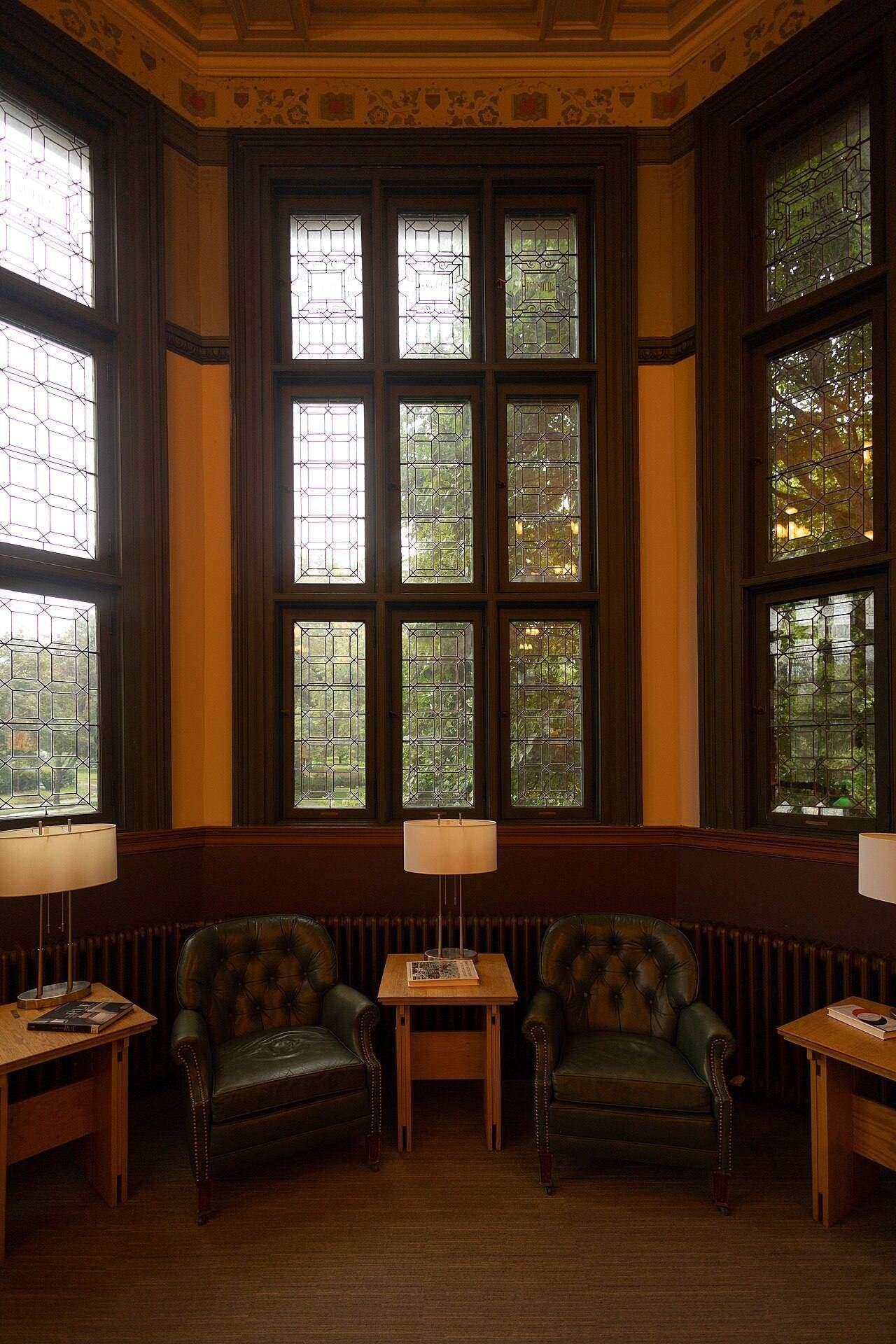
Claim any quiet 4×4 foot corner: accent chair, small side table (16–20 inches wide) within arm’s reach, and a floor lamp with the shade bottom at your seated eye level (about 42–48 inches from the floor). That’s the whole formula. Add a throw blanket and you’re done.
Light placement matters more than people think. The lamp should sit slightly behind and to the side of your reading shoulder — not directly overhead (glare) and not across the room (eye strain). If the corner has a window, angle the chair to catch daylight from the side, never with your back to the window (your shadow falls on the page).
Try it: test the corner with existing furniture first. If you naturally drift there with a book for three evenings in a row, the nook earns the new chair.
9. The Bedroom Corner Chair
A bedroom chair is a different animal from a living room chair — it’s for the five minutes of pulling on shoes, the novel before sleep, the robe draped over the back. A slipper chair or slim barrel chair (under 30 inches wide) fits corners that can’t take a full armchair.
Keep it 3+ feet from the bed so the room doesn’t feel crowded, and skip the side table if space is tight — a wall-mounted mini shelf at 24 inches high holds the book and water glass. One honest warning: an unused bedroom chair becomes a clothes rack within a week. If you won’t sit in it, don’t buy it — the “valet chair” is a myth we tell ourselves.
Try it: if your bedroom is under 120 square feet, a slipper chair is the only style I’d attempt. Anything with arms will crowd the walking path.
10. The Home Office Guest Seat
A small modern accent chair in the home office does double duty: guest seating for calls and a thinking spot away from the desk. Choose a slipper or armless style under 28 inches wide so it tucks beside a bookcase or under a console when not in use.
The ergonomic bar is lower here than for a desk chair — it’s a perch, not an 8-hour seat — but still check that the seat height (17–19 inches) lets a guest sit without feeling like they’re sinking into a beanbag during your Zoom call. Performance fabric in a dark or medium tone hides the wear of daily use.
Try it: position it at a 45-degree angle to your desk, not facing it directly — it reads as a lounge corner, not an interrogation setup.
11. The Dining Table End Chair
Two accent chairs at the heads of a dining table — mixing with simpler side chairs — is the designer move that makes a basic table look custom. The math that matters: standard dining tables are 30 inches high with an apron around 25–26 inches; your chair seat must be 17–19 inches so thighs clear the apron comfortably.
Armless styles (slipper chairs, slim barrel chairs) work best here — arms collide with the table edge and prevent tucking in. Upholstery should be wipeable; dining chairs take food abuse that living room chairs never see. This placement also stretches your furniture budget: the “dining set” becomes two investments instead of six matching chairs.
Try it: measure your table apron height before shopping. A gorgeous 20-inch-seat lounge chair that doesn’t fit under the table is just an expensive mistake.
4 Styling Rules That Make Any Chair Look Expensive
A $200 chair styled right beats a $600 chair plopped on bare floor. These four rules are the difference.
12. Anchor It With a Rug
A chair floating on bare floor looks temporary; the same chair with its front legs on a rug looks placed. Minimum rule: the rug extends at least 6 inches beyond the chair on each side, with the front legs fully on the rug. For a reading nook, a 4×6 or 5×7 rug under chair + side table is the standard.
Rug pile matters with chairs: low-pile or flat-weave rugs let chair legs sit stable; thick shag makes the chair wobble and traps the legs. And the rug doesn’t need to be expensive — a $60 flat-weave does the anchoring job as well as a $600 wool rug. What matters is size and position, not price tag.
Try it: if a full rug isn’t in the budget, a 3×5 flat-weave just under the chair’s front half still grounds it. Partial anchoring beats no anchoring.
13. Build the Side-Table-and-Lamp Triangle
The most useful styling formula in furniture: chair + side table + lamp, arranged in a tight triangle. The side table should be 16–22 inches wide and sit within arm’s reach — you should be able to set down a coffee without standing. Table height should land within 2–3 inches of the chair’s armrest (typically 22–26 inches total).
The lamp follows one rule: the bottom of the shade at your seated eye level, roughly 42–48 inches off the floor for a floor lamp. Table lamp on the side table works too — same eye-level math. This triangle is what turns “a chair in a corner” into “a reading nook,” and it works in living rooms, bedrooms, and offices identically.
Try it: sit in the chair and mime setting down a mug. If you have to lean or stretch, the table is wrong — move it before you buy anything new.
14. Dress It With Pillows and Throws
One lumbar pillow (12×20 or 14×22 inches) and one throw blanket — that’s the complete recipe. The lumbar size matters: a standard 18-inch square pillow overwhelms a 30-inch chair and pushes you forward off the backrest. Lumbar proportions support your lower back and look tailored.
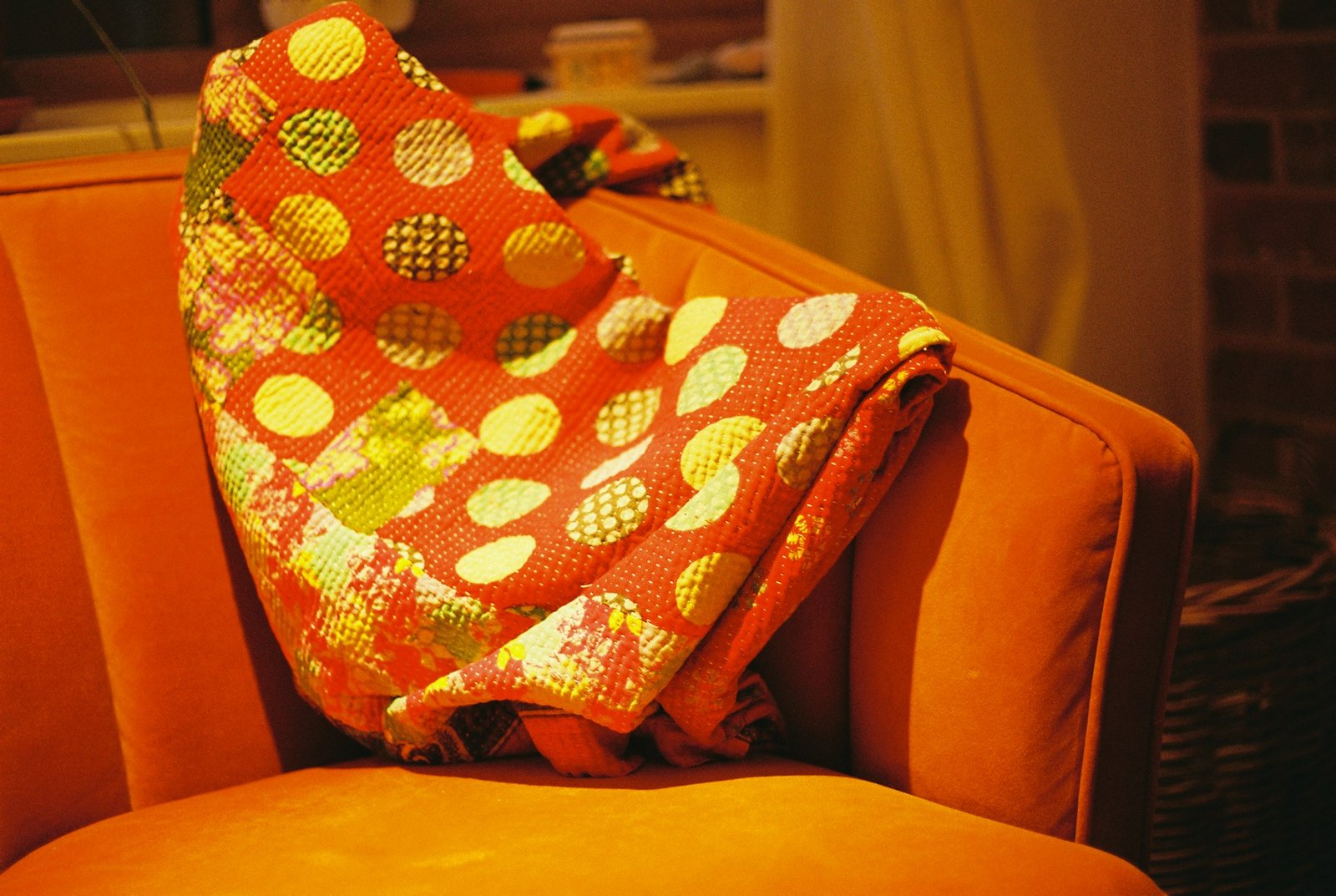
For the throw, drape — don’t fold. A throw folded into a perfect rectangle looks staged; one casually draped over an arm or the seat back looks lived-in. Texture contrast is the goal: nubby throw on smooth velvet, chunky knit on flat linen. And keep the palette to two colors maximum — the chair, the pillow, and the throw should share one color story, not audition three.
Try it: the pillow goes in front, slightly off-center — dead-center symmetry reads stiff. Offset it two inches left and watch the chair relax.
15. Pick a Color Story
The question everyone asks: should the accent chair match the sofa? No — it should relate to the room. Three approaches that always work: pull a secondary color from your rug or art (the chair echoes something already there), go tonal (same color family as the sofa, two shades deeper or lighter), or choose deliberate contrast (rust chair in a blue-gray room, emerald in a neutral room).
The 60-30-10 rule keeps it safe: 60% dominant (walls, sofa), 30% secondary (rug, curtains), 10% accent — that’s your chair’s job. When the chair is the 10%, it can be bold. When everything else is already loud, make the chair the quiet piece. The mistake is a bold chair in a bold room with no plan — that’s not eclectic, that’s noise.
Try it: photograph your room, then hold fabric swatches up to the photo. The camera reveals clashes your eyes forgive in person — if the swatch fights the photo, it’ll fight the room.
Try it: if a full rug isn’t in the budget, a 3×5 flat-weave just under the chair’s front half still grounds it. Partial anchoring beats no anchoring.
Modern Accent Chairs on Any Budget
Let’s talk money honestly, because “budget-friendly” means wildly different things depending on who’s writing. Modern accent chairs cluster in three real tiers, and each one has a different value proposition.
Under $250 — the starter tier. This is the land of flat-pack frames, polyester upholstery, and 20-minute Allen-key assembly. Perfectly fine for a bedroom corner or a low-use reading spot. What to watch: check that the frame is solid wood or metal (not particle board), and read reviews specifically about wobble after three months. My first accent chair lived in this tier and lasted four years — because it sat in a corner and got gentle use. Put a $180 chair in the main TV-watching rotation and you’ll replace it in two.
$250–$600 — the sweet spot. This is where quality jumps hardest. You get kiln-dried hardwood or rubberwood frames, higher-density foam that doesn’t bottom out, better fabric (often with real double-rub ratings), and weight capacities in the 350+ lb range. If the chair will be sat in daily, this is the tier to target. Most of the best-reviewed chairs from the big roundup sites live here, and honestly, the difference between a $300 chair and a $550 chair is smaller than the difference between $150 and $300.
$600–$1,500+ — the investment tier. Designer silhouettes, premium fabrics (real bouclé, top-grain leather), and construction meant to survive moves and decades. Worth it for the chair you’ll keep through three apartments — the one with the perfect proportions that everything else gets arranged around. Not worth it as a trend experiment; don’t spend four figures on a style you’re not sure you’ll love in five years.
Where to buy: Wayfair and Amazon dominate the budget tier (filter by 4+ stars with 500+ reviews, and read the 3-star reviews — they’re the honest ones). Article, West Elm, and Joybird own the mid-tier with better design. For investment pieces, Design Within Reach, Herman Miller, and Knoll for licensed originals; Chairish and 1stDibs for vintage.
And never skip Facebook Marketplace and estate sales — a $50 solid-frame chair plus a $250 reupholster job beats most $400 new chairs on comfort and character.
Try it: set your budget, then shop 10% under it. The leftover covers the lumbar pillow, the throw, and the side table — the styling pieces that make the chair look twice its price.
Common Mistakes to Avoid
1. Buying before measuring. The number one accent chair regret. That 34-inch beauty doesn’t fit through your 30-inch doorway, or it swallows the 8-foot wall. Tape the footprint on the floor and measure every doorway on the delivery path. This mistake costs return shipping — or a chair you resent.
2. Matching the sofa exactly. A chair in the identical fabric as the sofa doesn’t look coordinated; it looks like the showroom set nobody bought the rest of. Complement, don’t clone — same color family, different texture, or a pulled accent color.
3. Ignoring seat height. A 16-inch lounge chair next to a 19-inch sofa makes one person feel like a child at the table. Keep seat heights within 2 inches of each other in conversation groupings.
4. Floating it too far away. A chair 12 feet from the sofa isn’t part of the conversation — it’s in exile. The 8–10 foot maximum between facing seats is real; beyond it, people stop talking across the gap.
5. Choosing fabric for the photo, not the life. White bouclé with two toddlers and a husky is a cry for help. Performance fabric, leather, or washable covers for real life; the delicate stuff for low-traffic corners only.
6. Skipping the rug. Bare floor under the chair makes even a beautiful piece look like it’s waiting to be moved. Front legs on a rug, always — it’s the cheapest styling upgrade in this entire guide.
7. Forgetting the side table. A chair with nowhere to set a drink gets used half as much. The chair-table-lamp triangle isn’t decoration; it’s what makes the seat functional.
8. Ignoring the back of the chair. Most accent chairs float in the room — which means you see the back as often as the front. Some budget chairs have unfinished backs: exposed staples, a different fabric, or a visible frame. Before buying, check the product photos for a rear view. If the listing hides the back, assume it’s ugly and plan the chair against a wall, not floating in open space.
Modern Accent Chairs at a Glance
Use this table to narrow the field before you shop. Find the row that matches your room’s job, then compare two or three listings within that style — the real decision is always between specific chairs, not categories.
| Chair Style | Best For | Typical Size (W × D) | Price Range |
|---|---|---|---|
| Mid-century lounge | First accent chair, modern rooms | 28–30″ × 28–32″ | $150–$600 |
| Barrel chair | Conversation pairs, small rooms | 28–32″ × 28–30″ | $150–$500 |
| Slipper chair | Bedrooms, tight corners, dining ends | 24–28″ × 26–28″ | $120–$400 |
| Swivel chair | Open-plan rooms, TV + talk zones | 28–32″ × 28–32″ | $200–$700 |
| Wingback chair | Reading nooks, classic-leaning rooms | 28–32″ × 30–34″ | $250–$800 |
| Bouclé accent chair | Soft modern style, low-traffic spots | 28–32″ × 28–32″ | $200–$650 |
Sizes and prices are typical US market ranges for orientation — always check the listing’s actual dimensions before buying.
FAQ About Modern Accent Chairs
Quick answers to the questions I hear most about modern accent chairs:
What size accent chair fits a small living room?
Look for chairs 28–30 inches wide with slim or no arms — barrel chairs and slipper chairs are the best small-room picks. Tape the footprint on your floor first, and keep 18 inches of walkway clearance on the chair’s traffic side. In rooms under 150 square feet, one well-placed chair beats a cramped pair.
How much space do you need around an accent chair?
Leave 18 inches minimum for walkways (24–30 inches for main paths), 14–18 inches between the chair and coffee table, and 3+ inches of clearance on all sides for swivel chairs. For conversation groupings, keep facing seats 8–10 feet apart maximum — closer (6–8 feet) feels more intimate.
Should accent chairs match the sofa?
No — complement, don’t match. Pull a secondary color from your rug or artwork, go two shades deeper or lighter than the sofa, or choose deliberate contrast. A chair in the identical fabric as the sofa reads as an unsold showroom set, not a design choice.
Are swivel accent chairs worth it?
Yes, in open-plan rooms or when one chair serves two zones (TV viewing plus conversation). The 360-degree base adds flexibility you can’t get any other way. Just leave clearance for rotation, expect a taller seat height (18–20 inches), and keep spinning backs away from side tables.
What is the most durable fabric for an accent chair?
Performance fabrics rated 30,000+ double rubs are the durability champions — they resist stains, fading, and abrasion while looking like normal upholstery. Leather is the runner-up: expensive but nearly indestructible with basic care. For pets specifically, tight-weave performance fabrics beat velvet, bouclé, and linen, all of which show hair or snag.
How do I style an accent chair in an empty corner?
Build the triangle: chair, side table (16–22 inches wide, within arm’s reach), and a lamp with the shade at your seated eye level. Anchor the front legs on a rug, add one lumbar pillow and a draped throw. That five-piece formula turns any dead corner into a reading nook in under an hour.
Can you put an accent chair in a bedroom?
Absolutely — it’s one of the best uses. Choose a slipper or slim barrel chair under 30 inches wide, keep it 3+ feet from the bed so the room breathes, and skip the side table in tight rooms in favor of a wall-mounted shelf. Be honest about whether you’ll sit in it; an unused bedroom chair becomes a clothes rack within a week.
How tall should a side table be next to an accent chair?
Within 2–3 inches of the chair’s armrest height — typically 22–26 inches total table height. Too low and you’re bending double for your coffee; too high and it looms over the chair. Width-wise, 16–22 inches is the sweet spot: big enough for a lamp, book, and mug, small enough to tuck beside the chair.
Final Thoughts
A modern accent chair is the rare purchase that’s both practical and a little bit indulgent — extra seating you’ll actually use, in the corner that’s been bugging you for months. Measure first, pick the fabric for your real life, and give it the rug-table-lamp triangle it deserves.
If you take one thing from this guide to modern accent chairs, make it the tape measure. Every regret in accent-chair buying — the doorway it wouldn’t fit through, the seat height that fought the sofa, the pair that crowded the room — traces back to skipping the measuring step. Ten minutes with painter’s tape saves a $40 return shipping label and a month of resentment.
Start with the corner you walk past every day. Tape the footprint this weekend, and tell me in the comments which of the 15 styles won — I’m betting on the reading nook.

Founder of NestFlavors — sharing tested recipes and honest home ideas, made for real life.