
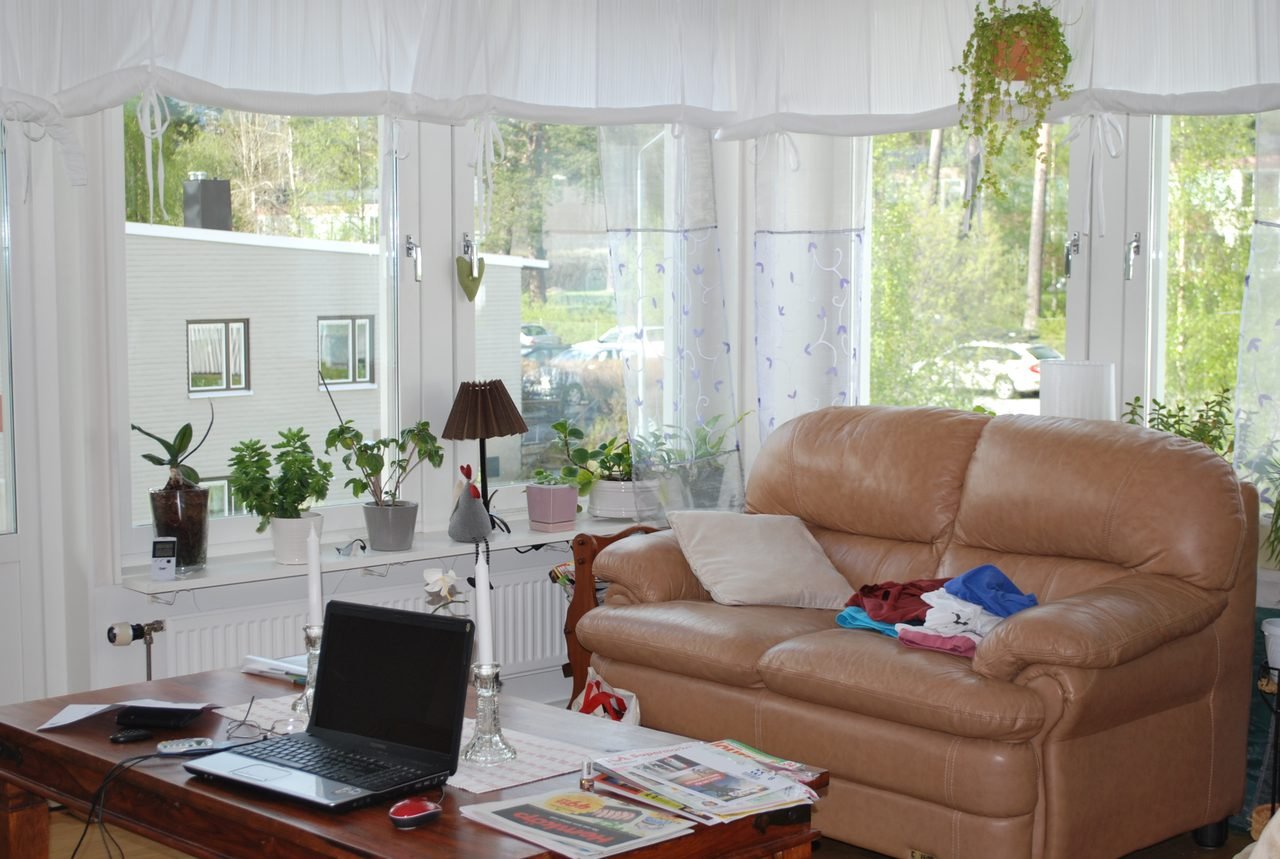
A brown couch is not a design problem to fix — it’s a warm, forgiving anchor that most living rooms are lucky to have. And unlike trend-driven furniture, it won’t look tired two years from now.
I’ll be honest: I used to think brown sofas looked dated too. Then I styled my sister’s chocolate brown couch with cream pillows, a rust throw, and a light rug, and her whole living room went from “hand-me-down” to “where did you get that?” in one afternoon. The couch didn’t change. Everything around it did.
That’s the secret nobody tells you. A brown couch looks dated only when everything around it fights it or copies it. Get the colors, textures, and proportions right, and brown becomes the coziest, most versatile neutral in your home.
My sister’s couch is a perfect example. It’s a big, chocolate-brown fabric sofa she got secondhand — comfortable, but the room around it was all beige walls, a dark brown rug, and one sad floor lamp. Everything matched the couch, so nothing stood out. We spent one Saturday and about $120: cream pillow covers, a rust throw from a discount store, a light jute rug layered over the old one, and we moved her floor lamp to the other side and added a warm bulb. She texted me a photo that night with three exclamation marks. Same couch. Different room.
This guide gives you 21 exact styling ideas — real color pairings, pillow formulas, rug rules, and wall colors — so your brown couch looks intentional and modern.
What Is Brown Couch Styling?
Brown couch styling is the practice of choosing colors, textures, and accessories that make a brown sofa look intentional and modern instead of dark or heavy. Because brown is a warm neutral with red, orange, or yellow undertones, it pairs best with colors that either echo that warmth (cream, terracotta, mustard) or contrast it (teal, navy, sage green).
Think of your brown couch the way a painter thinks of a canvas. It’s not the star and it’s not the background — it’s the warm middle ground everything else plays off. Once you stop trying to hide the brown and start designing with it, the whole room clicks.
Why You’ll Love a Brown Couch
Before we style it, let’s give brown its due. There are real reasons this color has anchored living rooms for decades:
- It hides real life. Pet hair, crumbs, a little wear — brown forgives all of it. If you have kids or a dog, a brown couch is quietly the smartest choice you can make. White sofas are for magazines; brown sofas are for living.
- It goes with almost everything. Warm neutrals, jewel tones, cool blues, earthy greens — brown plays well with a wider range of colors than gray ever will. When I get bored with my decor, I don’t replace the couch; I just swap the pillows.
- It adds instant warmth. A brown sofa makes a room feel cozy and grounded in a way that white or gray furniture simply can’t. In an open-plan space with lots of hard surfaces, that warmth is doing real work.
- It works in every style. Mid-century modern, farmhouse, boho, rustic, traditional — I’ve seen brown couches look right at home in all of them. It’s the rare piece that survives a total style change.
- It ages gracefully. Especially in leather, brown gets better-looking with wear. Scratches and patina become character, not damage. A ten-year-old brown leather couch often looks better than the day it arrived.
First, Find Your Couch’s Undertone
Here’s the step almost every styling guide skips — and it’s the reason so many “brown couch color palettes” fail in real rooms. Not all browns are the same. Your couch has an undertone, and matching your accents to it is what separates a room that looks “designed” from one that looks “close enough.”
Do this quick test: hold a plain white sheet of paper (or a white pillowcase) right against your couch in daylight. Look at the brown next to the white. You’ll see one of these:
- Red undertone — the brown looks warm, almost mahogany or cherry. Common in traditional leather couches.
- Orange/yellow undertone — the brown looks golden, like cognac, camel, or caramel. Very common in modern leather and tan fabric sofas.
- Neutral/gray undertone — the brown looks muted, like espresso, taupe-brown, or “greige-brown.” Common in contemporary fabric sofas.
Why does this matter? Pair warm-undertoned couches with warm accents (cream, terracotta, mustard, rust) and cool or neutral-undertoned couches can take cooler accents (sage, slate blue, soft gray). When the undertones clash — say, icy gray pillows on an orange-brown couch — something feels “off” even if you can’t name it. Match the undertone and everything suddenly looks expensive.
Quick paint cheat sheet by undertone, if you ever do repaint: red undertone loves warm whites and muted olive; orange/yellow undertone loves creamy whites and soft golds; neutral/gray undertone can handle true greige and even pale blue-gray. When testing swatches, tape them to the wall right beside the couch and check them in morning and evening light — brown shifts more through the day than most colors.
Renters, this matters double for you: since you probably can’t repaint, your textiles do all the undertone-matching work. Keep this test in mind as we go through the color pairings below.
Color Pairings That Make a Brown Couch Sing
Color does 80% of the heavy lifting. These seven pairings are the ones I reach for first, organized from safest to boldest. Each one works because it either echoes brown’s warmth or gives it a deliberate contrast.
1. Warm White + Cream (The Can’t-Miss Combo)
If you only do one thing from this list, do this. Cream and warm white pillows, a cream throw, and light curtains instantly lift a brown couch. The contrast is what makes it work — dark sofa, light textiles, and suddenly the room breathes. Stick to warm whites (think ivory, not hospital white) — cool blue-whites can clash with brown’s warmth.
Try it: Swap two dark pillows for 20-inch cream linen ones and drape a chunky cream knit throw over one arm. Ten minutes, massive difference.
2. Terracotta + Rust (Earthy and Rich)
Terracotta is brown’s best friend. It’s in the same warm family but lighter and redder, so it harmonizes without blending in. A rust-colored throw or two terracotta pillows make a brown couch look curated, like something from a boutique hotel. It also photographs beautifully — terracotta and brown is a combination cameras love.
Try it: One rust throw blanket folded across the seat + two terracotta velvet pillows in the corners. Works beautifully on cognac and caramel couches.
3. Mustard Yellow + Ochre (Cheerful Contrast)
Mustard is the color that makes brown fun. It pulls out the golden notes in the couch and adds energy without going neon. This pairing shines in mid-century modern rooms — think mustard pillows, a walnut coffee table, done. If mustard feels too bold, start with ochre or marigold — same family, slightly quieter.
Try it: Two mustard pillows mixed with one cream pillow. Keep the rest of the room calm so the mustard reads as an accent, not a theme.
4. Sage Green + Olive (Calm and Natural)
Green is brown’s complement on the color wheel’s warm side, which is why this pairing feels so natural — literally. Sage and olive echo the outdoors, and a brown couch grounds them the way soil grounds a garden. This is also the easiest pairing to extend through the whole house, since sage and olive work in bedrooms and kitchens too. Add a real plant nearby and the whole corner comes alive.
Try it: Sage green pillows + an olive throw + one large leafy plant (a fiddle-leaf fig or snake plant) beside the couch.
5. Teal + Turquoise (The Designer Contrast)
Want proof that brown isn’t boring? Teal. Blue-green against warm brown is a classic designer move because cool and warm tones make each other pop. Teal sits opposite brown’s orange undertones on the color wheel, which is why this contrast feels so satisfying rather than random. It works on every brown undertone and reads modern instantly.
Try it: Two teal pillows in different textures (one velvet, one linen) plus a small teal accent — a vase, a tray, a piece of art — elsewhere in the room to repeat the color.
6. Navy Blue + Indigo (Moody and Sophisticated)
Navy gives a brown couch a grown-up, library-like feel. It’s dramatic without being dark-on-dark, because navy reads as a true color, not a shadow. Brass or gold accents bridge navy and brown beautifully — a brass lamp or picture frame ties the two together. This is my favorite pairing for brown leather couches in particular.
Try it: Navy pillows with a subtle pattern (thin stripes or a small geometric) so they don’t read as flat blocks of dark color next to the couch.
7. Blush Pink + Dusty Rose (Soft and Unexpected)
Hear me out. Muted, dusty pink against rich brown is gorgeous — warm on warm, but the pink’s lightness keeps it fresh. It works best with deep chocolate or espresso couches, where the contrast is strongest. Keep the pink muted and dusty, never bubblegum — the sophistication comes from the restraint. Think cozy, romantic, a little bit glam.
Try it: One blush lumbar pillow centered on the couch + a cream throw. Keep it to one pink piece so it stays sophisticated.
Pillow & Throw Formulas for a Brown Couch
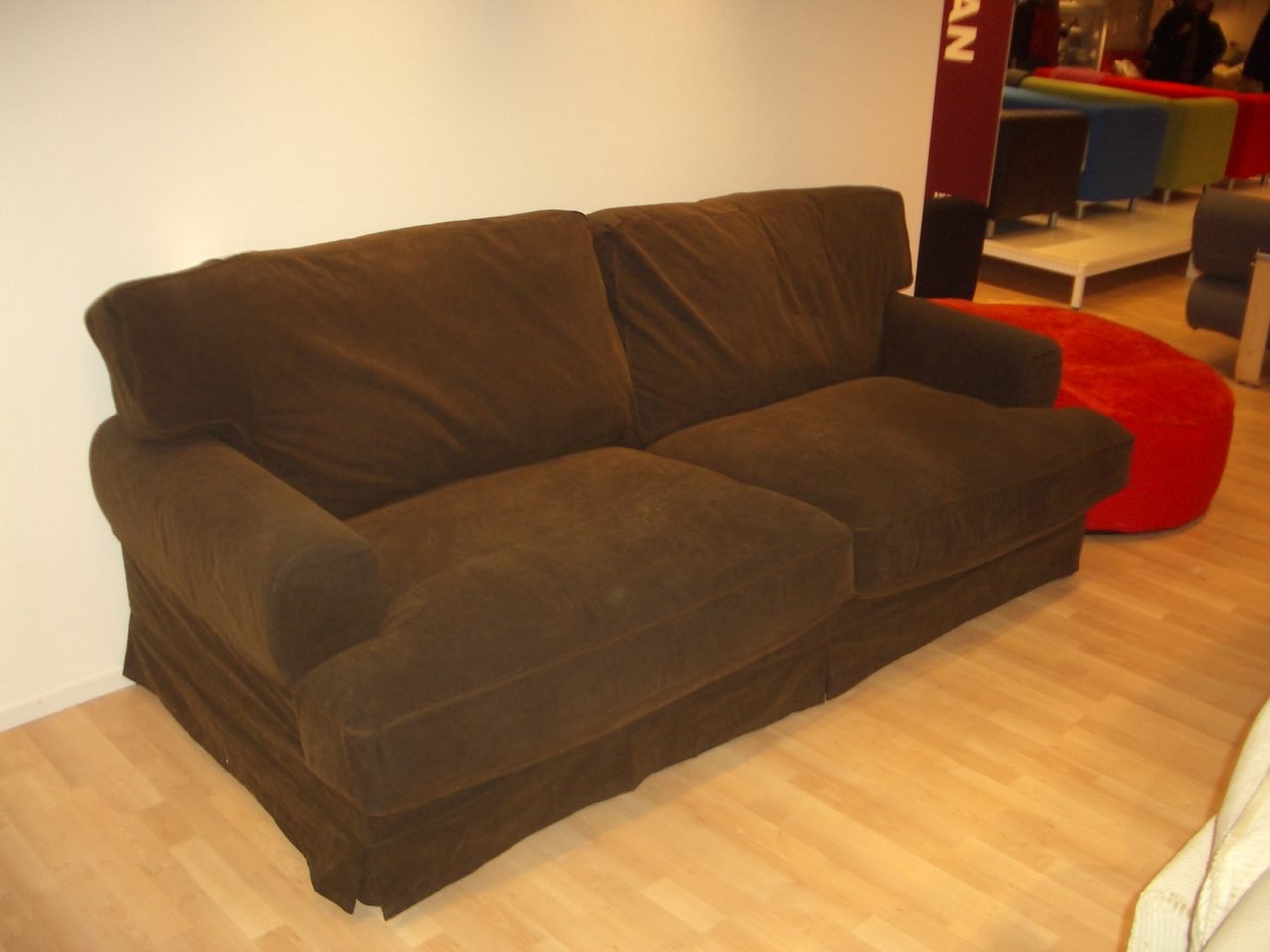
Pillows are the fastest, cheapest way to transform a brown couch. But random pillows look random. These formulas give you a professional result every time.
8. The 5-Pillow Formula (Symmetrical and Polished)
For a standard 3-seat sofa: two 20-inch solid pillows in the outer corners (cream or your main accent color), two 18-inch patterned pillows in front of those, and one 12×20-inch lumbar pillow centered. Odd numbers and descending sizes — that’s the whole trick.
Try it: Cream 20s + a subtle geometric print in 18s + a lumbar in terracotta or mustard. Step back and watch your couch look styled.
9. Mix Three Textures, Not Just Three Colors
A brown couch styled only in cotton looks flat. The fix is texture: velvet catches light, linen looks relaxed, boucle or knit adds coziness. Same color family, different textures — that’s what makes a couch look touchable instead of staged.
Try it: Pick one color (say, cream) and get it in three textures: a linen pillow, a knit pillow, a velvet pillow. Your couch will look richer without adding a single new color.
10. The Pattern Rule: One Pattern, Then Stop
Patterns add life, but two competing patterns next to brown can turn chaotic fast. My rule: one patterned pillow per couch, and make sure the pattern contains at least one color already in the room. Stripes, small geometrics, and mudcloth-style prints all behave well with brown.
Try it: If your rug has a pattern, keep every pillow solid. If your rug is solid, one patterned pillow is your green light.
11. Drape the Throw Like You Mean It
A throw tossed in a ball looks messy; a throw folded in thirds and laid across one seat cushion (or over one arm) looks intentional. For a brown couch, let the throw hang with one end longer than the other — asymmetry reads as effortless.
Try it: Fold your throw lengthwise into thirds, drape it over the left arm with the long end hanging inside. Takes thirty seconds and photographs beautifully.
Rugs, Walls & the Big-Picture Choices
Pillows are the outfit; rugs and walls are the room. Get these right and your brown couch stops being “the dark thing in the corner” and starts being the anchor of a real design.
12. Go Light With the Rug (The Single Biggest Fix)
The number one reason brown couches make rooms feel dark? A dark rug under a dark couch on a dark floor. It’s a brown sandwich. A light rug — cream, beige, light gray, natural jute — is the single fastest way to brighten a brown-couch living room. It creates a visual “floor” of lightness that the couch sits on instead of sinking into.
Try it: If your rug is dark brown or burgundy, swap it for a light neutral. Even a budget jute rug changes the whole light level of the room.
13. Size the Rug Right: Front Legs On, Always
A too-small rug makes a brown couch look like it’s floating in space. The rule: at least the front legs of the couch (and any chairs) must sit on the rug. For a standard sofa setup, that’s usually an 8×10-foot rug; for a sectional, 9×12. When in doubt, go bigger — an oversized rug makes the seating area feel generous and deliberate.
Try it: Measure your seating zone and tape the rug outline on the floor with painter’s tape before buying. You’ll be shocked how big the right size feels.
14. Wall Colors That Love a Brown Couch
The best wall colors for a brown couch: warm white (not stark blue-white), greige (gray-beige), soft taupe, and pale sage. They give the brown room to breathe. One step bolder: a deep green or navy accent wall behind the couch makes the brown look rich and deliberate instead of heavy.
Avoid: chocolate-brown walls (too much of a good thing), cool icy gray (fights warm brown undertones), and anything you’d describe as “builder beige with pink in it” — test swatches against your couch in daylight first.
Try it (renters): Can’t paint? Hang large-scale light-colored art or a big mirror behind the couch. It does 70% of what an accent wall does, with zero paint.
15. Curtains: Hang High, Go Light
Heavy dark curtains plus a brown couch equals a cave. Light, airy curtains hung 4-6 inches above the window frame (and wide enough to clear the glass when open) make the room taller and brighter, which balances the visual weight of the couch. Linen-look curtains in white, cream, or soft beige are the sweet spot.
Try it: Move your existing curtain rod up and out this weekend. It’s free, takes twenty minutes, and changes how big the room feels.
Furniture & Finishing Touches
With color and textiles handled, these are the pieces that finish the room and keep a brown couch from looking lonely.
16. Pair It With Light Wood, Not Dark Wood
A brown couch next to a dark espresso coffee table disappears into one brown blob. Light and medium wood tones — oak, ash, natural pine, light walnut — create contrast that lets each piece stand out. Mixing wood tones is fine; just keep the big pieces lighter than the couch.
Try it: If your coffee table is dark, lighten the vignette on top of it instead: a cream tray, a white vase, a stack of light-covered books.
17. Layer Your Lighting (Overhead Light Is Not Enough)
One ceiling light makes a brown couch look flat and shadowy. Three light sources minimum: a floor lamp beside the couch (warm bulb, 2700K), a table lamp on a side table, and something small — candles, a lantern, fairy lights in a jar. Warm light on brown upholstery looks like honey. Cool white bulbs make it look muddy.
Try it: Swap any daylight (5000K) bulbs near the couch for warm white (2700K). It’s a two-dollar fix with a ridiculous payoff.
18. Add Something Alive
Every brown couch needs greenery. Plants do two jobs: their green contrasts beautifully with brown, and their organic shapes soften all the rectangles. One large plant (fiddle-leaf fig, olive tree, snake plant) beside the couch beats five tiny succulents scattered around.
Try it: No green thumb? A large faux olive tree in a woven basket reads as real from six feet away and costs less than replacing dead plants every spring.
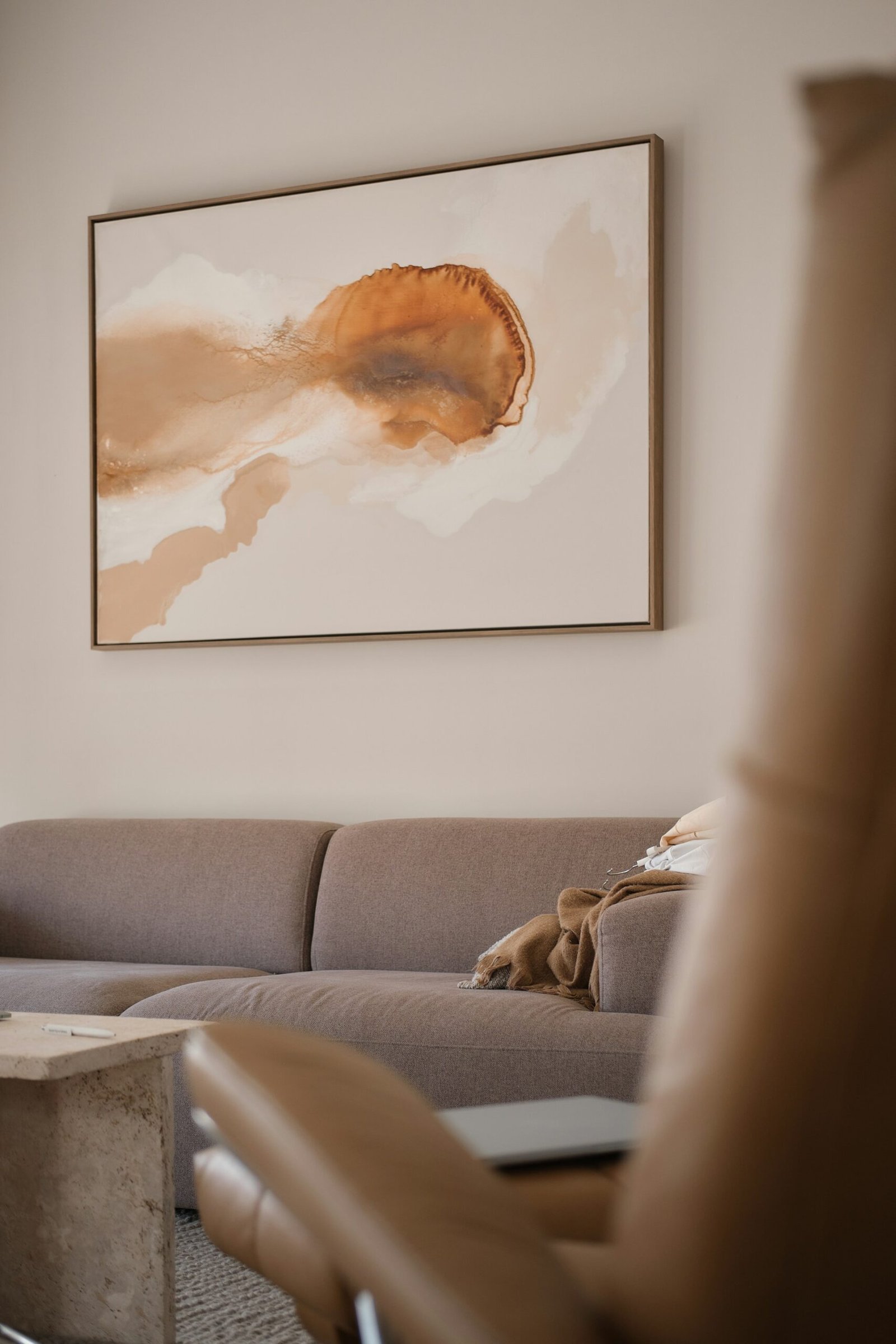
19. Hang Art or a Mirror Above It
A bare wall above a brown couch makes the couch look like it’s waiting for something. Art should span about two-thirds the width of the couch and hang 6-8 inches above the back cushions. A large mirror works even better in dark rooms — it bounces light and visually doubles the space.
Try it: Three framed prints in a row, one oversized canvas, or a round mirror. Just don’t hang it too high — the most common art mistake I see is art floating a foot above the sofa.
Styling by Material: Leather vs. Fabric
A brown leather couch and a brown fabric couch are different animals. Styling that flatters one can fight the other.
20. Brown Leather Couch: Go Sleek, Add Shine
Leather already has sheen and structure, so lean into it. Mixed metals (brass lamp, black side table, chrome tray) look incredible against brown leather. Keep pillows a little more tailored — fewer, cleaner, no fussy ruffles. Leather + glass + metal = modern. Leather + plaid wool throw + wood = classic study. Both work; pick a lane.
Try it: A cognac leather couch with black metal accents, a marble-look tray on the coffee table, and two tailored linen pillows. Instant modern.
21. Brown Fabric Couch: Go Soft, Add Texture
Fabric absorbs light, so it needs texture to avoid looking flat. Layer nubby, soft, touchable things: a chunky knit throw, boucle pillows, a high-pile or shaggy rug underfoot. Fabric couches also take pattern better than leather, so this is where your mudcloth pillow or subtle stripe earns its place.
Try it: If your fabric couch looks a little tired, new pillow covers (not new pillows — just covers) in mixed textures will make it look reupholstered for under fifty dollars.
3 Copy-Paste Color Schemes for a Brown Couch
Don’t want to think about color theory? Steal one of these complete schemes. Each one lists every color you need — walls, rug, pillows, accents — so you can shop with a list instead of guessing.
The Modern Warm Minimalist
Walls: warm white. Rug: light beige low-pile or flatweave. Pillows: cream linen (20″), oatmeal boucle (18″), one cognac leather lumbar. Accents: black metal floor lamp, one large green plant, light oak coffee table. Art: one oversized abstract print in beige and black. This scheme works because it keeps the palette tight — brown, cream, black, green — and lets texture do the talking. It’s the “expensive hotel lobby” look, and it’s nearly impossible to get wrong.
The Cozy Farmhouse
Walls: soft greige. Rug: natural jute layered under a smaller cream vintage-look rug. Pillows: cream (20″), rust plaid (18″), mustard lumbar. Accents: distressed wood coffee table, woven baskets, a chunky knit throw in oatmeal. Art: landscape prints in thin wood frames, hung in a pair. The farmhouse scheme leans into brown’s rustic side. Layered rugs are the key move here — jute underneath adds texture and size for less money than one huge rug.
The Boho Eclectic
Walls: warm white or pale terracotta on one accent wall. Rug: patterned — a faded Persian-style or kilim in rust, cream, and navy. Pillows: mix freely: mudcloth, a small kilim print, solid cream, solid sage. Accents: rattan side table, macramé wall hanging, three or more plants at different heights, brass lanterns. Art: a gallery wall of mixed frames and sizes. Boho is the most forgiving style for a brown couch because “collected over time” is the whole point. The one rule: repeat each accent color at least twice so it looks curated, not random.
Seasonal Swaps: Restyle Your Brown Couch Twice a Year
A brown couch is a year-round piece, but your textiles don’t have to be. I keep two small bins — one for warm months, one for cool — and swapping them takes twenty minutes.
Spring/summer: lighten up. Swap heavy throws for a thin cotton or linen throw in white or pale sage. Trade rust and mustard pillows for lighter covers in cream, soft blue, or botanical prints. Add a glass vase with fresh stems on the coffee table. The couch stays; the mood gets breezy.
Fall/winter: cozy it down. Bring back the chunky knits, plaid, and velvet. Deepen one accent — swap sage for forest green, or add a burgundy pillow. A plaid wool throw over the arm plus a candle on the side table makes a brown couch feel like the best seat in the house on a cold night.
Pillow covers (not whole pillows) make this cheap. A set of seasonal covers costs less than one dinner out and completely changes the room.
The 30-Minute Brown Couch Refresh
Overwhelmed by 21 ideas? Start here. This is the minimum effective dose — the five moves that deliver most of the transformation in half an hour, using things you may already own.
- Strip the couch bare. Take off every pillow and throw. Look at the couch alone in daylight. Notice its undertone (do the white-paper test if you haven’t). You’re starting fresh.
- Add two light pillows. Cream, white, or beige — whatever light pillows or covers you have. Put the largest ones in the outer corners. This alone lifts the whole piece.
- Add one color. Pick a single accent from the pairings above — rust, mustard, sage, teal, navy — and add one or two pillows in that color. One color, done with confidence, beats three colors done timidly.
- Drape one throw. Fold it in thirds, over one arm, long end hanging inside. If your throw is dark, fold it so less of it shows, or swap in a lighter one.
- Fix the light. Turn off the overhead if it’s cool white. Turn on a lamp — any lamp — with a warm bulb near the couch. If you don’t have one, move the closest lamp closer. Warm light on brown is transformative.
Step back and look. In most rooms, these five moves get you 80% of the way there. The rug, the curtains, the art — those are weekend projects. Today, you made the couch look like you meant it.
Common Mistakes to Avoid
I’ve styled enough living rooms to spot these patterns. Each one has a fast fix.
- Surrounding brown with more brown. Brown couch + brown rug + brown curtains + brown walls = a room with no contrast and no focal point. Fix: lighten at least two of the four (rug and curtains are cheapest).
- Using only dark accent colors. Burgundy, forest green, and navy are all lovely — but all-dark accents with a dark couch doubles the heaviness. Fix: for every dark accent, add a light one. Dark pillows? Add a cream throw.
- A rug that’s too small. The postage-stamp rug under a full-size couch is the most common sizing mistake in living rooms. Fix: front legs on the rug, minimum 8×10 for a standard sofa.
- All pillows the same size and color. Five identical brown pillows on a brown couch look like upholstery samples, not styling. Fix: vary sizes (20″, 18″, lumbar) and mix at least two colors plus texture.
- Ignoring the undertone. Icy gray accessories on an orange-brown couch, or warm gold on a gray-brown couch — the clash is subtle but real. Fix: do the white-paper test from earlier and match your accents to what you find.
- Skipping texture entirely. All-smooth cotton everything makes a brown couch look flat and a little sad. Fix: add at least two textures (velvet, knit, boucle, jute, leather) within arm’s reach of the couch.
- One sad overhead light. Brown absorbs light; a single ceiling fixture leaves the couch in shadow. Fix: floor lamp + table lamp + candles. Warm bulbs only.
Brown Couch Styling at a Glance
| Element | Best Choices | Avoid |
|---|---|---|
| Pillow colors | Cream, terracotta, mustard, sage, teal, navy | All brown, all dark, icy gray on warm brown |
| Pillow count/sizes | 5 pillows: 20″ + 18″ + lumbar; odd numbers | Same size, even numbers, overstuffing |
| Throw blanket | Cream knit, rust, or olive; folded, not balled | Dark heavy throws that blend into the couch |
| Rug color | Light neutral, cream, beige, natural jute | Dark brown, burgundy, or busy dark patterns |
| Rug size | 8×10 min; front legs of couch on rug | 5×7 “postage stamp” under a full sofa |
| Wall color | Warm white, greige, soft taupe, pale sage | Chocolate brown, icy blue-gray |
| Curtains | Light linen-look, hung high and wide | Heavy dark drapes that darken the room |
| Wood tones | Light/medium oak, ash, natural pine | Dark espresso pieces that merge with the couch |
| Lighting | Warm 2700K; floor + table + accent | Single cool-white overhead |
| Plants | One large statement plant | None at all, or only tiny succulents |
| Leather couch accents | Mixed metals, glass, tailored pillows | Fussy ruffles, all-matte accessories |
| Fabric couch accents | Nubby textures, knit, boucle, pattern | All-flat cotton, zero texture contrast |
FAQ
What colors go with a brown couch?
Cream, warm white, terracotta, mustard yellow, sage green, olive, teal, navy blue, and dusty rose all pair beautifully with a brown couch. The safest all-around choice is cream and warm white — they brighten any brown. For contrast with a modern edge, try teal or navy.
What color rug goes with a brown couch?
A light-colored rug — cream, beige, light gray, or natural jute. Light rugs create contrast that keeps a brown couch from making the room feel dark. Size matters as much as color: choose at least 8×10 feet so the couch’s front legs sit on it.
What wall color goes with a brown couch?
Warm white, greige, soft taupe, and pale sage are the best wall colors for a brown couch. If you want drama, paint one accent wall deep green or navy behind the couch. Test paint swatches against your couch in daylight, because brown undertones shift how paint reads.
How do I make my brown couch look modern instead of dated?
Lighten everything around it (cream pillows, light rug, airy curtains), add one cool contrast color like teal or navy, mix in modern textures (boucle, linen, mixed metals), and make sure your lighting is warm and layered. In most cases the couch isn’t dated — its surroundings are.
What color throw pillows go with a brown couch?
Start with cream or warm white as your base, then add one or two accent colors: terracotta, mustard, sage green, teal, or navy. Use the 5-pillow formula (two 20-inch, two 18-inch, one lumbar) and mix textures — velvet, linen, knit — rather than buying five identical pillows.
Does grey go with a brown couch?
Yes, but choose carefully. Warm grays (greige) work with any brown. Cool, blue-leaning grays only work with brown couches that have neutral or gray undertones — on a warm orange-brown couch, icy gray looks mismatched. When in doubt, pick greige over gray.
Can a brown couch work in a small living room?
Absolutely. Keep walls light, use a light rug, hang curtains high and wide, add a mirror to bounce light, and choose a couch with visible legs rather than a skirt to the floor — seeing floor underneath makes any sofa look lighter. In a studio, float the couch as a room divider instead of pushing it against the wall.
Is a brown leather couch easier to style than fabric?
They’re just different. Leather is easier to keep clean and pairs naturally with metals and glass for a modern look. Fabric is more forgiving with pattern and texture layering, and it feels cozier. Pick based on your lifestyle (kids and pets usually vote leather) and style each according to its strengths.
Final Thoughts
Your brown couch was never the problem. It’s warm, it’s forgiving, it hides a multitude of sins — and with the right colors around it, it’s genuinely one of the most versatile pieces of furniture you can own.
Start with the easy wins: cream pillows, a light rug, a throw draped with intention. Then add your accent color, fix your lighting, and put something green next to it. You don’t need a new couch — you need a new supporting cast.
I’d love to hear which pairing you tried — and if your brown couch finally got the compliment it deserved.

Founder of NestFlavors — sharing tested recipes and honest home ideas, made for real life.