
A wooden coffee table is the one piece of living room furniture you will touch every single day — so the wood you pick decides whether it looks better in ten years or worse by spring.
I have owned a cheap veneer table that bubbled the first time a hot mug landed on it, and a solid oak one that survived two kids, one dog, and more game nights than I can count. The difference was never the price tag. It was the wood, the finish, and five minutes of care a week.
A wooden coffee table anchors your seating, holds your morning coffee, and takes the brunt of daily life — which makes it the perfect place to understand what “solid wood” actually means. In this guide I will walk you through the nine wood types worth considering, the finishes that protect them, sizing rules that work with any sofa, styling ideas I use constantly, and the care routine that keeps wood looking good for decades. Wooden coffee table shopping gets simple once you know what you are looking at.
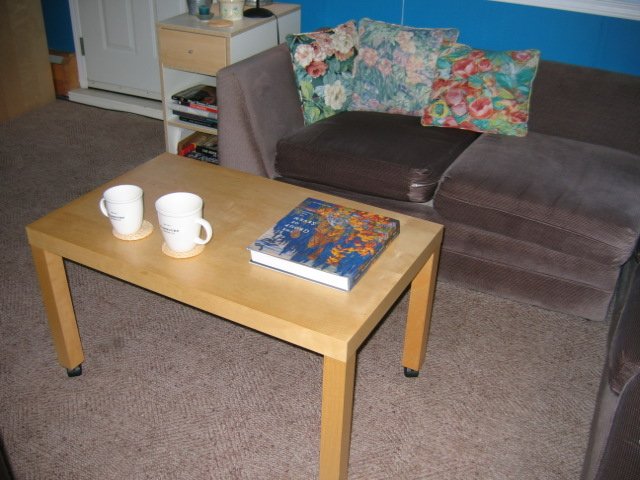
What Is a Wooden Coffee Table?
A wooden coffee table is a low living room table — typically 16 to 18 inches tall — with a top made of real wood, engineered wood, or wood veneer over another core. The word “wooden” on a listing does not always mean solid lumber: it can legally describe anything from a thick slab of walnut to a sheet of printed wood-grain paper over particle board.
That ambiguity is exactly why this guide exists. Once you can tell the species apart, read a finish, and size the piece for your room, a wooden coffee table becomes one of the easiest furniture purchases to get right — and one of the hardest to regret.
Why You’ll Love a Wooden Coffee Table
- It ages instead of wearing out. Solid wood can be sanded, re-oiled, and refinished, so scratches become character instead of damage.
- It works with every style. Pale oak reads Scandinavian, dark walnut reads mid-century, and rough-sawn reclaimed wood reads farmhouse — same material, three moods.
- It is warmer than glass or metal. Wood never feels cold to the touch in winter and softens the look of leather sofas and metal frames.
- It holds its value. A well-made solid wooden coffee table resells and even appreciates, while veneer tables are disposable.
- It is endlessly re-styleable. Swap the tray, the books, and the vase and the whole room feels different without buying new furniture.
Wooden Coffee Table Wood Types: The 9 That Matter
Wood species decides three things: how the table looks, how it handles abuse, and how much it costs. The industry shortcut for hardness is the Janka hardness scale — the higher the number, the better the wood resists dents and scratches. Here are the nine species you will actually encounter, ranked by what matters to you, not by price.
1. White Oak — The All-Rounder
Oak is the classic wooden coffee table wood for a reason: it is hard (about 1,360 lbf on the Janka scale), shows a beautiful open grain, and takes every finish from pale Scandinavian oil to dark espresso stain. Its prominent grain also hides small scratches, which makes it the best pick for busy living rooms.
Try it: choose white oak over red oak when you can — the grain is tighter and it stains more evenly.
2. Black Walnut — The Showpiece
Walnut brings deep chocolate tones and swirling grain that no stain can fake. At around 1,010 lbf Janka it is a little softer than oak, but still tough enough for daily use, and it develops a rich patina as it ages. Read the black walnut wood profile before you buy — “walnut finish” on a listing means stained to look like walnut, while “solid walnut” means the real thing.
Try it: let walnut shine with an oil finish instead of hiding it under dark stain.
3. Hard Maple — The Tough One
At about 1,450 lbf Janka, hard maple is one of the toughest domestic woods you can buy, and its pale, fine grain keeps small rooms feeling bright. The trade-off: it shows water rings and fingerprints more than open-grained woods, so it needs a sealed finish if you are not a coaster person.
Try it: pair maple with a polyurethane top coat for a kid-proof, ring-resistant surface.
4. Cherry — The One That Changes Color
Cherry starts out a pale pinkish brown and darkens to a rich reddish brown over a few years of sunlight — a table you buy today will literally look better later. It is medium-hard (about 995 lbf Janka) and machines into elegant traditional designs. Buy it for the patina, and keep it out of harsh direct sun if you want the darkening to happen evenly.
Try it: rotate decor items on a new cherry table so the whole top darkens at the same rate.
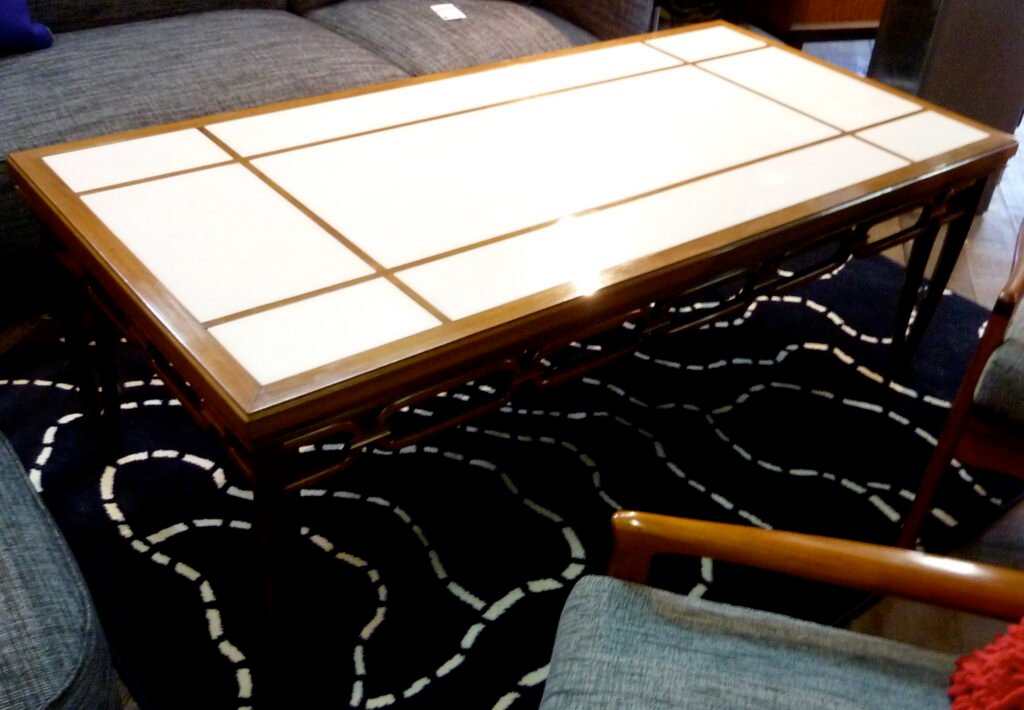
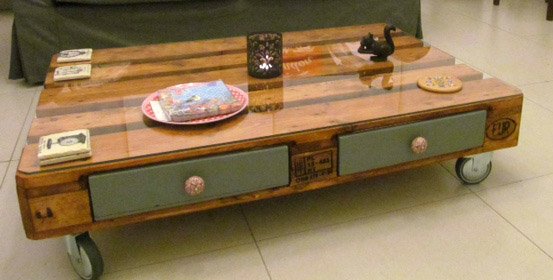
5. Reclaimed Wood — The Storyteller
Reclaimed wood — old barn beams, factory floors, shipping pallets — gives every table one-of-a-kind grain, nail holes, and texture. It is the eco-friendly pick and the cheapest way to get a thick solid top. The catch: ask whether it has been properly kiln-dried and sealed, because old wood can hide pests and moisture problems.
Try it: buy reclaimed from a local maker who can tell you exactly which building the wood came from.
6. Mango Wood — The Budget-Friendly Beauty
Mango trees are harvested for fruit for decades, then the timber gets a second life as furniture — that is why mango wood tables cost less than oak but still show gorgeous, varied grain. It is a medium-hard wood that suits the warm, organic look popular in boho and coastal rooms.
Try it: pick mango when you want solid-wood character under $400.
7. Acacia — The Outdoor-Indoor Crossover
Acacia is naturally oily, which helps it shrug off humidity — handy in a home with no AC or near a busy entryway. Its wild, contrasting grain looks striking, though that same drama means two “identical” tables can look quite different. Check the actual piece you are buying, not the catalog photo.
Try it: acacia loves oil finishes, which sink into its pores and deepen the contrast.
8. Teak — The Heirloom
Teak’s natural oils made it the ship-deck wood of choice, and the same property means a teak coffee table barely notices spills. At around 1,155 lbf Janka it is solidly durable. It costs more because genuine plantation teak is slow-growing — reserve it for a piece you plan to keep for decades.
Try it: skip teak if you are on a budget; oak gives you 80% of the durability at half the price.
9. Pine — The Rustic Cheap Seat
Pine is soft (about 380 lbf Janka), which means it dents if you look at it wrong — but it also means farmhouse tables cost very little, and every ding adds to the rustic story. Knots and resin pockets are the charm, not a defect. Buy pine when you love the worn-in look and plan to beat the table up anyway.
Try it: a pine table with a stained top and painted base is the classic budget farmhouse formula.
Wooden Coffee Table Finishes Compared
The finish — not the wood — decides how your table survives coffee, feet, and toddlers. Ask the seller exactly what is on the surface before you buy.
- Polyurethane: a plastic-like film that shrugs off water rings and scratches. The most bulletproof option for families and rentals. Matte or satin versions avoid the plastic look.
- Hard-wax oil: soaks into the wood for a natural, touchable feel. Spot-repairable — rub more oil into a scratch and it vanishes — but needs re-oiling every year or two.
- Lacquer: the glossy furniture-store finish. Beautiful and fairly tough, but chips instead of denting, and refinishing requires stripping.
- Wax: soft, warm glow on antique or rustic pieces. The least protective — fine for a low-traffic parlor, risky for a family room.
My rule: polyurethane for households with kids or pets, hard-wax oil for adults who enjoy a little maintenance and want to feel the grain under their hands.
One more thing to check before you fall in love with a finish: run your thumbnail across an edge or the underside. If the “wood” is paper-thin over a core, you will feel the seam. A finish can only protect what is actually there.
Solid Wood vs. Veneer: Spotting the Difference Before You Buy
This is where most wooden coffee table buyers get burned. “Wood solids” on a big-box listing usually means glued-together scraps under a thin veneer — not a single slab of lumber. Veneer is not automatically bad (a thick real-wood veneer over plywood is stable and affordable), but you should know what you are paying for.
- Check the edges. Solid wood shows end grain on the short edges — the grain pattern turns and runs across the edge. A veneer edge shows a thin repeated stripe, or a plastic-looking edge band.
- Look at the underside. Honest makers finish the bottom too, or at least leave it in raw wood. A stapled-on black dust cover or bare particle board screams veneer.
- Lift it. Solid oak and walnut are heavy — a 48-inch solid oak top weighs 40 to 60 pounds. If the table feels suspiciously light for its size, the “wood” is mostly air and glue.
- Price-check the species. A “solid walnut” table for $149 is not solid walnut. Walnut lumber costs more than that before anyone builds anything.
When is veneer fine? If you want a trendy look you might replace in five years, a quality plywood-core veneer table at a low price is a sensible buy. When is it a trap? When it costs solid-wood money. Pay for the material, not the marketing.
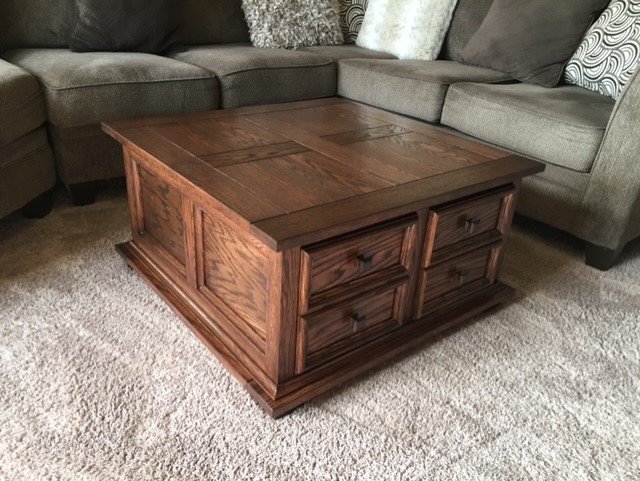
Shapes and Sizes: Getting the Fit Right
A beautiful wood means nothing if the table is the wrong size. These rules work in every living room I have ever styled:
- Length: the table should be about two-thirds the length of your sofa — a 90-inch sofa wants roughly a 60-inch table.
- Distance: leave 12 to 18 inches between the table edge and the sofa. Closer and knees hit it; farther and reaching your mug is a stretch.
- Height: match the seat height of your sofa, or sit 1 to 2 inches lower. Standard coffee table height is 16 to 18 inches.
- Clearance: keep 30 inches between the table and anything else (TV stand, fireplace) so people can walk around it.
Shape is a room problem, not a taste problem: rectangles anchor long sofas, squares suit sectionals and conversation pits, ovals and rounds soften rooms with lots of hard angles (and are kinder to toddler foreheads). Because my table here is about the material, shape choice is really about your layout — wood suits every shape.
How to Style a Wooden Coffee Table Like a Designer
Wood gives you a warm, textured base, which means you can style it with almost anything — but the arrangement still needs structure. I use the same formula every time:
- Rule of three: group objects in odd numbers — a tray, a stack of books, and one sculptural object (vase, candle, bowl).
- The tray is non-negotiable. It corrals remote controls and coasters into one tidy zone and protects the finish underneath. A leather or woven tray plays beautifully against wood grain.
- Vary the heights. A tall vase next to a low stack of books and a squat candle keeps the eye moving. If everything sits at the same height, the table looks flat.
- Let the wood show. Leave at least a third of the surface bare. The grain is the decoration — covering every inch hides what you paid for.
- Add something alive. A small plant or a bowl of fresh fruit brings color and contrast that no object can match.
- Seasonal swap: keep one element you change — swap the candle scent in fall, the greenery in spring — and the whole room feels refreshed for free.
How to Care for a Wooden Coffee Table
Wood is not fragile, but it is alive — it moves with humidity and reacts to heat and water. This weekly routine is all it takes:
- Dust weekly with a soft, dry microfiber cloth. Dust is mildly abrasive and dulls finishes over time.
- Use coasters and felt pads under everything: mugs, vases, remotes, the tray itself. Heat rings and planters are the two most common finish killers.
- Wipe spills immediately with a barely damp cloth, then dry. Water left standing is what raises grain and leaves rings.
- Keep it out of direct sun or rotate the table seasonally — UV fades and darkens wood unevenly (cherry and walnut especially).
- Feed oil finishes once or twice a year with the product your maker recommends. Polyurethane tables need no feeding — just cleaning.
- Fix small scratches yourself: a matching furniture marker for stained finishes, a dab of oil for oil finishes, and fine steel wool plus wax for shallow dings in lacquer.
Common Mistakes to Avoid
- Buying “walnut finish” when you wanted walnut. “Finish” describes the color; “solid” describes the material. A walnut-finish table can be pine underneath. Read the materials line, not the title.
- Ignoring height. A 14-inch table in front of a tall modern sofa feels like a step down; a 20-inch table with a low sectional blocks the view. Measure your seat height first.
- Skipping the finish question. If the seller cannot tell you whether the top is oiled, waxed, or sealed, assume it is unprotected and plan to finish it yourself.
- Floating it on a too-small rug. The front legs of your seating should sit on the rug, and the coffee table should sit fully on it too — a rug that ends under the table looks like an island.
- Setting hot dishes straight on oil or wax. A trivet costs five dollars. Refinishing a heat-damaged top costs a weekend. This is the mistake I made exactly once.
- Choosing pine for a rough household. Soft woods are honest about their limits. If toddlers will drum on it with wooden spoons, buy oak, maple, or acacia instead.
Wooden Coffee Table at a Glance
| Wood Type | Best For | Typical Price Range | Care Level |
|---|---|---|---|
| White oak | Busy family rooms, first “real” table | $300–$1,200 | Low |
| Black walnut | Statement piece, mid-century rooms | $600–$2,500 | Low–medium |
| Hard maple | Small bright rooms, heavy use | $350–$1,400 | Medium |
| Cherry | Traditional rooms, patina lovers | $500–$2,000 | Medium |
| Reclaimed wood | Farmhouse, eco-conscious buyers | $250–$1,500 | Medium |
| Mango wood | Budget solid wood, boho style | $150–$500 | Low |
| Acacia | Humid homes, bold grain lovers | $200–$800 | Low |
| Teak | Heirloom buy, spill-proof living | $800–$3,000 | Low |
| Pine | Rustic look on a tight budget | $80–$400 | High |
FAQ
What is the best wood for a coffee table?
White oak is the best all-around choice: hard enough to resist dents (about 1,360 lbf Janka), affordable, and attractive in almost any finish. Walnut is the pick for a statement piece, hard maple for maximum toughness, and reclaimed wood for character on a budget.
How much should I spend on a wooden coffee table?
Expect $150–$500 for mango or pine, $300–$1,200 for oak or maple, and $600–$2,500 for walnut or teak. Solid wood costs more upfront than veneer but can be refinished instead of replaced, which makes it cheaper over a decade.
What height should a wooden coffee table be?
Match your sofa’s seat height or go 1 to 2 inches lower — most sofas sit at 17 to 19 inches, so a 16 to 18 inch table is the sweet spot. A table that is noticeably taller than the seat feels intrusive; one much lower strains your back when you reach for things.
How do I get water rings off a wooden coffee table?
For white rings (moisture trapped in the finish), rub gently with a paste of baking soda and water or a 50/50 mix of vinegar and olive oil along the grain, then wipe clean. Black rings mean the stain reached the wood itself — those need light sanding and refinishing of the spot.
Is solid wood better than engineered wood for a coffee table?
Solid wood wins on longevity and repairability: it can be sanded and refinished many times. Good engineered wood (plywood core with thick real-wood veneer) is stable and cheaper, but a thin veneer over particle board peels and cannot be repaired once damaged.
Can I put a wooden coffee table on carpet?
Yes, with two conditions: the legs should have felt pads so they do not crush carpet fibers unevenly, and the rug underneath should be large enough for the table to sit fully on it. Keep solid wood off damp basement carpet, where moisture can wick up into the legs.
How do I clean a wooden coffee table day to day?
Dust with a dry microfiber cloth and wipe spills with a barely damp cloth, drying immediately after. Skip silicone sprays and all-purpose cleaners — they build up residue and can react with some finishes. Plain water and prompt drying beats every specialty product.
Does walnut or oak last longer as a coffee table?
Both last generations with basic care. Oak is harder and resists dents better; walnut is slightly softer but more dimensionally stable and resists warping. In practice, the finish and how you treat the table matter more than the difference between these two species.
Final Thoughts
A wooden coffee table is one of the few furniture purchases where spending a little more genuinely buys you decades instead of years. Pick the wood that fits your life — oak for the chaos, walnut for the drama, reclaimed for the story — seal it properly, and give it five minutes of care a week. It will outlive your sofa, your rug, and probably your next three paint colors. That is the whole secret: wooden coffee table shopping is really just buying the right material once and treating it well.

Founder of NestFlavors — sharing tested recipes and honest home ideas, made for real life.