
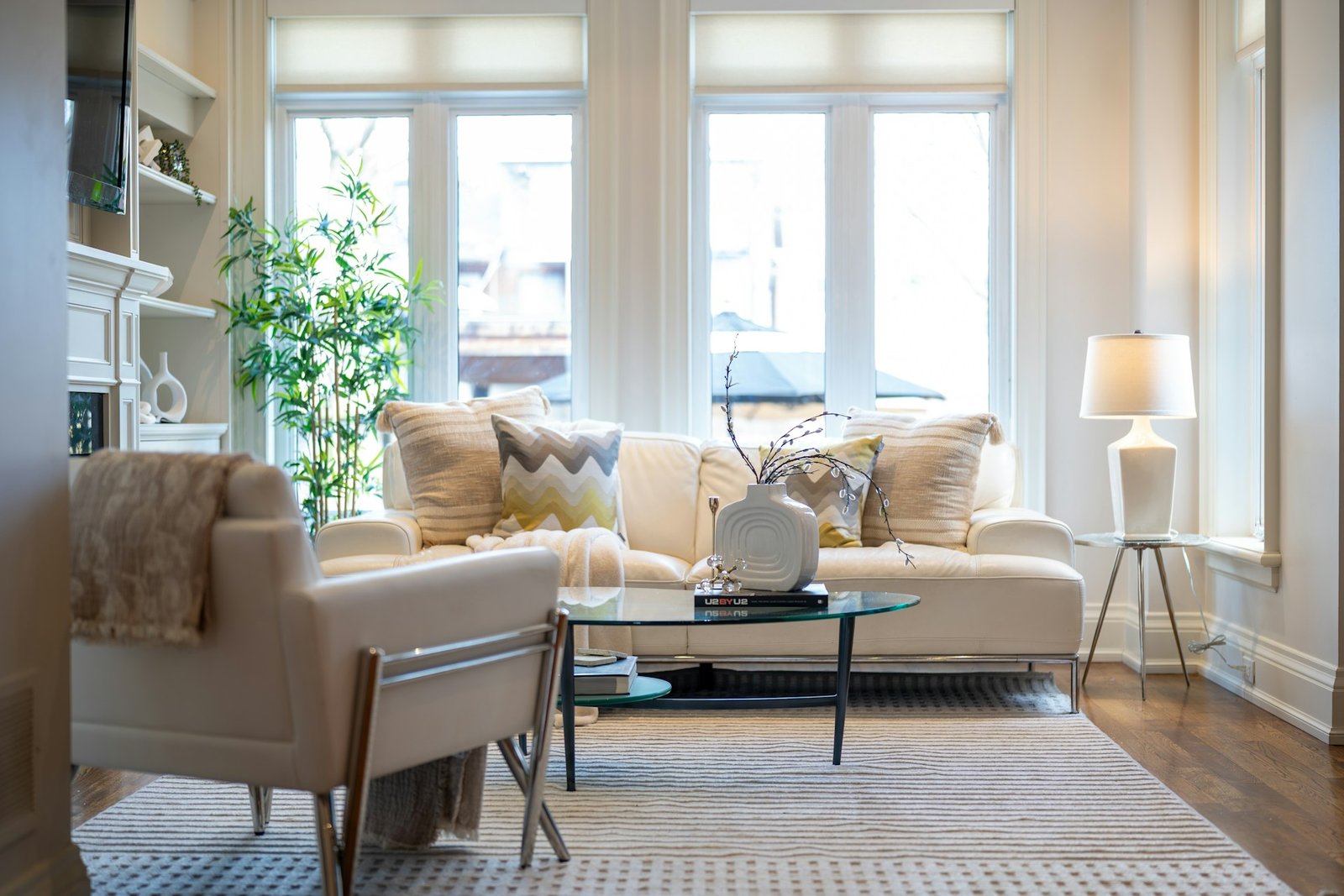
The little table next to your sofa does more work than almost any piece in your living room — here’s how to pick one that’s the right height, the right size, and actually looks good.
I’ve bought the wrong side table more times than I care to admit. Too tall, so setting down my coffee felt like reaching for a shelf. Too small, so it looked like a stool that wandered in from another room. One wobbled every time the dog walked past. After years of trial and error — and measuring more sofa arms than I can count — I finally have a system for choosing side tables that fit, function, and look intentional.
Side tables are the hardest-working small furniture in your home. They hold your lamp, your drink, your book, your remote, your phone charger, and half the time your dinner. Get the size right and they disappear into the room in the best way. Get it wrong and they nag at you every single day.
This guide covers everything: the 15 best side tables for living rooms, the exact height rule (in inches), which materials hold up, what to spend, how to style them like a designer, and the mistakes I see everywhere. Let’s find the one your sofa has been waiting for.
What Is a Side Table?
A side table — also called an end table or accent table — is a small table designed to sit beside seating, typically a sofa, armchair, or bed. Most side tables stand 18 to 28 inches tall with a tabletop 12 to 24 inches wide, giving you a landing spot for lamps, drinks, books, and decor within arm’s reach.
The terms get used interchangeably, but there are subtle differences. An end table usually sits at the end of a sofa and tends to be a bit larger, often with storage. An accent table is the decorative cousin — smaller, more sculptural, chosen as much for looks as function. A nightstand is just a side table doing bedroom duty. For living rooms, all three labels point you to the same hunt: a small, right-height surface next to where you sit.
Why You’ll Love the Right Side Table
- Everything within reach. No more balancing your mug on the sofa arm or getting up to grab the remote. A well-placed side table keeps daily essentials exactly where your hand lands.
- Your lamp finally has a home. Table lamps need a perch at the right height for reading light. Side tables put the light source right beside you instead of across the room.
- Instant room balance. A bare sofa end looks unfinished. One table anchors the seating arrangement and makes the whole layout feel deliberate.
- Clutter control. Drawers and shelves swallow remotes, coasters, chargers, and the mystery items that migrate to every flat surface.
- A styling stage. It’s the easiest vignette in your home — a lamp, a stack of books, something green. Three objects and the corner looks designed.
- Flexibility. Unlike a sofa, a side table moves in seconds. Pull it up for guests, shift it to the bedroom, or restyle it seasonally.
How to Choose the Right Size Side Table
This is the part most people skip, and it’s the part that matters most. A beautiful table at the wrong height will annoy you daily.
The armrest rule (the only measurement that really matters)
Your side table should be level with your sofa’s armrest, or up to 2 inches lower. Never taller than the arm. When the table sits higher than where your arm rests, setting down a drink becomes an awkward lift, and the proportions look top-heavy and wrong.
Here’s how to get your number:
- Measure from the floor to the top of your sofa arm. Most sofa arms land between 22 and 26 inches.
- Subtract 0 to 2 inches. That’s your ideal table height.
- Most living room side tables on the market fall between 20 and 25 inches tall, so you’ll find options — but measure first, because low-profile modern sofas with 20-inch arms need shorter tables than traditional 26-inch-arm sofas.
If you’re buying before the sofa arrives (we’ve all been there), 24 inches is the safest middle-ground height for a living room side table.
Width, depth, and breathing room
- Tabletop width: 16 to 22 inches suits most sofas. Go narrower (12 to 16 inches) for tight spaces or beside a chair; wider (22 to 24 inches) only if the sofa is large and the room can handle it.
- Proportion check: the table should be roughly one-third the visual width of the sofa section it sits beside. A chunky 24-inch cube next to a petite loveseat looks like it’s swallowing it.
- Gap from the sofa: leave 2 to 4 inches between the table edge and the sofa. Close enough to reach, with enough air that the pieces don’t look crammed together.
- Walkway clearance: keep at least 30 inches of clear walking space around the table. In a small living room, that rule alone may push you toward a round or C-shaped table instead of a square one.
Beside a chair instead of a sofa?
Same logic, different anchor: match the chair arm height (usually 22 to 25 inches) or the seat height plus a few inches. For a reading chair with no arms, aim for the tabletop to land 2 to 4 inches above the seat cushion — close enough that your tea is a natural reach, not a stretch.
Quick size cheat sheet
| Seating | Measure this | Ideal table height | Ideal top width |
|---|---|---|---|
| Standard sofa (24″ arm) | Arm height minus 0–2″ | 22–24″ | 18–22″ |
| Low-profile modern sofa (20–22″ arm) | Arm height minus 0–2″ | 18–22″ | 14–20″ |
| Deep traditional sofa (26″ arm) | Arm height minus 0–2″ | 24–26″ | 20–24″ |
| Accent/reading chair | Arm or seat + 2–4″ | 20–24″ | 14–18″ |
| Sectional corner | Match the nearest arm | 22–24″ | 16–20″ |
Classic Side Table Styles That Always Work
These are the proven shapes — the ones designers reach for when they need something that simply works. If decision fatigue is setting in, start here.
1. The Solid Wood End Table
The workhorse. A simple wooden end table with straight or gently tapered legs goes with literally everything — farmhouse, traditional, mid-century, even modern rooms that need warming up. Oak, walnut, and acacia are the sweet spots for durability; pine costs less but dents more easily if you have kids or a dog with ambitions.
Look for a sealed or lacquered top if drinks will land on it daily — raw wood rings if you look at it wrong. Expect to spend $60 to $200 for a good one. I’ve had the same walnut end table through three apartments, and it looks better now than the day it arrived.
Try it: place one at each end of a standard sofa for instant symmetry, or just one if your layout is tight.
2. The Glass-Top Side Table
When your living room is small or dark, glass is magic. A clear glass top on a slim metal or wood frame visually disappears, so the room feels bigger and light keeps moving. It’s the best trick I know for a table that functions without adding visual weight.
The honest trade-offs: glass shows every fingerprint and dust mote, and it’s not the pick for homes with toddlers who treat furniture as a climbing gym. Tempered glass is a must — check the listing before you buy. Budget $50 to $150.
Try it: pair a glass-top table with a heavier piece nearby (like a chunky coffee table) so the room still feels grounded.
3. The Marble-Top Accent Table
Nothing says “I have my life together” like a marble top. Real marble is heavy, cool to the touch, and each slab’s veining is one of a kind. It anchors a seating area the way jewelry anchors an outfit. Seal it — marble stains from coffee and wine if left unprotected, and coasters are non-negotiable.
Real marble tables run $150 to $500+; marble-look porcelain or engineered stone gives you 90% of the look for under $120 and shrugs off stains. For a living room, I prefer a marble top on slim brass or black metal legs — the contrast keeps it from feeling stuffy.
Try it: let it be the star. Keep styling minimal — one sculptural object or a small stack of art books, and stop.
4. The Industrial Metal Side Table
Black steel frame, maybe a wood or concrete-look top, clean lines, zero fuss. Industrial metal side tables bring structure to soft, upholstered rooms and hold up to serious abuse — they’re the side tables I recommend to anyone with large dogs or teenagers. Powder-coated finishes resist scratches far better than painted ones.
They’re also some of the most affordable decent tables out there: $40 to $120. The downside is they can read cold in an already-minimal room, so add warmth with a wood tray or a plant on top.
Try it: flank a leather sofa with two matching metal tables for a look that’s masculine, tidy, and nearly indestructible.
Space-Saving Side Tables for Small Living Rooms
Small rooms don’t need fewer side tables — they need smarter ones. These four earn their footprint.
5. Nesting Tables (Two Tables in One)
A set of two or three side tables that tuck under each other like a puzzle. Keep them nested as a single sculptural unit day to day, then pull one out when guests arrive or you need a spot for the popcorn bowl. It’s the most practical small-space purchase in this entire guide.
Buy a set where the smallest table is still usable on its own — some sets include a tiny third table that’s basically decorative. Good sets run $70 to $180. Round nesting tables soften a room full of rectangles; mixed materials (wood and metal) keep them interesting.
Try it: separate the set — one beside the sofa, one beside the reading chair — and nest them back together when you need floor space.
6. The C-Shaped Table
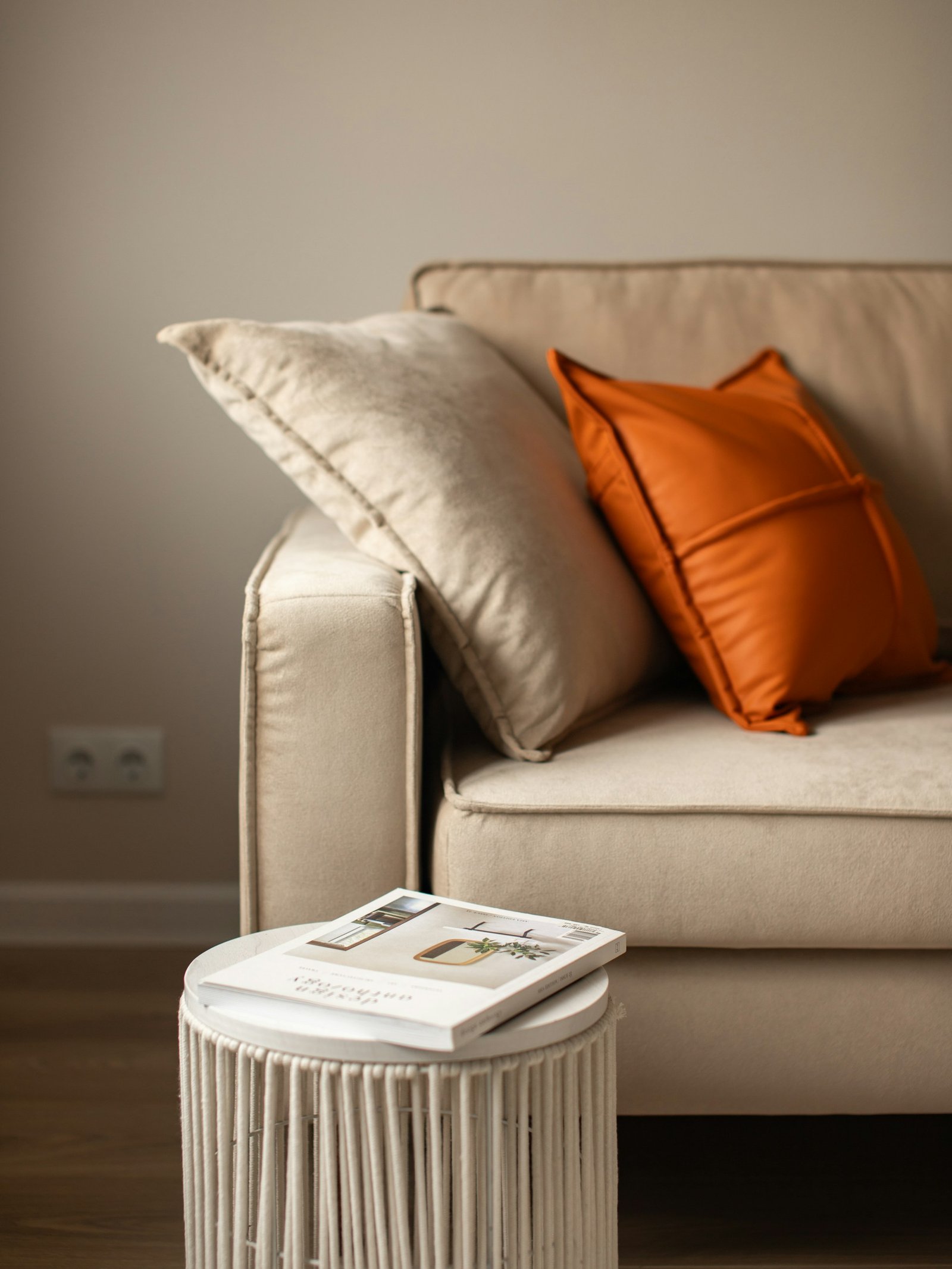
The base slides under your sofa or chair so the top floats right over your lap. Laptop work, dinner in front of the TV, morning coffee without leaning forward — the C-table was designed by someone who truly understands couch life. It’s the single best side table for small apartments where every square foot works overtime.
Measure your sofa’s seat height first: the tabletop needs to clear the seat cushion with room for your legs. Most C-tables adjust or come in heights from 22 to 28 inches. Prices run $40 to $130.
Try it: keep it as your permanent sofa companion and let a prettier table handle the lamp on the other end.
7. The Floating Wall-Mounted Table
Zero floor footprint. A small wall-mounted shelf or fold-down table beside the sofa gives you a landing spot without claiming a single inch of floor — brilliant for micro living rooms and awkward gaps between furniture and walls. Fold-down versions disappear entirely when you don’t need them.
You’ll need a stud or solid wall anchor; these aren’t renter-friendly unless your landlord is relaxed about small holes (most are — it’s two screws and a dab of spackle at move-out). Cost: $30 to $90.
Try it: mount one at armrest height in that dead 10-inch gap between the sofa and the wall. Dead space becomes your favorite spot.
8. The Slim Pedestal Table
One central column, one round top, a footprint barely bigger than a dinner plate. Pedestal side tables tuck into corners, squeeze between a chair and the wall, and never snag your shins the way four-legged tables do. A 12- to 14-inch top is plenty for a drink and a book.
Stability matters more here than with any other style — a top-heavy pedestal with a narrow base tips. Look for a weighted base and test the wobble before you commit. Expect $50 to $140.
Try it: use one as a plant stand when it’s not on drink duty. It earns its keep twice.
Side Tables With Storage That Hide the Clutter
If your living room doubles as an office, a playroom, or just real life, storage isn’t optional. These side tables swallow the mess.
9. The Single-Drawer End Table
The classic for a reason. One drawer hides the remote, the coasters, the charging cables, the reading glasses — everything that makes a coffee table look chaotic. The tabletop stays clean for the lamp and one pretty object.
Check the drawer glide in person or in reviews; a drawer that sticks will drive you mad within a month. Dovetail joints and a finished drawer box signal quality. Prices: $70 to $220 depending on wood and build.
Try it: designate the drawer as the “remote and charger” drawer and enforce it. Your coffee table will thank you.
10. The Two-Tier Shelf Table
An open shelf below the tabletop doubles your surface without doubling the footprint. Style the lower shelf with a basket (more hidden storage), a stack of coffee table books, or a folded throw blanket. It keeps everyday items accessible but visually contained.
Open shelves collect dust, so this style suits people who actually enjoy a quick weekly wipe-down — or who fill the shelf with a lidded basket and call it done. Budget $60 to $160.
Try it: put the pretty stuff on top and the practical stuff below in a woven basket. Nobody needs to see the extra phone chargers.
11. The Lift-Top Side Table
The overachiever. The top lifts or hinges open to reveal hidden storage — perfect for stashing the TV remote, gaming controllers, or the blanket you grab every evening. From the outside it looks like a clean-lined cube or drum; inside it’s a junk drawer that doesn’t look like one.
Confirm the hinge quality and that the top stays open on its own while you grab things. These run $90 to $250, and the mechanism is what you’re paying for.
Try it: keep the evening essentials inside (remote, glasses, hand cream) and the top styled with just a candle. Clean by day, functional by night.
Statement Side Tables With Real Personality
Function is covered. Now the fun part — side tables chosen because they make you happy every time you walk past.
12. The Rattan or Woven Table
Texture is the fastest way to warm up a room, and nothing delivers it like rattan, cane, or seagrass. Woven side tables bring a relaxed, coastal-boho energy and they’re featherlight — you’ll rearrange them constantly just because you can. They’re also genuinely renter-friendly: cheap enough to not stress over, light enough to carry with one hand.
They won’t hold a heavy lamp safely on a wobbly weave top, so keep the load light — a candle, a small plant, a paperback. Prices: $40 to $130.
Try it: pair a rattan table with a linen sofa and a jute rug, then add one contrasting piece (black metal lamp) so it doesn’t tip into theme-park territory.
13. The Drum Table
A fabric-upholstered cylinder that reads more like decor than furniture. Drum tables soften rooms full of hard edges, add a punch of color or pattern, and double as an extra seat in a pinch (check the weight rating first — most handle 200+ pounds, but verify). Nailhead trim or a bold print takes it from background to focal point.
Upholstery and drinks are a risky mix, so treat the top with fabric protector or use a tray. Expect $70 to $200.
Try it: pick a pattern that pulls one color from your rug or curtains. Instant cohesion.
14. The Sculptural Pedestal
The art piece. A twisted wood column, a stacked-stone form, a glossy ceramic silhouette — sculptural side tables exist to be looked at first and used second. They’re how you get a designer look without a designer budget, because one bold shape does the work of five accessories.
Keep the top mostly clear so the form reads. One small object, maximum. These range wildly — $80 to $400+ — because you’re paying for design, not materials.
Try it: place it where it’s visible from the entryway. First impressions are free.
15. The Removable Tray-Top Table
A tray that lifts off its base and becomes a serving piece. Carry drinks from the kitchen on the tray, set it back on the stand, done. It’s the entertainer’s side table, and it solves the eternal problem of getting snacks from point A to the sofa without three trips.
Look for a tray with raised edges and handles — flat trays slide right off your lap and your life. Sets run $60 to $170.
Try it: use the tray for a permanent little bar setup (two glasses, a small bottle, a candle) and lift the whole thing off when guests need serving.
How to Style Side Tables Like a Designer
Here’s the part most buying guides skip entirely: owning the table is only half the job. Styling it is what makes it look expensive. Designers use a simple formula — the rule of three — and it works on every tabletop.
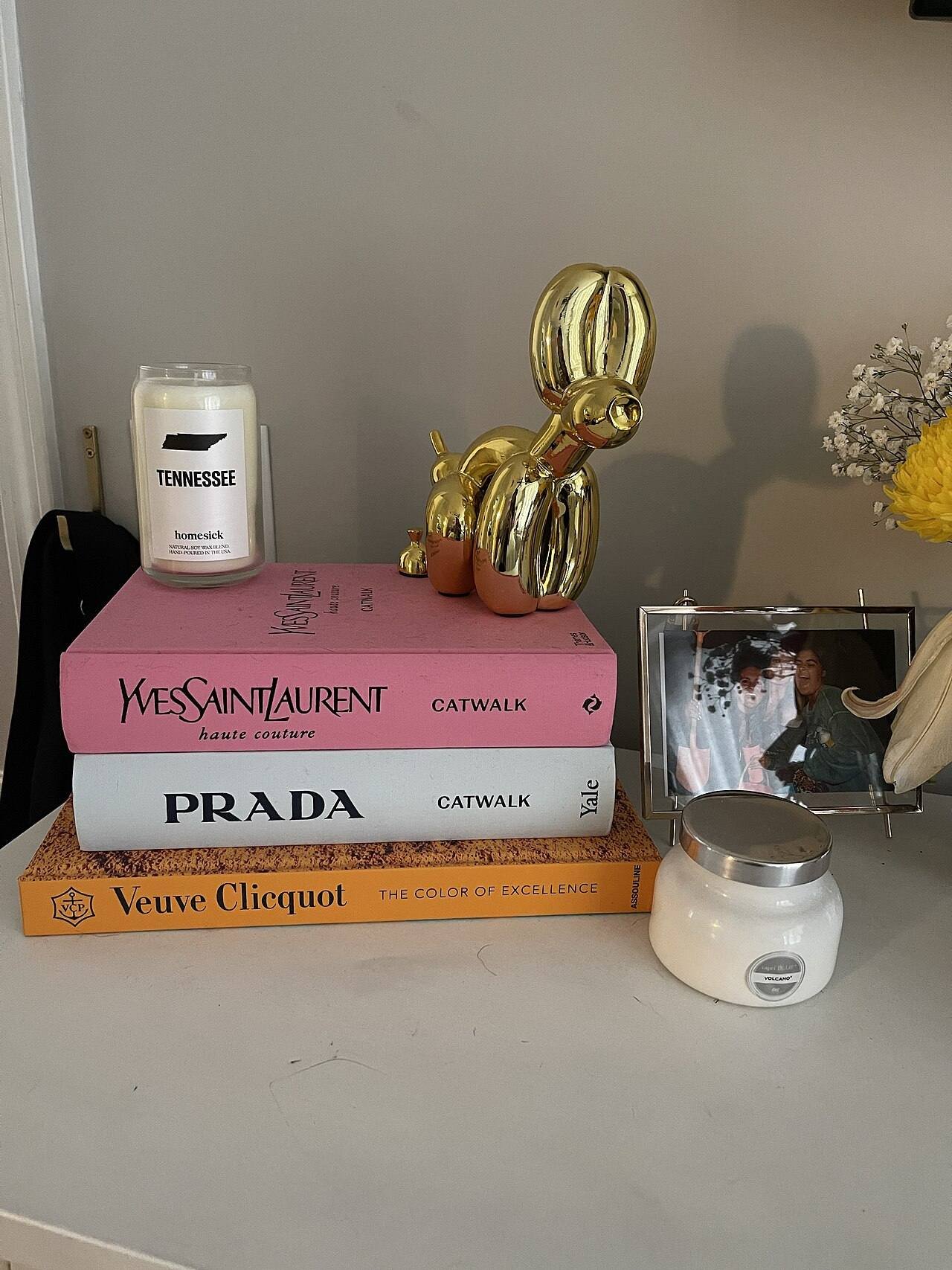
The formula: one tall, one medium, one small.
- Tall (the anchor): a table lamp, a tall vase with branches, or a sculptural object. This gives the vignette height and draws the eye.
- Medium (the bridge): a stack of two or three books, a small framed photo, a candle cluster. This fills the middle ground.
- Small (the finish): a tiny plant, a decorative box, a single special object. This is the detail people notice up close.
Then apply three refinements:
- Vary the heights. If everything sits at the same level, the arrangement looks flat. Your tall piece should be roughly twice the height of your small one.
- Group in odd numbers. Three objects (or five on a larger top) always look more natural than two or four. Your brain reads odd groupings as curated, even groupings as accidental.
- Leave breathing room. Cover no more than two-thirds of the tabletop. Negative space is what separates “styled” from “cluttered.” If the table also holds your daily drink and remote, style around a clear landing zone on one side.
My go-to living room formula: a 24-inch table lamp (tall), a stack of two coffee table books with a small brass object on top (medium), and a 4-inch potted plant (small). It takes ninety seconds and it never looks wrong.
One more designer trick: corral with a tray. A tray turns three separate objects into one intentional grouping, protects the tabletop from rings, and lets you lift everything at once when you need the surface. On a small 14-inch top, a tray might be the entire styling.
And here’s my honest take after styling dozens of these: live with it for a week before you finalize. The arrangement that looks perfect in a photo sometimes fails real life — the lamp you love might glare right into your eyes from the reading chair, or the vase might block your view of the TV. Set it up, use the room normally for a few days, then adjust. The best-styled side tables aren’t decorated once; they’re edited over time as you learn how you actually live around them. I move things around on mine at least twice a year, usually when the seasons change and I swap in different colors and textures.
Side Tables for Tricky Layouts
Standard advice assumes a standard sofa against a standard wall. Real living rooms are messier. Here’s what the guides don’t tell you.
The armless sofa problem
No armrest, no armrest rule. For armless sofas and low-slung modern sectionals, anchor to the seat height instead: the tabletop should land 4 to 6 inches above the seat cushion. On a typical 17-inch seat, that means a 21- to 23-inch table. Too low and you’ll be fishing drinks out of a hole; too high and it looms.
Sectional corners
The inside corner of an L-shaped sectional is prime side table territory — it’s reachable from both sides. Use a round table here; square corners in a corner nook create a shin-bruising obstacle course. A 16- to 18-inch round top is plenty, and a lower shelf earns bonus points for shared remotes.
Behind the sofa
If your sofa floats in the middle of the room, the 4 to 6 inches of space behind it is wasted — unless you slide in a narrow console-style table (10 to 12 inches deep). It becomes a lamp perch, a book drop, and a visual backdrop for the sofa. Height should match or sit just below the sofa back.
The renter’s playbook
Renting means every piece should be light, affordable, and move-friendly. My renter rules for side tables: under 15 pounds (you’ll carry it up stairs someday), no complex assembly (look for 10-minute builds), and nothing you can’t sell or hand off in a weekend. Rattan tables, C-tables, and simple wood end tables check all three boxes. Skip marble — your back and your security deposit will thank you.
Small room, big lamp
Love a statement lamp but short on surface? The lamp base should cover no more than one-third of the tabletop — otherwise there’s no room for anything else and the proportions tip. On a 14-inch top, that’s a base under 5 inches wide. When in doubt, size the lamp down and let a taller, slimmer silhouette do the dramatic work.
Common Mistakes to Avoid
- Buying the height blind. The number-one regret. Measure your sofa arm before you shop — “standard” tables range from 18 to 28 inches, and guessing wrong means daily annoyance. Tape measure, thirty seconds, done.
- Matching everything. A side table doesn’t have to match the coffee table, and often looks better when it doesn’t. Match the tone (wood with wood, black metal with black frames) rather than the exact piece. Collected beats showroom.
- Going too small to “save space.” A 10-inch table beside a 90-inch sofa looks like a typo. When torn between two sizes, take the larger one — undersized tables are the most common sizing error I see.
- Forgetting the lamp math. If a table lamp is the plan, the table plus lamp should put the bulb at about eye level when you’re seated — roughly 38 to 42 inches off the floor total. A 24-inch table plus a 16-inch lamp is the classic combo.
- Ignoring weight capacity. That $35 table might hold a lamp fine — until someone sets a hardcover book and a full mug on it too. Check the rating (most decent tables handle 25 to 50 pounds on top) and be honest about how you’ll actually use it.
- Skipping the wobble test. Uneven legs on hard floors, rickety joints on cheap flat-pack — test stability on day one while returns are easy. Felt pads fix minor wobbles; structural wobbles mean send it back.
- Styling every inch. A table crammed edge to edge with decor stops being furniture and becomes a shelf you’re afraid to touch. Leave a clear landing zone for real life.
Side Tables at a Glance
| Style | Best for | Typical height | Price range | Watch out for |
|---|---|---|---|---|
| Solid wood end table | Everyday use, any decor | 22–24″ | $60–$200 | Unsealed tops ring from drinks |
| Glass-top table | Small or dark rooms | 20–24″ | $50–$150 | Fingerprints, dust, kid safety |
| Marble-top accent table | Statement luxury | 22–26″ | $150–$500+ | Staining if unsealed; heavy |
| Industrial metal table | Durability, modern edge | 22–24″ | $40–$120 | Can feel cold; add warm accents |
| Nesting tables | Small spaces, guests | 20–24″ | $70–$180 | Flimsy cheap sets wobble |
| C-shaped table | Laptop/TV-dinner life | 22–28″ | $40–$130 | Must clear your seat height |
| Floating wall-mounted | Micro rooms, dead gaps | Custom | $30–$90 | Needs studs; not renter-proof |
| Slim pedestal table | Tight corners | 22–26″ | $50–$140 | Tip risk if base is too light |
| Single-drawer table | Clutter control | 22–26″ | $70–$220 | Sticky drawers — check glides |
| Two-tier shelf table | Books, baskets, throws | 22–24″ | $60–$160 | Open shelf collects dust |
| Lift-top table | Hidden storage | 22–24″ | $90–$250 | Hinge quality varies |
| Rattan/woven table | Texture, boho/coastal | 18–22″ | $40–$130 | Not for heavy lamps |
| Drum table | Color, softness, extra seat | 18–22″ | $70–$200 | Fabric + drinks = use a tray |
| Sculptural pedestal | Designer look, focal point | 20–26″ | $80–$400+ | Keep top clear; form is the point |
| Tray-top table | Entertaining, serving | 22–24″ | $60–$170 | Needs raised edges + handles |
FAQ
How tall should a side table be next to a sofa?
Match your sofa’s armrest height, or go up to 2 inches lower — never taller. For a standard 24-inch sofa arm, a 22- to 24-inch table is ideal. Measure the arm first; most sofas land between 22 and 26 inches.
What’s the difference between a side table and an end table?
Almost nothing in practice. “End table” traditionally means the slightly larger table at the end of a sofa, often with storage; “side table” is the broader term for any small table beside seating. Retailers use them interchangeably, so shop by dimensions, not by label.
How much space should I leave between a side table and the sofa?
Leave 2 to 4 inches between the table edge and the sofa — close enough to reach your drink without stretching, with enough air that the pieces don’t look crammed. Also keep about 30 inches of clear walkway around the table’s outer side.
Can a side table be shorter than the sofa arm?
Yes — up to 2 inches shorter is the sweet spot and often looks better than an exact match. More than 3 inches shorter starts to look like a mistake and makes reaching for items awkward.
What is the best material for a side table?
Solid wood wins for everyday durability and versatility. Glass tops suit small rooms because they visually disappear. Marble makes a statement but needs sealing against stains. Metal frames are nearly indestructible and budget-friendly. Match the material to your real life: kids and pets point to wood or metal; a formal sitting room can handle marble or glass.
How do I style a side table without making it cluttered?
Use the rule of three: one tall piece (lamp or vase), one medium piece (stack of books), one small piece (plant or decorative object). Cover no more than two-thirds of the tabletop and leave a clear landing zone for your drink and remote.
Are nesting tables worth it?
For small living rooms, absolutely — they’re the most practical space-saving buy in this guide. You get two or three surfaces that store as one, and you can separate them when guests come over. Just avoid the cheapest sets; flimsy frames wobble and the smallest table is sometimes too tiny to be useful.
What side tables work best in a rental?
Lightweight, affordable, and easy to move: rattan or woven tables, C-shaped tables, and simple wood end tables. Keep it under 15 pounds, skip anything needing complex assembly, and avoid heavy stone tops you’ll regret carrying up the stairs at your next move.
Final Thoughts
The right side table is the one you stop noticing — it just quietly holds your coffee at exactly the right height, keeps the remote from vanishing, and makes the corner look finished. Measure your sofa arm, pick a style that fits your real life (not your fantasy life), and style it with the rule of three.
If I had to pick one table for most living rooms, it’d be a 22- to 24-inch solid wood end table with a drawer: right height for standard sofas, storage for the clutter, and it works in every decor style I’ve ever seen. But the best side tables are the ones that fit your sofa, your space, and your habits.
What’s your sofa arm height? Measure it today — I’d bet the perfect table gets a lot easier to spot once you know your number.

Founder of NestFlavors — sharing tested recipes and honest home ideas, made for real life.