
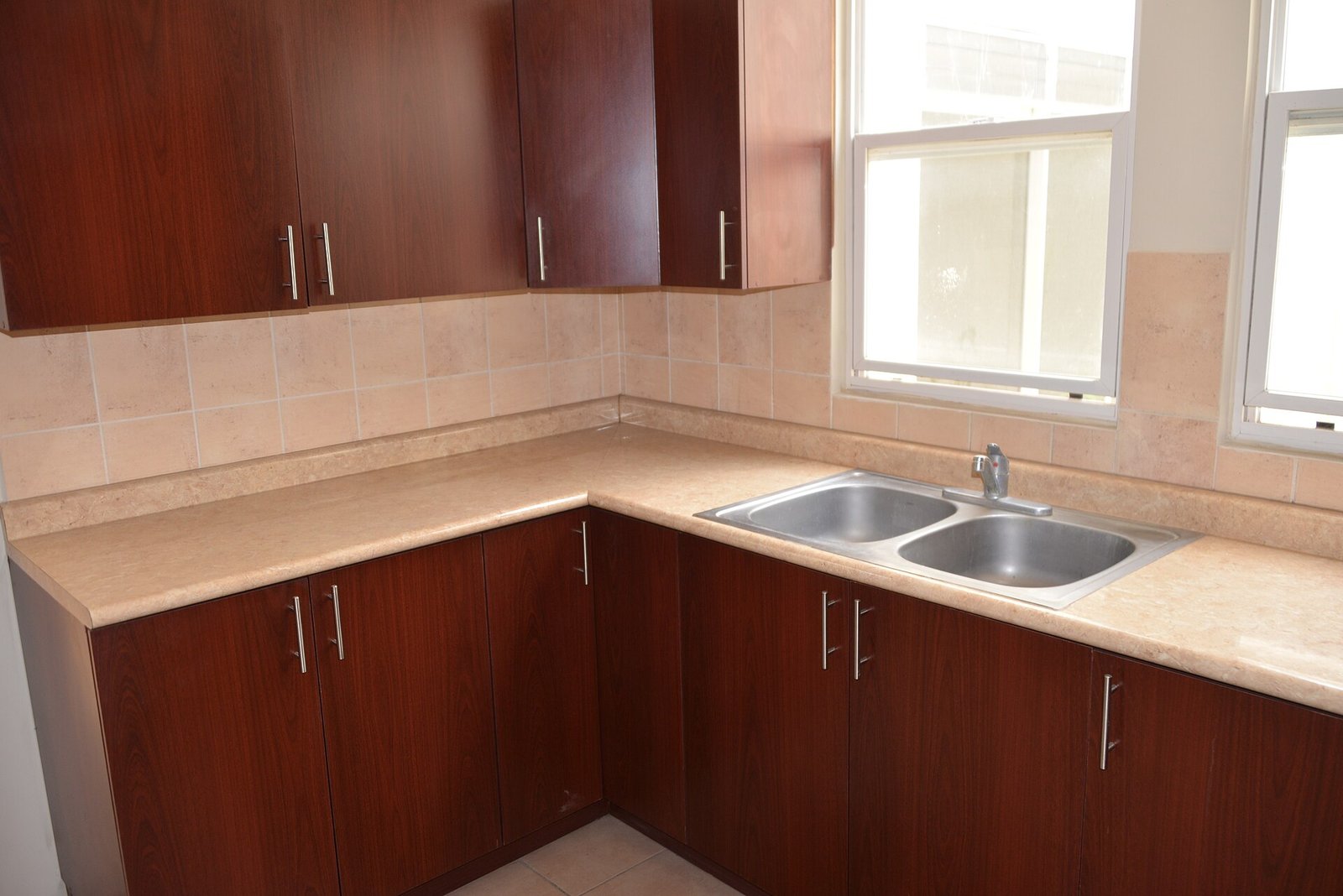
The cabinet under your kitchen sink is probably the most underused square foot in your whole house.
I opened mine last month and found a graveyard of half-empty spray bottles, a sponge fossilized in 2019, and one very damp trash bag box. Yours might be tidier, but I’ll bet the kitchen cupboards sink area in your home is doing a lot less than it could. When I finally gave mine a proper rethink — better storage, a few smart organizers, and one renter-friendly upgrade — it became one of the hardest-working spots in my kitchen.
This guide is the full rundown: 13 practical kitchen cupboards sink ideas covering under-sink storage, the sink-base cabinet itself, and the cupboards around your sink. Every idea is concrete, most cost under $40, and renters can do nearly all of them without drilling a single hole.
What Are Kitchen Cupboards Under the Sink?
The kitchen cupboards under the sink are the base cabinets built directly beneath your sink basin, designed with a false drawer front and an open back to make room for plumbing. They typically measure 30 to 36 inches wide, and their interior is the trickiest storage in the kitchen because pipes, a garbage disposal, and shut-off valves eat up the middle of the space.
Unlike every other cabinet in your kitchen, this one has to share its box with plumbing. That single fact shapes every storage decision you make around it. Once you plan around the pipes instead of fighting them, the whole zone starts working.
Why You’ll Love These Kitchen Cupboards Sink Ideas
- You get a real cabinet back. The average under-sink cabinet holds about 5 cubic feet of storage that most people waste. Organized properly, it handles all your cleaning supplies plus trash or recycling.
- Cleaning gets faster. When every bottle has a home, grabbing the dish soap takes three seconds instead of a full archaeological dig.
- Most fixes cost less than a pizza night. Tension rods, bins, and door racks run $8 to $25. Even the priciest organizer here stays under $40.
- Renters can do almost everything. I’ve flagged which ideas need zero drilling — most of them use friction, adhesive, or gravity.
- Your cabinet stays dry. Moisture-proofing ideas protect the cabinet floor from the slow leaks that ruin particleboard boxes.
- It’s safer with kids or pets. Locks and high placement keep harsh chemicals out of curious hands.
Kitchen Cupboards Sink Storage That Actually Works
The space under the sink is awkward: pipes in the middle, valves on the wall, garbage disposal on one side. These four kitchen cupboards sink storage ideas are built around that reality instead of pretending it isn’t there.
1. The Two-Tier Pull-Out Organizer
This is the single best upgrade you can make to any kitchen cupboards sink cabinet. A two-tier organizer has a fixed top shelf — often U-shaped or narrower to fit around the basin and pipes — plus a bottom basket that slides out like a drawer toward you.
What makes it work: the vertical space beside the pipes becomes usable instead of dead air, and the slide-out basket means nothing ever disappears into the dark back corner again. Look for a metal frame with a removable tray so leaks wipe up in seconds, and measure your interior width before ordering — a 30-inch sink cabinet has roughly 26 to 27 inches of clear space inside.
Try it: Put heavy daily bottles (dish soap, all-purpose cleaner, dishwasher pods) in the bottom slide-out, and lighter items like sponges and extra trash bags on the top tier.
2. A Tension Rod for Spray Bottles
A spring-loaded tension rod mounted near the top of the cabinet, running side to side or front to back, gives every spray bottle a hook to hang from by its trigger. I paid about $9 for mine and it freed the entire cabinet floor.
This works because spray bottles are tall and tippy — the number one cause of under-sink avalanches. Hung from a rod, they stay upright, visible, and grabbable with one hand. No screws, no damage, and it takes about two minutes to install. Measure the interior width first so the rod’s range covers it.
Try it: Mount the rod a few inches below the cabinet top, above where the pipes run, so bottle triggers clear the plumbing.
3. Door-Back Storage for Your Kitchen Cupboards Sink Cabinet
The inside of the cabinet door is free storage space hiding in plain sight. An over-the-door or adhesive-mounted rack holds gloves, scrub brushes, extra sponges, and small cleaning tools without eating a single inch of shelf space.
Adhesive-mounted racks are the renter-friendly pick — modern ones hold several pounds and peel off without damage. Keep it shallow (under 3 inches deep) so the door still closes flat, and leave room at the front of the cabinet for the rack to swing in. This is where your everyday grab-and-go items belong: the gloves you wear daily, the brush you reach for constantly.
Try it: Put only items you touch weekly on the door; if you haven’t used it in a month, it belongs deeper in the cabinet.
4. Stackable Bins Around the Pipes
The zones on either side of the plumbing are perfect for stackable open bins — one category per bin, labels facing forward. Trash bag refills, sponge packs, and floor cleaner live happily in these side zones.
Choose bins with handles so you can pull the whole bin out like a drawer, and clear plastic so you can see what’s inside without digging. The back corners behind the pipes? Reserve those for true backups — the jumbo refill bottle you touch twice a year. Front and sides are for the daily rotation.
Try it: Limit yourself to three bins per side at most. Four or more and you’re back to the cluttered mess you started with.
Sink Base Cabinets: The Heart of Kitchen Cupboards Sink Design
If you’re choosing cabinets (or replacing a ruined one), the sink base is its own animal. These ideas cover the cabinet itself — how it’s built, how to protect it, and the add-ons that make it earn its keep.
5. Know What a Real Sink Base Is
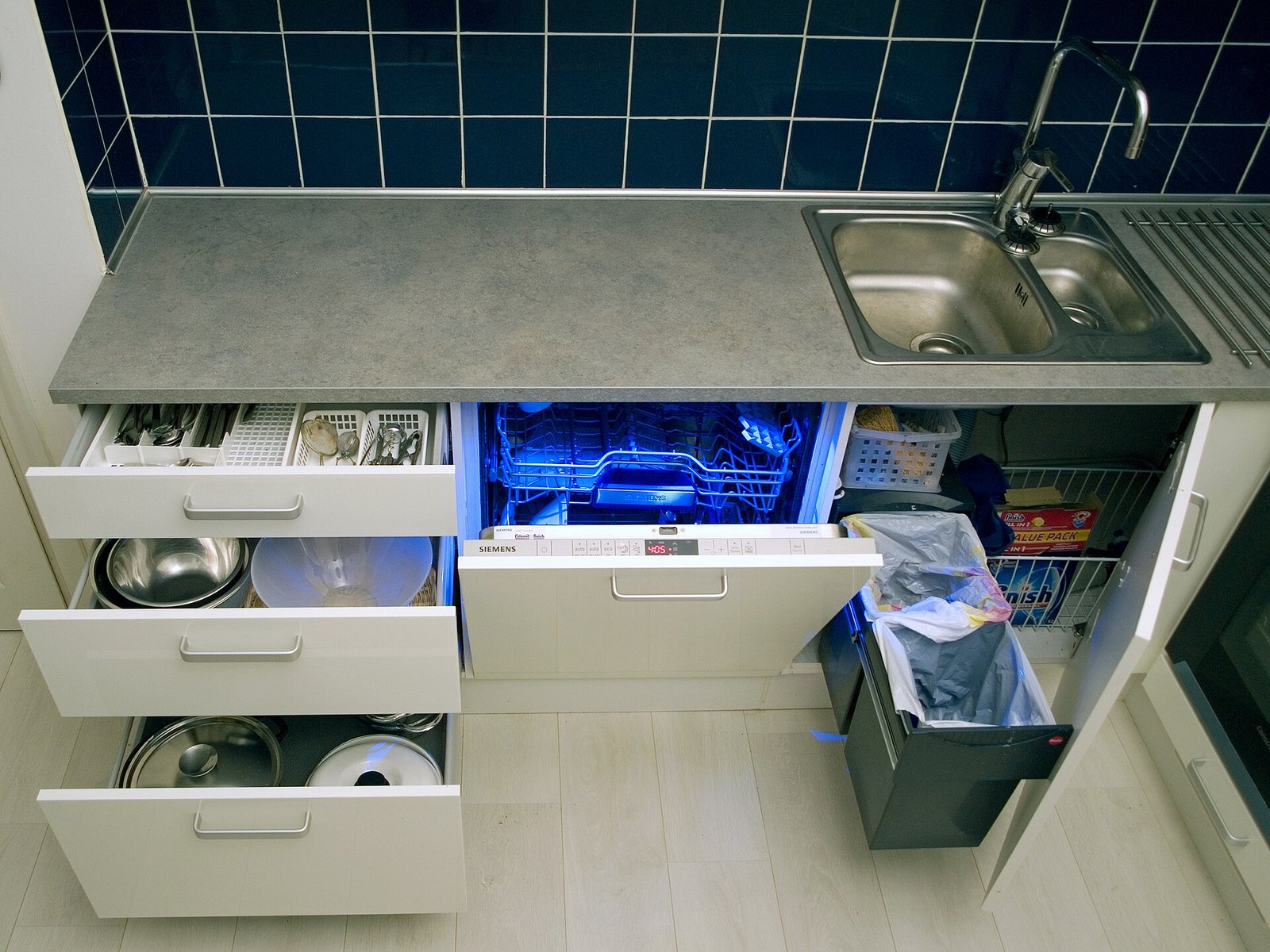
A true sink base cabinet has a false drawer front — the “drawer” under your sink doesn’t open because there’s a sink basin in the way — and an open back panel so plumbing connects through the wall. Standard widths run 30 to 36 inches, with 30 to 33 inches suiting most single bowls and 33 to 36 inches fitting double bowls comfortably.
Why this matters for you: if you’re ordering or replacing, check your sink’s spec sheet against the cabinet’s interior width before you pay, and confirm the floor is plywood, not flimsy particleboard. Sinks are heavy, and a weak floor sags over time. Plywood floors matter most right here, in the wettest cabinet in your kitchen.
Try it: When getting quotes, ask one question: “Is the sink base floor plywood?” If the dealer hesitates, shop elsewhere.
6. Pull-Out Trash Bins Inside the Sink Cabinet
Moving your trash or recycling bin into the sink cabinet gets a smelly, ugly object off your kitchen floor and puts it exactly where food prep happens. Pull-out sets mount on the cabinet floor and slide toward you on tracks.
This works beautifully beside a double sink, where one side of the cabinet often has enough clearance for a slim pull-out. A 30-inch base can typically fit a double-bin pull-out (trash + recycling) if the plumbing runs tight to the wall. Measure the floor space between the pipes first — you need a clear rectangle roughly 14 by 20 inches.
Try it: If pipes crowd the floor, try a single-bin pull-out for trash and keep recycling in a slim cabinet nearby.
7. Add a Removable Shelf for Two Levels
About 60% of under-sink cabinets have no shelf at all — just one tall, dark void. A freestanding, adjustable shelf that fits around the pipes instantly doubles your storage levels.
Unlike a built-in shelf, a removable unit lets you lift it out when a plumber needs full access (ask me how I know). Stackable wire or plastic shelf units come in heights designed for under-sink use, with notches that straddle the drain pipe. Keep the lower level for tall bottles and the upper level for short items like sponges, pods, and cloths.
Try it: Set the shelf height so your tallest daily bottle just clears it — every inch above that is wasted air.
8. Moisture-Proof the Cabinet Floor
Slow drips from a loose supply line or a sweating pipe will quietly destroy a particleboard cabinet floor over months. Line the base with a waterproof tray, a sheet of removable aluminum, or a rubber boot tray cut to fit.
This is the cheapest insurance in the whole kitchen. A contained puddle wipes up in ten seconds; a swollen, crumbling cabinet floor means a carpentry job. While you’re at it, learn where your water shut-off valves are — every sink cabinet should have them on the hot and cold lines, and one quarter-turn beats mopping at midnight.
Try it: Slide a waterproof tray under the pipes today. Check it every few months when you grab the dish soap.
Kitchen Cupboards Around the Sink
The sink zone isn’t just the cabinet underneath — it’s the wall cabinets, shelves, and counters on either side. These ideas make the whole kitchen cupboards sink area work as one system.
9. Open Shelves Over the Sink
One floating shelf above the sink is the highest-impact move in a small kitchen. It holds the five things you reach for constantly — hand soap, a dish brush, two glasses, a small plant — right where wet hands can grab them.
Mount it about 20 inches above the faucet so your tallest pot clears it, and choose a shelf with a raised back lip if you keep bottles up there, because sink splashes are real. In a rental, a counter-standing shelf unit gives you the same look with zero holes in the wall.
Try it: Paint the shelf the same color as the wall so the dishes and glasses become the decoration, not the wood.
10. Glass-Front Cabinets Flanking the Sink Window
If you have wall cabinets on either side of the sink window, swapping solid doors for glass fronts turns them into display space for your prettiest everyday dishes. The sink wall becomes a feature instead of a blind spot.
This only works if you’re honest about the contents — chipped mugs with faded logos get retired fast when they’re visible. Keep it to one color family of dishes plus clear glass, and the cabinet reads as intentional design instead of clutter. It’s also a gentle decluttering system: when everything shows, the ugly stuff leaves.
Try it: Try it for a month with your current dishes before buying glass doors — live with the “everything visible” rule and see if you like it.
11. A Slim Tray Cabinet Beside the Sink
That narrow dead strip between the sink base and the next cabinet — or a slim 9-inch base beside it — makes a perfect vertical tray divider for cutting boards, sheet pans, and baking sheets. These flat items are miserable to stack horizontally and perfect standing on edge.
If you’re buying cabinets, spec this as a dedicated narrow base with vertical dividers. In an existing kitchen, a countertop file-sorter-style rack inside the nearest cabinet does the same job. Either way, drying and storing sheet pans gets dramatically less annoying when they stand upright.
Try it: Pull out every flat pan and board you own; if they don’t all fit standing on edge in one spot, that’s your sign you need this.
Finishing Touches for Your Kitchen Cupboards Sink
The big storage moves are done — these last two upgrades are the details that make the whole kitchen cupboards sink zone feel finished and work better every day.
12. Under-Cabinet Lighting at the Sink
A battery-powered LED strip or puck light inside the sink cabinet (or under the wall cabinet above the sink) ends the era of the dark, cave-like under-sink. Stick-on lights with motion sensors cost about $12 and turn on the moment you open the door.
You’d be surprised how much this changes behavior: when you can actually see the back corners, you stop shoving things in blindly and start putting them back in their spots. Under the wall cabinet above the sink, the same LED strip becomes task lighting that makes dishwashing genuinely easier on your eyes.
Try it: Use warm white (2700K) lights — cool white makes the inside of a cabinet look clinical and food look gray.
13. Child-Safety Locks on Sink Cabinets
If kids or pets live in your home, the under-sink cabinet is the most dangerous box in the kitchen — it’s at floor level, easy to reach, and full of chemicals. Adhesive-mounted magnetic locks or slide latches keep little hands out with zero drilling.
KidsHealth recommends storing household cleaning products and aerosol sprays in a high cabinet out of reach and using safety latches on any cabinet that holds chemicals (their poisoning-prevention guide has the full checklist). Magnetic locks are the cleanest option: invisible from outside, released with a magnetic key you keep on the fridge. If relocating chemicals isn’t possible, a locked under-sink cabinet is the next best thing.
Try it: Install the lock today and move the harshest chemicals (drain cleaner, bleach) to a high cabinet this weekend.
Pro Tips to Make These Kitchen Cupboards Sink Ideas Your Own
Once the basics are in, these are the refinements that separate a decent under-sink from a great one:
- Measure first, buy once. Interior width, depth, height, and the exact position of the pipes and disposal. Write the numbers on your phone before you shop. Every organizer that fails under a sink fails because it was bought on hope.
- Decant into matching pump bottles. Dish soap, hand soap, and all-purpose cleaner in matching pump bottles look ten times better and pump faster than squeezing retail bottles. Label them — houseguests should know what’s what.
- Keep a “sink caddy” for daily tasks. A small handled caddy with your sponge, brush, and dish soap lifts out when you clean and drops back in when you’re done. The cabinet stays organized because nothing lives loose.
- Leave the disposal side clear. Garbage disposals vibrate, get hot, and occasionally need a reset button pressed. Don’t cram storage tight against one — give it a few inches of breathing room.
- Follow the industry playbook for layout. The National Kitchen & Bath Association publishes kitchen planning guidelines that cover clearances and cabinet placement — worth a skim if you’re remodeling the sink run.
- Do a six-month purge. Cleaning products multiply. Twice a year, pull everything out, toss anything expired or unused, and wipe the cabinet down. Moisture and dust build up silently around bins and organizers.
Common Mistakes to Avoid With Kitchen Cupboards Sink Storage
- Cramming chemicals next to the trash food waste. Storing cleaning products right against an open trash bin invites spills onto bottles and cross-contamination. Fix: keep a small gap or a bin wall between chemicals and anything food-adjacent.
- Blocking the shut-off valves. When a supply line bursts, you need those valves in seconds — not after emptying three bins. Fix: keep a clear hand-width path to both valves, and test them twice a year so they don’t seize.
- Storing food under the sink. It’s tempting in a small kitchen, but moisture, heat from the dishwasher or disposal, and chemical fumes make it a bad pantry. Fix: under-sink is for cleaning supplies and trash only — find food a drier home.
- Using cardboard boxes as organizers. Cardboard wicks up moisture, grows mold, and collapses. Fix: plastic, metal, or sealed wood only in this cabinet.
- Forgetting the cabinet floor exists. Most people organize the shelves and ignore the floor — where leaks land first. Fix: waterproof tray down first, organizers second. Always in that order.
Kitchen Cupboards Sink at a Glance
| Category | Best Pick | When to Use It |
|---|---|---|
| Under-sink organizer | Two-tier slide-out organizer | You want maximum storage with zero reaching into dark corners |
| Spray bottle storage | Tension rod | Bottles keep tipping over; you need a $10 renter-friendly fix |
| Door storage | Adhesive door-back rack | Everyday items (gloves, brushes) need a grab-and-go home |
| Sink base cabinet | 30–36″ base with plywood floor | You’re ordering or replacing cabinets and want it to last |
| Trash solution | Pull-out bins inside the sink cabinet | You want the bin off the floor and near food prep |
| Moisture protection | Waterproof tray under the pipes | Always — this is the cheapest insurance in the kitchen |
| Around-the-sink storage | Open shelf over the sink | Small kitchens needing daily items within arm’s reach |
| Child safety | Magnetic cabinet locks | Kids or pets in the home with chemicals stored low |
Kitchen Cupboards Sink FAQ
What should I actually store under the kitchen sink?
Daily cleaning supplies (dish soap, all-purpose cleaner, sponges, dishwasher pods), trash bags, and rubber gloves. That’s it. Food, paper goods, and anything moisture-sensitive belong elsewhere — the under-sink runs warm and damp from the dishwasher and plumbing.
How do I organize kitchen cupboards under the sink with lots of pipes?
Work around the plumbing, not through it: hang spray bottles on a tension rod above the pipes, put stackable bins in the clear zones on either side, and use the door back for small tools. Measure the clear rectangles between pipes before buying any organizer.
What size is a standard kitchen sink base cabinet?
Most sink bases run 30 to 36 inches wide. Single-bowl sinks typically fit 30–33 inch cabinets, while double bowls need 33–36 inches. The interior loses an inch or two to the frame, so check clearances against your sink’s spec sheet before ordering.
How can I make under-sink cabinets renter-friendly?
Skip anything that screws in. Use a tension rod for bottles, adhesive door racks, freestanding bins and shelves, a waterproof tray on the floor, and battery stick-on lights. Every one of these leaves zero damage when you move out.
How do I keep the cabinet under the sink from smelling?
Pull everything out twice a year, wipe all surfaces with a vinegar solution, toss expired products, and make sure the waterproof tray is clean and dry. Persistent smells usually mean a slow leak — check the supply lines and the drain connections while you’re in there.
Can I put a trash can inside the sink cabinet?
Yes — pull-out trash bins designed for sink cabinets are one of the best uses of the space. Measure the clear floor area between the pipes first (you need roughly 14 by 20 inches for a double-bin pull-out), and keep a path to the shut-off valves clear.
Should I lock my kitchen cupboards under the sink?
If children or pets live in your home, yes. The under-sink cabinet sits at floor level and typically holds the most hazardous chemicals in the kitchen. Magnetic locks are invisible from the outside and need no drilling — and moving the harshest cleaners to a high cabinet is even better.
Why does the cabinet under my sink always get damp?
Usual suspects: condensation on cold supply lines, a slow drip at a connection, or moisture from a nearby dishwasher. Feel the pipes and connections with a dry hand while the water runs. A waterproof tray catches the drips, but find and fix the source — persistent dampness rots cabinet floors.
Final Thoughts
The kitchen cupboards sink zone went from the cabinet I avoided to the one I open with genuine satisfaction — and all it took was one honest afternoon, about $35 in organizers, and a plan that respected the pipes instead of fighting them. Pick the two or three ideas from this list that fit your kitchen, start with the waterproof tray and the tension rod, and build from there.
Your turn: open that cabinet, pull everything out, and give it the reset it deserves. You’ll wonder why you waited so long.
Start your kitchen cupboards sink reset this weekend. Pick the single idea from this guide that solves your biggest pain point — the two-tier organizer, the tension rod, the waterproof tray — and install it today. These small kitchen cupboards sink upgrades compound fast: once the cabinet under the sink finally works, the whole kitchen feels calmer.

Founder of NestFlavors — sharing tested recipes and honest home ideas, made for real life.