
One chair can carry an entire corner — and the club armchair has been doing it for over a century.
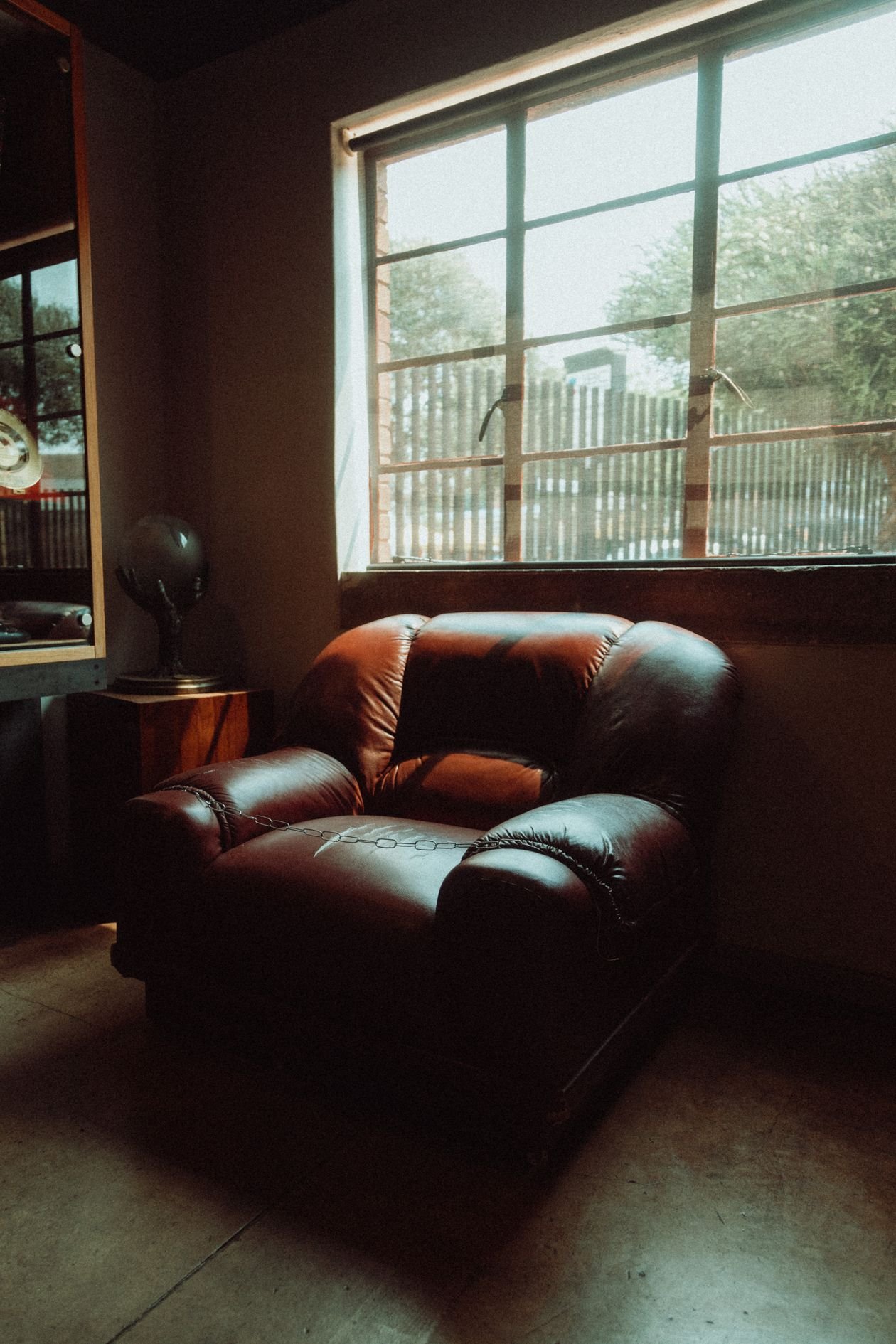
I bought my first club armchair the way most of us buy things we love: by accident, secondhand, and slightly too big for the car. It was a battered brown leather thing with one arm that squeaked and a seat cushion that had clearly hosted a thousand Sunday naps before mine. I told myself I’d reupholster it someday. Five years later, the patina has deepened to the color of strong tea, the squeak became part of the house’s soundtrack, and that chair is the single most-sat-in piece of furniture I own. Nobody fights over the sofa anymore. Everyone fights over the chair.
That’s the thing about a club armchair: it was designed for exactly this. Born in French gentlemen’s clubs as the fauteuil confortable — literally the “comfortable armchair” — it’s a deep-seated, low-backed, generously armed chair built for hours of sitting, reading, and lingering. The round, barrel-armed shape you picture when someone says “leather club chair” is still the most emblematic version, but the family has grown: boucle tubs, jewel-tone velvets, swivels, slipcovers.
Below are 15 club armchair ideas for a stylish reading corner — heritage leather looks, modern fabric twists, small-space solutions, and statement corners — plus a practical guide to size, fabric, and placement, the mistakes I see people make over and over, and honest answers to the questions you’re actually asking. Whether your corner is a sunlit window or a dark wall of books, there’s a club armchair with your name on it.
Classic Leather Club Armchair Looks
Start with the originals. These are the silhouettes that have looked right for a hundred years and will still look right when your grandkids fight over the chair. If you want the safe bet that never feels trendy, start here.
1. The Cognac Leather Original
This is the club armchair against which all others are judged: warm cognac or saddle-tan leather, rolled arms at nearly the same height as the back, a deep seat that swallows you whole. Cognac is the perfect first leather because it plays well with both warm and cool palettes — it glows against gray walls and deepens beside walnut and oak.
Real top-grain leather starts firm and breaks in over weeks, the way good boots do. That stiffness is a feature, not a flaw. If you can, sit in the chair before buying: you want to sink about two inches into the seat, not perch on top of it like a barstool. Splurge on the leather grade if your budget has a splurge line; save on the accessories, because a great chair needs almost none.
Try it: Place your cognac club chair opposite the sofa with a small round side table between them — instant conversation area, zero additional thought required.
2. The Vintage Thrift-Store Score
My chair cost me a tank of gas and an afternoon. Estate sales, flea markets, and secondhand shops are full of club armchairs with better bones than anything new at three times the price — kiln-dried hardwood frames that have already proven they can survive decades. The leather’s already broken in, which means someone else did the stiff first year for you.
Inspect before you commit: sit in it and lean hard to check for frame wobble, lift the seat cushion and look at the springs or webbing underneath, and give it the sniff test — smoke and mildew don’t leave, no matter what the seller promises. Scratches and fading are fine; they blend into patina. A sagging seat deck is not fine. This is where a washable throw earns its keep: it hides the cushion that’s slightly more worn than the rest and protects the arm you always grab getting up.
Try it: Style a thrifted club chair with a plaid wool throw and a brass floor lamp — the mixed materials make “secondhand” read as “collected.”
3. The Deep-Tufted Chesterfield Style
Button tufting is the tailoring of the club chair world. Deep-set buttons pull the leather into diamond folds that catch light and shadow, and the whole chair reads more formal, more deliberate — less “man cave,” more “private library.” This is the style for the corner you want to feel like an occasion.
Tufting is not just decoration; it holds the padding in place, which is why a well-tufted seat keeps its shape for years while a plain loose cushion migrates. The trade-off is cleaning: crumbs settle into the folds. A soft brush attachment on your vacuum handles it in minutes, but if you eat dinner in this chair every night, the smooth leather version will make you happier. I love this style against dark green or navy walls, where the tufting’s shadows turn into the whole show.
Try it: Flank a fireplace or a bookshelf with two tufted club armchairs and a shared ottoman — it reads as a room that was designed all at once, even if it wasn’t.
4. The Brass Nailhead Library Look
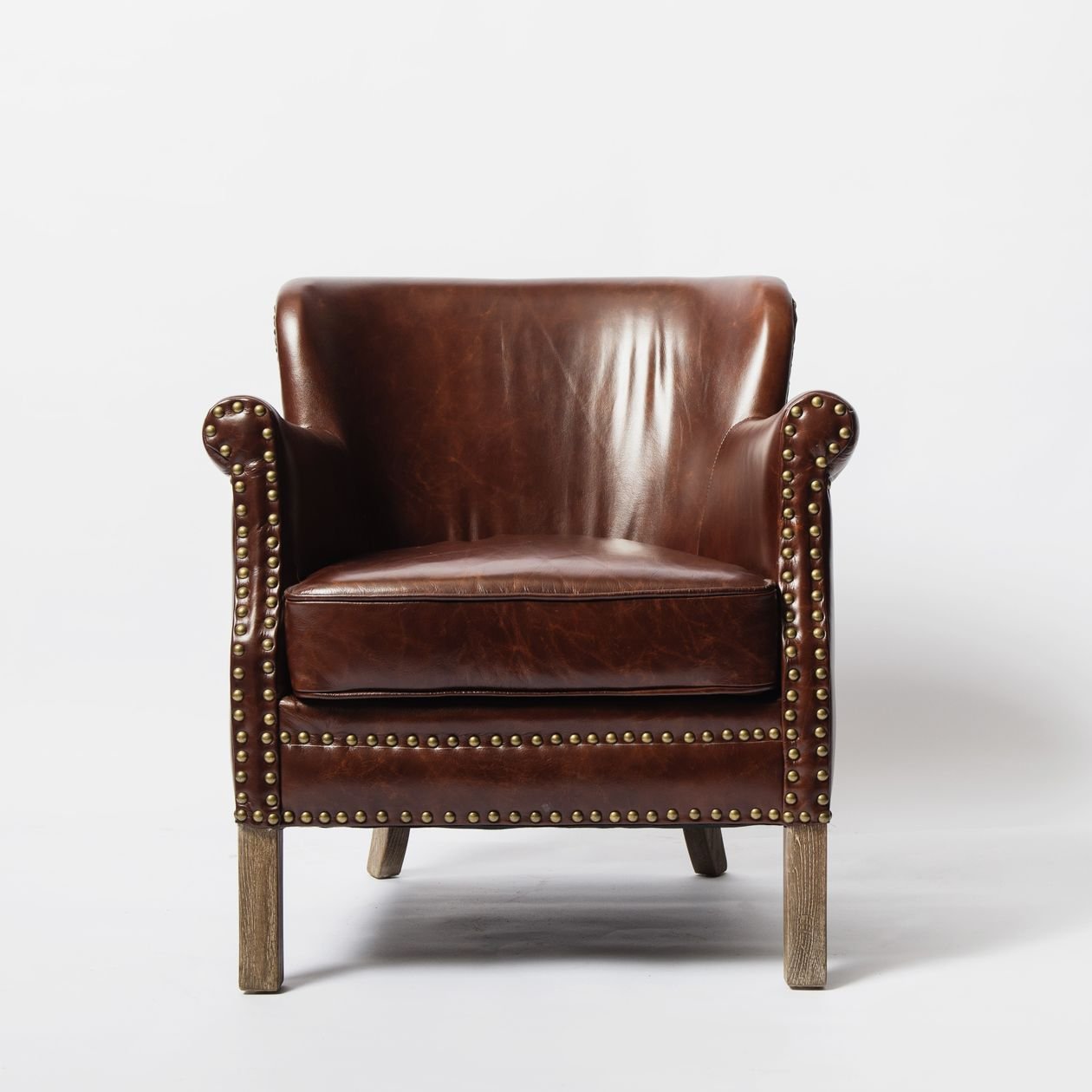
Hand-applied nailhead trim along the arms and back is the jewelry that separates a plain club armchair from a refined one. Brass studs against dark brown or oxblood leather give you that old-library gravity; the same trim on a lighter tan reads more relaxed and modern. Either way, the eye follows the line of studs, which makes the chair look more expensive than it is.
Check how the trim is actually attached before you fall in love. Real individually applied nails sit slightly proud of the leather and catch the light; a glued-on decorative strip peels within a year or two of daily use. This is one of the details worth paying for, because it’s the first thing your hand touches when you grab the arm — and cheap trim is something you feel every single day.
Try it: Pair a nailhead-trimmed club chair with a tall bookcase and a swing-arm wall lamp — the library corner practically builds itself around this chair.

Fabric & Modern Club Armchair Twists
Leather owns the club chair’s history, but it doesn’t own its future. These are the versions for people who want the deep, enveloping shape without the traditional leather look — softer, lighter, and in some cases far more practical for real households.
5. The Cream Boucle Tub
Boucle — that nubby, looped textile that looks like it was borrowed from a very fashionable sheep — turned the tub-shaped club armchair into a design-magazine staple. The rounded, armless-adjacent silhouette wraps around you like the inside of a parenthesis, and the texture catches light so the chair looks soft even from across the room.
Buy this one with your eyes open. Real wool boucle snags on cat claws and traps pet hair like velcro; polyester performance boucle resists both far better, so check the fabric content tag, not just the look. Light cream shows denim transfer, which means medium tones like oatmeal or greige are the practical picks for daily reading. This is a texture play, not a color play — buy it quiet and let the loops do the talking.
Try it: Set a cream boucle club chair against a dark wood side table and a black arc floor lamp — the contrast keeps all that softness from washing out.
6. The Emerald Velvet Statement
Some chairs are seating. An emerald (or sapphire, or oxblood) velvet club armchair is jewelry. The pile catches light differently from every angle, giving the chair a depth that flat fabrics can’t fake, and the club silhouette keeps the drama grounded — this reads as confident, not costume.
Velvet has one honest quirk: it shows every indent. Sit in the same spot daily and you’ll develop a visible map. Rotate the seat cushion weekly and brush the pile back with your hand to revive it, and you’ll stay ahead of the wear. Dark jewel tones hide all of this best, which is another reason the emerald version outsells the blush one by a mile. Keep the rest of the corner quiet — warm white walls, one brass lamp — and let the chair do all the talking.
Try it: Angle an emerald velvet club chair 45 degrees toward a window and style it with nothing but a small plant — the color is the whole composition.
7. The Swivel Club Chair
Take a deep club armchair, put it on a 360-degree swivel base, and you’ve solved the reading corner’s oldest problem: chasing good light. Morning sun on the east side, evening lamp on the west side — just turn. For open floor plans, the swivel is genuinely functional, not a gimmick: one seat can face the conversation, the TV, or the window depending on the hour.
The base adds two to three inches of height, so swivel club armchairs sit a little taller than the classic low-slung version — plan your side table height accordingly. Leave a few inches of clearance on all sides for rotation, and never park one where the spinning back will clock a side table (I learned this the loud way). A memory-return base that spins back to center on its own is worth seeking out if a perpetually crooked chair will bother you.
Try it: Float a swivel club chair in the middle of an open living room instead of pushing it to a wall — the swivel earns its keep when the chair isn’t anchored to one view.
8. The Washable Slipcovered Classic
A slipcovered club armchair is the relaxed answer to formal leather: a loose, washable cover over a deep, comfortable frame. If your household includes kids, dogs, or a talent for spilling coffee, this is the club armchair that actually survives real life — the entire cover comes off and goes in the washing machine.
The slightly rumpled look is the point, so don’t fight it. Fit matters more here than with any other style: a baggy cover looks intentional, a saggy one looks sad. Look for covers with ties, elastic, or a tailored cut, and buy a second cover if you can — one in the wash, one on the chair. Linen and cotton-duck covers wrinkle; that’s their charm. And here’s my favorite trick: white or natural linen for summer, a darker cover for winter. Two rooms for the price of one chair.
Try it: Choose a slipcovered club chair in natural linen for a reading corner that needs to feel breezy, then layer a chunky knit throw when the weather turns.

Club Armchair Ideas for Small Spaces & Quiet Corners
The club armchair has a reputation for being a big, room-eating piece. It doesn’t have to be. These four ideas prove the silhouette works in apartments, bedrooms, and corners you thought were too small for anything but a houseplant.
9. The 30-Inch Apartment Club
Here’s the secret the furniture industry doesn’t advertise: plenty of club armchairs run around 30 inches wide, which is barely wider than a large dining chair. The classic deep seat is still there — typically 20 to 22 inches of it — but the narrower arms and tighter back make it genuinely apartment-friendly.
The trick to small-space success is visual lightness, not just measurements. A 30-inch club chair on raised wooden legs reads smaller than a 28-inch one on a solid upholstered base, because your eye travels under it. Before buying, tape the footprint on your floor with painter’s tape and live with the outline for two days. You’ll discover door swings and walkway collisions that no product photo reveals. Leave at least 18 inches between the seat front and any coffee table, and 36 inches along your main walking routes.
Try it: Tuck a compact club chair into the dead corner beside your bookshelf — add a wall-mounted reading light and you’ve built a nook without losing a single square foot of walkway.
10. The Bedroom Corner Perch
A bedroom club armchair is a different animal from a living room one. It’s for the five minutes of pulling on shoes, the novel before sleep, the robe draped over the back at midnight. You don’t need the full 36-inch-wide lounge version here — a slimmer club armchair keeps the corner feeling like a corner, not a second living room.
Keep it at least three feet from the bed so the room breathes, and skip the side table if space is tight — a small floating shelf at about 24 inches high holds a book and a glass of water just fine. I put mine where it catches the last light of the day, and evening reading by a west-facing window in a chair that holds you like this is honestly a top-tier life experience.
Try it: Style a bedroom club chair with a lumbar pillow in a contrasting texture — leather against linen, or velvet against cotton — to keep the low back from looking flat.
11. The Home-Office Escape Seat
If your desk chair is for working, your office needs a club chair for not-working: the seat where you read the contract, take the call that doesn’t need a screen, or stare out the window and actually think. The deep, low posture is the opposite of task seating, and that contrast is the whole point.
Angle it away from the desk — even 90 degrees changes the mental mode — and toward whatever view or art the room offers. A small side table within arm’s reach holds the notebook and the coffee that migrates with you. One caution from experience: don’t make it too comfortable if this is where you “quickly check” your phone, because the club chair’s whole design brief is keeping you seated longer than you planned.
Try it: Put the office club chair on a small round rug, even over carpet — the rug visually separates “work zone” from “thinking zone” in a shared room.
12. The Sunlit Window Nook
The simplest idea on this list is also the one I recommend most: a club armchair, a window, a floor lamp, a side table. That’s the entire formula, and it has never once failed. Daylight from the side — never with your back to the window, which throws your shadow onto the page — does more for a reading corner than any piece of decor.
Angle the chair about 45 degrees to the glass instead of facing it head-on; you get natural light over your reading shoulder and the room gets a styled corner instead of a chair staring at a wall. The floor lamp goes slightly behind and to the side of your reading shoulder, with the shade bottom at about your seated eye level. A sunlit club armchair by a window needs almost no styling — a folded throw on the arm is the whole decoration budget.
Try it: Test the spot with an existing chair for three evenings first. If you naturally drift there with a book, the nook has earned the new club chair.
Statement Club Armchair Corners
Sometimes the chair isn’t just seating — it’s the reason the room exists. These three corners let a club chair be the main character, and they all start from the same place: give the chair room to breathe and light worth sitting in.
13. The Moody Library Wall
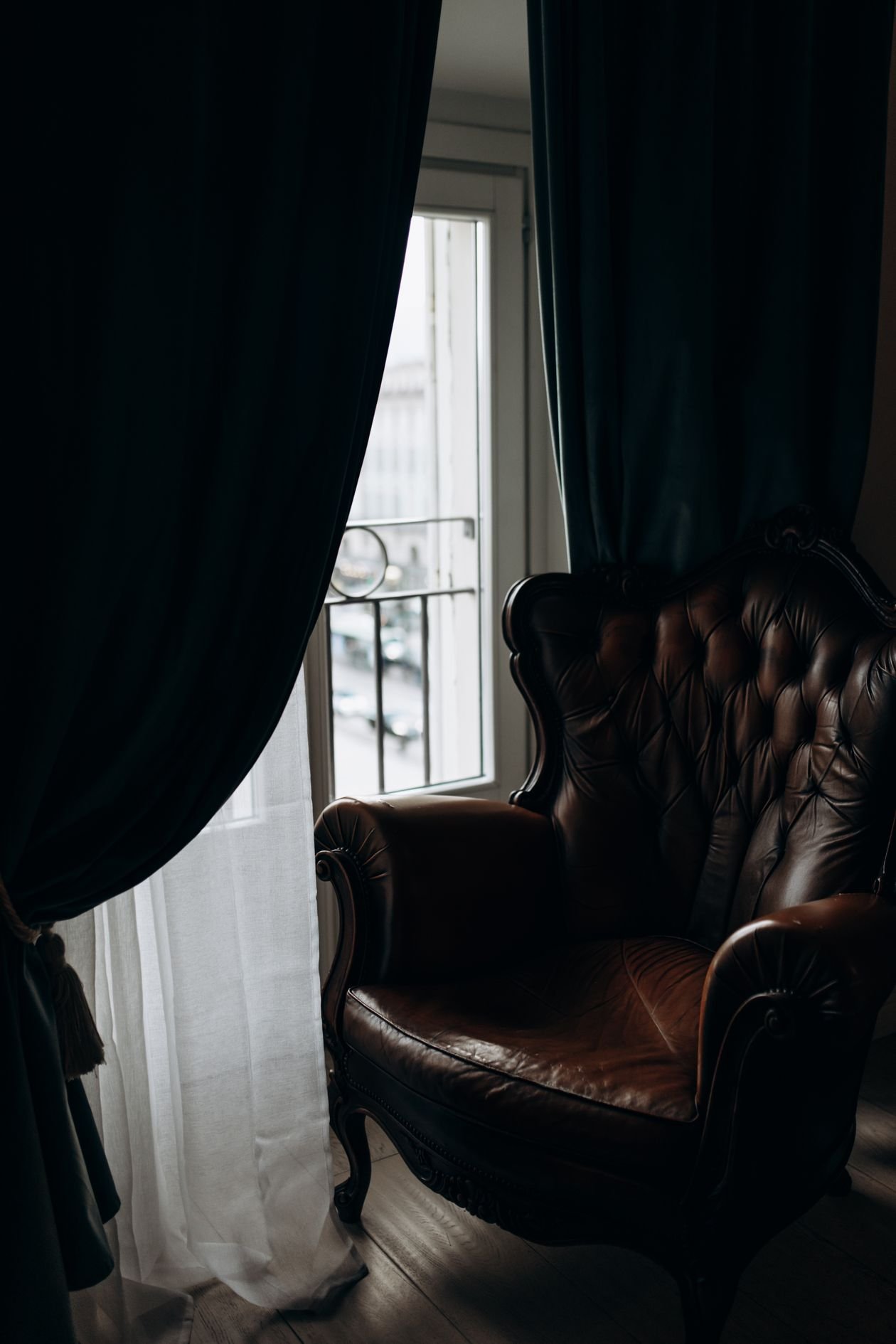
Dark walls are the club armchair’s natural habitat. Deep green, charcoal, or oxblood paint absorbs light and makes a cognac or chestnut leather chair glow like it’s lit from within. Add floor-to-ceiling bookshelves and a brass picture light, and the corner stops being a corner and becomes a destination.
Moody doesn’t mean dark enough to strain your eyes — that’s the mistake. The reading light does the work: a pharmacy-style wall lamp or an arc floor lamp aimed at the seat, warm bulb, shade positioned so no direct light hits your eyes. Keep one light-toned element in the corner — a cream rug, a linen throw — so the chair has something to pop against. Without it, even beautiful leather disappears into the dark.
Try it: Paint just the reading wall a deep tone and keep the other three walls light — you get the library mood without committing the whole room.
14. The Leather Pair for Conversation
Two club armchairs facing each other across a small table is the most civilized seating arrangement ever invented. It’s the setup the original gentlemen’s clubs were built around: equal seats, no bad chair, conversation at the perfect distance. In a living room, a pair of club armchairs opposite the sofa balances the whole layout; in a large bedroom or study, they create a sitting area out of thin air.
The pair doesn’t have to match exactly. Two chairs in the same leather family — say, cognac and chestnut — look collected rather than catalog-bought, and they age into each other beautifully. Keep the distance between the facing seats under eight to ten feet; beyond that, people raise their voices and stop talking to each other. A shared ottoman or a low coffee table between them anchors the grouping and gives feet somewhere to go.
Try it: Before buying the pair, place your dining chairs in the candidate spots for a weekend — you’ll feel immediately whether the spacing and angles actually work.
15. The Mixed-Material Rustic Mix
Leather gets along with everything, which is why the club armchair is the easiest statement piece to style. My favorite corner right now pairs a worn leather club armchair with a rattan side table, a jute rug, and one very alive houseplant. The materials do all the work: smooth leather, woven rattan, nubby jute, living green.
The rule for mixing is contrast with a common temperature. Warm leather plus warm wood plus warm-toned textiles always works; add one cool note — a black metal lamp, a gray linen pillow — so the warmth doesn’t turn soupy. This is also where the vintage club chair shines brightest: a chair with twenty years of patina has a texture no new piece can match, and rustic rooms are built on exactly that kind of honest wear.
Try it: Let the leather club chair be the only upholstered piece in a room of wood and wicker — it becomes the focal point without any effort.
How to Choose the Right Club Armchair for Your Room
Styles are the fun part. This is the part that saves you from a return, a restocking fee, and the particular sadness of a beautiful chair that doesn’t fit your life.
Measure first, shop second. A true club armchair typically runs 30 to 36 inches wide and 32 to 38 inches deep, with a seat depth around 20 to 24 inches and a seat height in the 16 to 19-inch range — lower than most sofas. Tape the full footprint on your floor, including any swivel clearance, and live with the outline for 48 hours. Then check the delivery path: measure your doorways, hallways, and stairwell turns. A 36-inch-deep chair does not pivot around a tight landing the way you hope it will.
Match the seat to your body. This is the single most important comfort check. Sit all the way back: you want a couple of inches between the front edge of the seat and the back of your knees. If you’re under about 5’4″, a 24-inch-deep seat will push you into a slouch — look for the shallower end of the range. If you’re over 6’1″, you want the deepest seat you can find or your knees will hang off like a kid at the grown-ups’ table. For reading specifically, check that the back supports your shoulders when you lean back; most club armchairs offer little head support, so test the lean with your actual reading posture.
Choose fabric for your life, not the photo. Leather — top-grain, not bonded — is the most practical luxury: it wipes clean, scratches blend into patina, and it handles pets better than any fabric. (Bonded leather is essentially leather-flavored plastic; it peels within a couple of years, so read the fine print.) Performance fabrics and tight weaves come next for durability; loose linen and cheap velvet sit last. Households with cats should know that boucle and claws are natural enemies. If the chair will live in a sunny spot, leather needs distance from direct sun or it dries and fades — rotate the chair’s position seasonally if you can.
Place it like you mean it. The classic reading-nook formula: chair angled toward the window or into the room (never shoved flat against the wall), a side table 16 to 20 inches wide within arm’s reach, and a floor lamp slightly behind your reading shoulder with the shade bottom at seated eye level — roughly 42 to 48 inches from the floor. Give the chair six to eight inches of breathing room on each side. And match the seat height to your sofa within a couple of inches, or conversation between the two seats feels lopsided.
Common Mistakes to Avoid
I’ve made most of these myself. Learn from my furniture, not yours.
1. Buying a seat too deep to sit upright. The club chair’s famous deep seat is wonderful for sprawling and terrible for readers who sit upright — you’ll slouch forward to reach the backrest and your back will file a complaint by chapter three. The fix: match seat depth to your leg length before you fall in love with the silhouette, or plan on a lumbar pillow as a permanent resident.
2. Shoving it flat against the wall. A club armchair pushed flush into a corner looks like it’s in time-out. The whole point of the deep, sculptural shape is that it looks good from an angle. The fix: pull it out six to twelve inches and angle it 15 to 45 degrees. The corner instantly looks styled instead of stuffed.
3. Forgetting the side table. A reading chair without a landing spot for the book, the coffee, and the glasses is a chair you’ll use half as much. The fix: budget for the table with the chair — 16 to 20 inches wide, roughly the height of the chair’s arm — and place it within easy arm’s reach, not across the room.
4. Lighting it wrong. Overhead light creates glare on the page; a lamp across the room creates eye strain; your own shadow falls on the book when the light is behind you. The fix: one floor or table lamp, slightly behind and to the side of your reading shoulder, shade bottom at seated eye level. Warm bulb, always.
5. Parking leather in direct sun. That gorgeous cognac fades to sad beige and dries out if it bakes in a south-facing window all day. The fix: keep leather out of the direct-sun blast zone, condition it once or twice a year, and rotate the chair’s position with the seasons if the room allows.
6. Ignoring scale next to the sofa. A low club armchair beside a tall, deep sofa can look like a kid’s chair that wandered into the wrong room — or the reverse. The fix: keep seat heights within about two inches of each other, and match visual weight: a chunky leather club chair wants a substantial sofa, not a wispy loveseat.
7. Buying “leather” that isn’t. Bonded leather, faux leather, and “leather gel” all look convincing in product photos and all have the lifespan of a cheap umbrella. The fix: read the materials line, not the headline. You want “top-grain” or “full-grain” leather; anything with “bonded,” “bicast,” or “faux” in the name should be priced — and expected — accordingly.
Club Armchair at a Glance
| Category | Best Pick | When to Use It |
|---|---|---|
| Heritage leather | Cognac leather club armchair with rolled arms | The forever chair — living rooms, libraries, anywhere you want patina and presence |
| Vintage / secondhand | Thrifted leather club chair with solid hardwood frame | Best bones for the money; ideal if you love pieces with a past |
| Modern fabric | Cream boucle tub or jewel-tone velvet club chair | Contemporary rooms where you want the shape without the traditional leather look |
| Small spaces | 30-inch compact club chair on raised legs | Apartments, bedrooms, and corners under four feet wide |
| Reading-first | Club armchair with shallower seat + lumbar pillow | When upright reading comfort matters more than maximum sprawl |
| Statement corner | Paired leather club armchairs or one moody library setup | When the chair is the reason the corner exists |
Frequently Asked Questions
What is a club armchair, exactly?
A club armchair is a deep-seated, generously upholstered armchair with a low back and substantial rolled arms, originally designed for 19th-century gentlemen’s clubs in France. Unlike a standard armchair, it’s built for extended lounging rather than upright sitting — deeper seat, lower profile, and arms you can actually rest on. The round “barrel” leather version is the most iconic, but the shape now comes in fabrics from boucle to velvet.
Are club armchairs good for reading?
They can be excellent or frustrating, depending on the seat depth. The deep seat is perfect for curling up sideways with a novel, but if you read sitting upright, a very deep seat forces a slouch unless you add a lumbar pillow behind you. Before buying, sit in your actual reading posture — back supported, book at chest height — and check that the backrest meets your shoulders. Pair it with a good side lamp and the chair becomes a genuine reading machine.
What size club armchair fits a small apartment?
Look for compact versions around 30 inches wide and under 34 inches deep — they exist, and they keep the deep-seat comfort in a much smaller footprint. Tape the full footprint on your floor before ordering, leave 18 inches between the seat front and any coffee table, and keep 36 inches clear along main walking routes. Chairs on raised legs read smaller than their measurements because your eye travels underneath.
How much space do I need around a club chair?
Give the chair itself its full footprint plus breathing room: six to eight inches on each side, about 18 inches between the seat front and a coffee table, and 36 inches along any main walkway. For a swivel version, add a few inches of rotation clearance on all sides. The reading-nook minimum is roughly a four-by-four-foot corner: chair, small side table, and floor lamp.
Leather or fabric — which is better for a club chair?
It depends on your household, not the chair. Top-grain leather wins on longevity and easy cleaning — it wipes down, scratches blend into patina, and it outlasts fabric by years. Fabric wins on initial softness, color range, and price; performance weaves and velvets give you the club shape without the traditional look. Avoid bonded or faux leather if you expect the chair to last — it peels within a couple of years of daily use.
How do I style a club chair in a modern living room?
Let the chair be the warm counterpoint to clean lines. A leather club armchair beside a low-profile modern sofa works because the contrast is the design — just keep seat heights within a couple of inches so the pairing feels intentional. Angle the chair 15 to 45 degrees instead of lining it up with the walls, and style around it simply: one side table, one lamp, one throw. In modern rooms, a single club armchair in an unexpected fabric — boucle, emerald velvet — often works better than traditional leather.
What’s the difference between a club chair and a barrel chair?
They’re close cousins, and the terms overlap. A club chair is the broader category: deep seat, low back, substantial arms, historically leather. A barrel chair is defined by its shape — the back and arms form one continuous curve, like sitting inside a barrel — and it tends to be more compact and more modern in feel. Many barrel chairs are essentially club chairs with a wraparound silhouette; if it has the deep, enveloping sit, you’re in the same family either way.
How do I care for a leather club chair so it lasts?
Three habits cover nearly all of it: keep it out of direct sunlight (which dries and fades leather), condition it once or twice a year with a proper leather conditioner, and wipe up spills promptly with a barely damp cloth. Vacuum crevices and tufting folds with a soft brush attachment a few times a year. Real leather develops scratches — that’s patina, not damage — but deep cuts and pet-claw punctures are permanent, so a throw over the most-used arm is cheap insurance.
Final Thoughts
Here’s what five years with my battered brown club armchair taught me: the best reading corner isn’t the prettiest one, it’s the one you actually sit in. Every idea on this list — the cognac original, the thrift-store score, the boucle tub, the moody library wall — works for the same reason the original gentlemen’s clubs worked: a deep seat, arms at the right height, good light, and somewhere to put your coffee.
So tape the footprint, pick the version that fits your life (not just your feed), and give it the side table and the lamp it deserves. Then put a book on the arm and don’t get up for an hour. That’s the whole point of the chair — it was designed, over a century ago, for exactly that afternoon.
Also Read: 12 Reading Chair Ideas for the Perfect Nook

Founder of NestFlavors — sharing tested recipes and honest home ideas, made for real life.