
Your bedroom curtains are doing two jobs at once, and most people only hire them for one. They look pretty — sure — but they’re also the bouncer deciding how much streetlight, noise, and draft gets into your sleep.
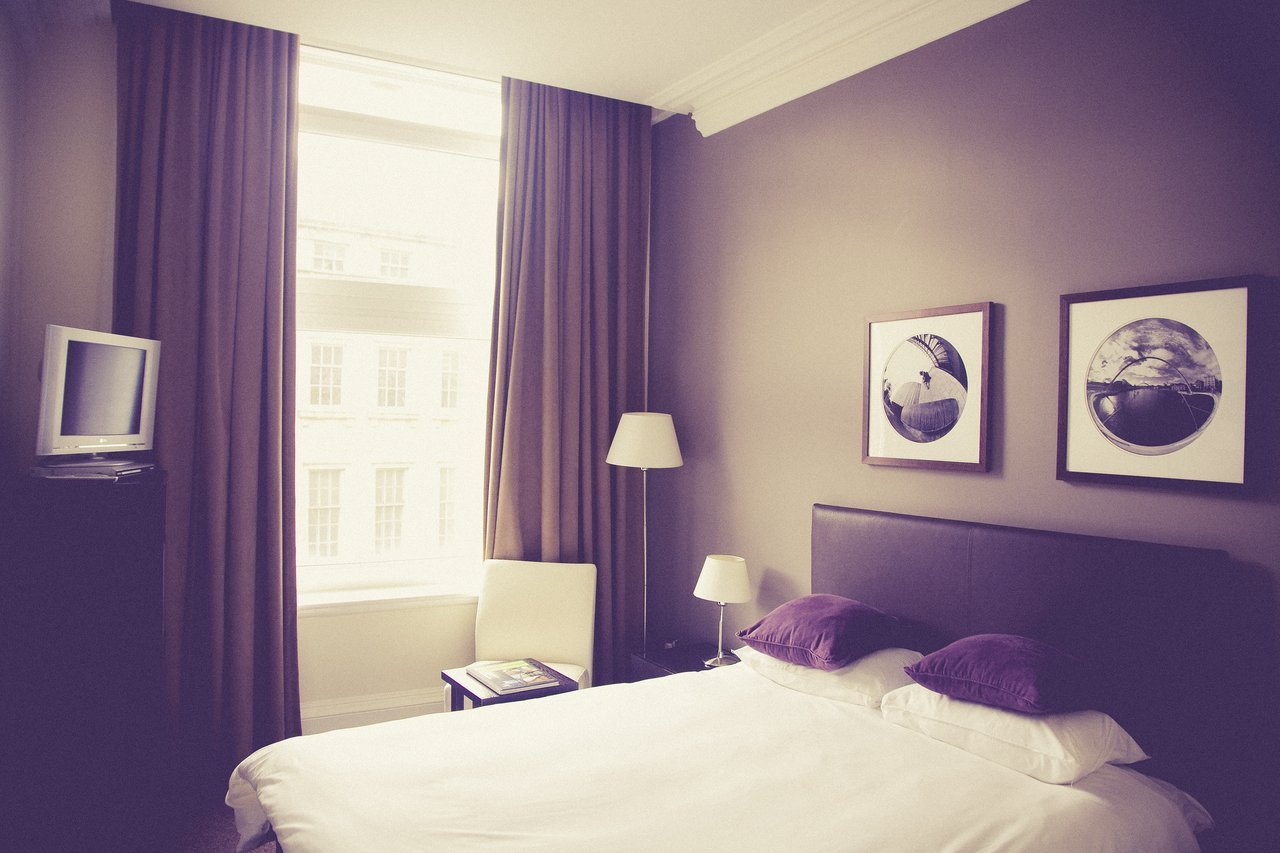
I learned this the hard way in my first apartment, where a pair of thin unlined panels let the parking lot floodlight treat my bedroom like a stadium at 2 AM. Swapping them for proper bedroom curtains — right fabric, right size, hung right — changed my sleep more than the fancy mattress did. This guide gives you 14 bedroom curtain ideas covering fabrics, exact measuring math, hanging rules, styling, and renter-friendly tricks, so you get darkness when you want it and beauty all day long.
And here’s what surprised me most: curtains are the only bedroom upgrade that works while you sleep and while you’re awake. Blackout fabric earns its keep at midnight; the color, drape, and hang of the panels earn it at noon. Most guides treat those as separate topics — fabric people talk weaves, decor people talk colors. This one covers both, because a curtain that blocks light but looks wrong still bothers you every single day.
What Are Bedroom Curtains?
Bedroom curtains are window treatments chosen specifically for a sleep space — they prioritize light control, privacy, and insulation alongside style, unlike living room curtains where looks lead. The best bedroom curtains block enough light for real darkness, keep prying eyes out after dark, and soften the room visually.
That “unlike other rooms” part matters. A sheer panel that’s perfect in a sunny kitchen is a sleep disaster in a bedroom facing a streetlight. Bedroom curtains earn their keep at 11 PM and 6 AM, not just in listing photos. Everything below — fabric, size, hanging height — flows from that one job: protect your rest first, look good doing it.
What counts as a bedroom curtain in practice? Usually a lined panel — blackout, thermal, or at least a privacy lining — in a header style that suits how often you’ll open it: grommets and back tabs glide easily for daily use, while rod pockets suit panels that mostly stay put. Weight matters too. A bedroom curtain should feel substantial in your hand, because thin fabric rarely blocks light or sound well, no matter what the packaging promises.
Why You’ll Love Getting Your Bedroom Curtains Right
- Darker room, deeper sleep. Light exposure at night can interfere with melatonin production — that’s your body’s “time to sleep” signal. Blocking it is the cheapest sleep upgrade you can buy.
- Real privacy after dark. Sheers turn into a shadow-puppet theater once interior lights go on. Bedroom curtains fix that.
- Quieter, cozier room. Heavy fabrics dampen street noise and cut drafts at the window — you’ll feel the difference on cold nights.
- Bigger-looking windows. Hung high and wide, curtains make a standard window look grand and the ceiling look taller. It’s the highest-impact trick per dollar in bedroom decor.
- Energy savings you can feel. Thermal-lined bedroom curtains add an insulating layer at the window — the biggest heat-loss surface in most bedrooms — which takes the edge off winter drafts and summer heat gain.
- Instant style reset. New bedroom curtains change a bedroom’s mood faster than paint, for a tenth of the effort.
Bedroom Curtain Fabrics: Pick Your Fighter
Fabric is the first decision when choosing bedroom curtains, and it drives everything else — how dark the room gets, how the panels hang, and what they cost. Here’s the honest breakdown.
1. Blackout Curtains: The Sleep-First Choice
The idea: true blackout bedroom curtains use a dense triple-weave fabric or a bonded backing to block 90–100% of outside light. For street-facing bedrooms, shift workers, and light sleepers, this is the default answer.
Blackout doesn’t have to mean ugly or heavy-as-a-blanket. Modern blackout panels come in linen-look weaves, soft colors, and every header style. The backing does add weight and a slightly stiffer drape — that’s the trade for darkness. If a product says “room darkening” instead of “blackout,” expect 80–90% light blockage; fine for most people, not enough for a night-shift sleeper.
Header styles matter here: grommet tops let heavy blackout panels slide with one hand for daily opening, while pinch pleats give a tailored, formal fold that suits a master bedroom. And if you fall for a fabric that isn’t blackout, buy it unlined and add a separate blackout liner on rings or clips — you keep the look and gain the darkness, often for less than true blackout panels cost. Try it: hold any “blackout” panel up to a bright window in the store — if you see the bulb’s shape through it, it’s room-darkening at best.
2. Sheer and Linen Curtains: The Light-Lovers’ Pick
The idea: sheer voile or washed-linen panels filter daylight into a soft glow while keeping the room bright and airy. They suit bedrooms that face a garden or courtyard, not a streetlight.
Sheers alone give you daytime privacy (from a distance, in daylight) and almost zero nighttime privacy or light blocking — plan to layer them over blinds or under blackouts if your room needs darkness. Linen and linen-blend panels wrinkle, and that’s the look; if crisp bothers you, buy them anyway, because bedroom linen looks better a little rumpled. They wash easily and dry fast, which matters in a room where curtains collect dust.
For headers, sheers look best on slim rods with clip rings or a simple rod pocket — chunky grommets overwhelm thin fabric. One honesty note: “sheer blackout” is marketing nonsense; no sheer fabric blocks meaningful light, whatever the tag claims. Try it: hang one sheer panel for a week — if you miss darkness, add a blackout layer on a double rod instead of replacing them.
3. Velvet Curtains: The Cozy Statement
The idea: cotton or polyester velvet bedroom curtains bring weight, drama, and natural insulation — they read “boutique hotel” the second they go up.
Velvet blocks a surprising amount of light even without a blackout lining, and its pile absorbs sound better than any flat weave. The catch: real presence needs real fullness, so velvet gets expensive fast on wide windows, and cheap velvet crushes flat and looks tired within a year. Stick to cotton velvet or good polyester velvet in deep tones — navy, forest, terracotta, charcoal.
Velvet’s pile direction matters too: run your hand down the panel, and make sure the nap runs downward, which is when the color looks richest. Hang velvet on grommets or pinch pleats rather than rod pockets, which crush the pile at the top into a permanent flat band. Try it: velvet on just one window (the one behind the bed, if you have one) gives you 80% of the drama for half the cost.
4. Cotton Curtains: The Easy All-Rounder
The idea: medium-weight cotton or cotton-blend bedroom curtains are the safe middle — decent drape, easy washing, honest prices, and they take a blackout lining well.
Cotton is what I recommend when someone feels paralyzed by choice. It hangs in soft folds, doesn’t demand dry cleaning, and comes in every color on earth. Unlined cotton filters light gently (think “dimmer switch,” not “off”), so pair it with a separate blackout liner on curtain clips if you need real darkness — liners cost less than new curtains and you keep the look you love.
Cotton takes every header style well, which is part of its charm: tab tops for casual, back tabs for a clean tailored line, grommets for everyday sliding. One caution: pre-wash cotton panels before hemming. Cotton can shrink 3–5% on the first wash, and a panel that kissed the floor in the store becomes a hover after laundry day. Try it: buy cotton panels one shade deeper than your wall color for contrast that still feels calm.
The 5-Minute Bedroom Curtain Measuring Worksheet
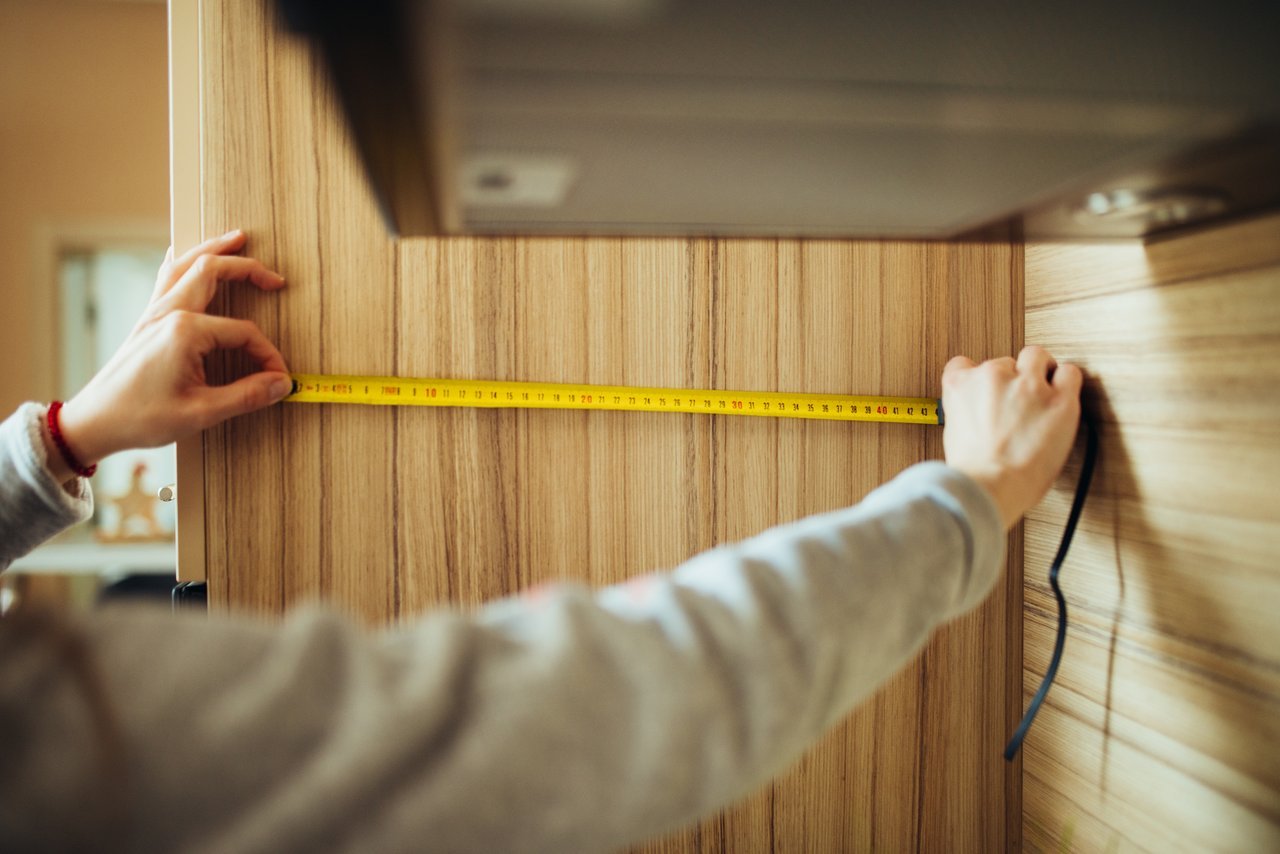
Here’s the part most guides skip: the actual math, worked through once, so you can copy it. Grab a tape measure and do these in order — rod position first, then width, then length. Measuring the window and guessing is how curtains end up two inches short.
My example window: 60 inches wide, top of the frame 84 inches from the floor, 9-foot (108-inch) ceilings. Follow along with your own numbers.
Step 1 — Rod height. Mount the rod 4–6 inches above the frame, or about halfway between the frame top and the ceiling for extra drama. My frame top: 84″. Halfway to the 108″ ceiling: 96″. Rod goes at 96 inches from the floor. (With standard 8-foot ceilings, 4–6 inches above the frame is the safer pick.)
Step 2 — Rod width. The rod should extend 8–12 inches past the frame on each side, so open panels stack on wall, not glass. My window: 60″ + 10″ + 10″ = 80-inch rod. Don’t forget to include the trim when you measure the window.
Step 3 — Panel width (fullness). Total fabric should be 1.5–2 times the rod length for proper gathered folds. 80″ rod × 2 = 160″ of fabric. Standard ready-made panels run about 52″ wide each, so three panels (156″) hits the mark. Two extra-wide 80″ panels work too.
Step 4 — Panel length. Measure from the rod straight down to the floor: 96″. Buy panels at 96 inches and they’ll kiss the floor exactly. Standard lengths are 63, 84, 96, and 108 — if your number lands between, size up and let them puddle slightly, or size down for a clean float. Never size to the window; size to the rod.
Write your four numbers down before you shop: rod height ___” | rod width ___” | total panel width ___” | panel length ___”. This five-minute worksheet prevents the two most common bedroom curtain regrets — too short and too skimpy — and it works for every window in the house.
Quick example for 8-foot ceilings: window 48″ wide, frame top 80″ from the floor. Rod at 85″ (5″ above the frame). Rod width: 48 + 10 + 10 = a 68″ rod. Fullness: 68 × 2 = 136″ of fabric — three 52″ panels (156″ total) lands right in range. Length: 85″ rod-to-floor → buy 84″ panels for a clean half-inch float.
Header-style adjustment: grommet panels start about 1–1.5 inches above the rod, so subtract an inch from your rod-to-floor number before picking a standard length. Rod-pocket, tab-top, and back-tab panels hang from the rod itself — use the full measurement. This one detail is why two people with identical windows end up with different “correct” lengths.
Hang Them Like a Designer
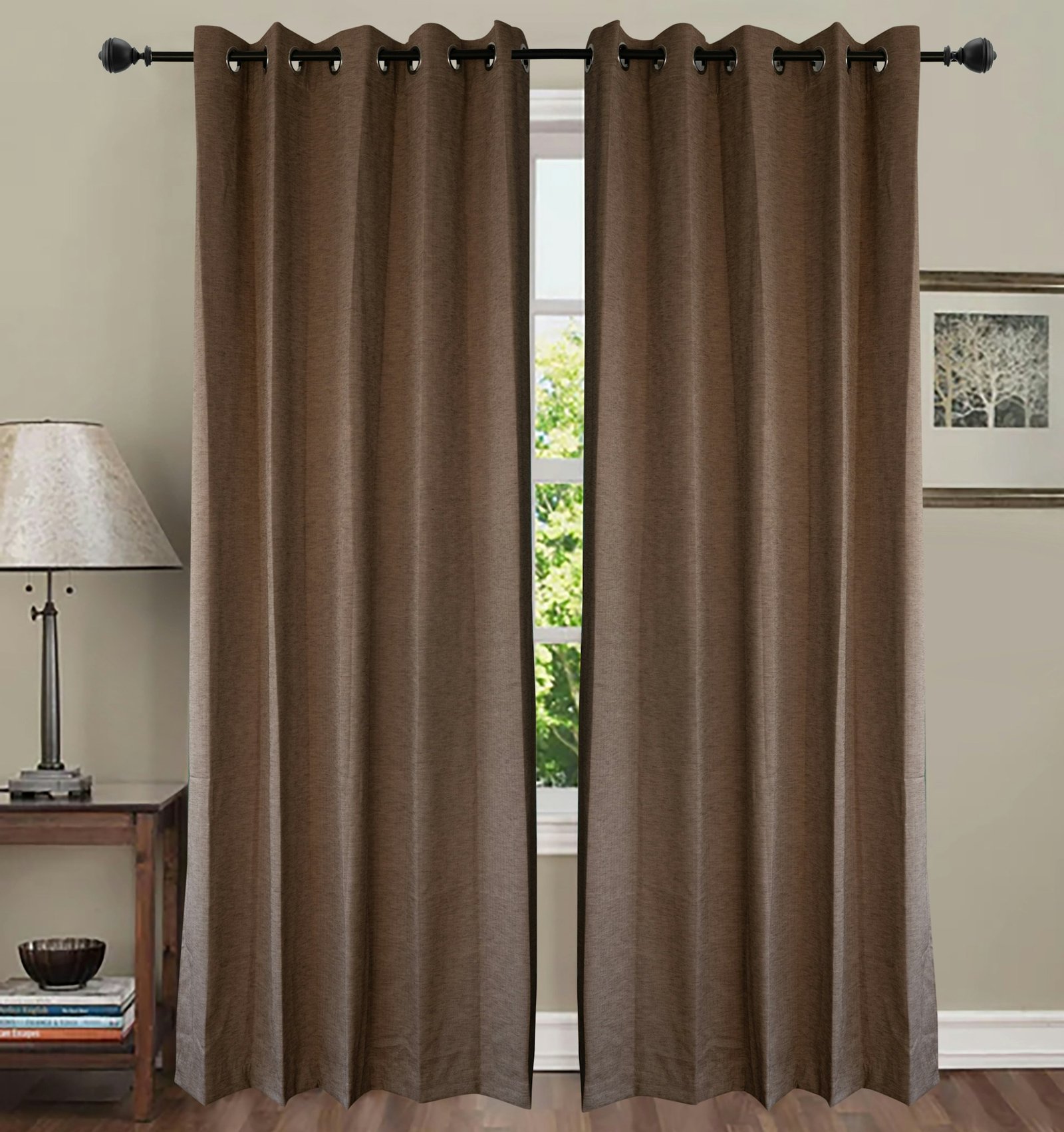
You can buy $300 bedroom curtains and make them look cheap by hanging them wrong — or buy $40 bedroom curtains and make them look custom. Placement is the whole game.
5. Mount the Rod 4–6 Inches Above the Frame
The idea: brackets go 4–6 inches above the window casing (minimum 2 inches), never screwed into the frame itself. This single move draws the eye up and makes ceilings feel taller.
Use a level and mark both bracket spots before drilling anything — bedroom walls are rarely as straight as they look, and a rod that’s off by half an inch will bug you every morning. For heavy blackout or velvet panels, hit a stud or use proper drywall anchors; a rod full of velvet is shockingly heavy.
Header choice changes daily life more than people expect: grommets glide with one hand (ideal for blackouts you open every morning), back tabs look tailored but need two hands, and rod pockets suit panels that mostly stay closed. Try it: hold the rod up with painter’s tape at the planned height and live with it for an evening — you’ll instantly feel whether it wants to go higher.
6. Extend the Rod 8–12 Inches Past Each Side
The idea: the rod runs 8–12 inches wider than the window frame on both sides, so when curtains are open they stack against the wall and the full glass shows.
This is the trick that makes windows look bigger than they are. When panels bunch over the glass, you lose light and the window reads small; parked on the wall, the window reads at its full width plus the curtain. Measure your window including trim, then add the extension — trim eats 2–3 inches people forget. On very wide windows or sliding doors, add a center support bracket so the rod doesn’t bow under the weight; a sagging rod in the middle ruins the whole high-and-wide effect. Try it: open your current curtains fully and note how much glass the fabric still covers — that’s exactly what a wider rod fixes.
7. Buy 1.5–2× Fullness, Never Window-Width Panels
The idea: total panel width should be 1.5 to 2 times the rod length, so closed curtains fall in soft gathered folds instead of stretching flat like a bedsheet.
Skimpy curtains are the fastest tell of a rushed job — when closed, you should see deep folds, not a flat plane straining at the edges. For sheers, go even fuller (2–2.5×) since thin fabric needs more gathering to look intentional. Count panels, not packages: a “pair” of 52-inch panels is 104 inches total, which only properly covers a rod up to about 60–65 inches. Try it: close your curtains and look at them from across the room — if you can see the wall color between stretched-thin folds, you need another panel.
8. Let Them Kiss the Floor
The idea: bedroom curtain hems should just graze the floor — the “kiss” — or float a half-inch above it. This reads tailored and intentional.
The look to avoid is the 2–4 inch hover, which reads as “measured wrong” rather than a style choice. A 1–3 inch puddle works for a romantic, relaxed bedroom (linen and velvet puddle beautifully), but keep puddling away from high-traffic paths and pet zones — dusty hems in a bedroom are an allergen trap.
Check both ends: floors slope, and a hem that kisses on the left can hover on the right. If you’re between standard lengths, remember the header math from the worksheet — grommets buy you roughly an extra inch of coverage, which is sometimes exactly the inch you needed. Try it: pin the hem with binder clips at floor-kiss height and live with it for two days before hemming — you’ll catch the slope.

4 Styling Ideas That Change the Whole Room
Once fabric, size, and placement are right, styling is where bedroom curtains get fun. These four moves work in real bedrooms, not just photo shoots.
9. Layer Sheers Under Blackouts on a Double Rod
The idea: mount a double curtain rod — sheer panels on the inner rod, blackout drapes on the outer — and you get two rooms in one: bright and soft by day, cave-dark at night.
This is the single best setup for a bedroom, full stop. Daytime: pull the blackouts open, let sheers filter the light. Night: draw the blackouts and the street disappears.
Double rods cost little more than singles, and the layered look reads expensive even with budget panels. Keep the sheer simple (white or ivory voile) and let the outer drape carry the color. Match the metals too — if the blackout rod is matte black, the sheer rod should be as well; mixed finishes on a double rod read as a mistake, not a choice. Try it: if a double rod feels like a project, hang the sheer on a tension rod inside the frame and the blackout on the main rod — same effect, half the hardware.
10. Go Wall-to-Wall for a Boutique-Hotel Look
The idea: run the curtain rod nearly wall to wall and hang enough panels to cover the whole span — window or not — for a soft, upholstered-wall effect.
Hotels do this because it makes even a basic room feel finished and plush. It works best on the bed wall or a wall with a small off-center window, where the extra fabric balances the composition. Use an affordable fabric in a quiet color — you’re buying yards of it, so this is where cotton or polyester shines over velvet. Budget realistically: covering a 12-foot wall at 2× fullness means roughly 24 feet of fabric width — about nine standard 52-inch panels. At $25 a panel that’s around $225, which is exactly why this look rewards affordable fabrics.
The panels don’t all need to function; the outer ones can be stationary with just the center pair drawing closed. Try it: price it in a solid ivory cotton first — wall-to-wall in a neutral is dramatic without being loud.
11. Pick a Color That Sets the Mood
The idea: curtain color steers the bedroom’s whole emotional temperature — soft neutrals calm, deep tones cocoon, and one saturated color can carry an otherwise plain room.
For calm: warm white, oatmeal, soft gray, sage, dusty blue — colors that sit one or two shades away from your walls so there’s depth without contrast. For cozy drama: navy, forest green, terracotta, or charcoal, especially in velvet or heavy cotton. One honest warning from experience: pure white curtains in a bedroom show every speck of dust and go dingy fast near a sunny window — warm whites and creams are far more forgiving.
And a simple coordination rule: curtains should relate to either your bedding or your walls, never introduce a third unrelated color family. Two color stories per bedroom; three starts to feel busy. Try it: tape fabric swatches to the wall and check them at 7 AM and 7 PM — bedroom light changes brutally through the day, and colors lie at noon.
12. Try Pattern — Carefully
The idea: a restrained pattern — tone-on-tone stripes, small botanicals, subtle geometrics — adds personality without shouting over the bed.
Bedrooms punish loud patterns more than any other room because you stare at them while falling asleep. The safe zone: patterns where the background and motif are close in tone, so the texture reads before the print does. If your bedding is already patterned, keep curtains solid — one pattern per bedroom is the rule that keeps things restful.
Stripes are the exception that plays well with almost everything; vertical stripes even nudge the ceiling visually higher. Scale matters too: small prints suit small bedrooms, while a large-scale botanical needs room to breathe or it reads as visual noise. Try it: if you’re pattern-shy, put the pattern on a Roman shade or the blackout liner and keep the visible drape solid.
Renter? No-Drill Wins
Your lease says no holes; your sleep still needs darkness. These two approaches hold real bedroom curtains without touching a drill.
13. Tension Rods Inside the Frame
The idea: a spring-tension rod wedged inside the window frame holds light and medium bedroom curtains with zero hardware and zero damage.
Tension rods are the renter classic for a reason — they install in seconds and remove without a trace. Their limits are honest ones: they sit inside the frame, so you lose the high-and-wide illusion, and they top out around medium-weight cotton or linen — no velvet, no heavy blackouts. Twist-to-lock rods hold better than the cheap spring-only kind; measure the frame’s inside width and buy the rod sized for it, not “adjustable” wishful thinking. Check the frame’s inside depth too — deep-set windows in older homes can swallow a tension rod’s ends.
And keep a spare in the closet: tension rods lose spring over a year or two, and when the curtain starts drifting closed on its own, the rod is telling you it’s done. Try it: pair an inside-frame tension rod with a wraparound blackout shade behind it — the shade does the darkening, the curtain does the pretty.
14. Adhesive Hooks and Brackets That Actually Hold
The idea: heavy-duty adhesive hooks and no-drill curtain brackets grip the wall (not the frame) and can carry a real rod with real bedroom curtains — then peel off cleanly at move-out.
This is the upgrade from tension rods: adhesive bracket sets let you mount high and wide like a homeowner. The non-negotiables: clean the wall with rubbing alcohol first, use hooks rated for at least double your curtain weight, and wait the full cure time on the package (usually 24 hours) before hanging anything. They grip painted drywall, tile, and glass best; they fail on textured, dusty, or freshly painted walls.
Do the weight math honestly: a pair of lined blackout panels for a 60-inch window can weigh 8–12 pounds, so two hooks “rated 5 lbs each” are a 3 AM crash waiting to happen — use three to four hooks, or a proper no-drill bracket set, for heavy panels. Try it: hang one bracket and a test weight overnight before committing the whole rod — five minutes of paranoia saves a 3 AM crash.
8 Bedroom Curtain Mistakes to Avoid
- Mounting the rod on the window frame. It chops the window visually shorter and lets light leak around the edges — the exact light you bought blackouts to block. Fix: brackets 4–6 inches above the casing, mounted on the wall, with the rod extending past each side.
- Buying panels as wide as the window. Closed, they stretch flat and skimpy, and light gaps appear at the center overlap. Fix: total fabric 1.5–2× the rod length; for a 60-inch rod that’s at least 90 inches of panel width, ideally 120.
- The 3-inch hover. Hems floating a few inches off the floor read as a measuring error, not a style choice, and they leak hallway light underneath at night. Fix: kiss the floor, float a half-inch max, or commit to a deliberate 1–3 inch puddle.
- Sheers alone on a street-facing window. Daytime pretty, nighttime shadow theater — once interior lights go on, neighbors see silhouettes. Fix: layer sheers over blinds, or add a blackout liner on clips behind them.
- “Blackout” that isn’t. Room-darkening and light-filtering are not blackout, and packaging loves to blur the line. Fix: look for a stated blockage percentage (90%+), and hold the panel up to a bright light before you buy — if you see the bulb’s shape, walk away.
- Hardware that can’t carry the fabric. Velvet or lined blackout on a tension rod or two tiny hooks ends on the floor at 3 AM. Fix: match rod diameter, bracket count, and anchors to the real curtain weight — when in doubt, add a center bracket.
- Forgetting the stack-back. A rod exactly window-width means open panels still cover the glass, stealing light all day. Fix: extend the rod 8–12 inches per side so panels park fully on the wall.
- Never washing them. Bedroom curtains collect dust, pollen, and pet dander for years, quietly worsening allergies and dulling the fabric. Fix: vacuum monthly with an upholstery attachment; machine-wash cotton and linen every 3–6 months per the care label.
Bedroom Curtains at a Glance
If you’re torn between two bedroom curtain fabrics, this is the cheat sheet — match your biggest need (darkness, budget, coziness, easy care) to the right row, then buy with confidence.
| Fabric | Light control | Best for | Price tier | Care |
|---|---|---|---|---|
| Blackout (triple-weave) | 90–100% blocked | Street-facing rooms, shift workers, light sleepers | $$ | Machine wash gentle, hang dry |
| Sheer voile | Minimal | Bright rooms, layering over blinds | $ | Machine wash, dries fast |
| Washed linen | Light filtering | Airy, relaxed bedrooms | $$ | Machine wash, embrace wrinkles |
| Velvet | High (even unlined) | Cozy statement walls, cold rooms | $$$ | Dry clean or careful hand wash |
| Cotton / cotton blend | Medium; great with liner | The safe all-rounder | $–$$ | Machine wash easy |
| Thermal-lined | High + insulation | Drafty windows, cold climates | $$ | Spot clean or gentle wash |
Bedroom Curtains FAQs
Should bedroom curtains be blackout or sheer?
For most bedrooms, blackout — sleep quality depends on darkness, and sheers alone block almost no light at night. The best of both is layered: sheers for soft daylight, blackouts drawn at night. If your bedroom faces a garden with no streetlight and you wake naturally with the sun, sheers over blinds can be enough. For kids’ rooms, blackout is almost always the right call — early sunrises and short summer nights are the sworn enemies of bedtime.
How long should bedroom curtains be?
Your bedroom curtains should be long enough to just kiss the floor. Measure from your rod position straight down to the floor and buy that length — standard sizes are 63, 84, 96, and 108 inches. Avoid the 2–4 inch hover above the floor; it looks like a measuring mistake and leaks light underneath. A 1–3 inch puddle suits a relaxed, romantic style, especially in linen or velvet.
How high should I hang the curtain rod in a bedroom?
Mount it 4–6 inches above the window frame, or about halfway between the frame top and the ceiling if you want extra drama. Higher placement makes the window look larger and the ceiling taller. Never mount directly on the frame — it shortens the window visually and leaks light at the edges.
How wide should bedroom curtains be?
For bedroom curtains, total panel width should be 1.5 to 2 times the rod length so closed curtains fall in full folds. And the rod itself should extend 8–12 inches past the window frame on each side, letting open panels stack on the wall instead of covering the glass.
What color curtains are best for a bedroom?
Soft neutrals — warm white, oatmeal, sage, dusty blue — create the calmest feel and sit well one or two shades from your wall color. Deep tones like navy or forest green make a room feel cocooning and cozy, especially in velvet. Avoid high-contrast brights; they’re stimulating in exactly the room meant for rest. As a rule, let curtains relate to either your bedding or your walls — never a third unrelated color.
Can I hang bedroom curtains without drilling?
Yes. Tension rods work inside the window frame for light and medium curtains — cotton, linen, and sheers. For a high-and-wide mount, heavy-duty adhesive brackets hold a real rod on smooth painted drywall: clean with rubbing alcohol first, respect the weight rating (use double the curtain’s actual weight), and let the adhesive cure a full 24 hours before hanging. Skip adhesives on textured or freshly painted walls.
Do blackout curtains really help you sleep?
They help by removing the obstacle: light exposure at night can interfere with melatonin, your body’s sleep signal. Blackout curtains can’t fix an inconsistent schedule, but for streetlights, early sunrises, and shift work, they’re one of the most effective bedroom upgrades per dollar. Pair them with a consistent bedtime and a cool, quiet room, and you’ve covered the three sleep-environment levers you can actually control.
How often should I wash bedroom curtains?
Vacuum them monthly with an upholstery attachment — bedrooms accumulate dust, pollen, and dander fast. Machine-wash cotton, linen, and polyester panels every 3–6 months following the care label. Velvet usually needs dry cleaning; check the label before water touches it.
Final Thoughts
Bedroom curtains are one of those rare upgrades that pay you back twice — every morning you wake up rested, and every evening you walk into a room that looks finished. Measure once with the worksheet, hang high and wide, and pick fabric for your sleep first and your style second. The pretty part takes care of itself.
If budget is tight, spend it in this order: correct size first (the wrong size ruins any fabric), blackout lining second, pretty fabric third. A $30 cotton panel in the right length on a well-placed rod beats a $150 velvet panel screwed to the window frame every single time. Get the bones right and even budget bedroom curtains look custom.
Which of these 14 ideas is going up in your bedroom first? Tell me in the comments — and if the measuring worksheet saved you from too-short panels, I want to hear about it.

Founder of NestFlavors — sharing tested recipes and honest home ideas, made for real life.