
Some rooms feel finished the second you walk in. Nine times out of ten, there’s a great rug doing the heavy lifting. A cool rug can rescue a beige rental, warm up cold hardwood, and pull a whole color scheme together — and you don’t need to spend a fortune to get one that looks like you did.

Cool rugs are the ones with personality: vintage-look Persians, Moroccan trellises, painterly abstracts, chunky shags, natural jutes. In this guide I’m sharing my 15 favorites, organized by style — plus the buying rules I wish someone had told me before my first purchase: exact sizes in inches for every room, which materials actually survive kids and pets, how to pick a rug pad, and the sizing mistake almost everyone makes (spoiler: it’s always too small).
What Are Cool Rugs?
A cool rug is any area rug with a distinctive style that gives a room personality — vintage Persians, Moroccan patterns, modern abstracts, bold geometrics, and textured naturals. Quick note on the word “cool”: most people mean cool-looking, but there’s a second meaning worth knowing — literally cool-to-the-touch rugs like breathable cotton flatweaves and jute, which feel great underfoot in warm climates or on sun-baked floors.
Either way, the goal is the same: a rug that looks intentional, anchors your furniture, and makes the room feel pulled together instead of accidental. That’s what the 15 cool rugs below are all about.
Why You’ll Love These Cool Rugs
- Instant room makeover. A rug covers more visual ground than any other single decor item — swap it and the whole room reads differently.
- Hides imperfect floors. Scratched hardwood, sad rental carpet, cracked tile — a good area rug covers a multitude of sins.
- Defines zones in open spaces. In a studio or open-plan living room, a rug tells your eye “this is the seating area” without a single wall.
- Adds warmth and softness. Bare floors are loud and cold; a rug with decent pile quiets echoes and warms toes.
- Renter-friendly. No paint, no holes, no landlord drama. Roll it up and take it to your next place.
Vintage-Inspired Cool Rugs
Nothing makes a room look collected and interesting like a rug with history — or at least the look of history. Faded Persian and Turkish motifs are everywhere right now because they work with everything from mid-century furniture to thrifted finds, and their distressed patterns are masters at hiding everyday wear.
1. The Faded Persian Look
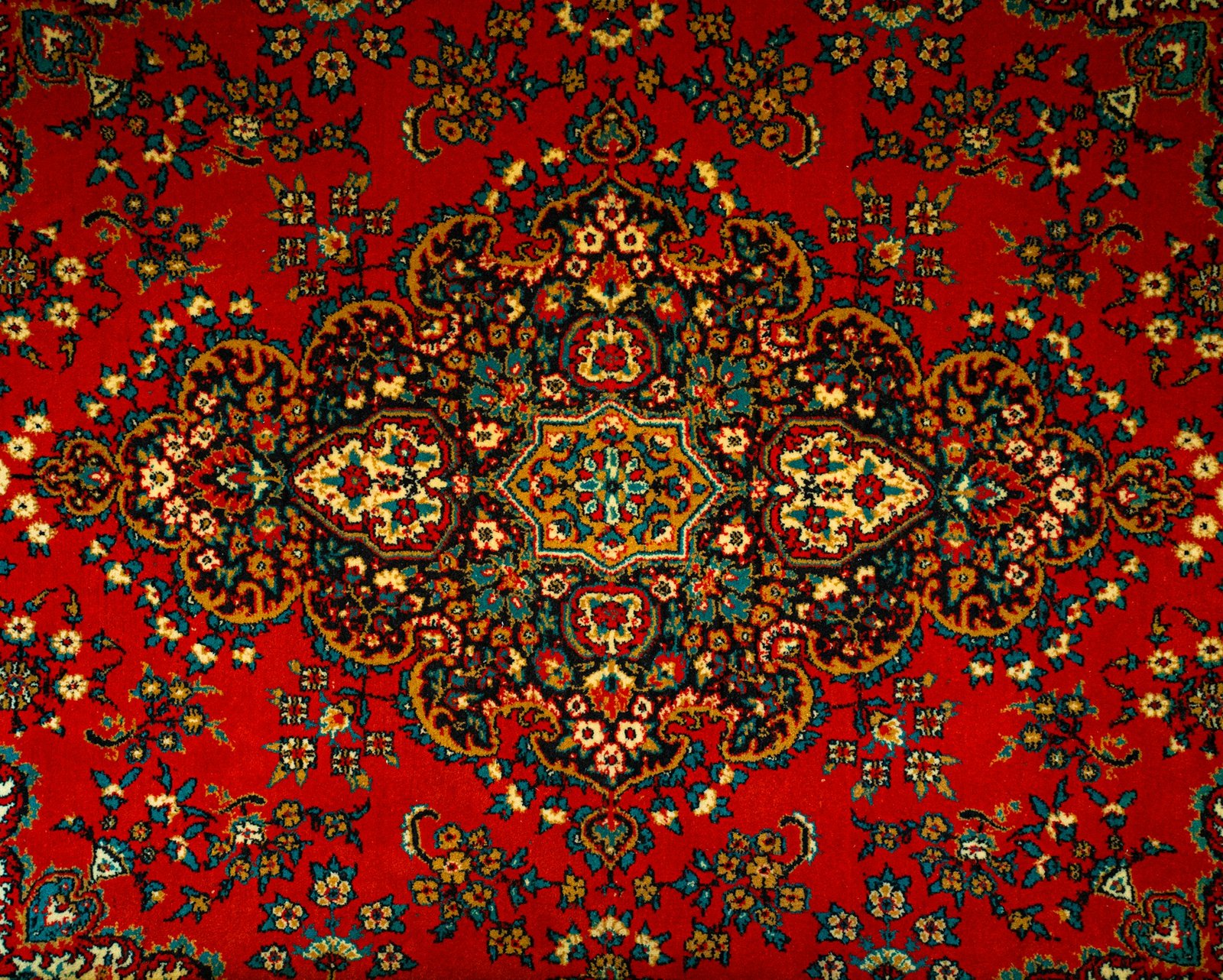
This is the rug that launched a thousand living room pins. Persian-style rugs with washed-out, sun-faded coloring — think terracotta, dusty blue, and warm ivory in a classic medallion layout — read as vintage without the antique price tag or the fragility of a real heirloom. The low-contrast pattern hides crumbs, pet hair, and traffic paths better than almost any other style I’ve tested. They suit living rooms, bedrooms, and dining rooms equally well, and they age gracefully because they already look aged.
Try it: Pair one with a plain linen sofa and let the rug do all the talking — keep other patterns quiet.
2. Vintage Turkish Kilim
Kilims are flatweave rugs — thin, no pile, traditionally handwoven — with bold geometric tribal motifs in saturated color. They feel casual and well-traveled, and because they’re thin, they’re door-friendly: no rug bunching under doors, and they layer beautifully over a larger jute or sisal base. The graphic patterns are fantastic at disguising stains, which is why I recommend them for entryways and hallways. Downside: zero cushioning on their own, so a felt rug pad underneath is a must.
Try it: Layer a kilim over a large neutral jute rug in the living room for instant collected-style depth.
3. Moroccan Beni Ourain Style
The classic Moroccan look — thick, shaggy ivory wool with simple dark geometric lines — works in boho, modern, and Scandinavian rooms alike. The real versions are handwoven and pricey, but good machine-made interpretations capture the cozy, high-pile feel at a fraction of the cost. That deep pile is dreamy under bare feet but does collect debris, so it’s best in bedrooms and low-traffic living rooms rather than under a dining table where crumbs go to hide forever.
Try it: Use one bedside or in a reading corner where your feet will thank you every morning.
Modern & Abstract Cool Rugs
If vintage isn’t your thing, the modern side of cool rugs is all about rugs that read as art. Oversized abstract designs, painterly brushstrokes, and low-contrast geometrics act like a giant piece of floor art — and they play especially well with clean-lined, contemporary furniture.
4. Painterly Abstract Rug
These rugs look like someone took a watercolor painting and laid it on your floor: soft washes of color, visible brushstroke texture, no repeating pattern. They’re brilliant in rooms with plain upholstered furniture because the rug supplies all the visual interest without competing with anything. I love them in muted palettes (sage, clay, sand) for calm rooms, or in bolder color stories for a real statement. One caution: very light abstracts show dirt, so check the pile and pick a pattern with some mid-tone variation.
Try it: Match one accent color from the rug to a throw pillow or piece of wall art to tie the room together.
5. Oversized Geometric
Big, simple geometric shapes — arches, oversized checkerboards, bold stripes — with low contrast between the colors. This restrained take on geometry feels modern and calm rather than busy, and it’s very forgiving in small spaces where a fussy small-scale pattern can feel chaotic. The checkerboard in particular is having a major moment and works surprisingly well with both minimalist and maximalist rooms. Machine-made or power-loomed options keep this look very affordable.
Try it: Repeat one shape from the rug elsewhere — an arched mirror, a round coffee table — for a designer-looking echo.
6. Minimalist Tonal Rug
Sometimes the coolest rug is the quietest one: a solid or near-solid rug in a rich tone with subtle texture — a nubby boucle, a hand-loomed wool with visible weave variation, a washed-linen look. Tonal rugs are the unsung heroes of rooms where the furniture and art are already doing a lot; they ground everything without adding noise. They’re also the safest pick if you redecorate often, because they go with literally everything.
Try it: Choose a tone slightly darker than your floor for definition, or slightly lighter to brighten a dark room.
Cozy Textured Cool Rugs
Texture is the main event in 2026 rug trends — high-low pile, boucle knots, hand-tufted slubs, and chunky weaves that beg to be touched. These rugs add dimension even in a single color, which makes them perfect for neutral rooms that need interest without pattern.
7. Chunky Wool Shag
Deep, plush, sink-your-feet-in shag in undyed ivory or oatmeal wool. Nothing beats it for pure coziness in a bedroom or a dedicated lounge spot. Wool is naturally stain-resistant and flame-retardant, and a quality wool shag can last for decades — though it does shed for the first few months, so vacuum regularly (suction only, no beater bar) and expect some fluff. Not ideal under dining chairs, which sink and wobble on deep pile.
Try it: Place one where you’ll sit on the floor — kids’ play corners, meditation spots, fireside reading nooks.
8. Natural Jute Rug
Jute rugs bring instant warmth and an earthy, coastal-casual feel, and they’re one of the most affordable natural-fiber options. The chunky braided texture adds tons of visual interest in a neutral palette, and they layer under everything. Two honest caveats: jute is rough underfoot (not a barefoot-luxury pick) and it hates moisture — keep it out of bathrooms, damp basements, and anywhere spills are likely. In a living room or bedroom, though, it’s a workhorse.
Try it: Use a large jute as a base layer and top it with a smaller patterned rug for the popular layered look.
9. High-Low Carved Rug
High-low (also called carved or sculpted) rugs have pile cut at two different heights, creating a subtle three-dimensional pattern you can see and feel. The effect is quietly luxurious — tone-on-tone designs that shift as light moves across them. They’re a great middle ground if you want texture with a bit more polish than a shag, and the pattern is woven in, so it never fades. Expect to pay a bit more; this is typically a hand-tufted construction.
Try it: Let raking natural light hit it from a side window — that’s when the carved pattern shows off best.
Also Read: How to Decorate a Studio Apartment: 12 Smart Ideas for Small Spaces
Pet & Kid-Friendly Cool Rugs
Here’s my honest take: the coolest rug is one you don’t have to stress about. If you share your home with dogs, cats, toddlers, or red-wine enthusiasts, these are the cool rugs that stay good-looking through real life.
10. Machine-Washable Rug
Washable rugs are the biggest rug trend of 2026 for a reason: the whole rug (or a thin top layer, depending on the brand) goes right in your washing machine. Spilled juice, muddy paws, mystery stains — wash and it’s new again. Look for single-layer designs that don’t need a separate backing pad, and always check your machine’s capacity before buying a large size; an 8×10 may need a laundromat trip. The style range has exploded — vintage looks, modern abstracts, kids’ prints, all washable.
Try it: Keep a spare in the closet; swap in seconds when one is in the wash and guests are coming.
11. Low-Pile Polypropylene
Polypropylene (often sold as “indoor/outdoor” or performance rugs) is the unsung hero of high-traffic homes: stain-resistant, fade-resistant, hose-it-off durable, and cheap enough that replacing it doesn’t hurt. Modern versions come in genuinely attractive patterns — faded Persians, geometrics, stripes — that don’t scream “plastic rug.” The trade-off is feel: it’s not plush, and it can feel a little flat underfoot, so pair it with a cushioned rug pad.
Try it: Use one under the dining table where food falls — crumbs vacuum right off low pile.
12. Dark Patterned Vintage-Look
If washable isn’t your thing but you still need forgiveness, go dark and patterned: deep navy, charcoal, or rust vintage-style rugs with busy distressed motifs. Dark colors conceal stains beautifully, busy patterns disguise wear paths, and the vintage look means new marks just blend into the “character.” This is my top pick for entryways, family rooms, and anywhere shoes stay on.
Try it: Choose a pattern with at least three colors — the more variegated, the better it hides real life.
Small-Space & Layered Cool Rugs
Small rooms need rugs too — arguably more than big ones, since a bare floor makes a small space feel unfinished. These cool rugs are sized and styled for apartments, and the layering trick works in rooms of any size.
13. Round Jute Rug
A round rug is a secret weapon in small or awkward rooms: it softens harsh corners, improves flow, and fits beautifully under round dining tables or in reading nooks. A 5- or 6-foot round jute adds texture without visual weight, and the natural fiber keeps a small space feeling airy rather than crowded. In a studio, a round rug under a small bistro table clearly marks the “dining zone” without chopping up the floor plan.
Try it: Center it under a round table with 24 inches of rug extending past the table edge on all sides.
14. The Layered Look (Jute + Patterned)
Layering — a large flat base rug with a smaller statement rug on top — is the fastest way to make a room look professionally styled. The classic combo is an inexpensive large jute or sisal with a 5×8 vintage-look or patterned rug centered on top. You get the footprint of an expensive large rug for much less money, plus visual depth that a single rug can’t match. Keep the top rug at least 12 inches smaller than the base on every side so the border reads intentionally.
Try it: In a bedroom, layer a small patterned rug over wall-to-wall carpet — yes, rug-on-carpet works with a good pad.
15. Slim Hallway Runner
Runners are the most underused cool rug in the house. A long, narrow runner (typically 2.5 to 3 feet wide and 8 to 12 feet long) turns a boring hallway or galley kitchen into a designed space, protects high-traffic flooring, and muffles sound in echo-prone corridors. Look for low-pile, easy-clean constructions since hallways take a beating. Leave 4 to 6 inches of bare floor visible on each side of the runner for a tailored look.
Try it: In a long hallway, two matching runners with a small gap between them look better than one awkwardly short runner.
Matching Your Rug to Your Decor Style
Sizes and materials are only half the battle. The other half is picking cool rugs that actually belong with the rest of your stuff. Here’s how the main decor styles pair with rugs — use this as a shortcut when you’re staring at forty browser tabs.
Bohemian / Eclectic
This is rug heaven. Layer freely: jute base, kilim or Moroccan on top, maybe a small sheepskin tossed over a chair. Mix patterns without fear — the rule in boho is that clashing is the point, as long as there’s a shared color thread running through the layers. Warm terracottas, rusts, and indigos are the classic palette. If your furniture is a mix of thrifted wood and rattan, a Moroccan-style shag or a colorful kilim will feel like it was always meant to be there.
Modern / Minimalist
Restraint is the move. One rug, chosen deliberately: an oversized geometric in low contrast, a painterly abstract in two or three tones, or a minimalist tonal piece with interesting texture. Let negative space do the work — a 9×12 tonal rug under a low-profile sofa looks far more expensive than a busy pattern fighting your clean lines. Avoid fringe and heavy traditional medallions here; they read as visual noise against minimal furniture.
Scandinavian
Think light, soft, and natural. Ivory or oatmeal wool shags, pale flatweaves, and light-toned vintage rugs with washed-out patterns are the sweet spot. Scandi rooms love texture over pattern, so a high-low carved rug or a chunky knit-look wool piece adds the coziness the style demands without breaking its calm. Keep the palette close to your floors — just a shade deeper or with a subtle pattern — for that seamless Nordic flow.
Farmhouse / Rustic
Natural fibers and heritage patterns. Jute and sisal bases, faded Persian-look rugs in warm reds and blues, and braided textures all fit the farmhouse story. The style is forgiving: a distressed vintage rug hides farmhouse living (dogs, kids, muddy boots) better than anything else, and the worn look is a feature, not a flaw. In kitchens, a low-pile runner in a faded stripe handles the traffic.
Mid-Century Modern
Geometric is your friend — but go bold rather than fussy. Oversized checkerboards, atomic-age starbursts, and simple two-tone geometrics echo the era’s graphic confidence. Warm-toned abstracts in mustard, olive, and burnt orange sit beautifully with teak and walnut furniture. Skip the heavy traditional Persian here; a faded vintage piece can work, but a cleaner pattern keeps the mid-century lines crisp.
Traditional
This is where the classics shine: Persian and Oriental patterns, rich color (deep red, navy, emerald), and bordered designs with a proper medallion. Traditional rooms can handle — and want — a rug with presence, so don’t undersize; a 9×12 with all furniture legs on it is the goal. Hand-knotted or good hand-tufted wool is worth the investment here because the style is timeless and you’ll keep the rug for decades.
The one universal rule: if your room already has a lot of pattern (busy curtains, patterned upholstery, gallery walls), choose a quieter rug. If your room is mostly solids, that’s your license to go bold. Pattern needs a quiet partner somewhere in the room — make sure it’s not the rug competing with everything else.
Cool Rug Buying Guide: Sizes in Inches, Materials & Rug Pads
This is the part that saves you from the number-one rug regret. Bookmark it before you shop.
Rug Sizes by Room (the inch rules)
Living room:
- 8×10 feet (96″ x 120″) is the most common right-size choice for a standard sofa setup. All front legs of the sofa and chairs should sit on the rug.
- 9×12 feet for larger seating areas or sectionals — all furniture legs fully on the rug looks most luxurious.
- 5×8 feet works only for small loveseat setups or apartments; a 5×8 floating under a full-size sofa almost always looks too small.
- Rule of thumb: leave 12 to 18 inches of bare floor between the rug edge and the wall.
Bedroom:
- 8×10 under a queen bed: position it so it extends 18 to 24 inches beyond each side and the foot of the bed. The rug should start a few inches from the nightstands.
- 9×12 under a king bed for the same proportions.
- Budget alternative: two 2.5×8 runners on either side of the bed instead of one big rug.
Dining room:
- The rug must extend 24 inches beyond the table on all sides so chairs stay on the rug when pulled out. For a 3×6-foot table, that’s at least an 8×10.
- Match rug shape to table shape: rectangular rug for rectangular tables, round rug for round tables.
Hallway/kitchen:
- Runners: 2.5 to 3 feet wide, length matched to the hallway. Leave 4 to 6 inches of floor showing on each side.
Materials at a Glance
Wool: soft, durable, naturally stain-resistant and flame-retardant. The best all-around choice for living rooms and bedrooms. Costs more, sheds at first, lasts decades.
Cotton: soft, affordable, often machine-washable. Great for kitchens, kids’ rooms, and layering. Less durable under heavy traffic.
Jute/sisal: chunky natural texture, very affordable, great for layering. Rough underfoot and hates moisture — living rooms and bedrooms only.
Polypropylene/nylon: the performance synthetics. Stain-proof, fade-proof, budget-friendly, easy to clean. Best for dining rooms, entryways, and homes with pets. Less plush than natural fibers.
Viscose/rayon: silky sheen that mimics silk at a low price — gorgeous, but stains easily and is hard to clean. Decorative low-traffic areas only.
Silk: luxurious, expensive, delicate. Beautiful but impractical for most homes; consider it a splurge for formal spaces.
Weave Types (this is what drives price)
- Hand-knotted ($$$$): each knot tied by hand; extremely durable (50+ years), heirloom quality, expensive.
- Hand-tufted ($$): yarn punched through a backing; plush and attractive, lasts 5-10+ years, mid-range price. My most-bought category.
- Flatweave ($-$$): no pile, thin and reversible-ish; casual, great for layering and kitchens.
- Power-loomed/machine-made ($): budget-friendly, huge style range, easy care; lasts 5+ years. Perfect for rentals and trend-driven picks.
What Should You Expect to Pay?
Nobody likes guessing at budgets, so here are honest ballparks for an 8×10 area rug (prices drop a lot for smaller sizes):
- Budget ($80–$250): power-loomed synthetics, cotton flatweaves, small jutes. Great for rentals, kids’ rooms, and trend-driven picks you might swap in a few years.
- Mid-range ($250–$800): hand-tufted wool and wool blends, quality washables, good machine-made vintage looks. This is the sweet spot for living rooms and bedrooms — you get real durability and genuinely nice feel.
- Investment ($800–$2,500+): hand-knotted wool, high-end hand-tufted, large natural-fiber designer pieces. Buy these for rooms and styles you won’t change for a decade or more.
My rule of thumb: spend the most on the rug in the room you use the most, save on secondary spaces, and never feel guilty about a budget rug in a rental — a $150 rug that’s the right size always beats a $600 rug that’s too small.
Don’t Skip the Rug Pad
A rug pad is the unglamorous purchase that makes everything better: it stops the rug sliding (safety), protects your floors from dye transfer and scratches, adds noticeable cushioning underfoot, and extends the rug’s life. Get a felt pad (about 1/4 inch thick) for cushioning on hard floors, or a felt + rubber combo for grip — pure rubber pads can discolor some floors over time. Size the pad 1 to 2 inches smaller than the rug on all sides so it doesn’t peek out. For rug-on-carpet, use a thin non-slip pad made for that purpose. For more on rug construction and care standards, check the Carpet and Rug Institute.
Also Read: Small Apartment Decor: 14 Ideas That Make Tiny Spaces Feel Bigger
Common Mistakes to Avoid
- Buying too small. The classic error. A tiny rug floating in the middle of a seating area makes the whole room feel disconnected. When in doubt, size up — designers say “bigger is better” for a reason.
- Skipping the rug pad. Your rug slides, wrinkles become trip hazards, and the floor underneath gets scuffed. A pad costs a fraction of the rug and fixes all of it.
- Choosing high pile under the dining table. Chairs sink, wobble, and trap crumbs in deep shag. Dining areas want low pile, always.
- Matching the rug exactly to the wall color. A beige rug on beige carpet disappears into a sad beige puddle. You need contrast — in color, pattern, or at minimum texture.
- Ignoring the door swing. Thick rugs plus doors that open inward equals a rug that bunches and a door that sticks. Measure the clearance or choose flatweave for tight spots.
- Buying for the showroom, not your room. That bold rug looked amazing in the styled product photo with white walls and perfect light. Hold a swatch (or a screenshot) against YOUR sofa, YOUR floors, YOUR light before committing.
- Putting jute or sisal in wet zones. Natural plant fibers and moisture are enemies — they stain, warp, and can mildew. Bathrooms and damp entryways need synthetics.
- Forgetting to rotate. Sun fades one side, foot traffic wears a path. Rotate your rug 180 degrees every 6 months and vacuum weekly to double its good-looking life.
Cool Rugs at a Glance
| Rug Style | Best Room | Pile | Price Range | Why It’s Cool |
|---|---|---|---|---|
| Faded Persian look | Living room, bedroom | Low | $–$$ | Hides wear, goes with everything |
| Turkish kilim | Hallway, entry | Flat | $–$$ | Graphic, layerable, door-friendly |
| Moroccan shag style | Bedroom, lounge | High | $$–$$$ | Ultra-cozy, big visual softness |
| Painterly abstract | Living room | Low–med | $$–$$$ | Reads as floor art |
| Oversized geometric | Living room, studio | Low | $–$$ | Modern, calm, affordable |
| Minimalist tonal | Any room | Varies | $–$$$ | Safest long-term pick |
| Chunky wool shag | Bedroom | High | $$–$$$ | Maximum coziness, lasts decades |
| Natural jute | Living room, bedroom | Flat | $ | Texture + layering base |
| High-low carved | Living room | Med | $$–$$$ | Subtle 3D pattern, polished |
| Machine-washable | Anywhere with kids/pets | Low | $–$$ | Wash away any disaster |
| Low-pile polypropylene | Dining room, entry | Low | $ | Nearly indestructible |
| Dark patterned vintage | Family room, entry | Low | $–$$ | Disguises stains and wear |
| Round jute | Nooks, small dining | Flat | $ | Softens small spaces |
| Layered jute + patterned | Living room, bedroom | Mixed | $$ | Designer look, budget price |
| Hallway runner | Hallway, galley kitchen | Low | $–$$ | Finishes forgotten spaces |
FAQ
What size rug is best for a living room?
For most living rooms, an 8×10-foot rug is the sweet spot — big enough for the front legs of your sofa and chairs to sit on it. Larger seating areas or sectionals usually need a 9×12. A 5×8 only works for small loveseat setups; anything smaller tends to look like a postage stamp under full-size furniture.
Should all furniture legs be on the rug?
Not necessarily — you have three options. All legs on the rug looks the most luxurious and works best with large rugs. Front legs only is the most common and budget-friendly approach. Nothing on the rug (a small rug floating under the coffee table) only works in very small spaces. Pick one and commit; half-measures look accidental.
What is the best rug material for pets?
Low-pile synthetics like polypropylene are the most practical — they resist stains, don’t trap pet hair the way shag does, and are cheap to replace. Machine-washable rugs are the other top pick since you can literally wash away accidents. Avoid high-pile wool and light-colored viscose if your pets shed or have muddy paws.
Are washable rugs actually good?
Yes — they’ve improved enormously. The best ones are single-layer designs that wash evenly and lie flat afterward without a separate pad. The main limitation is size: very large washable rugs may not fit a home washing machine, so check dimensions against your machine’s capacity before buying an 8×10 or larger.
Do I really need a rug pad?
Yes. A rug pad prevents slipping (a real safety issue on hard floors), protects your flooring from scratches and dye transfer, adds cushioning, and helps the rug last longer. It’s the highest-value accessory in the rug world — budget roughly 10-15% of the rug’s price for the pad.
What’s the difference between hand-knotted and hand-tufted rugs?
Hand-knotted rugs have each knot tied individually by hand — they’re extremely durable, often lasting 50+ years, and priced as heirlooms. Hand-tufted rugs have yarn punched through a canvas backing with adhesive — they’re plush and attractive at a mid-range price, typically lasting 5-10+ years. Both are “handmade,” but the construction (and price) differ dramatically.
Can you layer rugs on carpet?
Absolutely — rug-on-carpet is a legitimate styling move, especially in rentals with bland wall-to-wall carpet. Use a thin non-slip pad designed for carpet (not a thick felt pad, which can buckle), and choose a low-pile top rug so the layers sit stably. It adds color and definition that rental carpet desperately needs.
Are “cooling” rugs a real thing?
Sort of. No rug actively refrigerates a room, but breathable natural flatweaves — cotton, jute, and low-pile wool — feel noticeably cooler underfoot than dense synthetics or deep shag because they don’t trap heat. If your floors bake in summer sun, a light-colored flatweave is the most comfortable choice.
Cool Rug Shopping Checklist
Before you hit “add to cart,” run through this five-minute checklist — it catches 90% of rug regrets:
- Measure the room and the furniture zone. Tape the rug dimensions on the floor with painter’s tape and live with the outline for a day. This single step prevents the too-small mistake better than any advice.
- Check your door clearances. Open every door near the rug and measure the gap underneath. If it’s under half an inch, you need a flatweave or a thinner rug in that spot.
- Match material to the room’s real life. Dining room, entryway, kids, pets — low pile and washable or synthetic. Bedroom, reading corner — go plush.
- Order swatches first. Most online rug stores ship free or cheap swatches. Check the color in YOUR light, at different times of day, against YOUR sofa. Screens lie about color — warm lighting makes everything look more yellow than it is.
- Add the rug pad to the cart now, not later. Measure the rug, order a pad 1-2 inches smaller on each side, and don’t talk yourself into “I’ll get one later.” Later never comes, and sliding rugs are a safety issue.
- Read the return policy. Rugs are bulky and return shipping can be expensive. Favor retailers with free returns on rugs, and keep the packaging until you’re sure.
- Photograph the label. Snap a photo of the material, construction, and care instructions when the rug arrives. You’ll thank yourself at cleaning time.
Final Thoughts
The right cool rugs do more work than almost anything else you can buy for a room — they set the color story, define the space, soften the acoustics, and forgive your floors. Measure twice, size up rather than down, grab a rug pad, and don’t be afraid of pattern. Your floors are the biggest blank canvas in the house; go ahead and make them interesting.
Which of these 15 cool rugs would you try first? I’d love to hear — and if you found this guide useful, share it with someone whose living room is still waiting for its rug moment.
One last thing from experience: the “perfect” rug is the one that fits your room, survives your life, and makes you smile when you walk in. Get those three right and the rest is just details.

Founder of NestFlavors — sharing tested recipes and honest home ideas, made for real life.