
Glass doors are wonderful until the sun hits at the wrong angle or a neighbor can see straight into your living room. I learned this in a house with French doors in the dining room: lovely light all day, zero privacy at night, and a glare on the table every summer evening. A door curtain fixed all three problems without blocking the light I loved. The right door curtain is different from a window curtain. It has to move with the door, clear the handle, and stay out of the way when you walk through.
How to Choose a Door Curtain
Start with the door itself when you choose a door curtain. French doors, sliding patio doors, a front door with sidelights, and a single glass door all need different hardware.
For French doors, you can hang one rod across both doors, or use a rod on each door so each panel moves on its own. For sliding doors, a wide rod or a track that lets panels stack to one side works best. For a front door with sidelights, narrow panels on each sidelight give privacy without covering the door. Measure the full width you want to cover, plus extra for gathering, and measure from the rod to where you want the curtain to end: sill, floor, or just below the glass.
Fabric choice controls light and privacy. Sheers soften light and give daytime privacy while keeping the room bright. Light-filtering fabrics give more privacy and still let light through. Blackout fabrics give full privacy and block light, which suits a bedroom door or a room that gets harsh afternoon sun.
I often layer a sheer with a heavier panel, so I can use the sheer by day and close the heavier panel at night. For general guidance on window coverings and energy use at home, the US Department of Energy’s Energy Saver site is a useful reference: Energy Saver home guidance. Hardware matters too for a door curtain: a sturdy rod, rings that slide easily, and a mount that clears the handle will make daily use much smoother.
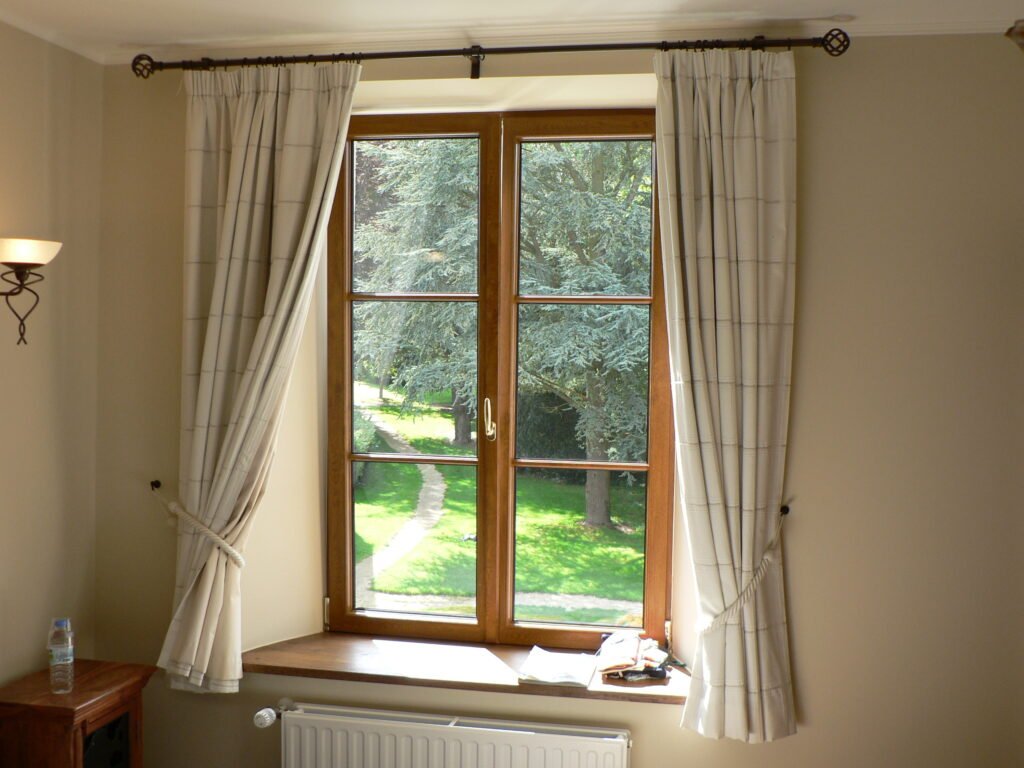
15 Door Curtain Ideas for Every Door in the House
These fifteen ideas cover French doors, patio doors, front doors, and interior glass doors, with notes on light, privacy, and daily use.
1. Sheer Panels on French Doors
Sheer panels on French doors keep the light and soften the view in. I hang one sheer panel per door, on a slim rod mounted on each door, so each door still opens on its own. The sheers move with the door, which avoids tangles. This look suits a dining room or living room where you want daylight and a little privacy. Choose a sheer in white or cream, and keep the rod close to the glass so the panels do not swing far when the door moves.
2. Full-Length Drapes Across Both French Doors
Full-length drapes as a door curtain hung on one wide rod above both French doors give a formal, finished look. When open, the panels stack on the sides and frame the doors. When closed, they cover the glass fully for privacy at night. I like this in a living room or primary bedroom where the doors are a feature. Mount the rod high and wide, so the doors feel taller and the panels do not block the glass when open.
3. Sliding Panels for a Patio Door
Sliding panel curtains are made for patio doors. Flat panels hang from a track and slide to one side, like a soft version of a sliding door. They stack neatly, they do not swing into the room, and they are easy to open with one hand. I like this style in a modern living room or a dining room that opens to a patio. Choose panels in a light-filtering fabric for daytime use, and add a heavier panel if you need night privacy.
4. A Single Panel on a Single Glass Door
A single glass door, like a back door, needs a simple door curtain. or a side door, needs only one panel. Hang it on a rod mounted on the door itself, or on the wall above it, and let it cover the glass. A light-filtering panel gives privacy without making the entry dark. I keep the panel narrow enough that it does not catch on the handle. This simple setup suits a mudroom, a laundry room, or a kitchen door.
5. Narrow Panels for Front-Door Sidelights
Front-door sidelights are narrow, tall windows beside the door, and they need narrow panels. I use a slim rod on each sidelight, or a tension rod inside the frame, with a sheer or light-filtering panel. The panels give privacy from the street while keeping the entry bright. Keep the fabric simple and the length to the sill or the floor, depending on the sidelight height. This is a small change that makes an entry feel much more private.
6. Blackout Panels for a Bedroom Door
If a bedroom has glass doors to a balcony or patio, blackout panels help with sleep and privacy. I hang them on a wide rod above the doors, so they close fully at night and stack to the sides by day. Blackout fabric also cuts glare and drafts a little. Choose a color that matches the bedroom, and make sure the panels overlap in the middle when closed, so no gap lets light through. A dark bedroom door setup like this is worth the extra fabric.
7. Linen Panels for a Relaxed Look
Linen panels give glass doors a relaxed, airy feel. The fabric has a natural texture and a soft drape, and it filters light gently. I use linen in a living room or bedroom with natural wood and soft colors. Linen wrinkles, so I accept a lived-in look rather than pressing it often. A white or oatmeal linen panel suits almost any room, and it pairs well with a sheer underneath for extra privacy.
8. Cafe-Length Panels on a Kitchen Door
Cafe-length panels cover only the lower half of the glass, which gives privacy at eye level while leaving the top open for light. I like this on a kitchen door or a door between a kitchen and a dining room. The panels hang from a rod mounted halfway up the door, or from a tension rod inside the frame. This length also keeps the fabric away from the handle and from food splashes. It is a practical, charming choice for a busy kitchen.
9. Tie-Back Panels for Easy Daily Use
Tie-backs keep door panels out of the way during the day and let you close them quickly at night. I use fabric tie-backs or simple hooks on the wall beside the door. The panels gather neatly to the sides, so the doors open fully and the walkway stays clear. This suits a door you use often, like a patio door in summer. Choose tie-backs that match the panels, and mount the hooks at a height that keeps the gathered fabric off the floor.
10. Layered Sheer and Heavy Panels
Layering gives you two levels of light control on one door. I hang a sheer close to the glass for daytime privacy, and a heavier panel on a second rod or a double rod for night. By day, the sheer stays closed and the heavy panel stays open. At night, I close the heavy panel for full privacy. This works well on French doors and patio doors in a living room. The double rod needs a sturdy mount, because two layers weigh more than one.
11. Beaded or Bamboo Door Curtains for an Interior Doorway
For an interior doorway without a door, a beaded or bamboo curtain gives a little separation without blocking light or air. I use this between a living room and a sunroom, or in a doorway where a solid door would feel heavy. The strands move aside easily when you walk through, and they add texture and sound. Keep the length to just above the floor, so the strands do not drag. This is not a privacy solution, but it marks a space nicely.
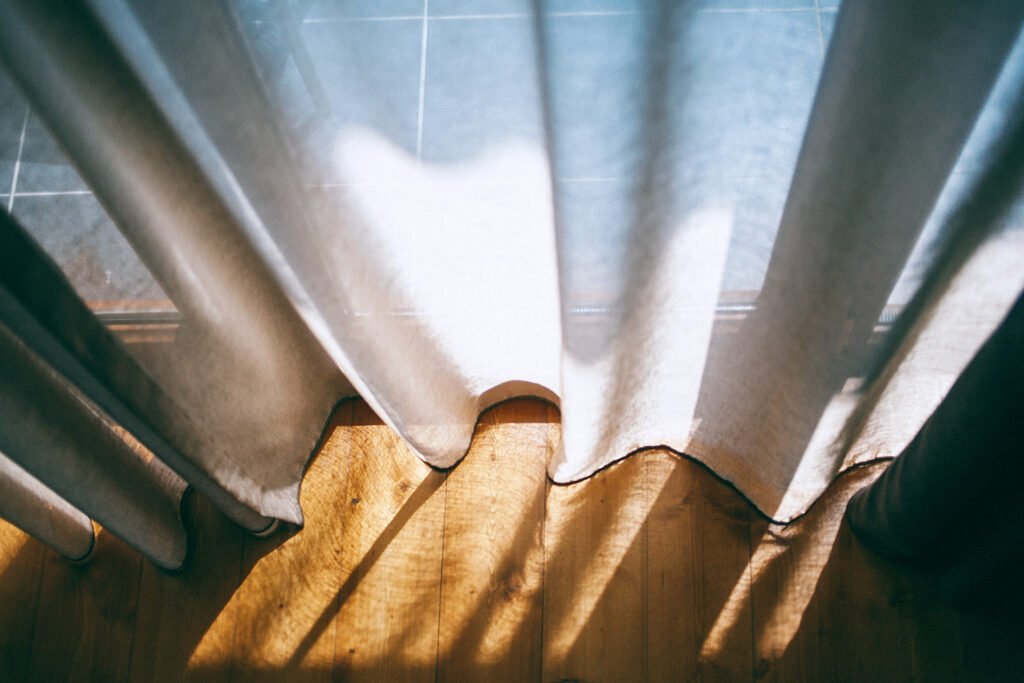
12. Thermal Panels for a Drafty Glass Door
A drafty glass door feels colder in winter, and a heavier thermal panel can help. I hang thermal panels on a wide rod, so they cover the full door and overlap at the sides. The thicker fabric and lining cut drafts and reduce heat loss through the glass. This suits an older patio door or a glass door in a cold room. The panels also give full privacy at night. Choose a color that works with the room, because these panels are more visible than sheers.
13. Patterned Panels to Frame a Plain Door
A patterned panel can turn a plain glass door into a feature. I use a simple stripe, a small floral, or a quiet geometric print, and keep the rest of the room plain so the pattern stands out. This works well in a bedroom or living room where the doors are the main light source. Keep the pattern scale in mind: a small room suits a smaller print, while a large room can handle a bolder pattern. The panels should still open easily, so avoid very heavy fabric.
14. Short Panels for a Door with a Pet Door
If your door has a pet door at the bottom, a short panel that ends above the pet door keeps the fabric clear. I mount the rod above the glass and let the panel end a few inches above the pet flap. The pet can come and go without pushing fabric aside, and the panel still gives privacy at eye level. This is a practical fix for a back door or patio door in a pet-friendly home. Check the panel length against the pet door height before you buy.
15. Matching Door and Window Panels for a Unified Room
Using the same fabric on the door and the nearby windows ties a room together. I match the door panels to the window panels in color and fabric, even if the lengths differ. The room feels planned, and the eye moves smoothly from window to door. This suits a living room or bedroom with several glass openings. Keep the hardware similar too, so the rods and rings look like part of one plan. A unified room feels calmer, even with a lot of glass.
Measuring and Hanging Tips
Measure twice, and measure the door, not just the glass. For a rod mounted on the wall, add several inches on each side so the panels can stack off the glass when open. For a rod mounted on the door, check that the rod and the panel clear the handle and the lock. Mount the rod high enough that the panels do not drag, and low enough that they cover the glass fully. Use wall anchors if the mount goes into drywall, because door panels get pulled daily. Test the door swing after hanging, and adjust the rod or the panel length if the fabric catches.
Door Curtain Care and Seasonal Swaps
A door curtain gets more daily wear than a window curtain, because it moves every time the door opens. I check the rod mounts every few months, tighten any loose screws, and make sure the rings still slide easily. A drop of dry lubricant on a sticking track, or a quick wipe of the rod, keeps panels moving smoothly. If a panel starts to catch on the handle, I adjust the rod rather than forcing the door, because forcing it loosens the mount over time.
Seasonal swaps are easy with a door curtain. In summer, I use sheers or light-filtering panels to keep the room bright while cutting glare. In winter, I swap to heavier panels on doors that feel drafty, and I keep the lighter panels stored clean and dry for spring. Washing door panels on a gentle cycle, following the care label, keeps the fabric fresh, especially on doors near a kitchen or an entry where dust and cooking smells settle. A door curtain that is easy to take down is a door curtain you will actually wash, so I favor simple rings and hooks over fiddly hardware.
Common Mistakes to Avoid
The most common mistake is hanging panels that block the door handle or catch every time the door opens. A second mistake is using a rod that is too short, so the panels cover the glass even when open and block light. A third mistake is choosing a fabric that is too heavy for a door-mounted rod, which can pull the mount loose. A fourth mistake is forgetting the walkway: panels that pool on the floor near a door become a trip hazard. A fifth mistake is using only sheers on a bedroom door, where night privacy matters more. Finally, do not skip measuring the handle clearance, because a beautiful panel that snags is a panel you will stop using.
Door Curtain Choices at a Glance
| Door type | Best curtain style | Light and privacy |
|---|---|---|
| French doors | Sheer panels per door or full drapes | Daylight with daytime privacy, full cover at night |
| Sliding patio door | Sliding panels or wide drapes | Easy daily use, stacks to one side |
| Front door sidelights | Narrow sheer panels | Street privacy, entry stays bright |
| Bedroom glass door | Blackout panels | Full privacy and darkness at night |
| Interior doorway | Beaded or bamboo strands | Light separation, no solid door |
Frequently Asked Questions
Can I hang curtains on a door that opens often?
Yes, if the panels are mounted on the door itself or on a track that moves with the door. Panels on a wall rod above a frequently used door can swing and catch, so a door-mounted rod or a sliding track usually works better for daily use. Test the swing after hanging.
Should door curtains touch the floor?
For a door you walk through often, I keep a door curtain just above the floor just above the floor or at sill length, so they do not drag or trip anyone. Full-length panels that puddle on the floor suit a door that stays mostly closed, like a bedroom French door. Safety and daily use matter more than a formal puddle near a walkway.
What is the best fabric for a patio door?
A light-filtering fabric works well by day, and a layered heavy panel works at night. Sliding panels in a durable, washable fabric suit a patio door that gets a lot of use. Avoid very delicate fabric on a door that children or pets pass through often.
How do I cover sidelights without darkening the entry?
Use narrow sheer or light-filtering panels on each sidelight. They give privacy from the street while letting light through. Keep the panels light in color, and avoid blackout fabric on sidelights unless the entry gets harsh direct sun.
Can I use a tension rod on a glass door?
A tension rod works inside a frame or on a door with a flat surface, and it avoids drilling. It suits light sheers and cafe panels. For heavier panels, a mounted rod with screws and anchors is safer, because a tension rod can slip under weight.
How do I keep panels from catching on the handle?
Mount the rod so the panel hangs clear of the handle, or use a panel that is narrow enough to sit beside it. A door-mounted rod with standoff brackets gives clearance. Test the handle with the panel closed and open, and adjust the rod position if it catches.
Are blackout curtains good for glass doors?
Blackout curtains are good for bedrooms and rooms with harsh sun, because they block light and give full privacy. They are heavier, so they need a sturdy rod. In a living room where you want daylight, a sheer or light-filtering panel is usually the better daytime choice.
How do I wash door curtains?
Follow the care label, and wash sheers on a gentle cycle in cold water. Heavier panels may need a larger machine or a laundry service. Take panels down carefully so the hardware stays in place, and rehang them while slightly damp if the label allows it, so wrinkles fall out.
Final Thoughts
A door curtain should make a glass door easier to live with, not harder. Start with the door type, measure the handle clearance and the full width, and choose a fabric that matches how you use the room by day and by night. Layer a sheer with a heavier panel when you want both light and privacy. Hang it well, test the swing, and adjust once. That careful setup turns a bright, exposed door into a comfortable part of the room.
Also Read: 15 Living Room Curtains Ideas That Make Any Room Feel Finished
Also Read: 14 Bedroom Curtain Ideas for Deeper Sleep and a Better-Looking Room
Also Read: 15 Half Bathroom Ideas for Small Powder Rooms

Founder of NestFlavors — sharing tested recipes and honest home ideas, made for real life.