
A living room feels “done” the moment its tables look like they belong together — here’s how to get that look on purpose.
Walk into any well-designed living room and you’ll notice something: the tables look related. The coffee table talks to the side tables, the side tables talk to the console — same wood tone, same leg style, same vibe. That’s not an accident. That’s a living room table set, whether it came in one box or was assembled piece by piece over two years.
I used to buy tables one at a time, grabbing whatever was on sale, and my living room always looked slightly… off. The day I learned to think in sets — matching deliberately or mismatching on purpose — everything clicked. This guide gives you 12 living room table set ideas covering the classic combinations, small-space solutions, finish-matching formulas, and the styling tricks that make the whole arrangement look intentional.
ElpenorsGhost, CC BY-SA 4.0 via Wikimedia Commons
What Is a Living Room Table Set?
A living room table set is a coordinated group of tables — typically a coffee table plus one or two end tables, sometimes with a console or sofa table — chosen to look like they belong together through matching or complementary materials, finishes, and styles. You can buy them as a boxed set or build your own set piece by piece.
Here’s what a set does that random tables don’t: it creates visual rhythm. When your eye travels around the room and finds the same wood tone or the same black metal legs repeating, the room reads as calm and pulled together. Mismatched tables, on the other hand, make the eye stop and question each piece — which is fine if that’s the look you’re going for, but most of us want the calm version.
Why You’ll Love a Coordinated Living Room Table Set
- It makes decorating decisions for you. Once the tables relate to each other, every other choice — rug, lamp, throw pillows — gets easier because the foundation is settled.
- Boxed sets save real money. A 3-piece set almost always costs less than buying the coffee table and end tables separately. Retailers discount the bundle.
- Small rooms look bigger. Matching tables create clean sight lines with no visual interruptions. Three coordinated tables read as one calm unit instead of three separate obstacles.
- It’s the fastest “grown-up” upgrade. Swapping a random folding table for a coordinated trio is the single change that makes a living room feel finished. Guests notice, even if they can’t name why.
- Sets are renter-friendly. No installation, no wall damage — tables just sit there looking good. And a good set moves with you to the next place.
- You can build one gradually. A true set doesn’t have to arrive in one delivery. Buy the coffee table now, add matching end tables later — the guide below shows you how to keep them coordinated.
Classic Living Room Table Set Combinations
These are the tried-and-true formulas — the arrangements that show up in designer portfolios because they simply work.
1. Coffee Table Plus Two Matching End Tables
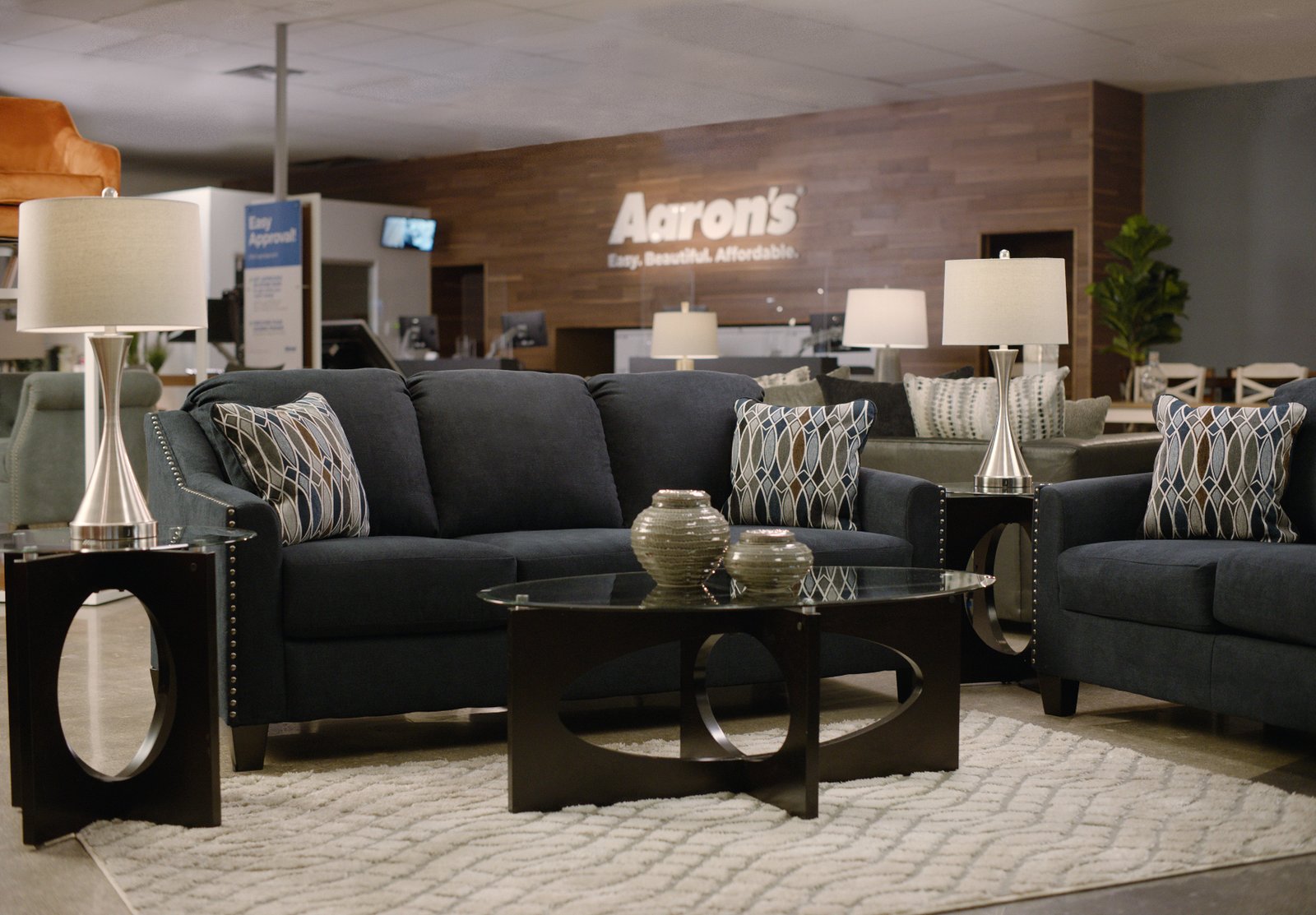
This is the default set configuration for a reason: one coffee table centered on the sofa, one end table on each side. It frames the seating area symmetrically, gives everyone a place for a drink, and the repetition of three matching pieces is deeply satisfying to look at.
Size it right: the coffee table should be about two-thirds the length of your sofa and roughly the same height as the seat cushions (14–18 inches). End tables should sit within 2 inches of the sofa arm height — too tall and they’re awkward, too short and they’re useless. Leave 12–18 inches between the coffee table and the sofa so legs have room.
Try it: measure your sofa, multiply the length by 0.66, and shop coffee tables within 4 inches of that number.
2. Coffee Table Plus Console Table
No room for end tables? A console table behind the sofa plus a coffee table in front gives you the set feeling with a smaller footprint. The console holds lamps, books, and a drink for whoever sits in the middle — it does the end tables’ job from behind instead of beside.
Match the console to the coffee table in finish and leg style so they read as a pair. Keep the console’s surface styled simply — a lamp, a small stack of books, one object — because its back faces the room and clutter shows. This combo is my top recommendation for sectionals, where end tables often don’t fit.
Try it: push a narrow console behind your sofa, style it with one lamp, and see if you miss the end tables (you won’t).
3. The Nesting Table Set
Nesting tables — two or three tables that tuck under each other — are the Swiss Army knife of occasional tables. Together they’re a layered side table; pulled apart they’re drink tables for every guest at a party. Nobody’s living room has ever been hurt by nesting tables.
Use the largest as a permanent end table and keep the smaller ones nested until needed. Round nesting sets soften rooms full of rectangles (most sofas are rectangles), and the varying heights look intentional even when they’re just sitting there. They’re also the cheapest way to get the “set” look — three tables, one purchase.
Try it: replace one end table with a 3-piece nesting set and pull the small ones out next time you have more than four guests.
4. C-Tables as a Flexible Set
C-tables — those small tables shaped like the letter C that slide over a sofa arm or chair seat — work brilliantly as a set of two or three scattered around the seating area. Each person gets a personal surface for a laptop, a book, or a glass of wine, right at armrest height.
Buy them identical so they read as a set even though they’re not beside each other. They’re perfect for households where the sofa is also the office and the dining table — the C-table slides away when you don’t need it and appears when you do. Look for ones with a weighted base so they don’t tip.
Try it: buy two matching C-tables and station one by each end of the sofa — instant personal workspace for two.
Living Room Table Sets for Small Spaces
Small living rooms need coordinated tables the most — and they’re where the wrong set does the most damage. These ideas keep things light, leggy, and movable.
5. The Round Table Set
In a tight living room, round beats rectangular every time. A round coffee table plus two small round end tables eliminates sharp corners from walkways, and curves make a boxy room feel softer and easier to move through. No bruised shins, ever.
Keep the scale compact: a 30–36 inch round coffee table suits most apartment sofas, and 16–18 inch round end tables tuck beside arms without eating floor space. Glass tops are the cheat code here — they visually disappear, so a round glass set makes the smallest room feel open.
Try it: if your walkways feel tight, swap a rectangular coffee table for a round one and reclaim 6 inches of clearance on every side.
6. Storage Ottoman Plus Tray Tables
Here’s a combination that hides its own clutter: a large storage ottoman as the coffee table (blankets and board games inside, tray on top for drinks) paired with two small tray tables as end tables. Everything has a lid or a handle.
The ottoman should be upholstered in something wipeable — performance fabric or leather-look — because feet will land on it. Top it with a large tray to create a stable surface for drinks, and the tray lifts off in two seconds when someone wants to put their feet up. The tray tables fold flat when guests need floor space.
Try it: replace your coffee table with a storage ottoman + tray for one week and count how much clutter disappears inside it.
7. The Wall-Hugger Set
When floor space is truly precious, build your set vertically: a narrow console against the wall plus one small end table — skip the coffee table entirely. The console holds the lamp and decor, the end table holds your drink, and the middle of the room stays gloriously empty.
This works beautifully in studio apartments where the “living room” is also the walkway. Choose a console no deeper than 12 inches so it hugs the wall, and mount a plug-in sconce above it instead of a table lamp to free the surface. You lose the coffee table; you gain a room you can actually move in.
Try it: push your coffee table against the wall for a weekend — if the room breathes better, the wall-hugger set is your answer.
Matching Finishes and Styles
Whether you buy a boxed set or build your own, this is the section that makes it look like a set. The finish formula matters more than the price tag.
8. The All-Wood Warm Set
Matching wood tones across all three tables is the easiest path to a coordinated look. Same oak, same walnut, same finish — done. Wood brings warmth that cold materials can’t, and it forgives styling mistakes because the material itself is interesting.
The key word is same: “close enough” wood tones side by side look like a mistake, while one consistent tone looks deliberate. If you’re building gradually, buy from the same collection or bring a drawer front to the store for matching. Medium tones (oak, walnut) are the most forgiving across different lighting.
Try it: line up your tables’ wood tones in daylight — if any two clash, that’s the piece to replace or refinish.
9. The Mixed-Material Set
Here’s the designer move: keep the shape consistent but mix the materials — a wood coffee table with black metal end tables, or a marble-top coffee table with wood side tables. The shared silhouette says “set”; the mixed materials say “collected, not catalog.”
The rule that keeps it working: repeat each material at least twice. Wood coffee table + wood bookshelf, black metal end tables + black floor lamp — now nothing looks random. Two materials max, repeated deliberately, is the whole formula. Three or more materials and you’re back to chaos.
Try it: pick your coffee table’s two materials, then make sure each one appears somewhere else in the room.
10. The Black and Glass Modern Set
Black metal frames with glass tops are the small-space, modern-style workhorse of coordinated table groupings. The black gives you strong, graphic lines; the glass keeps everything visually light. Together they suit modern, industrial, and transitional rooms without dominating any of them.
This set is also the most forgiving to live with: glass wipes clean, black metal hides fingerprints better than chrome, and the open frames don’t block light or sight lines. Just keep the glass clean — smudges are the one thing that cheapens this look fast. Felt pads under everything, always.
Try it: if your room feels visually heavy, swap one solid table for a black-and-glass piece and watch the sight lines open up.
Styling Your Living Room Table Set
A coordinated set still needs styling — matching tables with bare tops look like a showroom. These two ideas finish the job.
BMacZeroBot, Public domain via Wikimedia Commons
11. The Tray, Books, and Greenery Formula
Every coffee table in a set wants the same three things: a tray to corral, books to stack, and something green or sculptural on top. The tray defines the zone and protects the surface; two or three books add height and personality; the plant or object adds life. That’s it — that’s the formula designers use on repeat.
Echo it smaller on the end tables: one book + one small object, or a candle + a tiny plant. The repetition of the formula across all three tables is what makes the set feel styled rather than just placed. And leave some empty surface — a table you can’t set a drink on is a failed table.
Try it: style your coffee table with the tray-books-greenery trio today, then shrink the same formula onto each end table.
12. The Seasonal Refresh
The beauty of a coordinated set is that one styling swap updates all three tables at once. Change the objects, keep the tables: pumpkins and wheat in fall, pine and candles in winter, fresh flowers in spring, shells and driftwood in summer.
Keep a small bin of seasonal objects and do the swap in 20 minutes, four times a year. The set underneath stays constant — which is exactly why the room always looks intentional even as the decor changes. This is the highest-leverage decorating habit I know for the time it takes.
Try it: pick one seasonal object (a bowl of pinecones, a vase of branches) and repeat it in small form on all three tables.
Pro Tips for Choosing a Living Room Table Set
- Buy the coffee table first. It’s the anchor — the biggest, most visible piece. Choose it, then match end tables to it (not the other way around). Everything flows from the anchor.
- Measure twice, buy once. Coffee table = ~⅔ sofa length, seat-cushion height (14–18″). End tables = within 2″ of arm height. Table-to-sofa gap = 12–18″. Write these on your phone before you shop.
- Boxed sets are the budget play. A 3-piece set typically runs 20–30% cheaper than the same pieces bought separately — and the matching is guaranteed.
- Building your living room table set gradually? Photograph the finish. Take a daylight photo of your coffee table’s wood tone and finish to the store (or keep a sample chip). “Close enough” from memory never is.
- Mind the legs. When mixing pieces, matching leg style matters more than matching tops. Same tapered wood legs or same black metal frames unify pieces even when the surfaces differ.
- Leave walkways alone. Every table needs 30 inches of walkway around it where people actually walk. A beautiful set that you have to sidestep is a failed set.
Common Mistakes to Avoid With a Living Room Table Set
- Buying the coffee table too big. An oversized coffee table swallows the seating area and blocks walkways. Fix: stick to the two-thirds rule — measure the sofa and multiply by 0.66 before you shop.
- Ignoring height relationships. A coffee table towering over seat cushions or end tables dwarfed by sofa arms looks wrong even if the finishes match. Fix: coffee table at seat height (14–18″), end tables within 2″ of arm height.
- Matching everything too perfectly. Three identical tables plus identical lamps plus identical frames reads as a furniture showroom, not a home. Fix: match the tables, then vary everything on top of them.
- Forgetting function. A gorgeous set with nowhere to set a drink, no storage, and sharp corners at shin height fails at its job. Fix: every seat needs a reachable surface within arm’s length — that’s the real test.
- Blocking the walkway. End tables jutting into traffic paths get bumped, scratched, and resented. Fix: keep 30″ of clear walkway; in tight rooms, choose the wall-hugger set instead.
- Styling all three tables identically. The same objects on every table looks staged. Fix: use the same formula (tray/books/greenery) but vary the actual objects on each table.
Living Room Table Set at a Glance
| Set Style | Best For | Key Rule |
|---|---|---|
| Coffee table + 2 end tables | Standard sofas, symmetric rooms | Coffee table ≈ ⅔ sofa length |
| Coffee table + console | Sectionals, no room for end tables | Console behind sofa, lamp on top |
| Nesting tables | Entertainers, flexible needs | Large nests, small ones deploy |
| C-table pair | Work-from-sofa households | Identical pair, weighted bases |
| Round set | Small rooms, tight walkways | 30–36″ coffee table, glass tops |
| Storage ottoman + trays | Families, clutter-hiders | Wipeable fabric, tray on top |
| All-wood set | Warm, forgiving, classic | One consistent wood tone |
| Black + glass set | Modern, small spaces | Clean glass, felt pads always |
Frequently Asked Questions About Living Room Table Sets
What pieces are in a living room table set?
A standard set includes a coffee table plus one or two end tables. Many sets add a console or sofa table. Three pieces — coffee table plus two end tables — is the classic configuration that frames a sofa symmetrically.
What size coffee table do I need for my sofa?
Choose a coffee table about two-thirds the length of your sofa and roughly the same height as the seat cushions (14–18 inches). Leave 12–18 inches between the table and the sofa so there’s legroom.
Should all the tables in a living room match?
They should coordinate, not necessarily match exactly. Same finish, same leg style, or same material repeated across pieces reads as a set. Deliberately mixed materials work too, as long as each material appears at least twice.
Is it cheaper to buy a table set or individual tables?
A boxed 3-piece set is almost always cheaper — typically 20–30% less than buying the same pieces separately. You also get guaranteed matching, which is worth a lot if you’re building the look gradually.
What is the best table set for a small living room?
A round coffee table with small round end tables (glass tops if possible) keeps walkways clear and sight lines open. Alternatively, skip the coffee table entirely and use a narrow wall-hugger console plus one end table.
How far should the coffee table be from the sofa?
Leave 12–18 inches between the coffee table and the sofa — close enough to reach your drink, far enough for legs. In tight rooms you can go as low as 12 inches, but never less.
Can I mix a wood coffee table with metal end tables?
Yes — mixed materials are a classic designer move. Keep the silhouettes similar and repeat each material at least twice in the room (wood table + wood shelf, metal tables + metal lamp) so nothing looks accidental.
How do I style a living room table set without cluttering it?
Use the tray-books-greenery formula on the coffee table and a smaller version on each end table, varying the actual objects. Always leave enough empty surface for drinks — a table you can’t use is just a shelf.
Final Thoughts
A living room table set is really a decision to stop decorating by accident. Pick your anchor, match or artfully mix the rest, size everything to your sofa — and suddenly the whole room looks like someone meant it. Start with the coffee table this weekend; the end tables will follow.
For the full history and design evolution of the anchor piece in any set, Wikipedia’s guide to the coffee table covers its origins and the styles that shaped today’s living rooms.

Founder of NestFlavors — sharing tested recipes and honest home ideas, made for real life.