
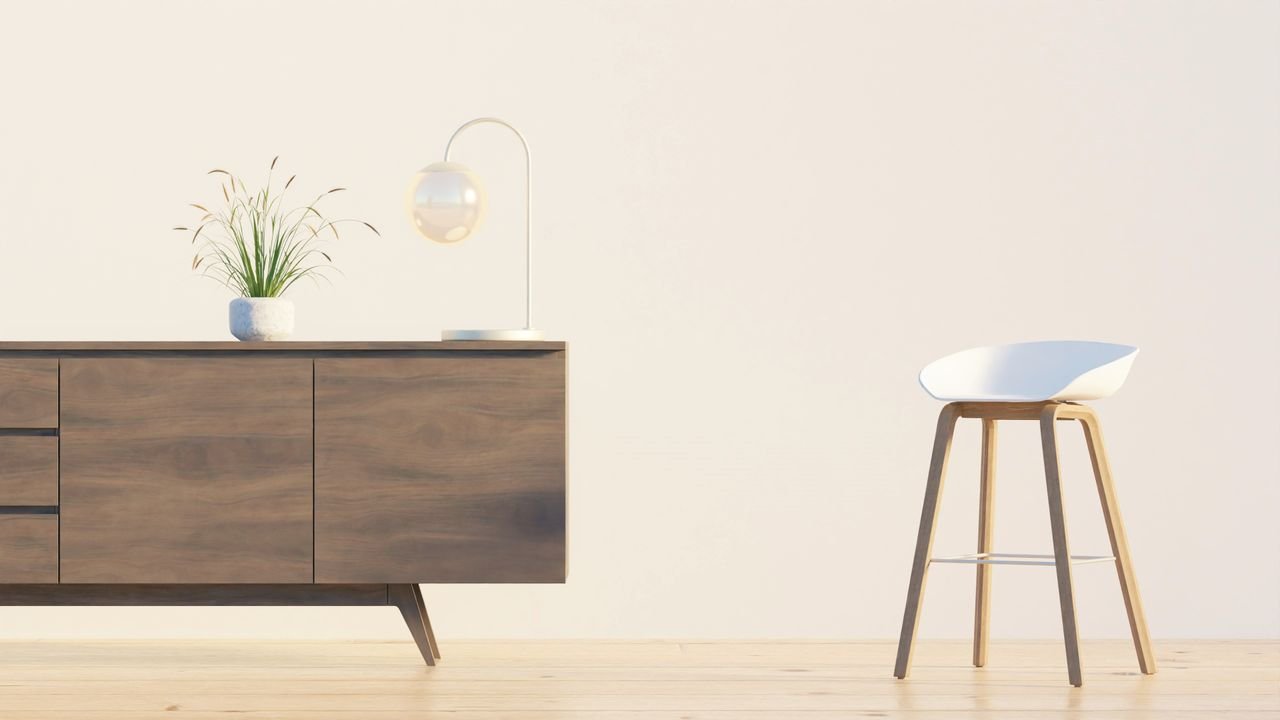
The sideboard is the hardest-working piece of furniture nobody talks about.
If you’ve ever wondered what to do with that blank wall in your dining room — or where to hide the board games, the good tablecloths, and the tangle of TV cables — a sideboard is probably the answer. It’s storage, a serving station, and a styling stage all in one long, low cabinet.
I bought my first sideboard for a tiny dining nook and honestly just needed somewhere to stash placemats. Five years later, it’s held a TV, served as a home bar, hidden my holiday dishes, and anchored three different rooms. Dollar for dollar, it’s the single best furniture purchase I’ve made — nothing else pulls this much weight for the footprint. These 15 sideboard ideas cover everything I wish I’d known before shopping: the types, the exact measurements that matter, what to put on top, and what to hide inside.
What Is a Sideboard?
A sideboard is a long, low storage cabinet — usually with cupboards, drawers, or both — traditionally placed against a dining room wall for storing serveware and displaying food during meals. Also called a buffet, it’s typically 30 to 36 inches tall, which puts its top at comfortable serving height.
The word dates back centuries (early versions appeared in 18th-century England and France, built from mahogany, oak, pine, and walnut), but today’s sideboard has escaped the dining room. You’ll find sideboards working as TV stands in living rooms, catch-all stations in entryways, and extra storage in hallways and bedrooms.
One quick naming note, since stores love to confuse you: “sideboard” and “buffet” are used interchangeably in most shops, and “credenza” gets thrown in too. The traditional distinction comes down to legs — short legs or a floor-sitting base means sideboard; longer legs usually mean buffet — but honestly, the measurements matter more than the label. Shop by size and storage, not by what the tag calls it.
Why You’ll Love Having a Sideboard
- Hidden storage that looks like decor — Clutter disappears behind closed doors while the top stays pretty.
- A serving station for hosting — Set out dishes, drinks, or desserts and free up your dining table for actual people.
- One piece, many rooms — Dining room today, entryway next year. Sideboards move well and adapt fast.
- Renter-friendly by nature — Freestanding, no drilling, no mounting. It leaves with you when the lease ends.
- Instant “finished room” energy — A styled sideboard makes a blank wall look intentional in about twenty minutes.
- Budget-stretching — One sideboard can replace a TV stand, a bar cart, and a linen closet’s worth of storage.
5 Sideboard Types Worth Knowing Before You Shop
Walk into any furniture store (or fall down an online rabbit hole) and you’ll see five names used almost interchangeably. They’re not the same thing. Here’s how to tell them apart so you buy the right one.
1. The Classic Sideboard
The original. A classic sideboard sits on short legs — or a solid plinth base that goes straight to the floor — with a mix of cabinets and drawers under one long top. This is the most versatile shape: deep enough for dinner plates, low enough to style beautifully.
What I love about the classic shape is the drawer-to-cabinet ratio. Drawers up top swallow the small stuff (flatware, linens, remotes), while the deep cabinets below take platters and board games. When you’re shopping, open everything and picture your actual belongings inside — a sideboard that looks perfect but can’t hold your serving bowls is just a pretty shelf.
Try it: If you only buy one, make it this one. It works in dining rooms, living rooms, and entryways without looking out of place.
2. The Credenza
Lower and often longer than a classic sideboard, the credenza usually has sliding doors instead of hinged ones. It started as office furniture, which is why it reads a little more modern and minimal. Great under a TV or along a living room wall where you want clean lines.
The sliding doors are the whole point — and the thing to test in person. Cheap credenzas have doors that jump their tracks or stick halfway. Slide them back and forth in the store; they should move with one finger and settle without a wobble. Also note the lower height: at 26 to 32 inches, a credenza puts its top below standard serving height, so it’s better as a media console or display piece than a dining room workhorse.
Try it: Choose a credenza when floor space is tight — sliding doors need zero swing clearance in front.
3. The Buffet Table
Taller, longer, and narrower than a sideboard, the buffet table is built for one job: holding food while people serve themselves. If you host holidays or dinner parties, the extra height (closer to counter height) makes serving genuinely more comfortable.
Because buffets run taller (34 to 38 inches), they change your styling math a bit. Art hung above needs to sit a little higher to keep that 6-to-8-inch breathing gap, and tall table lamps can start to feel oversized — go for shorter lamp silhouettes or candlesticks instead. The narrow depth (often 16 inches) is a feature, not a flaw: it keeps serving dishes within easy reach from one side.
Try it: Measure your dining table first — a buffet looks best when it’s roughly two-thirds the table’s length.
4. The Server
The server is the slim, formal cousin — narrower than both sideboards and buffets, designed for compact dining rooms. It holds the essentials (linens, a few serving pieces) without eating the room. Think of it as a sideboard for small spaces.
Be honest about capacity before you buy a server. At 36 to 48 inches wide with a 14-to-16-inch depth, it won’t hold full-size serving platters or a stack of dinner plates — and that’s fine if your goal is linens, candles, and a few pretty pieces. Where servers shine is in dining nooks and galley-style dining areas where a full sideboard would block the walkway. Pair it with wall-mounted storage above for the overflow.
Try it: In a dining nook under 10 feet wide, a server gives you storage without blocking chair traffic.
5. The Hutch
A hutch stacks open shelving on top of a sideboard-style base. You get closed storage below and display space above — perfect for showing off dishes, glassware, or a book collection. It’s the tallest option here, so it needs a wall with some height.
The open shelves are both the appeal and the maintenance contract. Everything up there is visible, which means dusting becomes a real chore and clutter has nowhere to hide. My rule: if you won’t commit to styling the shelves twice a year, buy a closed sideboard instead. But for collectors — vintage glassware, ceramics, cookbooks — a hutch turns storage into the room’s best feature.
Try it: Skip the hutch in rooms with low ceilings (under 8 feet); it can make the space feel top-heavy.
The Sideboard Buying Guide: Measurements That Matter
Here’s the section most sideboard guides skip: actual numbers. “Measure your space” is useless advice without knowing what the numbers should be. These are the rules I use every time.
Height: 30 to 36 inches. Most sideboards land in this range, which is no accident — 30 inches matches dining table height, so the top doubles as a serving surface. If it’ll live under a TV, stay closer to 30–32 inches so the screen sits at a comfortable viewing height.
Depth: 16 to 20 inches. Sideboards are shallower than dressers, which is why they hug walls so well. In a hallway or tight entryway, stick to 16 inches or less so it doesn’t become a shin-bruiser.
Length: the two-thirds rule. Your sideboard should span roughly two-thirds of the wall or furniture it’s paired with — two-thirds of your dining table’s length, or two-thirds of the empty wall. A 72-inch wall wants roughly a 48-inch sideboard. Too short looks lost; too long crowds the room.
Walkway clearance: 36 inches. Leave at least 3 feet of open floor in front of the sideboard (or in front of dining chairs pulled out near it). Anything less and people will sidestep it forever.
Art above: 6 to 8 inches. Hang a mirror or framed art so its bottom edge sits 6 to 8 inches above the sideboard top. Closer feels cramped; higher disconnects the two pieces.
TV sizing: If the sideboard will hold a TV, the TV should be no wider than the sideboard itself — ideally a few inches narrower on each side. A 55-inch TV (about 48 inches wide) pairs well with a 60-inch sideboard.
Materials, honestly ranked:
- Solid wood (oak, walnut, pine): The buy-it-for-life choice. Heavier, pricier, and it ages beautifully. My oak sideboard has survived two moves and looks better now.
- Wood veneer over MDF: The smart middle ground. Looks like solid wood at half the price. Check that edges are sealed — cheap veneer chips at corners.
- Rattan/cane fronts: Gorgeous texture and very on-trend, but look inside before buying — some cane-door cabinets have awkward interiors. Best for display storage, not heavy dishes.
- Metal and glass: Sleek and modern, and glass fronts keep small rooms feeling open. Fingerprints are the tax you pay.
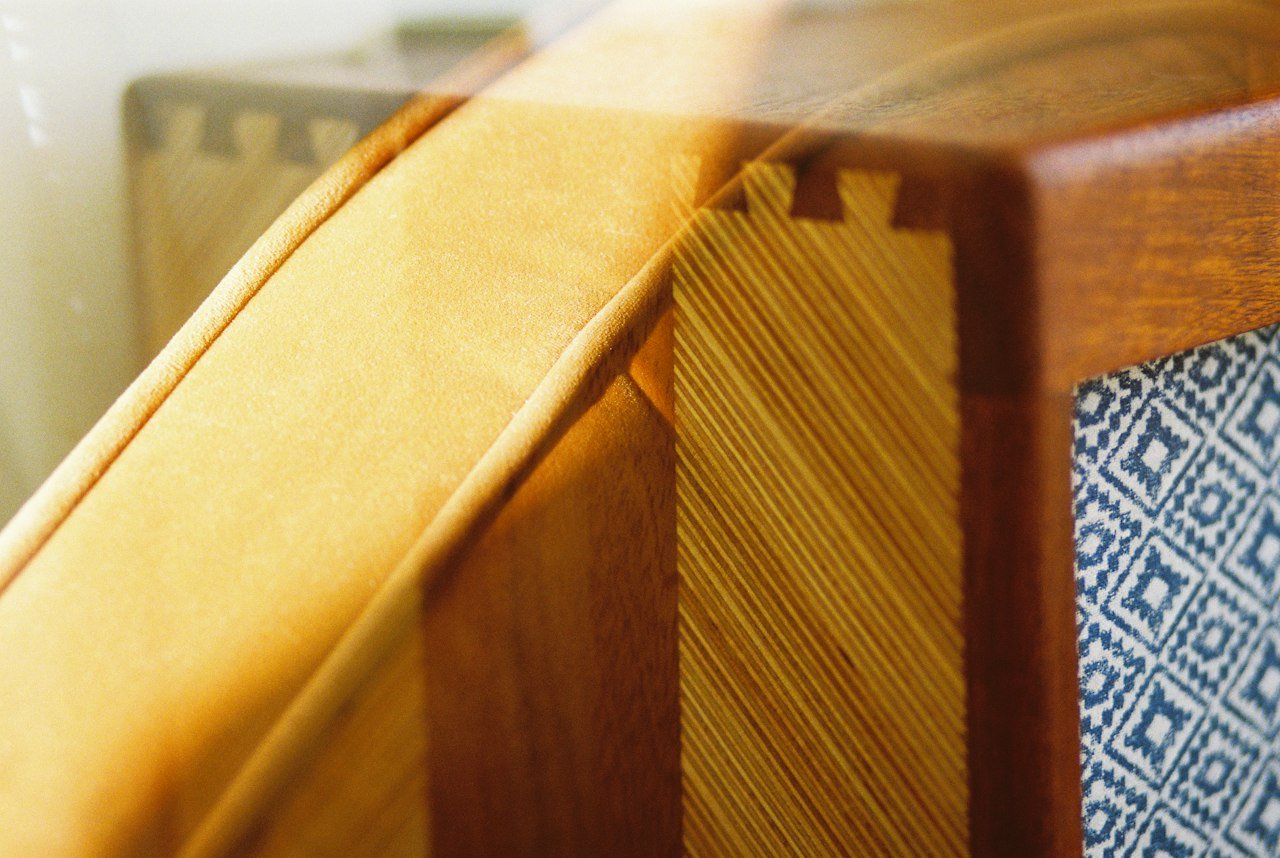
Construction checks before you buy: Open every drawer — they should glide, not stick. Look for dovetail joints on drawer boxes (a sign of real quality) and soft-close hinges on doors. Adjustable interior shelves are worth their weight; fixed shelves lock you into one layout. Check the back panel too — a finished back means you can float the piece as a room divider later; an unfinished one limits you to wall placement. And if it’s going on hardwood floors, check whether it needs felt pads (most do).
Renters, this part’s for you: A sideboard is one of the most landlord-proof furniture buys you can make. No mounting, no drilling, no wall damage — it just stands there looking expensive. If your lease is strict, skip wall-mounted art above it and lean everything. When you move, a standard 60-inch sideboard fits through most doorways and into most moving trucks without disassembly drama.
The 60-second decision checklist: Right size for the wall (two-thirds rule)? Right height for the job (serving vs. TV vs. display)? Drawers where you need small-item storage, cabinets where you need bulk? Doors that open without hitting anything? If you can answer yes four times, buy it.
Try it: Tape the sideboard’s footprint on your floor with painter’s tape and live with it for 48 hours. Walk around it. Open imaginary doors. You’ll know immediately if the size is wrong — before the delivery truck shows up.
10 Sideboard Styling Ideas That Always Work
You’ve got the piece. Now the fun part. These ten sideboard styling ideas work in dining rooms, living rooms, hallways, and entryways — pick the one that matches your room’s job.
6. The Anchor Trio: Art, Lamp, Plant
The most foolproof sideboard styling formula ever: something tall on one side (a table lamp), something living in the middle or other end (a plant or vase of stems), and art or a mirror centered above. Three elements, three heights, done. It works because the eye reads it as one composed vignette instead of random objects.
For the lamp, pick something 24 to 30 inches tall so it clears the art above without competing with it. For the greenery, one dramatic stem (eucalyptus, olive branches, pampas grass) beats a fussy mixed arrangement — and it lasts weeks with zero care. If your sideboard is longer than 60 inches, you can run the trio twice, mirrored, for a symmetrical look that suits formal dining rooms.
Try it: Keep the lamp on the side nearest your seating — you’ll actually use the light, and it balances the composition.
7. Lean, Don’t Hang
Instead of hanging art above your sideboard, lean a large framed print or mirror against the wall on top of it. It looks relaxed and collected, it needs zero nails (renters, rejoice), and you can swap pieces seasonally in seconds. Layer a smaller frame in front for depth.
Scale matters here: the leaning piece should be about two-thirds the width of the sideboard and tall enough to rise at least 18 inches above the top. Anything smaller looks like it got lost. Put a small museum-gel dot or adhesive bumper behind the frame’s bottom edge so it can’t slide forward — especially important in homes with kids or wobbly floors.
Try it: Lean the biggest piece slightly off-center and anchor the other side with a stack of books — asymmetry looks intentional, not accidental.
8. The Mirror Trick
Hang or lean a large mirror above the sideboard to bounce light around and double the sense of space. In a small or dark dining room, this single move can change how the whole room feels. Round mirrors soften all the sideboard’s straight lines; arched mirrors are having a well-deserved moment.
Size it generously — a mirror that’s too small over a long sideboard looks timid. Aim for a mirror about half to two-thirds the sideboard’s width, and hang its center around 57 to 60 inches from the floor (standard gallery height), which usually lands the bottom edge right in that 6-to-8-inch sweet spot above the top. In a dining room, a mirror opposite the table also doubles candlelight beautifully at dinner.
Try it: Angle the mirror to reflect a window, not a blank wall — you want it to catch light and greenery, not your ceiling fan.
9. The Home Bar Setup
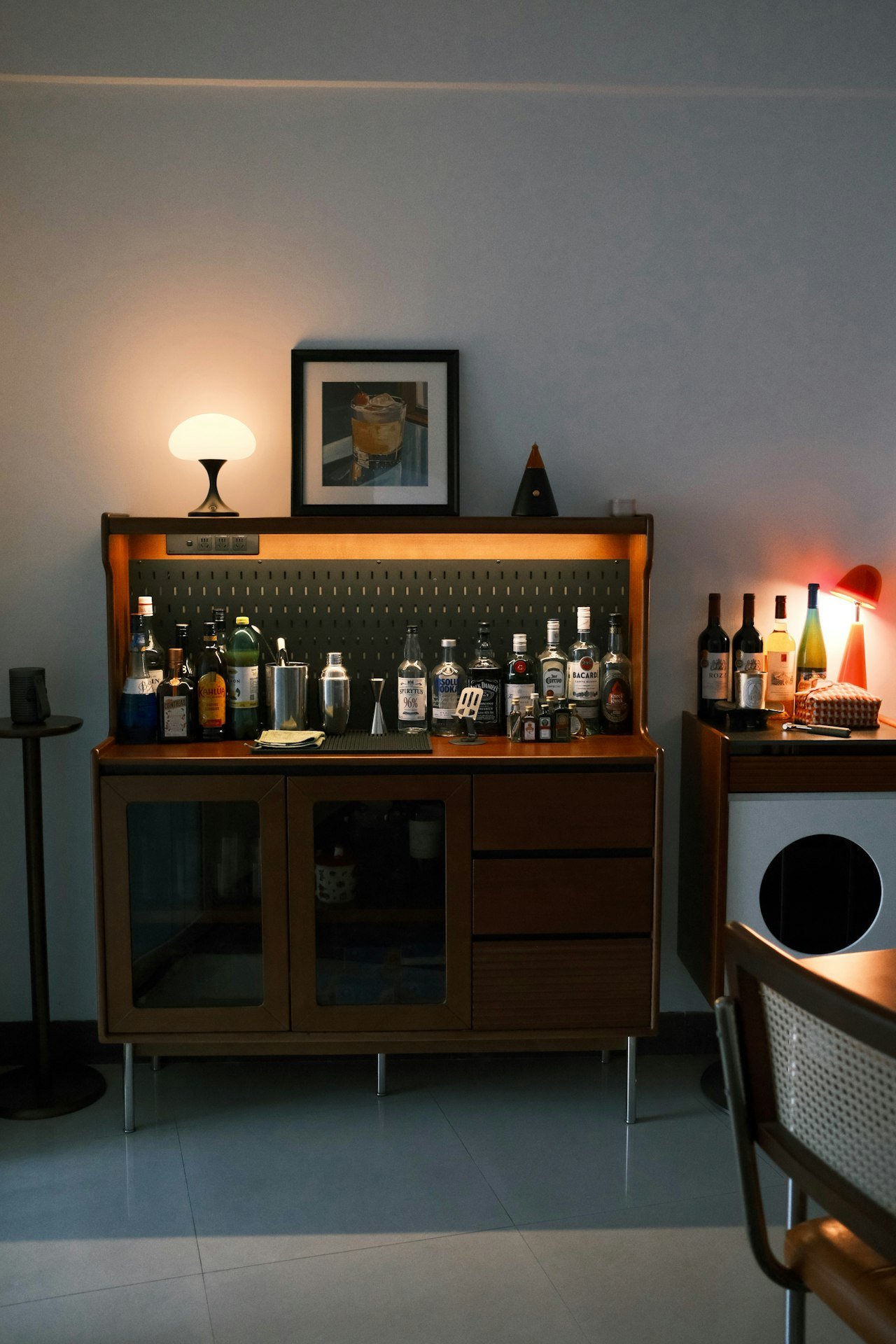
Turn your sideboard into a bar station: a large tray corrals bottles and decanters, a small ice bucket or cocktail shaker adds function, and a couple of nice glasses make it feel real. The cabinets below hide the overflow — extra bottles, mixers, the blender you only use in December.
Keep the tray to about a third of the sideboard’s length so the bar reads as a vignette, not a takeover. Group bottles by height (tallest in back) and leave breathing room — a crowded bar tray looks like a liquor store shelf. If you entertain often, stash a folding tray table inside the cabinet; it gives guests somewhere to set drinks when the sideboard itself is full of bottles.
Try it: Add a small potted herb (rosemary or mint) to the tray. It looks great and you can actually garnish drinks with it.
10. The Entryway Command Station
In a foyer or hallway, a narrow sideboard becomes mission control: a shallow bowl or tray for keys, a lidded box for sunglasses and mail, and a mirror above for last-second checks. Keep the surface ruthlessly edited — entryways collect clutter like nothing else.
Hallways demand slim profiles: look for 14-to-16-inch depths so the piece doesn’t choke the passage. Mount a row of hooks on the wall above (using adhesive strips if you rent) for coats and bags, and slide a low bench or a couple of floor cushions alongside for shoe duty. The goal is a 30-second landing zone: keys down, shoes off, bag stowed, out the door.
Try it: Put a small lidded basket inside the cabinet for each household member. Backpacks, dog leashes, and reusable bags disappear behind closed doors.
11. The TV Stand Upgrade
A sideboard makes a far better TV stand than most actual TV stands: it’s the right height, it hides components and cables in real cabinets, and it looks like furniture instead of an electronics rack. Drill a discreet cable hole in the back panel (or use adhesive cable channels — no drilling needed) and add a power strip inside.
Plan the interior before the TV goes up: measure your soundbar, console, and router, and make sure the cabinet depth clears them with room for cables to bend. A soundbar in front of the TV on the sideboard top works fine — just keep it below the screen’s bottom edge. And if you wall-mount the TV above instead, the sideboard below becomes pure decor and storage, which honestly looks better in most living rooms.
Try it: Leave one cabinet door slightly vented or choose a cane-front sideboard if you hide a game console or cable box inside — they need airflow.
12. The Dining Room Serving Station
This is the sideboard’s original job and still its best party trick. Before guests arrive, set out the serving dishes, a stack of plates, and drinks on the sideboard. Dinner hits the table; sides and seconds live on the sideboard. Nobody squeezes past anyone.
Set it up in serving order: plates first, then mains, then sides, with drinks and glasses at the far end so traffic flows one direction. Put hot dishes on trivets — not directly on a wood top unless you enjoy ring marks. And keep the drawers stocked with serving spoons, a carving knife, and extra napkins so you’re not sprinting to the kitchen mid-party.
Try it: For holidays, add a small folding table leaf or tray on one end to extend serving space — then put it away January 2nd.
13. The Book Lover’s Display
Style the top with horizontal stacks of books (3 to 5 per stack, largest on the bottom), a bookend or small sculpture on top of one stack, and a reading lamp at one end. The drawers below swallow bookmarks, reading glasses, and the books you’re “currently” reading.
Vary the stack heights so the composition has rhythm — a tall stack, a short stack, then the lamp. Tuck a small framed photo or a ceramic object between stacks to break up the rectangles. And leave one stretch of empty surface; a reading lamp needs a landing spot for the actual book you’re reading, plus your coffee.
Try it: Arrange one stack by color for a calm look, or spine-out rainbow for personality. There’s no wrong answer — it’s your shelf.
14. The Seasonal Swap
Keep the sideboard’s base styling constant (lamp, art, one plant) and rotate one small vignette with the seasons: pumpkins and dried grasses in fall, pinecones and candles in winter, fresh tulips in spring, a bowl of lemons in summer. Five minutes, four times a year, and the room always feels fresh.
The trick is containing the seasonal stuff to one tray or one end of the sideboard. When the whole surface changes, the room feels chaotic instead of refreshed; when one vignette changes, it feels intentional. Shop your own house first — that vase from the bedroom and the bowl from the kitchen become “new” seasonal decor with zero spending.
Try it: Store the seasonal bits in one labeled bin inside the sideboard itself. Future you will be grateful.
15. The Small-Space Double Agent
In a studio or small apartment, a sideboard earns its footprint twice: use it as a room divider between sleeping and living zones (style both sides), a console desk behind a sofa, or even a changing table in a nursery (standard sideboard height is close to changing-table height — just add a contoured pad and never leave baby unattended). Back it with a rug to define the zone.
As a room divider, the back of the sideboard matters — it’s visible from the other zone. Choose a finished back (or add peel-and-stick wallpaper to a raw one) and style it like a console: a runner, a low plant, maybe a small lamp. Anchor it with a rug that extends under both zones so the divider reads as architecture, not a barricade.
Try it: A 48-inch sideboard placed perpendicular to the wall creates an entry “foyer” in a studio that opens straight into the living area. Instant floor plan.
What to Store Inside Your Sideboard (Room by Room)
Everyone styles the top of the sideboard. Almost nobody talks about the inside — which is a shame, because that’s where the real magic happens. Here’s my room-by-room storage map:
Dining room: Table linens (folded, not stuffed), placemats, cloth napkins, serving platters, the good flatware, candles and candle holders, and a table runner or two. Keep one drawer as the “hosting drawer”: bottle opener, matches, extra napkins, stain wipes.
Living room: Board games and card decks, TV remotes (one small tray so they stop migrating), throw blankets (folded tight), coasters, and the cable-box overflow. If it’s your TV stand, dedicate one cabinet to components with a power strip mounted inside the back.
Entryway/hallway: Each person’s “go bag” bin, reusable shopping bags, dog leash and treats, umbrellas (in a tall bin if the cabinet is deep enough), outgoing mail, and a small toolkit for quick fixes.
Bedroom: Off-season accessories, extra bedding, the “I don’t know where this goes” drawer — but organized. Drawer dividers are non-negotiable here; without them, every sideboard drawer becomes a junk drawer within a month.
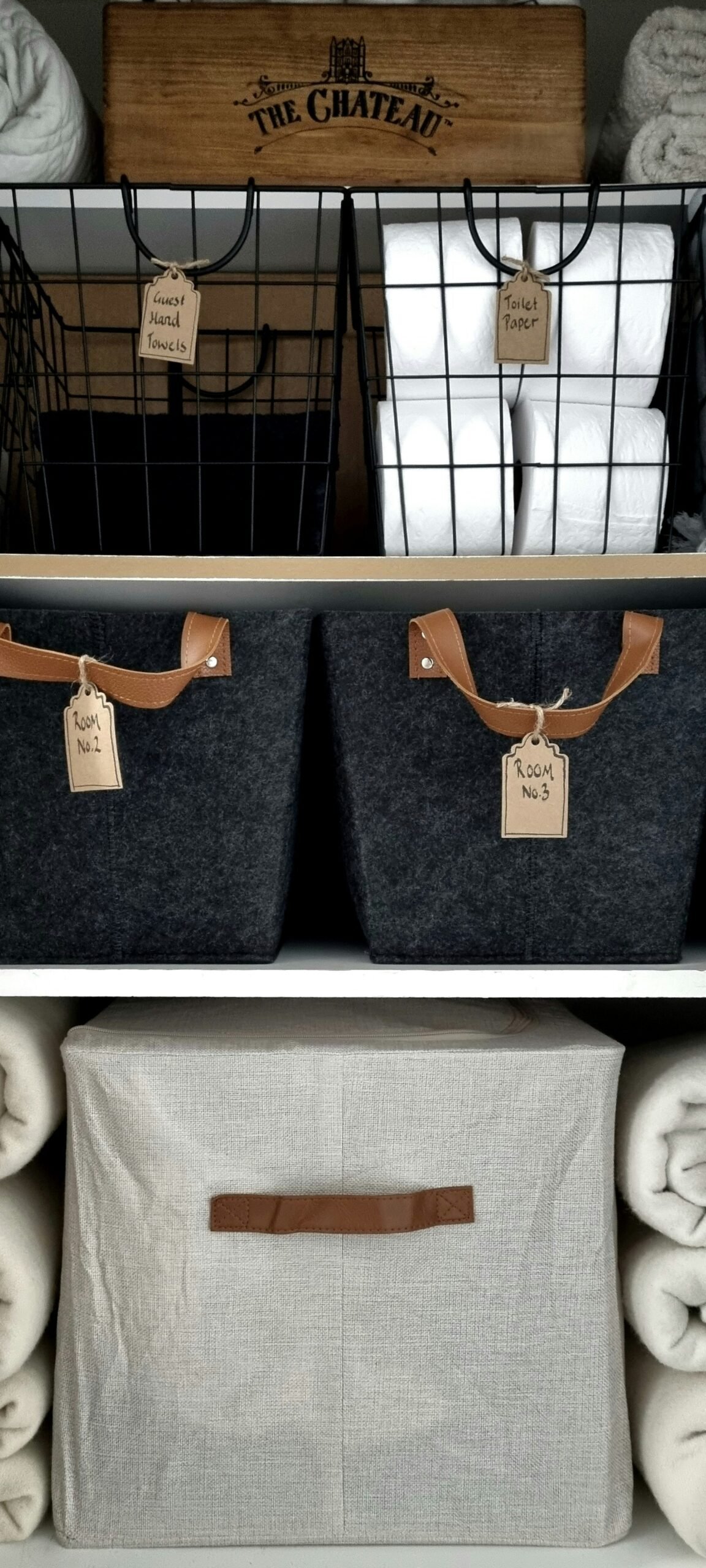
The organization rules that make it stick: Use trays and bins inside cabinets so things don’t slide into chaos. Label the bins if you share the house with anyone. Put the most-used items at the front and top, and keep rarely used pieces (holiday platters, fondue sets) on the highest or deepest shelves. Line cabinet shelves with washable shelf liner — it protects the wood and makes spills a wipe, not a crisis. And once a season, open every door and evict anything you haven’t touched — a sideboard full of forgotten stuff is just an expensive junk drawer.
One more trick I swear by: photograph the inside of each cabinet after you organize it. When things drift (and they will), the photo shows you exactly where everything belongs. It takes ten seconds and saves the slow slide back into chaos.
Common Mistakes to Avoid
- Buying the wrong size. The number-one sideboard regret. Measure the wall, tape the footprint on the floor, and apply the two-thirds rule before you spend a dollar. A sideboard that’s too small looks like an afterthought; too big eats the room. Fix: return windows exist for a reason — but measuring first is cheaper than hauling furniture back.
- Overcrowding the top. If you can’t see any surface between objects, remove half of them. Negative space is what makes the remaining pieces look expensive. The rule of three (group objects in odd numbers) beats a dozen small trinkets every time. Fix: box up the extras for a week. If you don’t miss them, donate them.
- Hanging art too high. The 6-to-8-inch gap between sideboard top and frame bottom is the sweet spot. Higher and the art floats away from the furniture; lower and it feels cramped. Fix: rehang it. One extra nail hole is invisible behind the frame anyway — or switch to leaning and skip holes entirely.
- Ignoring the inside. A gorgeous top over chaotic cabinets is a missed opportunity. Spend one afternoon adding dividers and bins — it’s the difference between storage and a hiding place. Fix: pull everything out, keep only what belongs in that room, and contain the rest in labeled bins.
- Blocking walkways. That 36-inch clearance isn’t a suggestion. If guests have to turn sideways to pass, the sideboard is in the wrong spot or it’s the wrong piece. Fix: try the adjacent wall, or downsize to a server — the slim formal cousin built exactly for tight dining rooms.
- Wrong TV proportions. A TV wider than the sideboard looks precarious and top-heavy, even when it’s perfectly stable. Size the furniture to the screen, not the other way around. Fix: if you already own both, wall-mount the TV and let the sideboard live underneath as pure storage and style.
- Choosing looks over function. A stunning sideboard with fixed shelves and no drawers will frustrate you daily if you needed drawer storage. List what must go inside before you fall in love with a silhouette. Fix: add aftermarket drawer organizers and stackable shelf risers inside cabinets — they can’t create drawers, but they fake the flexibility.
Sideboard at a Glance
| Type | Best For | Typical Size (W × H × D) | Watch Out For |
|---|---|---|---|
| Classic sideboard | Dining rooms, all-purpose storage | 48–72″ × 30–36″ × 16–20″ | Cheap veneer chips at corners |
| Credenza | Living rooms, under-TV, modern spaces | 60–80″ × 26–32″ × 16–18″ | Lower height limits what fits inside |
| Buffet table | Hosting, serving, dinner parties | 60–72″ × 34–38″ × 16–18″ | Taller top changes styling proportions |
| Server | Small dining rooms, compact spaces | 36–48″ × 32–36″ × 14–16″ | Limited storage — be realistic |
| Hutch | Display + storage, dish collectors | 48–60″ × 72–84″ × 16–18″ | Needs 8-ft+ ceilings to avoid looming |
FAQ
What’s the difference between a sideboard and a buffet?
The terms overlap a lot, but traditionally a sideboard sits on short legs or a plinth base directly on the floor, while a buffet has longer legs and stands taller. Buffets also tend to be longer and narrower, designed specifically for laying out food. In stores today the names are used almost interchangeably — go by the measurements, not the label.
What is the standard height of a sideboard?
Most sideboards are 30 to 36 inches tall. Thirty inches matches dining table height, which makes the top comfortable for serving. If you’re placing one under a TV, aim for 30 to 32 inches so the screen lands at a natural viewing height from your sofa.
How long should my sideboard be?
Use the two-thirds rule: the sideboard should span about two-thirds of the wall space or the furniture it’s paired with. On a 9-foot (108-inch) wall, look for something around 72 inches long. Against a 6-foot dining table, a 48-inch sideboard hits the mark.
What do you put on top of a sideboard?
The classic formula is three elements at three heights: a lamp (tall), a plant or vase of stems (medium), and a stack of books or a decorative box (low), with art or a mirror above. Beyond that, style for the room’s job — a bar tray in the living room, a key bowl in the entryway, serving pieces in the dining room.
Can I use a sideboard as a TV stand?
Absolutely — it’s one of the best uses. Choose one 30 to 32 inches tall, make sure the TV is no wider than the sideboard, and manage cables with an in-cabinet power strip and adhesive cord channels. If you hide a console or cable box inside, pick cane fronts or leave ventilation space so nothing overheats.
Sideboard vs credenza — which should I buy?
Buy a sideboard for the dining room or when you want maximum versatile storage with drawers and cabinets. Buy a credenza for the living room, under a TV, or when you want a lower, more modern profile — its sliding doors also need less clearance in tight rooms.
Where should I place a sideboard?
Against the longest empty wall in the room it’s serving: dining room wall for serving and storage, living room wall (often under the TV or opposite the sofa), entryway wall for a command station, or hallway for slim models. Keep 36 inches of clear walkway in front.
Are sideboards outdated?
Not even slightly. The fussy formal-dining-room sideboard of decades past evolved into one of the most versatile pieces in modern homes — TV stands, home bars, entryway organizers, room dividers. Mid century modern silhouettes, cane fronts, and fluted details keep it firmly current.
Final Thoughts
A sideboard is the rare furniture piece that solves two problems at once: the clutter you need to hide and the blank wall you need to fill. Measure first, buy for the storage you actually need, and style the top with restraint — three good objects beat twelve forgettable ones every single time.
Start with the measurements in this guide, buy for the storage you’ll actually use (not the silhouette you fell for online), and style the top with restraint. A sideboard done right doesn’t just fill a wall — it quietly organizes your whole room.
Which room is getting your sideboard — and what’s going inside it first? Tell me in the comments; I’m nosy about other people’s storage.

Founder of NestFlavors — sharing tested recipes and honest home ideas, made for real life.