
The nightstand is the smallest piece of furniture in the bedroom — and the one you touch more than any other.
You reach for it half-asleep for water, for your phone, for a book, for glasses. And yet most nightstands are afterthoughts: a wobbly box, a drawer that sticks, a finish that fights the bed. A good wood nightstand fixes all of that quietly, and these 15 wood nightstand ideas show how to pick one that actually works for your bedroom.
Below you will find wood nightstand styles for every bedroom: oak, walnut, reclaimed wood, live-edge slabs, and painted wood, plus sizing rules, storage layouts, and styling tips. I cover what to look for in the wood itself, because a nightstand made from solid wood ages beautifully while a thin veneer over particleboard rarely does.
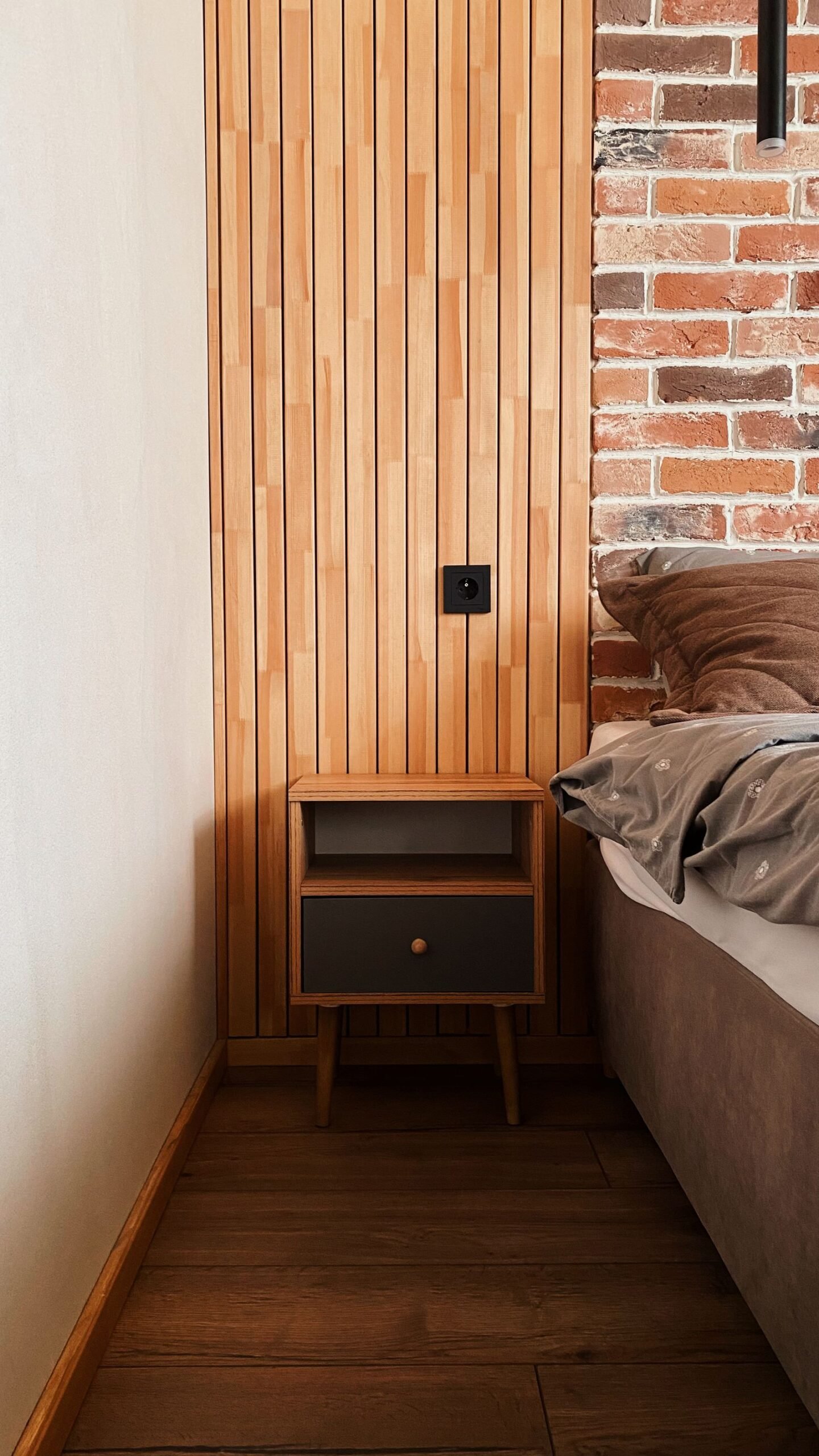
What Is a Wood Nightstand?
A wood nightstand is a small bedside table made primarily from wood — solid hardwood, engineered wood with a wood veneer, or reclaimed timber — designed to hold a lamp, a book, and nighttime essentials within arm’s reach of the bed. Typical nightstands stand 24 to 28 inches tall, about the height of the mattress top, and range from a simple open shelf to a cabinet with drawers and a charging station.
Wood is the most forgiving nightstand material because it suits almost every bedroom style. Oak reads warm and casual, walnut reads rich and modern, pine reads rustic and affordable, and reclaimed wood brings character no new material can fake. A wood nightstand also ages with the room: it can be sanded, refinished, or repainted years later, which is more than you can say for most furniture.
Why You Will Love These Wood Nightstand Ideas
- They warm up a bedroom instantly. Wood adds texture and warmth that metal and lacquer cannot, and a wood nightstand grounds the whole bed wall.
- They suit any style. From farmhouse to mid-century to modern, there is a wood nightstand finish that fits — the wood itself does most of the styling work.
- They last for decades. A solid wood nightstand can be refinished and handed down, while cheaper materials tend to chip and wobble within a few years.
- They hide the clutter. Drawers and cabinets in these wood nightstand designs keep chargers, medicines, and books out of sight.
- They are easy to personalize. Swap the knobs, stain it darker, or paint it — wood takes customization better than any other nightstand material.
Classic Wood Nightstand Styles
These are the styles that never go out of fashion. Start here if you want a nightstand you will still love in ten years.
1. The Solid Oak Nightstand
Oak is my default recommendation: it is hard, affordable, and its grain looks good with almost any bedding. A simple oak nightstand with one drawer and an open shelf below covers most bedrooms. Try it: choose white oak over red oak if your room leans cool — red oak has a pinkish tone that can clash with gray bedding.
2. The Walnut Nightstand
Walnut is darker, richer, and more formal than oak, with a chocolate-brown grain that pairs beautifully with brass lamps and white bedding. It costs more, but a walnut nightstand anchors a bedroom the way a good rug does. Use it: keep the finish matte or satin — high-gloss walnut shows every fingerprint and dust mote.
3. The Shaker-Style Nightstand
Clean lines, a recessed panel drawer, and tapered legs — Shaker style is the plain white shirt of nightstands: simple, honest, and right in almost any room. Try it: paint a Shaker nightstand the same color as your trim for a built-in look, or leave it natural for a warmer feel.
4. The Pine Farmhouse Nightstand
Pine is soft, light, and affordable, with knots and grain that read as rustic charm rather than flaws. A farmhouse pine nightstand with a chunky top and a lower shelf suits cottages and country bedrooms. Use it: seal pine well — it dents easily, and a good topcoat keeps water rings from becoming permanent.
5. The Mid-Century Teak Nightstand
Teak brings golden-brown warmth and the tapered legs and clean drawers of mid-century design. Vintage teak nightstands are widely available secondhand and often cost less than new furniture of worse quality. Try it: check drawer slides on vintage pieces — smooth slides matter more than a perfect finish, because a sticky drawer ruins a nightstand.
Nightstand Storage Ideas
What a nightstand holds matters as much as how it looks. These layouts solve the real bedside problems: chargers, books, and the things you need at 2 a.m.
6. The Two-Drawer Nightstand
Two drawers — one shallow for small items, one deep for books and chargers — is the most practical layout I know. The top drawer holds lip balm, medicine, and earbuds; the bottom swallows the rest. Use it: add drawer dividers, because one deep drawer without dividers becomes a junk drawer within a month.
7. The Open-Shelf Nightstand
An open shelf below the top is perfect for a stack of books and a basket for chargers, and it keeps the nightstand feeling light in a small room. Try it: use a small basket on the shelf for the ugly stuff — cables, remotes, and adapters — so the shelf still looks tidy.
8. The Nightstand with a Charging Drawer
A drawer with a built-in power strip keeps phones charging out of sight and ends the nightly cable tangle on top of the nightstand. This is my top pick for anyone who charges a phone, watch, and earbuds by the bed. Use it: check that the drawer has a cable pass-through at the back, or the cords will pinch every time you close it.
9. The Cabinet-Door Nightstand
A door instead of drawers hides larger items — a CPAP machine, extra blankets, a stack of magazines — behind one clean panel. It suits bedrooms where the nightstand has to do real storage work. Try it: soft-close hinges are worth the small extra cost; a slamming cabinet door at midnight wakes everyone.
10. The Floating Nightstand
A wall-mounted wood shelf or box frees floor space and makes a small bedroom feel larger, because you can see the floor beneath it. It also makes vacuuming easier, which is a genuine quality-of-life win. Use it: mount it into a stud, not just drywall — a floating nightstand holding a lamp and books carries real weight.
Character Nightstand Ideas
These are the nightstands with personality — the ones guests ask about.
11. The Reclaimed Nightstand
Reclaimed barn wood or old floorboards bring nail holes, saw marks, and a story no new wood can match. Each piece is different, which is the point. Try it: seal reclaimed wood thoroughly, since old timber can be rough and splintery without a good finish.
12. The Live-Edge Nightstand
A slab top with its natural bark edge preserved turns a nightstand into a piece of sculpture. It works best in rooms with simple bedding, where the slab can be the star. Use it: keep the rest of the nightstand simple — a live-edge top on fussy legs looks confused.
13. The Painted Nightstand
Painting a nightstand — sage green, navy, or soft black — lets you match an accent color exactly, and it rescues thrifted pieces with damaged finishes. Try it: use furniture paint with a built-in topcoat, and sand lightly between coats for a finish that does not chip in a month.
14. The Rustic Log Nightstand
A nightstand made from a section of log or a thick slab on hairpin legs suits cabins and rustic bedrooms, and it is often the cheapest solid-wood option if you buy from a local sawmill. Use it: check that the log is fully dried — green wood cracks as it dries, and a crack through the top is hard to fix.
15. The Mismatched Pair of Nightstands
Two different nightstands — say, an oak one on the left and a walnut one on the right — look collected and personal rather than bought as a set. The trick is a shared element: same lamp style, same height, or same hardware. Try it: keep both nightstands within 2 inches of the same height, or the bed wall looks lopsided.
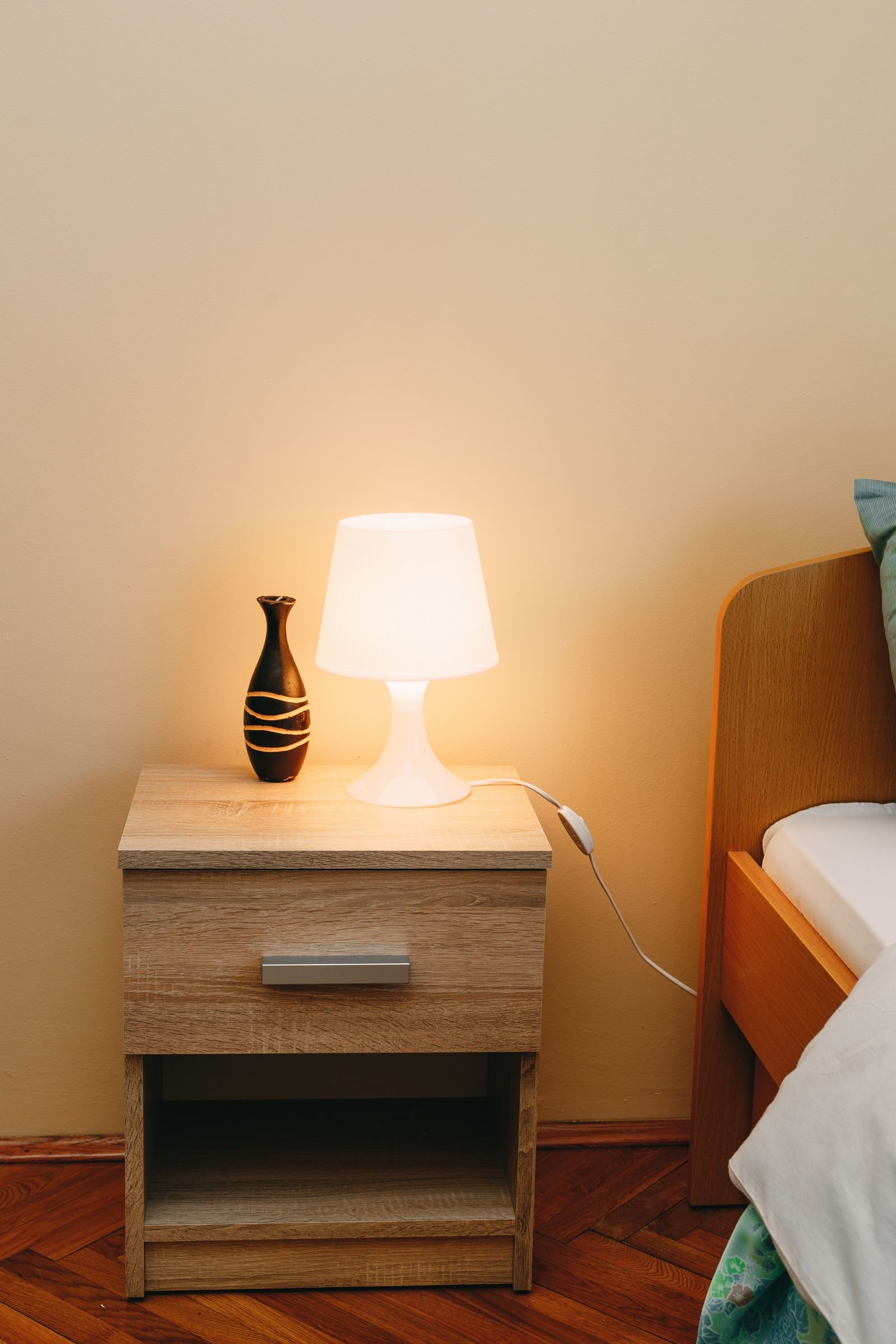
How to Size and Style a Nightstand
Height is the rule that matters most: the top of your nightstand should sit within 2 inches of the top of your mattress — level is ideal, slightly above is fine, and below the mattress is awkward because you reach down for everything. Width should be roughly 18 to 24 inches for a standard bedroom; in a small room, 14 to 16 inches still works if the lamp is slim.
Styling is simple: a lamp, one book or a small plant, and nothing else on top. The nightstand is a working surface, not a display shelf, and every extra object is something you will knock over in the dark. For lighting, pair the nightstand with a warm LED lamp — the US Department of Energy’s Lighting Choices to Save You Money guide notes LEDs use up to 90% less energy than incandescent bulbs, so a bedside lamp can stay on all evening for pennies.
Common Mistakes to Avoid
- Buying a nightstand shorter than the mattress. Reaching down for water and books gets old fast. Fix: measure your mattress top height before you shop, and buy within 2 inches of it.
- Choosing veneer so thin it peels. Cheap veneer chips at the edges and cannot be refinished. Fix: check edges and corners in person, and prefer solid wood or thick veneer.
- Ignoring drawer slides. A drawer that sticks or slams ruins the nightstand daily. Fix: test the drawers before buying, and look for full-extension, soft-close slides.
- Overloading the top. A nightstand crowded with decor leaves no room for the lamp, book, and water glass it exists for. Fix: lamp, one book, one small item — that is the whole styling list.
- Forgetting the charging plan. Cables snaking across the floor are ugly and a tripping hazard. Fix: choose a nightstand with a charging drawer or a cable hole, and run the cord behind the bed.
Nightstand at a Glance
| Style | Best Pick | When to Use It |
|---|---|---|
| Classic | Solid Oak Nightstand | Any bedroom; the safest, warmest default |
| Storage | Two-Drawer Nightstand | Bedrooms where the nightstand must hide clutter |
| Small rooms | Floating Nightstand | Tiny bedrooms that need floor space back |
| Character | Reclaimed Nightstand | Rooms that need a story, not just furniture |
| Budget | Pine Farmhouse Nightstand | Rustic rooms and first apartments |
Frequently Asked Questions
How tall should a nightstand be?
Within 2 inches of the top of your mattress is ideal. Level with the mattress is best, slightly above is fine, and below the mattress makes everything awkward to reach in the dark.
Is solid wood better than veneer for a nightstand?
Solid wood lasts longer and can be refinished, but good thick veneer over plywood is stable and affordable. Avoid very thin veneer over particleboard — it chips, swells with moisture, and cannot be repaired.
What wood is best for a nightstand?
Oak is the best all-rounder for durability and price, walnut is the most elegant, and pine is the most affordable and rustic. Teak suits mid-century rooms, and reclaimed wood suits character-filled spaces.
Should nightstands match the bed?
They do not have to match exactly. Nightstands that share a wood tone or finish with the bed look coordinated, but a contrasting wood can look intentional too, especially if the lamps match.
How wide should a nightstand be?
For most bedrooms, 18 to 24 inches wide works well. In a small room, 14 to 16 inches is enough if the lamp is slim and the storage is efficient.
Can I paint a nightstand?
Yes, and wood takes paint better than any other nightstand material. Sand lightly, prime, and use furniture paint with a topcoat so the finish survives daily use and water glasses.
How do I care for a nightstand?
Dust weekly with a dry cloth, wipe spills quickly, and use coasters under water glasses. Every year or two, feed the wood with a beeswax or oil finish to keep it from drying out.
Are floating nightstands sturdy?
Yes, when mounted into studs. A floating nightstand on drywall anchors alone will sag or pull out under the weight of a lamp and books, so find the studs first.
Final Thoughts
A wood nightstand is a small purchase that you use every single day, which is why it is worth choosing carefully. Measure your mattress height, pick a wood you love looking at, and make sure the drawers work smoothly. Do that, and the nightstand disappears into your routine in the best way — always there, always within reach, never in the way. If you are starting from scratch, the solid oak nightstand with two drawers is the one I recommend most, because it is the hardest to get wrong.

Founder of NestFlavors — sharing tested recipes and honest home ideas, made for real life.