
A wooden cabinet is the furniture equivalent of a good friend: it holds your stuff, looks good doing it, and never asks for attention.
I have bought, built, refinished, and regretted enough cabinets to know what separates a wooden cabinet you love for twenty years from one you list for sale within a year. It comes down to wood, construction, and honest storage — and these 15 wooden cabinet ideas cover kitchens, living rooms, bathrooms, and bedrooms so you can pick the right one for the room that needs it.
Below you will find wooden cabinet styles from farmhouse hutches to modern flat-front cabinets, plus sizing, finish, and hardware guidance. I include what to check before you buy, because a cabinet’s insides matter more than its doors.

What Is a Wooden Cabinet?
A wooden cabinet is a storage furniture piece made primarily from wood, with doors, drawers, or open shelves enclosing space for dishes, books, linens, tools, or display items — ranging from kitchen wall cabinets to freestanding armoires and sideboards. Wooden cabinets differ from metal or laminate storage in warmth, repairability, and weight: a solid wood cabinet can be sanded and refinished, while a laminate one cannot.
Wooden cabinets work in every room because wood adapts. In a kitchen, a wooden cabinet holds dishes and hides appliances. In a living room, it becomes a sideboard or media console. In a bathroom, it stores towels and toiletries behind a door that matches the vanity. The material is the same; the job changes with the room.
Why You Will Love These Wooden Cabinet Ideas
- They hide clutter beautifully. A wooden cabinet with doors turns a messy shelf into a clean wall, which is the fastest room upgrade I know.
- They last for decades. Solid wood cabinets can be refinished, repaired, and repainted, while cheaper materials chip and sag.
- They suit every style. Oak, walnut, pine, painted wood — there is a wooden cabinet finish for farmhouse, modern, rustic, and traditional rooms alike.
- They add value to a room. Built-in-looking cabinets make kitchens and living rooms feel finished and intentional.
- They are customizable. Swap knobs, add glass doors, or paint the interior a contrasting color — wood takes changes gracefully.
Kitchen Cabinet Ideas
Kitchen cabinets do the hardest work in the house: daily use, steam, grease, and heavy dishes. Choose construction first and style second.
1. The Shaker Cabinet
Shaker cabinets — flat recessed panels, simple frames, no ornament — are the most popular kitchen cabinet style for a reason: they suit almost any kitchen and never look dated. In oak or painted maple, they are the safe choice that is also the good choice. Try it: pair Shaker cabinets with simple bar pulls and the kitchen looks clean without trying hard.
2. The Open-Shelf Cabinet
Removing upper cabinet doors, or replacing a run of uppers with open wooden shelves, makes a small kitchen feel larger and puts pretty dishes on display. It only works if you keep the shelves tidy, so this is a style for people who actually like their dishes. Use it: limit open shelves to one wall and keep closed cabinets elsewhere for the ugly stuff.
3. The Glass-Front Cabinet
Glass doors on a few upper cabinets break up a wall of wood and let you display glassware and pretty bowls. It is the middle ground between open shelves and full doors. Try it: use glass only on one or two cabinets — a whole kitchen of glass doors looks like a shop display.
4. The Two-Tone Cabinet
Dark wood or painted lower cabinets with lighter uppers — white oak below, soft white above, for example — ground a kitchen without darkening it. This is my favorite trick for kitchens that feel top-heavy. Use it: keep the countertop and hardware consistent so the two tones still read as one kitchen.
5. The Pantry Cabinet
A tall pantry cabinet with pull-out shelves turns a deep, dark pantry into usable storage, because nothing hides at the back anymore. If your kitchen lacks a pantry closet, a freestanding wooden pantry cabinet does the same job. Try it: pull-outs are worth every penny — a pantry without them wastes a third of its space.
Living Room and Bedroom Cabinet Ideas
Outside the kitchen, a cabinet becomes display, media storage, or a wardrobe — and the style can be bolder.
6. The Sideboard Cabinet
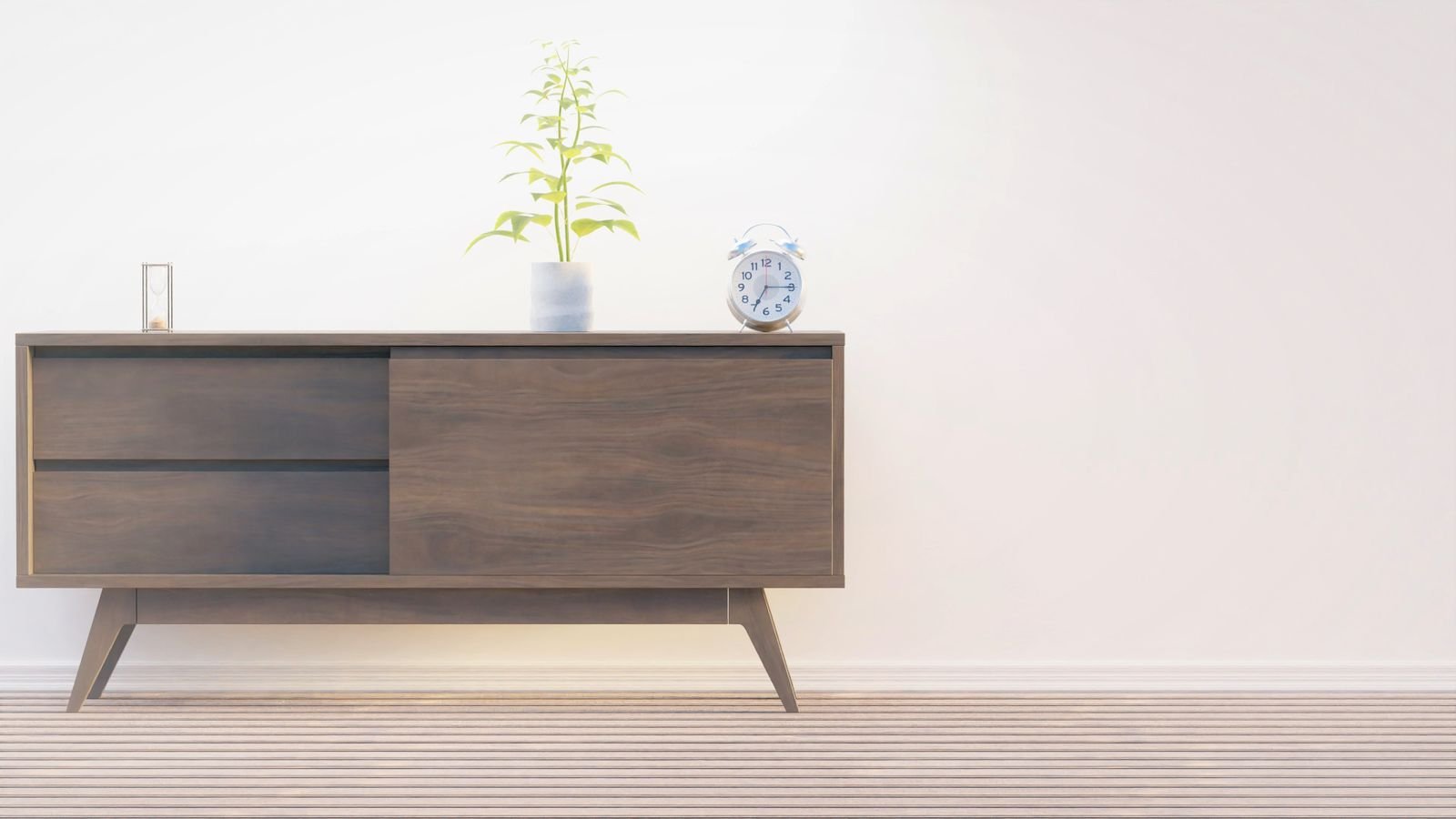
A long, low sideboard in walnut or oak stores board games, table linens, and media gear while giving you a surface for a lamp and art. It is the most versatile cabinet I own. Use it: choose a sideboard about two-thirds the length of the sofa or wall it sits against, so it looks anchored rather than lost.
7. The Armoire Cabinet
A tall armoire with double doors hides a television, a wardrobe, or a home office, and closes to a clean wooden front when you are done. In a bedroom without a closet, it is a lifesaver. Try it: measure your television or hanging clothes before you buy — an armoire that almost fits is worse than no armoire at all.
8. The Display Cabinet
A cabinet with glass doors and interior lighting turns collections — books, ceramics, inherited china — into a feature instead of clutter. Keep the display edited: a cabinet crammed full looks like a storage unit, not a gallery. Use it: add LED strip lighting inside, which makes the contents glow and costs almost nothing to run.
9. The Media Cabinet
A low cabinet with ventilated doors and cable management hides a television console, game systems, and routers while keeping them cool and reachable. Try it: drill cable holes before you load it, and leave the back open or vented — electronics in a sealed wooden box overheat.
10. The Linen Cabinet
A tall, narrow cabinet in a hallway or bathroom stores towels, sheets, and toiletries in one place, ending the linen-closet hunt. Adjustable shelves matter here, because towel stacks and tall bottles need different heights. Use it: label nothing — instead, group by person or by room so anyone can find what they need.
Character and Budget Cabinet Ideas
These cabinet ideas bring personality or save money — sometimes both.
11. The Reclaimed Wood Cabinet
Cabinets built from reclaimed barn wood or old doors carry texture and history that new wood cannot fake. Each one is different, which is the appeal. Try it: check that reclaimed wood is sealed and free of old nails or rough splinters before it comes into a bedroom or a child’s room.
12. The Painted Cabinet
Painting a cabinet — deep green, navy, or classic white — transforms a dated oak cabinet into a modern piece for the cost of paint and a weekend. This is the best budget kitchen upgrade I know. Use it: use cabinet-grade paint and a topcoat, because regular wall paint chips on cabinet doors within months.
13. The Rustic Hutch Cabinet
A hutch — a lower cabinet with an open-shelf or glass-door top — suits dining rooms and farmhouse kitchens, displaying dishes above and hiding table linens below. Try it: anchor a tall hutch to the wall, especially in homes with children, because top-heavy furniture tips more easily than you think.
14. The Secondhand Cabinet Rescue
Solid wood cabinets at thrift stores and estate sales often cost less than flat-pack furniture and last far longer. Look for dovetail drawers, solid backs, and doors that close true — those are signs of quality construction. Use it: bring a tape measure and check the piece fits through your doors, not just in your room.
15. The Small Cabinet for Tight Spaces
A narrow cabinet — 12 to 15 inches wide — fits between a washer and a wall, beside a toilet, or at the end of a hallway, turning dead space into storage. Try it: measure the gap twice, including baseboards, because a cabinet that is a half-inch too wide is a cabinet that goes back to the store.
How to Choose a Cabinet That Lasts
Construction tells you more than the price tag. Look for dovetail drawer joints, solid wood drawer boxes, adjustable shelves, and soft-close hinges. Plywood cabinet boxes are actually more stable than solid wood for large kitchen cabinets, because plywood resists warping — what matters is a thick, well-joined box, not a marketing claim of “all solid wood.” For finishes, a catalyzed varnish or a hardwax oil survives kitchen use better than a simple wax finish, and painted cabinets need a topcoat to survive daily handling.
Lighting inside and around a cabinet is worth planning too. A small LED strip inside a display cabinet, or under-cabinet lighting in a kitchen, makes the cabinet useful after dark. The US Department of Energy’s Lighting Choices to Save You Money guide notes LEDs use up to 90% less energy than incandescent bulbs, so cabinet lighting can stay on in the evening without worrying about the bill.
Common Mistakes to Avoid
- Buying for looks, ignoring construction. A pretty cabinet with stapled drawers and a cardboard back will not survive a year of real use. Fix: open the drawers, check the joints, and look at the back panel before you buy.
- Choosing cabinets too deep for the room. Deep cabinets in a narrow hallway or small kitchen eat walking space. Fix: measure the room’s traffic paths, and keep at least 36 inches of walkway in kitchens.
- Skipping wall anchors for tall cabinets. Tall hutches and armoires tip, and the risk is real in homes with children. Fix: anchor every tall cabinet to a stud, no exceptions.
- Painting without proper prep. Paint over a glossy finish without sanding and priming peels within months. Fix: clean, sand, prime, and use cabinet-grade paint with a topcoat.
- Forgetting ventilation for electronics. A sealed media cabinet cooks game consoles and routers. Fix: leave the back open, add vents, or choose doors with ventilation slots.
Cabinet at a Glance
| Room | Best Pick | When to Use It |
|---|---|---|
| Kitchen | Shaker Cabinet | The timeless, never-dated kitchen default |
| Living room | Sideboard Cabinet | Versatile storage plus a display surface |
| Bedroom | Armoire Cabinet | Wardrobe or hidden office without a closet |
| Bathroom | Linen Cabinet | Towels and toiletries in one tall unit |
| Budget | Painted Cabinet | A dated cabinet transformed for the cost of paint |
Frequently Asked Questions
What is the best wood for a cabinet?
Oak is the best all-rounder for durability and price, maple is smooth and paints beautifully, walnut is the most elegant, and pine is affordable and rustic. For kitchen cabinet boxes, plywood is often more stable than solid wood.
Are cabinets better than laminate?
Wood cabinets last longer, can be refinished or repainted, and age more gracefully. Laminate is cheaper and easier to clean, but it chips, cannot be repaired well, and rarely lasts as long under daily use.
How deep should a cabinet be?
Kitchen base cabinets are typically 24 inches deep, wall cabinets 12 inches, and pantry cabinets 24 inches. For living room cabinets, 16 to 20 inches is usually plenty — deeper cabinets waste space at the back.
Can I paint cabinets?
Yes, and it is one of the best budget upgrades available. Clean, sand, prime, and use cabinet-grade paint with a topcoat. Expect a weekend of work for a kitchen, and a much better result than wall paint would give.
How do I clean a cabinet?
Dust weekly, wipe with a damp cloth and mild soap for spills, and dry immediately. Avoid soaking wood and harsh cleaners, which damage finishes over time.
Should I anchor a cabinet to the wall?
Yes for any tall cabinet, hutch, or armoire. Anchor into studs with proper hardware — it prevents tipping, which is a real safety risk, especially with children in the house.
What hardware suits a cabinet?
Simple bar pulls suit modern and Shaker cabinets, knobs suit traditional and farmhouse styles, and leather pulls suit rustic cabinets. Match the finish to your faucets or light fixtures for a coordinated look.
How long does a cabinet last?
A well-built cabinet lasts 20 to 50 years or more, and solid wood pieces can be refinished multiple times. Cheap particleboard cabinets typically last 5 to 10 years under daily use.
Final Thoughts
A wooden cabinet is one of the few purchases that touches your daily life in every room, which is why construction matters more than the showroom photo. Check the drawers, check the joints, measure twice, and anchor it to the wall. Do that, and the cabinet will quietly do its job for decades — holding your dishes, your books, your linens, and your life, without ever asking for attention. If you are starting with one room, start with the kitchen Shaker cabinets or a living room sideboard; both are hard to get wrong and easy to live with.

Founder of NestFlavors — sharing tested recipes and honest home ideas, made for real life.