
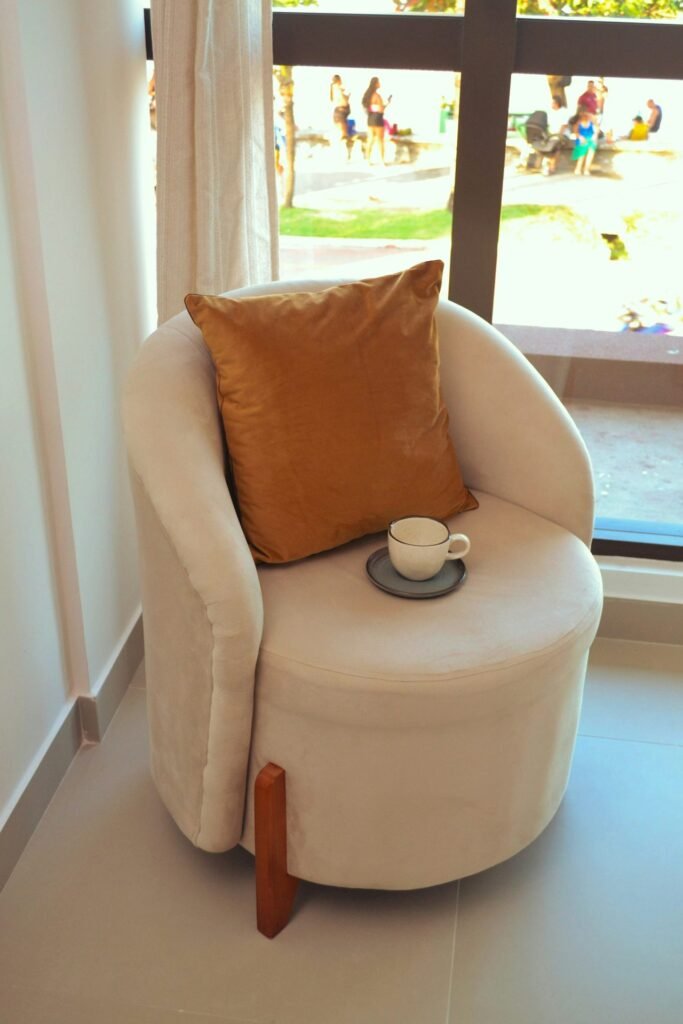
One chair. That’s all it takes to turn the most ignored corner of your living room into the seat everyone fights over.
An oversized chair is the hardest-working piece of furniture you can buy. It’s a reading nook, a nap station, a conversation seat, and the thing that makes a big empty room finally feel finished. But shop for one and you’ll drown in options — club chairs, barrel chairs, swivels, chaises — with prices from $250 to $2,000 and dimensions that may or may not fit through your front door.
I spent weeks comparing styles, sitting in floor models, and measuring doorways so you don’t have to. Below are 12 oversized chair ideas covering every major style, honest buying advice (including the tape-measure test most guides skip), and styling formulas that work in real living rooms — not just showrooms.
Whether you’re furnishing a big family room, carving a reading nook out of a studio apartment, or replacing a sad hand-me-down armchair, this guide walks you through the styles worth your money, the construction details that decide how long a chair lasts, and exactly where to put it once it arrives.
What Is an Oversized Chair?
An oversized chair is an accent chair wider and deeper than a standard armchair — typically 38 inches or wider — built for curling up, lounging, and serious comfort rather than perching. While a standard armchair runs about 28 to 34 inches wide with a 20-inch seat depth, an oversized chair gives you 38 to 54 inches of width and a 22 to 26-inch-deep seat you can actually tuck your legs into.
Why You’ll Love an Oversized Chair
- It seats one person luxuriously — or two in a pinch. A chair-and-a-half genuinely fits a parent plus a kid, or two adults who like each other.
- It anchors a room. In an open living room, one big chair creates a focal point faster than any gallery wall.
- It’s the ultimate reading chair. Deep seat, high back, room for a throw blanket — the formula for a reading nook is basically “oversized chair plus lamp.”
- It works in small spaces too. One generous chair often fits better than a cramped loveseat, and it looks intentional instead of apologetic.
- It’s the most-used seat in the house. Ask any family: the big comfy chair is never empty for long.
- It hides a multitude of sins. A beautiful oversized chair distracts from rental carpet, blank walls, and that corner you never knew what to do with.
Classic Oversized Chair Styles
These are the timeless silhouettes — the ones that have looked right for decades and will still look right in ten years. If you want a safe bet that never feels trendy, start here.
1. The Club Chair
The original oversized chair. Deep seat, low back, rolled arms, usually in leather or a heavy fabric — the club chair was literally designed for gentlemen’s clubs where men sat for hours. Today’s versions keep the deep, sink-in proportions but come in performance fabrics and lighter colors that work in family rooms.
What to know: Typical size is 38 to 44 inches wide and 36 to 40 inches deep, with a seat depth around 23 inches. The low back (usually under 34 inches high) keeps it from visually blocking a room, which makes it one of the easiest oversized styles to place. Look for a kiln-dried hardwood frame and high-resiliency foam wrapped in fiber — that’s what keeps the cushions from going flat in a year.
Try it: Place a club chair opposite your sofa with a small round side table between them to build an instant conversation area.
2. The Chair-and-a-Half (Cuddle Chair)
This is the widest “chair” you’ll find — 48 to 54 inches across, essentially a loveseat with the soul of an armchair. The name says it all: it seats one person sprawled out, or one-and-a-half people snuggled up. It’s the top pick for reading nooks because you can sit cross-legged, sideways, or fully stretched out.
What to know: Because it’s nearly loveseat-sized, measure twice. You need the chair’s footprint plus about 36 inches of walkway in front. Many chair-and-a-half models come with a matching ottoman, and I’d strongly consider it — the combo basically becomes a single bed for naps. Weight capacities here are often the highest in the category, commonly 350 to 500 pounds.
Try it: Angle a chair-and-a-half toward a window with a floor lamp behind it and you’ve built a reading nook without buying anything else.
3. The Wingback Chair
High back, winged sides, and a silhouette that’s been around since the 1600s — the wingback is the most structured oversized chair on this list. The wings were originally designed to shield sitters from drafts (and to catch heat from the fireplace), and they still do a wonderful job of making the chair feel like a private cocoon.
What to know: Wingbacks run 32 to 40 inches wide but feel bigger because of the tall back (40+ inches high). That height makes them ideal flanking a fireplace or anchoring the ends of a rug. Traditional versions have exposed wood legs; modern ones often sit lower with upholstered bases. The upright posture suits people who read or work in their chair rather than nap in it.
Try it: Put a pair of wingbacks facing each other across a coffee table for a formal-but-inviting living room arrangement.
12 Reading Chair Ideas for the Coziest Corner in Your Home
Modern Oversized Chair Styles
Clean lines, interesting textures, and silhouettes that look current without screaming “trend.” These are the styles dominating furniture feeds right now — for good reason.
4. The Barrel Chair
A barrel (or tub) chair wraps its back and arms into one continuous curve, like a cozy hug. It’s compact for an oversized chair — many are 32 to 38 inches wide — but the curved back makes every inch usable, so it feels roomier than the tape measure suggests. Lots of barrel chairs swivel, which makes them great for open floor plans where you want to turn toward the kitchen, the TV, or guests.
What to know: The curved silhouette softens rooms full of rectangles (sofas, coffee tables, TV consoles). Because the style is about the shape, it works in bold fabrics — a patterned barrel chair reads as intentional, not loud. Check the swivel base quality if you go that route; a cheap mechanism gets wobbly within a year.
Try it: Use a barrel chair in a bedroom corner or home office where a full club chair would eat the whole room.
5. The Oversized Swivel Chair
Take a deep, wide armchair and put it on a 360-degree swivel base. That’s it — and it’s transformative. You can face the conversation, then spin toward the TV, then spin toward the window, all without getting up. For open-concept living rooms, it’s the most functional oversized chair you can buy.
What to know: Look for a swivel with a memory-return or auto-return base if the spinning will drive you crazy — otherwise the chair ends up facing random directions. Seat depths of 24 inches or more are what make these “oversized” rather than just “swively.” Upholstery-wise, this style shows off texture beautifully: boucle, chenille, and nubby weaves all look great here.
Try it: Float an oversized swivel chair in the middle of an open living room instead of pushing it against a wall — the swivel earns its keep when the chair isn’t anchored to one view.
6. The Boucle Cloud Chair
Boucle — that nubby, looped wool-like textile — turned the humble accent chair into a design-world celebrity. The “cloud” versions pair the textured upholstery with an exaggeratedly deep seat and rounded, pillow-like arms. The result looks soft even from across the room, which is exactly why it photographs so well.
What to know: Real wool boucle is gorgeous but pricey and harder to clean; most affordable versions are polyester boucle, which is more stain-resistant and still looks the part. The light colors most cloud chairs come in (cream, ivory, oatmeal) show dirt, so this is a “no red wine, no muddy paws” chair unless you choose a performance weave. The rounded shape needs visual breathing room — give it 6 to 8 inches of clear space on each side.
Try it: Pair a cream boucle chair with a dark wood side table and a black arc floor lamp — the contrast keeps all that softness from looking washed out.
15 Accent Table Ideas That Finish Any Room in Minutes
Lounge-First Oversized Chairs
If your priority is comfort over formality — the chair where movies get watched and Sunday naps happen — these are your people.
7. The Swivel Glider
A swivel glider combines a gentle gliding motion with full rotation, on top of an oversized seat. It started in nurseries, but the modern versions are stylish enough for any living room — and honestly, once you’ve rocked gently while reading, a stationary chair feels broken. The deep seat (often 24+ inches) and high back make it a genuine lounge chair, not just baby furniture.
What to know: Test the glide before you commit if you can — cheap gliders squeak and feel jerky. The mechanism adds weight (these chairs often top 100 pounds) and a few inches of depth, so measure accordingly. Look for a solid wood or steel glider base, not plastic. This is also the best oversized chair style for anyone with back issues, since the motion keeps you from sitting rigidly.
Try it: Put a swivel glider near (not in front of) the TV — close enough for movie night, angled enough for conversation.
8. The Chaise Lounge Chair
Part chair, part daybed: a chaise gives you an extended seat for stretching your legs out fully. Oversized chaise chairs run 28 to 34 inches wide but 55 to 65 inches long — they need a wall or a long stretch of empty floor. What you get in return is the only chair on this list where you can lie completely flat without hanging off the edge.
What to know: Chaises are directional — they come in left-arm and right-arm versions, so check which side the extended seat is on before ordering. They’re the lowest-profile oversized option (usually under 34 inches high), which makes them perfect under windows. Pair with a small side table at the head end, not the middle, or you’ll be reaching awkwardly.
Try it: Slide a chaise under a living room window with a throw blanket folded at the foot — instant sunbeam napping station.
9. The Round Papasan-Style Chair
The papasan’s bowl-shaped rattan frame and fat round cushion are a 1970s icon that never really left. Modern oversized versions keep the cocoon feel but upgrade the materials — sturdier frames, washable cushion covers, and sizes that actually fit adults (look for 40+ inch diameter bowls). It’s the most casual, curl-up-in-a-ball chair on this list.
What to know: The round shape is deceptively space-hungry — a 44-inch papasan needs a 50-inch corner once you count the frame. The cushion will need fluffing and rotating; it’s the highest-maintenance comfort on this list. But nothing beats it for price-to-coziness: decent ones start around $150. Keep it out of direct sun if the frame is natural rattan, which can dry and crack.
Try it: Style a papasan with a chunky knit throw and a small plant beside it for a boho reading corner that costs less than dinner for two.
Statement Oversized Chairs
Sometimes the chair isn’t just seating — it’s the jewelry of the room. These styles bring color, texture, or drama.
10. The Leather Statement Chair
A big leather chair — cognac, espresso, or black — brings instant gravitas. Leather is also the most practical luxury upholstery: it wipes clean, ages beautifully (scratches blend into patina), and handles pets better than any fabric. Top-grain leather is the sweet spot; “bonded leather” is basically leather-flavored plastic and peels within a couple of years, so read the fine print.
What to know: Real leather oversized chairs start around $800 and climb fast. The chair will feel firm at first and break in over weeks — that’s normal and desirable. Condition it once or twice a year and keep it out of direct sunlight to prevent drying and fading. In cold rooms, drape a throw over the seat; nobody loves sitting on cold leather in January.
Try it: Let a cognac leather chair be the only warm-toned piece in a gray-and-white room — it becomes the focal point without any effort.
11. The Velvet Jewel-Tone Chair
Emerald, sapphire, mustard, oxblood — a velvet oversized chair in a saturated color is pure drama in the best way. Velvet’s pile catches light differently from every angle, which gives the chair depth that flat fabrics can’t match. And modern performance velvets (usually polyester) resist crushing and clean up far better than old-school cotton velvet.
What to know: Velvet shows every indent — sit in one spot daily and you’ll see a “butt map.” Rotate cushions weekly and brush the pile with your hand to revive it. Dark jewel tones hide wear best; light velvets (blush, ivory) are stunning but high-maintenance. This style works best as the room’s single bold piece — pair it with quiet neutrals everywhere else.
Try it: Put an emerald velvet chair against a white or warm-gray wall with a brass floor lamp — the color does all the talking.
12. The Slipcovered Casual Chair
A slipcovered oversized chair is the relaxed, beach-house answer to formal upholstery: a loose, washable cover over a comfortable frame. It’s the best pick for households with kids, dogs, or a talent for spilling coffee, because the entire cover comes off and goes in the washing machine. The slightly rumpled look is the point — don’t try to make it crisp.
What to know: Fit matters more here than with any other style. A baggy slipcover looks intentional; a saggy one looks sad. Look for covers with ties, elastic, or a tailored cut — and buy a second cover if you can, so one can be in the wash. Linen and cotton-duck covers wrinkle; that’s their charm. Performance-fabric slipcovers wrinkle less and resist stains better.
Try it: Choose white or natural linen slipcovers for summer and swap to a darker cover in winter — two rooms for the price of one chair.
Small Apartment Decor: 20 Ideas That Make Tiny Spaces Feel Huge
Where to Put Your Oversized Chair: 5 Placement Formulas
You bought the chair. Now the part that separates “styled” from “shoved in a corner”: placement. These five formulas work in real rooms.
1. The reading nook. Chair angled toward a window, floor lamp arcing over from behind, small side table within arm’s reach. This is the classic for a reason — natural light by day, lamplight by night, everything you need within reach. Works in living rooms, bedrooms, and that weird landing at the top of the stairs.
2. Opposite the sofa. Place the chair facing the sofa with a coffee table between them. This builds a conversation area that feels balanced — the chair’s visual weight holds its own against a full sofa. Keep 14 to 18 inches between the chair and the coffee table so legs have room.
3. The bedroom corner. An oversized chair in a primary bedroom turns dead corner space into a morning-coffee spot or a landing pad for tomorrow’s clothes (let’s be honest). Choose a lighter fabric here so it doesn’t visually darken the room, and skip the floor lamp — a small table lamp on a nightstand-height table is enough.
4. The awkward empty corner. Every house has one: too small for a sofa, too big to ignore. An oversized chair plus a tall plant and a floor lamp fills it perfectly. Angle the chair about 45 degrees into the room rather than flat against the walls — it reads as a destination instead of storage.
5. Floating in open plan. In a big open living room, float the chair on the rug with its back partially to the room’s entrance. Anchor it with the rug’s edge under its front legs, add a side table, and it becomes a zone of its own. This is where swivel chairs earn their keep — one seat, three views.
The universal rule: pull every oversized chair at least 4 inches off the wall and give it 30 to 36 inches of clear walkway. A big chair needs air around it; cram it in and even a $2,000 chair looks like clutter.
Oversized Chair Buying Guide: 6 Factors That Matter
Styles get the attention, but construction decides whether your chair is still comfortable in five years. Here’s what to check before you buy — most of it is buried in the product specs.
1. Frame construction. A kiln-dried hardwood frame with corner-blocked joinery is the gold standard; it won’t warp or loosen. Engineered wood or plywood frames are fine at lower prices but tend to creak and wobble after a couple of years of daily use. Metal frames are strong but can feel cold and industrial unless that’s your style. If the listing doesn’t mention the frame material at all, that’s your answer — it’s not hardwood.
2. Cushion fill and foam density. Seat comfort lives or dies here. Look for high-resiliency foam with a density of at least 1.8 pounds per cubic foot (2.0+ is better) — denser foam keeps its shape instead of developing a permanent butt-dent. Down-blend wrapped cushions feel luxurious but need regular fluffing; pure foam is lower maintenance. “High-density foam” without a number is marketing fluff — the number is what matters.
3. Fabric durability ratings. Upholstery fabric is tested with double rub counts (the Wyzenbeek test): 15,000 double rubs is the minimum for everyday residential use, and 30,000+ handles kids, pets, and heavy lounging. Performance fabrics — solution-dyed acrylics and polyesters — resist stains and fading far better than natural fibers. If you have a sunny room, check for fade resistance too; south-facing windows destroy cheap fabric in a year.
4. Seat dimensions for your body. Width gets the headlines, but depth and height decide comfort. Under 5’4″: look for 22–23″ seat depth and 17–18″ seat height so your feet reach the floor. Between 5’4″ and 6′: 23–25″ depth works. Over 6′: go 25″+ or you’ll feel perched. Seat width matters less than you think — arm width eats into it, so check the inside seat width, not the overall width.
5. Weight capacity. Standard oversized chairs support 250–300 pounds. If anyone using the chair is heavier, or two people will pile on regularly, look for 350–500 pound ratings — several chair-and-a-half and heavy-duty models offer this. A higher rating usually signals a sturdier frame overall, not just stronger legs.
6. Trend-proofing. Here’s my rule: buy the silhouette classic, take your risks on color and pillows. A club chair or barrel chair in a wild emerald velvet will still look right in a decade; a trendy shape in a trendy color dates twice as fast. If you love a bold look, get it in a fabric you can live with for years — or in a slipcover you can swap.
The 5-Minute Tape-Measure Test (Do This Before You Buy)
Here’s the section most buying guides skip — and the one that saves you from the most expensive mistake in furniture shopping: a chair that can’t get into your house. Oversized chairs are, by definition, big. Before you click “buy,” grab a tape measure and run this test.
1. Measure your narrowest doorway. Standard interior doors are 30 to 32 inches wide, and the chair has to pass through on its side or at an angle. Write down the narrowest door, hallway, or stairwell turn between your front door and the chair’s final spot.
2. Compare against the chair’s smallest dimension. A chair listed at 44″W x 40″D x 38″H can usually angle through a 32-inch door on its side (the height becomes the width). If the smallest dimension is bigger than your narrowest opening, it won’t fit — no amount of wishing helps.
3. Check the delivery path, not just the door. Tight stairwell turns and low ceilings kill more deliveries than doorways do. Walk the path yourself and look for the pinch points.
4. Measure the spot, plus breathing room. Mark the chair’s footprint on the floor with painter’s tape, then add 36 inches of clear walkway in front and 4 to 6 inches on each side. Sit in the taped outline. Does it feel right? This 60-second trick prevents more regret than any review.
5. Match seat depth to your legs. Sit all the way back in a floor model (or measure a chair you own). If you’re under 5’4″, a 26-inch seat depth means your feet dangle — look for 22 to 23 inches. If you’re over 6 feet, anything under 24 inches will feel like a kid’s chair. Seat height matters too: 17 to 19 inches suits most adults.
Do these five checks and you’ll never be the person watching a delivery crew wedge your dream chair in a hallway.
Common Mistakes to Avoid
- Buying without measuring the delivery path. The chair fits the room perfectly — and won’t fit through the door. Run the tape-measure test above before you order anything.
- Choosing fabric for looks alone. That cream linen chair is gorgeous until the dog claims it. Match the fabric to your real life: performance weave or leather for pets and kids, velvet for low-traffic glamour.
- Pushing it flat against the wall. An oversized chair shoved into a corner looks like it’s in timeout. Pull it out 4 to 6 inches and angle it slightly — it instantly looks styled instead of stored.
- Skipping the side table and lamp. A big chair with nowhere to put a book or a drink is just a sculpture. The nook formula is chair + side table + light source, every time.
- Ignoring seat depth for your height. Too deep and shorter sitters perch on the edge; too shallow and tall sitters feel folded. Test-sit with your back fully against the backrest.
- Matching it exactly to the sofa. A chair in the identical fabric as your sofa looks like a furniture-showroom set. Contrast instead: leather chair with a fabric sofa, or a patterned chair with a solid sofa.
- Forgetting traffic flow. Leave 30 to 36 inches of walkway around the chair. An oversized chair that forces everyone to squeeze past it makes the whole room feel cramped, no matter how beautiful it is.
Oversized Chairs at a Glance
| # | Style | Typical Size (W × D × H) | Seat Depth | Best For | Typical Price |
|---|---|---|---|---|---|
| 1 | Club Chair | 38–44″ × 36–40″ × 30–34″ | 22–24″ | Timeless living rooms | $500–$1,500 |
| 2 | Chair-and-a-Half | 48–54″ × 38–44″ × 34–40″ | 23–26″ | Reading nooks, snuggling | $600–$1,800 |
| 3 | Wingback | 32–40″ × 34–38″ × 40–46″ | 20–22″ | Fireplaces, formal rooms | $400–$1,400 |
| 4 | Barrel Chair | 32–38″ × 32–36″ × 32–38″ | 20–23″ | Small rooms, offices | $250–$900 |
| 5 | Oversized Swivel | 38–46″ × 36–42″ × 34–40″ | 23–26″ | Open floor plans | $500–$1,500 |
| 6 | Boucle Cloud Chair | 36–44″ × 36–42″ × 30–36″ | 23–25″ | Modern texture lovers | $400–$1,200 |
| 7 | Swivel Glider | 36–44″ × 38–44″ × 38–44″ | 22–26″ | Nurseries, bad backs | $400–$1,200 |
| 8 | Chaise Lounge | 28–34″ × 55–65″ × 30–34″ | 48–60″ (full length) | Window spots, napping | $400–$1,500 |
| 9 | Papasan-Style Round | 40–46″ diameter | 24–28″ (bowl) | Boho corners, budgets | $150–$500 |
| 10 | Leather Statement | 38–46″ × 36–42″ × 34–40″ | 22–24″ | Pet owners, gravitas | $800–$2,500+ |
| 11 | Velvet Jewel-Tone | 36–44″ × 36–40″ × 32–38″ | 22–24″ | Bold focal points | $400–$1,300 |
| 12 | Slipcovered Casual | 38–48″ × 36–42″ × 34–40″ | 22–25″ | Kids, dogs, rentals | $400–$1,200 |
Prices are typical US ranges and move with sales, materials, and brands — treat them as planning numbers, not quotes.
FAQ
What size is considered an oversized chair?
Generally, anything 38 inches wide or more. A standard armchair runs 28 to 34 inches wide with about a 20-inch seat depth; an oversized chair starts around 38 inches wide with a 22-inch-plus seat depth. The chair-and-a-half pushes past 48 inches wide — the largest “single” chair you’ll find. When shopping, compare the inside seat width (between the arms) rather than the overall width, since thick arms can eat up 6 to 8 inches of the listed measurement.
Will an oversized chair fit through my door?
Usually, yes — but measure first. Most oversized chairs can angle through a standard 30 to 32-inch interior door when turned on its side. Compare the chair’s smallest dimension (often its height) against your narrowest doorway, and don’t forget stairwell turns. When in doubt, check whether the legs or back remove for delivery.
What’s the difference between an oversized chair and a chair-and-a-half?
A chair-and-a-half is a type of oversized chair — specifically the widest kind, at 48 to 54 inches across. All chair-and-a-halfs are oversized chairs, but not all oversized chairs are chair-and-a-halfs. If you want maximum sprawl space, the chair-and-a-half is the one.
Are oversized chairs good for small living rooms?
They can be, with the right approach. One oversized chair often works better than a cramped loveseat in a small room — it looks intentional and seats one person in real comfort. Keep the visual weight down with legs (not a skirted base), a lighter color, and 4 to 6 inches of breathing room on each side.
What’s the best fabric for an oversized chair with pets or kids?
Performance fabrics (like solution-dyed polyester weaves) and top-grain leather are the top picks — both resist stains and wipe clean. Avoid light-colored linen, silk blends, and delicate velvets in high-traffic households. If you love the casual look, a slipcovered chair with a washable cover is the most forgiving option of all.
How much should I spend on an oversized chair?
For daily use, budget $500 to $1,200 for a well-built chair with a hardwood frame and good foam — that’s the range where comfort lasts. Under $300 usually means a softwood or engineered frame that loosens within a couple of years. Over $1,500 buys you top-grain leather, premium fabrics, or designer names. Sit-test before splurging.
How do I style an oversized chair?
Follow the nook formula: chair + side table + light source. Angle the chair slightly instead of pushing it flat against the wall, add a throw blanket over one arm and a lumbar pillow for color, and set a floor lamp or table lamp behind it for reading light. A small rug under the front legs ties it to the room.
Should I buy an oversized chair or a loveseat?
It depends on how you sit. A loveseat seats two people upright; an oversized chair seats one person in total comfort (or two snuggled). For reading, napping, and lounging, the oversized chair wins. For a small living room that needs maximum formal seating, the loveseat is more practical. Measure your space and be honest about which you’d actually use.
Final Thoughts
The best oversized chair isn’t the most expensive one or the trendiest one — it’s the one that fits through your door, survives your household, and gets sat in every single day. Pick the style that matches how you actually lounge, run the tape-measure test, and give it the side table and lamp it deserves.
Which style is calling your name? I’m partial to the chair-and-a-half — it’s the closest furniture gets to a hug.
Shopping this weekend? Screenshot the tape-measure test section and take it with you — it’s the fastest way to shop with confidence.

Founder of NestFlavors — sharing tested recipes and honest home ideas, made for real life.