
Your dining room needs storage, your style needs a voice — the right cabinet gives you both.
Every dining room has the same quiet problem: the table looks great, but the serving dishes live in the kitchen, the table linens are stuffed in a closet, and the wine glasses are balancing on top of the fridge. I’ve seen beautiful dining rooms fall apart functionally because nobody planned where the stuff goes. That’s what dining room cabinets fix — they’re the workhorses that hold your dinnerware, serveware, and linens while making the whole room look finished.
This guide walks you through 13 dining room cabinets — every major type, from the classic buffet to the space-saving corner hutch — with real dimensions in inches, honest price ranges, material guidance, and styling ideas. Think of it as the comparison guide: if you want the full tour of every style before you buy, you’re in the right place. (Looking for a deep dive on choosing one single cabinet? That’s a different article — this one is about understanding all your options side by side.)
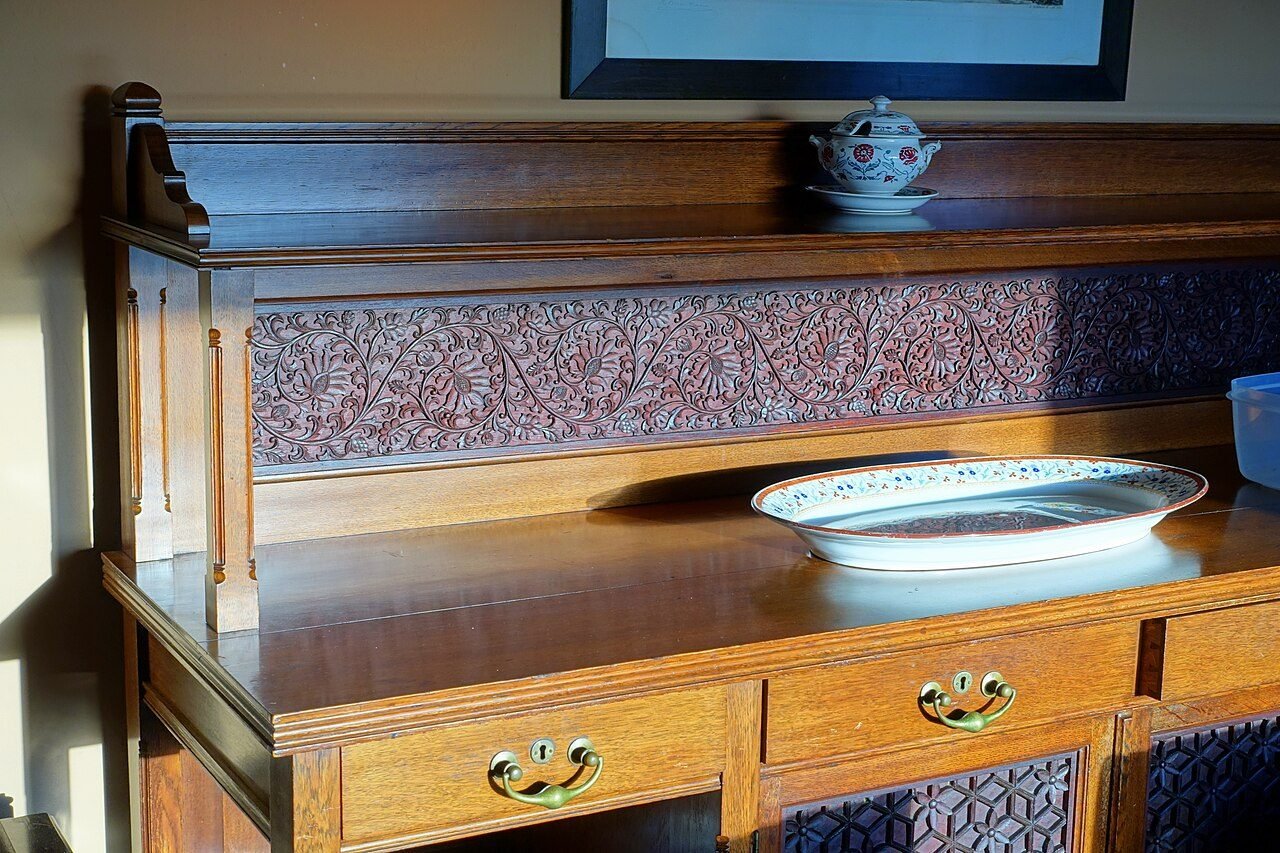
What Are Dining Room Cabinets?
Dining room cabinets are storage furniture designed specifically for the dining room — low or tall case pieces that hold dinnerware, serving platters, table linens, glassware, and bar supplies while doubling as serving surfaces and display space. Unlike kitchen cabinets, they’re freestanding furniture: buffets, sideboards, hutches, china cabinets, and credenzas, typically 16–20 inches deep, that turn a dining room from a bare table into a room that actually works for hosting.
Here’s the distinction that matters: a kitchen stores what you cook with; a dining room cabinet stores what you serve with. The good china, the gravy boat that only appears on holidays, the cloth napkins, the candlesticks, the serving platters too big for any kitchen shelf. When those things live steps from the table instead of across the house, hosting stops feeling like a logistics operation. I didn’t understand this until I moved my serving pieces out of the kitchen and into a sideboard — suddenly setting the table took ten minutes instead of thirty, because everything I needed was already in the room.
Why You’ll Love These Dining Room Cabinets
- Hosting gets easier overnight. Serving dishes, extra plates, and linens live arm’s reach from the table — no more kitchen sprints between courses.
- One purchase, three jobs. Most dining room cabinets store, serve, and display at the same time: drawers for silverware, a top for the buffet spread, shelves for the pretty stuff.
- There’s a fit for every room size. From a 72-inch hutch for a formal dining room to a 12-inch-deep floating cabinet for a dining nook, the range is enormous.
- They anchor the room visually. A bare wall behind a dining table looks unfinished; a cabinet fills it with purpose instead of just decoration.
- Real budgets, real options. You can spend $120 or $2,000 and get something genuinely good — this guide shows you what each price tier actually buys.
The Classics: 5 Tried-and-True Cabinet Styles
These five are the backbone of dining room storage — the types that have been around for decades because they solve the problem so well. If you’re overwhelmed by options, start here. Each one has earned its place in millions of dining rooms, and understanding these five first makes every other style on this list easier to judge — you’ll know exactly what you’re gaining or giving up when you pick something more specialized.
1. The Buffet: The Entertainer’s Workhorse
A buffet is a low, wide cabinet — usually 48–72 inches wide, 30–36 inches tall, and 16–20 inches deep — with a flat top made for serving food. It’s the piece you set the Thanksgiving spread on while the table holds the guests. Inside: drawers for silverware and linens, cabinets for serving platters and large bowls.
The top surface is the whole point. During a dinner party it holds the extra dishes, the dessert tray, the drinks station. On ordinary days it holds a lamp, a stack of art books, and a bowl of fruit. I think of the buffet as the dining room’s kitchen island — a landing zone that absorbs whatever the evening throws at it. Look for one with at least one deep drawer; that’s where the tablecloths and placemats live, folded flat instead of crammed.
Try it: measure your longest serving platter, then add 4 inches — that’s your minimum buffet interior depth. Most platters need 18 inches of depth to fit without angling.
2. The Sideboard: The Buffet’s Sleeker Sibling
Sideboards and buffets get used interchangeably, and honestly the line is blurry — but traditionally a sideboard is a touch lower and longer, often with legs that lift it off the floor, giving it a lighter, more furniture-like feel. Think 60–80 inches wide, 28–34 inches tall. The raised profile makes a small dining room feel less crowded because you can see floor underneath.
Where a buffet reads “formal dining,” a sideboard reads “modern living.” It’s the better pick if your dining area flows into the living room, because it looks at home in both. The long top is perfect for a row of framed photos, a pair of table lamps, or a styled bar setup. Storage inside runs the same as a buffet — dinnerware, linens, the good glasses — just in a slightly airier package.
Try it: if your dining space is open-plan, pick a sideboard with a finished back so it looks intentional from the living room side too.
3. The Credenza: The Minimalist’s Storage Wall
A credenza is the low, long, door-fronted cabinet — typically 60–84 inches wide but only 28–32 inches tall — that the mid-century era made famous and modern minimalists adopted. Sliding doors or clean flat-front doors, minimal hardware, and a silhouette that hugs the wall. It’s storage that stays quiet and lets the room do the talking.
The low height is strategic: it keeps the room feeling open and lets you hang art above it without the wall getting top-heavy. Inside, the long uninterrupted interior swallows board games, photo albums, the fondue set — everything too bulky for drawers. Because the doors are usually full-width, you get easy access to the whole interior, which sounds minor until you’ve fished a platter out of a deep cabinet with a center divider in the way.
Try it: a credenza under 30 inches tall doubles as a window-seat-height surface — style the top low and wide: a long tray, one sculptural object, done.
4. The Hutch: The Two-in-One Storage Tower
A hutch is really two pieces stacked: a lower buffet-style cabinet with an upper display section — open shelves or glass-front doors — on top. Total height runs 72–84 inches, width 48–72 inches. The bottom hides the practical stuff; the top shows off the pretty stuff. It’s the mullet of dining furniture, and I mean that as a compliment.
This is the highest-capacity option on this list. The lower cabinet handles linens, silverware, and serving pieces; the upper shelves display china, crystal, and the wedding gifts you’re actually proud of. If you inherited your grandmother’s china and actually want to use it, the hutch is your piece — the good dishes live visible and reachable instead of boxed in the attic. Many hutches come in two pieces, which makes delivery and moving dramatically easier than a one-piece 80-inch tower.
Try it: style hutch shelves in odd-numbered groups (3 or 5 items per shelf) with breathing room between — crammed shelves read as clutter even behind glass.
5. The China Cabinet: The Display Specialist
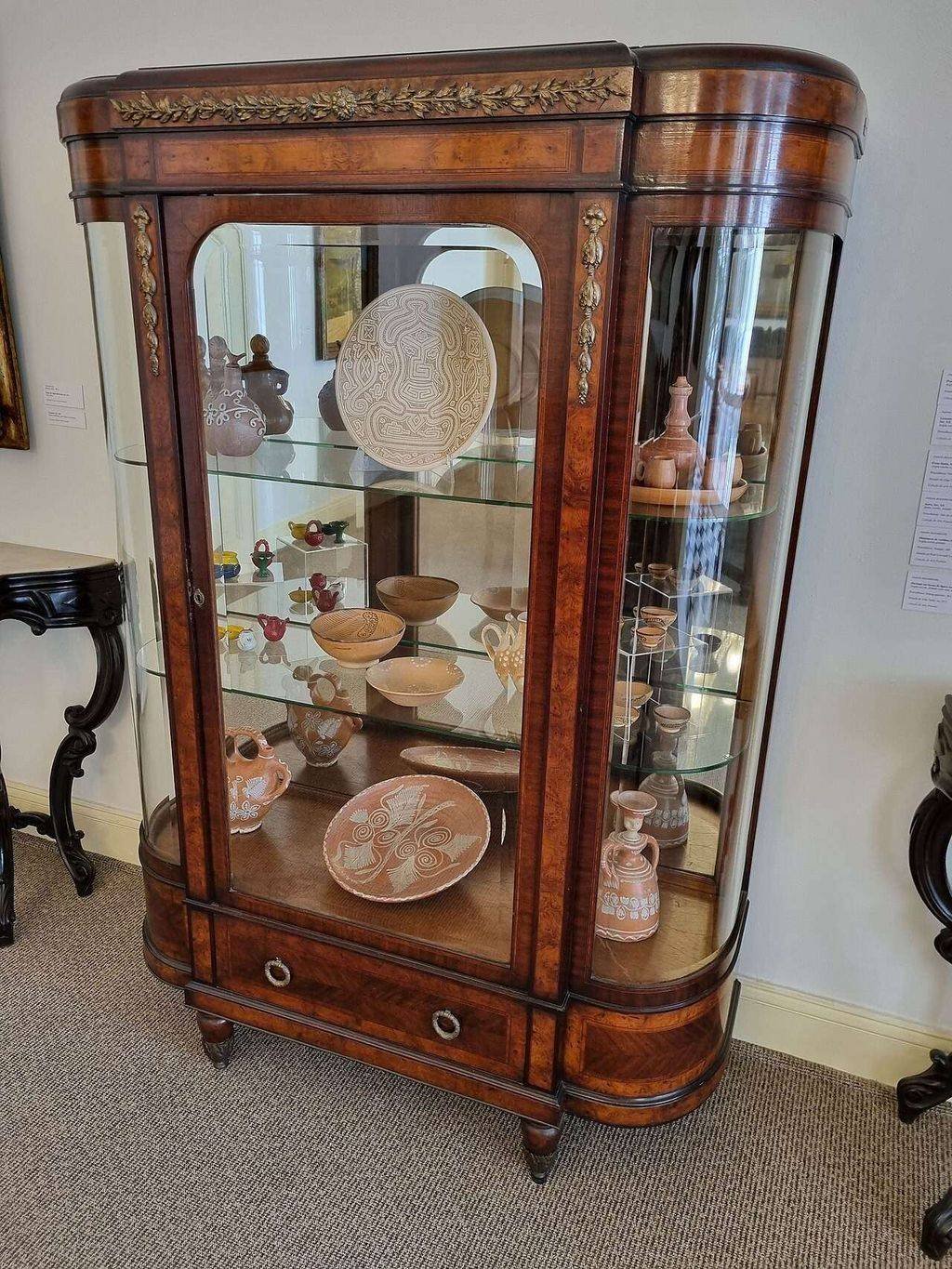
The china cabinet is the tallest, most display-focused of the classics: a narrow, upright cabinet — usually 36–48 inches wide, 72–80 inches tall, 14–18 inches deep — with glass doors front and often sides, built for one job: showing off dinnerware and glassware beautifully. Interior lighting, plate grooves, and mirrored backs are common features.
Buy a china cabinet when display is the priority and hidden storage is secondary. It’s the jewelry box of the dining room — perfect for the collector, the heirloom china, the crystal that catches afternoon light. The trade-off is honest: you get less concealed storage than a hutch, and glass doors mean the interior is always “on stage,” so it needs to stay styled. Keep the collection tight — one coordinated set displayed with space around it beats three mismatched sets crammed together.
Try it: line the back with peel-and-stick wallpaper in a soft pattern — it turns the interior into a backdrop and makes white china glow.
Also Read: 19 Studio Apartment Decor Ideas (One Room, Three Zones)
Space-Saving Dining Room Cabinets
Small dining room? Dining nook? Eat-in kitchen corner? These four prove you don’t need a formal dining room to deserve real storage.
6. The Corner Hutch: Dead Space, Reclaimed
A corner hutch is a tall cabinet designed to sit diagonally across a room corner — typically 28–36 inches wide on each face, 72–78 inches tall. Corners are the most wasted square footage in dining rooms, and this piece converts one into a full storage tower without blocking walkways or windows.
The angled front gives you surprising capacity: deep lower cabinets for bulky serving pieces, glass-front upper for display. It works especially well in square dining rooms where a flat-wall cabinet would crowd the table. Because the diagonal placement softens the room’s corners, it also makes a boxy dining room feel slightly larger — the eye travels across the angle instead of stopping at a hard corner. One honest note: corner pieces are harder to find secondhand and cost a bit more new, because the angled construction is more complex. But if you have an empty corner and a storage problem, nothing else uses that footprint as well.
Try it: measure corner to the nearest walkway — you need at least 36 inches of clearance in front for comfortable access to the doors.
7. The Floating Wall Cabinet: Zero Footprint Storage
A floating wall cabinet mounts directly to the wall — no legs, no base touching the floor — usually 36–60 inches wide, 24–36 inches tall, and a slim 12–16 inches deep. It’s the dining room equivalent of a wall-hung vanity: storage that doesn’t eat a single square inch of floor.
This is my top pick for genuinely tiny dining areas. Mounted at 54–60 inches off the floor, it holds glasses, small serving pieces, and linens while the floor underneath stays clear for chairs, a stroller, or just visual breathing room. The catch: it must anchor into studs, not just drywall — a loaded cabinet is heavy, and this is not a place for adhesive hooks. And the slim depth means large platters won’t fit, so pair it with a narrow console below for the big pieces if you host often.
Try it: mount it 8–10 inches above your sideboard or console to create a stacked storage wall with a serving ledge between.
8. The Narrow Console Cabinet: The Hallway Hero
A narrow console cabinet is 12–16 inches deep — hallway depth — but full dining-room height at 30–36 inches tall and 48–60 inches wide. It slides against any wall, even in a dining area that’s really just a wide hallway or the end of a living room.
Don’t let the slim depth fool you: 14 inches fits folded linens, glassware, candlesticks, and serving utensils easily. What it won’t fit is dinner plates stacked flat (most dinner plates are 10–11 inches, so they actually do fit — it’s the 14-inch chargers and big platters that don’t). This is the cabinet for the apartment dweller whose “dining room” is a table against the wall. Style the top like a vignette — lamp, small art, a carafe — and it reads as decor that happens to store things.
Try it: line the interior shelves with non-slip liner so glasses don’t migrate every time you open the doors — narrow cabinets get jostled more.
9. The Bar Hutch: Storage That Pours
A bar hutch is a hutch variant dedicated to drinks: lower cabinet for bottles and barware, upper section with stemware racks, wine bottle storage, and display shelves for glassware. Typical size: 36–48 inches wide, 68–78 inches tall. Some include a fold-down or pull-out serving shelf that becomes a mixing station.
If you host cocktail hours more than sit-down dinners, this beats a general cabinet — everything for drinks lives in one place, and the stemware racks keep fragile glasses safe and visible. Even if you’re not a big drinker, the format works beautifully as a coffee bar: mugs on the racks, the machine on the pull-out shelf, beans and filters below. The key feature to demand: adjustable shelves, because bottle heights vary wildly and fixed shelves waste the space above short bottles.
Try it: add a small tray on the serving shelf to corral bottles — it makes the whole setup look intentional and catches the inevitable drips.
Style-Forward Dining Room Cabinets
Storage is the job; style is the joy. These four bring a specific design point of view — pick the one that matches the room you’re building.
10. The Mid-Century Modern Credenza: The Design Icon
Tapered legs, warm walnut veneer, sliding doors, clean lines — the mid-century modern credenza is the most imitated dining cabinet in history for a reason. At 60–72 inches wide and 28–32 inches tall, its low horizontal profile stretches the wall visually, making dining rooms feel wider.
What makes it work beyond looks: the sliding doors need zero clearance to open, so it fits in tight dining rooms where swinging doors would hit chairs. The warm wood tone plays well with almost any dining table — it doesn’t need to match, just to harmonize. If you’re buying vintage, check that the sliding doors glide smoothly and the veneer isn’t bubbling; if buying new, look for solid wood legs and soft-close hardware, which separate the good reproductions from the flimsy ones.
Try it: pair it with a sunburst mirror or abstract art above — the low profile begs for vertical interest on the wall. And because sliding doors never swing into the room, this is also the safest pick for dining rooms where kids run laps around the table.
11. The Farmhouse Buffet: Rustic Warmth, Real Storage
The farmhouse buffet brings the countryside indoors: distressed or natural wood finishes, X-brace or plank doors, bronze or black hardware, generous proportions (54–72 inches wide, 34–38 inches tall — slightly taller than modern pieces). It’s the cabinet equivalent of a deep breath.
This style earns its keep in busy family dining rooms. The distressed finish hides dings from chair bumps and toy collisions — a feature, not a flaw, when real life happens around it. Deep drawers swallow the chaotic drawer of serving utensils; the tall interior fits the big roasting pan and the punch bowl. Style it with ironstone pitchers, wooden bowls, and greenery rather than crystal — farmhouse is about abundance, not preciousness.
Try it: lean a large cutting board and a framed print against the wall on top instead of hanging everything — the casual lean is the whole farmhouse vibe.
Also Read: 16 Small Apartment Decor Ideas for Every Tiny Room

12. The Rattan Cabinet: Texture That Breathes
Rattan and cane-front cabinets — woven natural fiber panels set in wood frames — bring texture and lightness that solid-door cabinets can’t. Typical size: 32–48 inches wide, 30–60 inches tall depending on whether it’s a low credenza or a tall armoire style. The woven fronts partially obscure the contents, so you get the airiness of open storage with the tidiness of closed doors.
This is the cabinet for coastal, boho, and tropical-leaning dining rooms, but I’ve seen it work in modern spaces too as the one textural counterpoint to clean lines. The weave filters light beautifully — contents are hinted at, not displayed, which is forgiving if your styling isn’t gallery-perfect. Care note: keep rattan out of direct blasting sun (it dries and brittles) and away from steamy dishwashers; a yearly wipe with a barely-damp cloth keeps it happy.
Try it: back the interior with a warm LED strip — light glowing through cane weaving at night is genuinely magical.
13. The Glass Display Cabinet: The Curio, Grown Up
A full glass display cabinet — glass on three or four sides, 28–40 inches wide, 60–78 inches tall — is the modern evolution of the curio cabinet: a transparent tower for your most beautiful objects. Unlike the china cabinet (which is about dinnerware sets), the display cabinet is about collections: vintage glassware, ceramics, sculptural serving pieces, the objects with stories.
Use it as the dining room’s art piece. One well-lit glass tower with a curated collection beats a wall of shelves every time, because the transparency keeps it from feeling heavy. The styling rule is ruthless editing: every object should earn its place, grouped by color or material, with empty space between groups. And yes, glass on all sides means dusting — accept it as the price of the look, or keep the doors closed and the objects behind glass will stay surprisingly clean.
Try it: group objects in threes by color family — three amber glass pieces together read as a collection; scattered, they read as clutter.
Dining Room Cabinet Sizes: The Measurement Rules
This is the section most buying guides skip and every buyer needs. Before you fall in love with a cabinet, run these numbers — they take ten minutes and prevent the most common (and most expensive) mistake: a beautiful cabinet that doesn’t fit your room or your stuff.
Depth: 16–20 inches is the sweet spot. This is the single most important dimension. Standard dinner plates are 10–11 inches across, serving platters run 14–18 inches, and folded tablecloths need about 14 inches. A 16-inch-deep cabinet fits plates and linens; 18–20 inches fits full-size platters flat. Below 14 inches, you’re limited to glassware and small pieces — fine for a console, wrong for your main storage.
Height: match it to the job. Serving-height cabinets (buffets, sideboards, credenzas) run 28–36 inches — comfortable to serve from while standing, low enough to style the wall above. Display towers (hutches, china cabinets) run 68–84 inches — they use vertical wall space instead of floor space. A good rule: the cabinet top should sit at or below your sightline when seated at the table, so the room feels open while you eat.
Width: leave breathing room. The cabinet should be at least 6 inches narrower than the wall it sits on — 12 is better — so it doesn’t look wedged in. And measure your walkways: you need 36 inches between the cabinet and the table edge for someone to walk through comfortably, 24 inches minimum to slide a chair back and stand up. In a 12×14-foot dining room with a 6-foot table, that math usually leaves room for one 60-inch cabinet on the long wall — measure twice.
Clearance behind chairs: pull your dining chairs out as if someone’s sitting down, then measure from the chair back to the wall. That’s your real available depth. I’ve seen people buy a 20-inch-deep hutch for a wall with 22 inches of clearance — the doors couldn’t open past 45 degrees. The cabinet fit the wall; it didn’t fit the room in use.
A worked example: say your dining room is 12 feet wide with a 40-inch-wide table centered. That leaves about 52 inches on each side. Chairs pulled out need 24 inches. 52 minus 24 leaves 28 inches — so a 20-inch-deep buffet fits with 8 inches to spare, but a 24-inch-deep armoire would not. Run this exact math on your room before you shop; it takes five minutes with a tape measure and saves a return headache.
Don’t forget delivery. Measure your doorways, hallways, and stairwell turns too. A 72-inch hutch that fits the dining room perfectly is useless if it can’t get through a 30-inch hallway. One-piece tall cabinets are the usual culprits — when in doubt, choose a two-piece hutch or a cabinet that ships flat-pack, and check whether the delivery includes room-of-choice placement or just curbside drop-off.
What Dining Room Cabinets Cost: Budget Tiers
Prices vary by material and construction, but here’s what each tier honestly buys you in 2026 — so you can shop with expectations instead of hopes.
Under $200: the smart basics. Flat-pack engineered-wood cabinets (MDF or particle board with veneer or laminate). Perfectly functional for light use — linens, glassware, everyday dishes. Expect cam-lock assembly, lighter-duty drawer glides, and finishes that look good but won’t survive a move well. This tier is ideal for renters and first apartments. Reinforce the back panel with a few extra screws during assembly; it doubles the sturdiness.
$200–$600: the sweet spot. Better-engineered wood, thicker panels, real wood veneer over plywood, soft-close hinges, adjustable shelves that actually adjust. This is where most dining rooms should shop — you get furniture that looks like furniture, survives a move or two, and handles daily use. Many of the best-looking rattan, farmhouse, and mid-century-style pieces live here.
$600–$1,500: the investment pieces. Solid wood (oak, walnut, mango), dovetail drawers, premium hardware, hand-finished details. These are buy-it-once cabinets that get better with age and survive decades of hosting. If this is your forever dining room, this tier pays for itself in longevity.
$1,500+: the heirloom tier. Designer pieces, artisan-made hutches, solid hardwood with traditional joinery. You’re buying craftsmanship and design pedigree. Worth it for a statement piece in a formal dining room — overkill for a first apartment, and that’s fine.
My honest take: spend the most on the cabinet you’ll use daily (the buffet or sideboard that holds everything), and save on the display piece, where construction matters less because it mostly just stands there looking beautiful.
Where to shop each tier: under $200, big-box retailers and flat-pack specialists are your friends — sort by reviews mentioning sturdiness, not just looks. In the $200–$600 sweet spot, mid-range furniture stores and well-reviewed online brands offer the best value per dollar; this is also the prime territory for secondhand solid-wood finds on marketplace sites, where a $400 used hardwood buffet beats a $400 new flat-pack every time. Above $600, buy from furniture makers and design retailers with real warranties — at that price, a 5-year warranty and white-glove delivery should be standard, not an upsell.
Also Read: 22 Easy Dinner Recipes for Busy Weeknights (Tested & Fast)
Dining Room Cabinets at a Glance
| Cabinet Type | Typical Size (W×H×D) | Best For | Price Range |
|---|---|---|---|
| Buffet | 48–72″ × 30–36″ × 16–20″ | Entertaining, serving space | $150–$1,200 |
| Sideboard | 60–80″ × 28–34″ × 16–20″ | Open-plan rooms, modern style | $180–$1,500 |
| Credenza | 60–84″ × 28–32″ × 16–20″ | Minimalist storage, low profile | $200–$2,000 |
| Hutch | 48–72″ × 72–84″ × 16–20″ | Maximum storage + display | $300–$2,500 |
| China cabinet | 36–48″ × 72–80″ × 14–18″ | Displaying china & crystal | $250–$2,000 |
| Corner hutch | 28–36″ × 72–78″ × 16–20″ | Using dead corner space | $350–$1,800 |
| Floating wall cabinet | 36–60″ × 24–36″ × 12–16″ | Tiny dining areas, zero footprint | $120–$600 |
| Narrow console cabinet | 48–60″ × 30–36″ × 12–16″ | Hallways, dining nooks | $130–$700 |
| Bar hutch | 36–48″ × 68–78″ × 16–20″ | Drinks, stemware, coffee bar | $250–$1,500 |
| Mid-century credenza | 60–72″ × 28–32″ × 16–20″ | Design-led dining rooms | $300–$2,500 |
| Farmhouse buffet | 54–72″ × 34–38″ × 16–20″ | Family dining, rustic style | $250–$1,400 |
| Rattan cabinet | 32–48″ × 30–60″ × 14–18″ | Coastal/boho texture | $180–$1,200 |
| Glass display cabinet | 28–40″ × 60–78″ × 14–18″ | Curated collections | $200–$1,800 |
7 Dining Room Cabinet Mistakes to Avoid
I’ve made several of these myself over the years — including the classic “it fit the wall but not the room” error with a hutch whose doors couldn’t fully open. Learn from my mistakes instead of your own wallet:
1. Buying before measuring the room in use. The cabinet fits the empty wall but the doors hit the pulled-out chairs. Fix: measure with chairs pulled out, then subtract door swing.
2. Choosing depth by looks instead of by platter. A slim 12-inch console can’t hold your 16-inch serving platter — and you’ll discover this on Thanksgiving. Fix: measure your largest platter first; buy depth to match.
3. Ignoring the door swing. Sliding doors need zero clearance; swinging doors need the full door width in front. Fix: in tight rooms, choose sliding, bi-fold, or open-shelf designs.
4. Matching the cabinet exactly to the table. A dining set where everything matches reads as a showroom, not a home. Fix: complement, don’t clone — same wood tone family, different finish or era.
5. Overfilling glass-front cabinets. Every item visible means every item styled. Fix: leave 30% of each shelf empty; store overflow in the closed lower section.
6. Skipping the anti-tip hardware. Tall hutches and china cabinets are top-heavy, especially with the upper shelves loaded. Fix: anchor every piece over 60 inches tall to a stud — it takes fifteen minutes and it’s non-negotiable with kids or in earthquake zones.
7. Forgetting lighting. A dark hutch interior makes beautiful china look murky. Fix: battery puck lights or an LED strip inside glass-front uppers — $15, no wiring, total transformation.
FAQ About Dining Room Cabinets
What’s the difference between a buffet, a sideboard, and a credenza?
They overlap heavily, but traditionally: a buffet is a serving-focused cabinet with a generous top (48–72″ wide); a sideboard is similar but often lower with legs for a lighter look; a credenza is the longest and lowest with clean flat-front doors, borrowed from office furniture by mid-century designers. In modern stores the names are used almost interchangeably — shop by dimensions and features, not by the label.
How deep should dining room cabinets be?
16–20 inches deep for a main storage cabinet — that fits dinner plates, folded linens, and full-size serving platters. 12–16 inches works for secondary pieces like console cabinets and floating wall cabinets, which hold glassware and smaller items. Measure your largest serving platter and add 4 inches; that’s your minimum.
Should dining room cabinets match the dining table?
They don’t have to match exactly — and honestly, they look better when they don’t. Aim for the same wood-tone family or a complementary finish: a walnut table with an oak sideboard, or a painted cabinet with a wood table. Exact matching sets can read as a furniture showroom; coordinated-but-different reads as collected and personal.
What do you store in dining room cabinets?
The serving layer of your home: everyday and formal dinnerware, serving platters and bowls, table linens (tablecloths, runners, placemats, cloth napkins), silverware and serving utensils, glassware and stemware, candlesticks and centerpieces, and bar supplies or the coffee setup. The rule: if you use it at the table, it lives in the dining room cabinet.
Are hutches out of style?
No — they’ve evolved. The heavy dark-wood hutch of the 1990s feels dated, but the format (storage below, display above) is timeless and currently thriving in lighter finishes: white oak, rattan fronts, and painted hutches in soft greens and blues. If you love the storage but not the look, paint is the great equalizer — a $150 secondhand hutch plus paint becomes a custom piece.
Can I put a dining room cabinet in a small apartment?
Absolutely — that’s what the narrow console cabinet, floating wall cabinet, and corner hutch are for. A 14-inch-deep console against any wall gives you real storage without eating the room. In studios and small apartments, choose pieces with legs (visible floor underneath reads as more space) and lighter finishes.
How do I style the top of a dining room cabinet?
The formula that never fails: something tall on one side (lamp, vase with branches, leaning art), something low in the middle (stack of books, a tray, a bowl), and breathing room on the other side. Odd numbers, varied heights, one unifying color. Change the middle object seasonally — pumpkins in fall, greenery in winter — and the whole dining room feels fresh for free.
What’s the best wood for dining room cabinets?
For durability: solid oak, walnut, and mango wood — they resist dents and age beautifully. For budget: plywood with real wood veneer gives you the look and most of the strength at half the price. Avoid ultra-thin particle board for pieces you’ll move or load heavily; it’s fine for a light display cabinet, wrong for a daily-use buffet. And always check that shelves are adjustable — fixed shelves waste the vertical space above short items.
Final Thoughts on Dining Room Cabinets
Thirteen types sounds like a lot until you realize they’re all answering the same question: where does the dining room stuff live? Pick the one that matches your room size first, your storage needs second, and your style third — in that order, because a gorgeous cabinet that doesn’t fit is just an expensive problem.
Start with the measurements, set an honest budget using the tiers above, and choose the type that solves your actual hosting life — not the one that photographed best. Your future self, setting the table in ten minutes flat with everything already in the room, will thank you.
One last piece of advice from someone who’s bought the wrong cabinet before: live with the empty wall for a week first. Tape the cabinet’s footprint on the floor in painter’s tape, walk around it, pull your chairs out, open imaginary doors. If the taped outline annoys you by day three, the real cabinet will annoy you for years. Get the size right and the style almost takes care of itself.
Which type are you leaning toward — the hardworking buffet or the statement hutch? Tell me in the comments; I read every one and answer as many as I can.

Founder of NestFlavors — sharing tested recipes and honest home ideas, made for real life.