
Your dining room works harder than almost any room in the house — weeknight dinners, homework sessions, holiday hosting, the occasional everything-dumped-here moment. These ideas will make it look like you planned it that way.
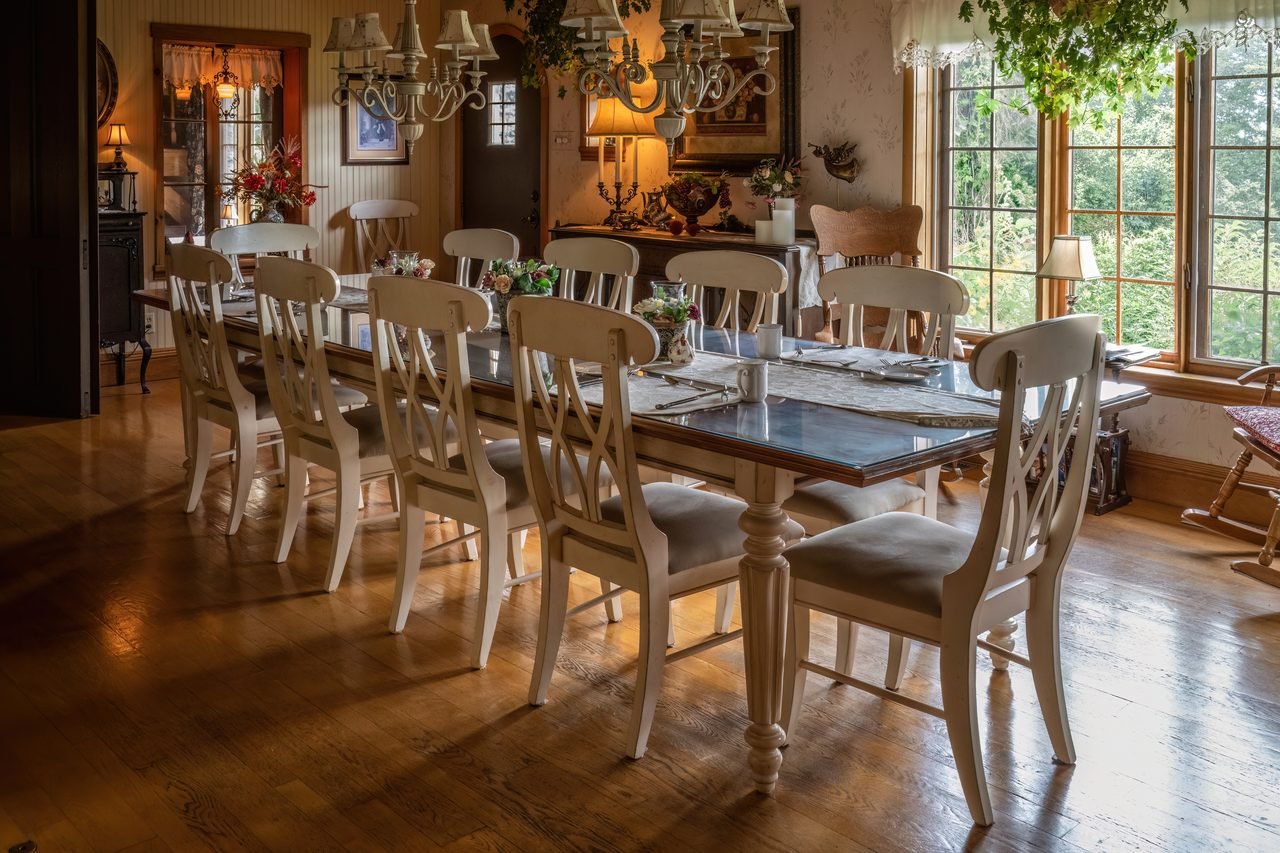
I’ve styled my share of dining rooms over the years — big ones, tiny apartment corners, and one memorable eat-in kitchen where the “dining room” was six feet of wall. Here’s what I learned: dining room decor isn’t about buying a matching set and calling it done. It’s about layers — the table, the light, the walls, and the small details that make people want to linger after dessert.
This guide gives you 16 ideas that work in real homes, with real budgets, including renter-friendly options and small-space fixes. I’ve also included the exact measurements designers use (chandelier height, rug size, art placement), because guessing is where most dining rooms go wrong.
In this guide:
- What Is Dining Room Decor?
- Why You’ll Love These Dining Room Decor Ideas
- Dining Table Decor Ideas
- 1. The Three-Layer Centerpiece
- 2. A Runner That Works Every Day
- 3. Seasonal Tablescape Swaps
- 4. Candles at Three Heights
- Dining Room Lighting Ideas
- 5. The Right-Height Chandelier
- 6. A Dimmer Switch (the $15 Upgrade)
- 7. Wall Sconces for Glow Without Wiring
- Dining Room Wall Decor
- 8. One Big Piece of Art
- 9. A Gallery Wall That Tells Your Story
- 10. A Mirror to Double the Light
- Floors, Windows & Storage Layers
- 11. A Rug That Actually Fits
- 12. Curtains Hung High and Wide
- 13. A Sideboard That Earns Its Keep
- Small Dining Room Decor Ideas
- 14. The Round Table Trick
- 15. Bench Seating You Can Tuck Away
- 16. A Bar Cart Corner
- Dining Room Decor Measurements Cheat Sheet
- Common Mistakes to Avoid
- Dining Room Decor at a Glance
- Dining Room Decor FAQ
- Final Thoughts
What Is Dining Room Decor?
Dining room decor is the combination of furniture, lighting, textiles, wall art, and tabletop styling that turns a place you eat into a place you want to gather. It covers everything from the chandelier above the table to the rug under it, the art on the walls, and the centerpiece in the middle.
Good dining room decor balances looks with real life. The prettiest tablescape in the world fails if you can’t see the person across from you over it, or if you’re terrified of spilling on it. The ideas below are built for actual eating — they’re beautiful, but they survive Tuesday night tacos too.
Popular dining room decor styles give you a starting direction. Modern dining rooms lean on clean lines, a sculptural pendant light, and a restrained palette of black, white, and wood. Farmhouse brings in a chunky wood table, slipcovered or ladder-back chairs, and soft linen textures. Traditional goes richer — an ornate chandelier, wainscoting or molding on the walls, and classic upholstered seating. Scandinavian keeps it light and airy with pale woods, simple forms, and lots of candlelight. Eclectic mixes eras on purpose: a vintage sideboard, modern chairs, bold art, collected over time.
You don’t have to pledge loyalty to one label. Most homes I see are a blend — maybe modern bones with farmhouse warmth, or traditional architecture loosened up with contemporary art. Pick the style whose rooms you’d actually want to eat in, then use the ideas below to build toward it. The measurements and layering rules work the same no matter which direction you choose.
Why You’ll Love These Dining Room Decor Ideas
- They work at every budget. Most of these ideas cost under $100; several cost nothing but rearranging what you own.
- They’re renter-friendly. No-drill options for art, lighting, and walls are marked throughout.
- They fit small spaces. Ideas 14–16 are designed for apartments, corners, and eat-in kitchens.
- They’re built on real measurements. You’ll get the exact chandelier height, rug size, and art placement rules designers actually use.
- They flex for holidays. The layering approach means your everyday look becomes your party look with a few swaps.
- They photograph beautifully. Repeating colors between your art, linens, and centerpiece makes even a simple table look styled.
Dining Table Decor Ideas
The table is the heart of the room, so start here. These four ideas build on each other — do one or do all four.
1. The Three-Layer Centerpiece
Think of your tabletop in three layers: a foundation that stays put every day, an everyday layer you refresh weekly, and an event layer you add for guests. The foundation might be a linen runner and a low wooden bowl. The everyday layer is a small vase of grocery-store greenery. The event layer is candlesticks and your good napkins.
This system is the secret behind every dining room that looks “effortlessly styled” on social media. Nothing is effortless — it’s just pre-decided. When the foundation lives on the table permanently, you’re never starting from a bare table.
Keep the whole arrangement under 14 inches tall so conversation flows across the table. Tall branches are gorgeous in photos and terrible at dinner parties.
Try it: This weekend, set your foundation layer and leave it for a week. Notice how much more “finished” the room feels.
2. A Runner That Works Every Day
A table runner is the hardest-working piece of dining room decor you can buy. It protects the table, adds color and texture, and visually anchors the centerpiece — for the price of a pizza. Choose machine-washable cotton or linen in a neutral tone, and size it to hang 6 to 12 inches past each end of the table.
Skip the runner only if your table itself is the star — a beautiful walnut or reclaimed-wood top deserves to show. In that case, use placemats or a few low vessels directly on the wood instead. The goal is the same: break up the big flat surface so it doesn’t read as an empty runway.
I keep two runners in rotation: a natural linen for every day and a deeper-toned one for fall and winter. Swapping them takes thirty seconds and the room feels new.
Try it: Measure your table length, add 12–24 inches, and order a washable runner in that size.
3. Seasonal Tablescape Swaps
You don’t need a new dining room every season — you need a box of seasonal swaps. Keep your foundation the same and change three things: the greenery, the napkins, and one accent. Spring gets fresh tulips and pale napkins. Fall gets eucalyptus, brass candlesticks, and mini pumpkins down the center. Winter gets evergreen branches and metallic ornaments in a shallow bowl.
Store each season’s swaps in a labeled bin, and the whole transformation takes twenty minutes. This is also the most budget-friendly way to decorate for holidays, because you’re reusing the expensive pieces (vases, candleholders, linens) and only swapping the cheap seasonal bits.
One styling trick that makes seasonal tables look professional: repeat a color from your wall art in your napkins or flowers. It ties the whole room together in photos and in person.
Try it: Build one seasonal bin now for the upcoming season — greenery, napkins, one accent — and store it near your linens.
4. Candles at Three Heights
Candlelight is the cheapest ambiance money can buy, and the trick is varying the heights. A trio of candlesticks at staggered heights, or a cluster of pillar candles on a tray with a few votives tucked around them, creates depth that a single row of matching candles never will.
Use unscented candles at the table — scented ones fight with food, and nobody wants their pasta to smell like “Autumn Harvest.” Save the scented candles for the sideboard or entryway. For everyday ease, good LED flameless candles have gotten convincing; I use real ones for dinner parties and flameless for Tuesday nights.
A shallow tray under your candle cluster is doing quiet work: it corrals everything into one visual unit and protects the table from wax.
Try it: Gather every candle you own onto one tray tonight and arrange them tall-medium-short. Instant centerpiece.
Also Read: 16 Small Apartment Decor Ideas for Every Tiny Room
Dining Room Lighting Ideas
Lighting makes or breaks a dining room more than any other single choice. Get this right and everything else looks better.
5. The Right-Height Chandelier
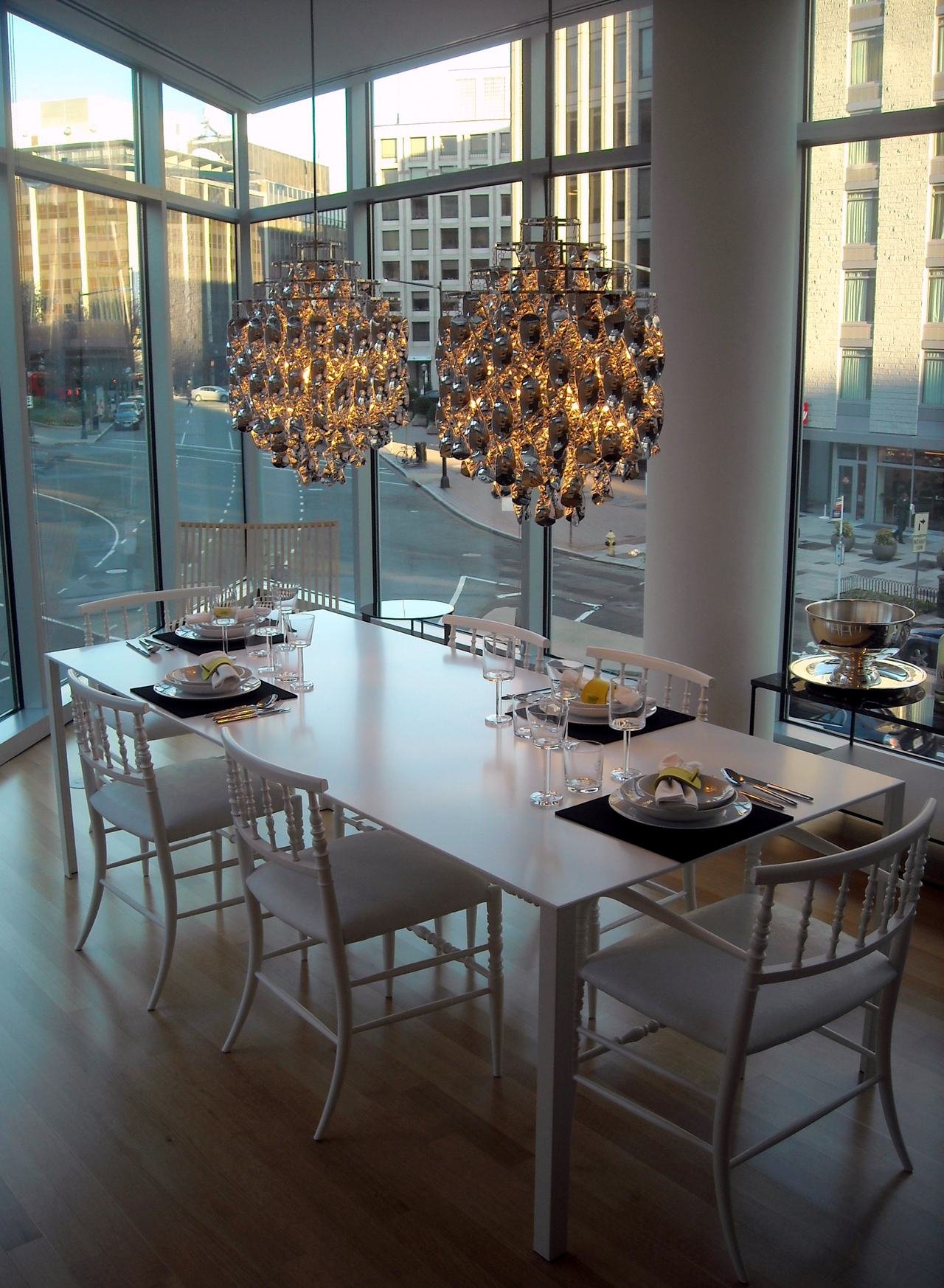
A chandelier hung at the wrong height is the most common dining room mistake I see. The rule: the bottom of the fixture should sit 30 to 36 inches above the tabletop (30 for 8-foot ceilings, up to 36 for taller ones). Too high and it floats disconnected; too low and tall guests duck.
Size matters too. Add the room’s length and width in feet — that number in inches is your starting chandelier diameter. A 12×14-foot room wants roughly a 26-inch fixture. When in doubt, go slightly bigger; undersized chandeliers are a far more common regret than oversized ones.
If your dining space has no ceiling fixture and you rent, a plug-in pendant with a swag hook gives you the look with zero wiring. Drape the cord to the wall and down to an outlet — done in an afternoon.
Try it: Measure your current fixture height tonight. If it’s outside the 30–36 inch window, adjust the chain or cord this weekend.
6. A Dimmer Switch (the $15 Upgrade)
If I could only recommend one lighting upgrade, it would be a dimmer switch on the dining room fixture. Bright overhead light for homework and cleanup, low warm glow for dinner — same fixture, completely different room. A basic dimmer costs around $15 and takes twenty minutes to install if you own your place.
Renters: plug-in dimmers exist for lamps, and smart bulbs with a phone app give you dimming with zero wiring changes. Warm-toned bulbs (2700K) flatter both food and faces; cool daylight bulbs (5000K) make everyone look like they’re in a dentist’s office.
Layer your light while you’re at it — overhead fixture plus one more source (sconces, a buffet lamp, or candles) beats a single bright ceiling light every time.
Try it: Swap your dining bulbs to 2700K warm white this week, even before you add a dimmer. You’ll see the difference immediately.
7. Wall Sconces for Glow Without Wiring
Sconces add that soft, flattering side light that makes a dining room feel like a restaurant — and modern battery-operated sconces mean no electrician required. Mount a pair flanking a sideboard or a piece of art, and you get instant ambiance with a remote control.
Hardwired sconces typically sit 60 to 66 inches from the floor to the center of the fixture, or about 6 inches above a sideboard. Battery versions follow the same placement — the eye can’t tell the difference. Rechargeable ones last weeks on a charge with evening-only use.
This is my favorite renter trick in the whole guide. Two sconces, two picture-hanging strips or small screws, and the room gains a whole layer of light.
Try it: Price a pair of rechargeable sconces and picture where they’d flank — art, mirror, or sideboard. That’s your weekend project.
Dining Room Wall Decor
Bare walls are why so many dining rooms feel unfinished even when the furniture is perfect. You need less than you think — one confident choice beats five timid ones.
8. One Big Piece of Art
A single oversized piece of art makes a stronger statement than a scattered collection of small frames, and it’s easier to get right. Aim for art that’s roughly two-thirds the width of the furniture below it — the sideboard, the table, or the wall section it hangs over.
Hang it so the center sits about 57 inches from the floor (gallery standard), or 6 to 8 inches above the furniture below it. This is the measurement people skip, and it’s why art so often floats too high. When art relates clearly to the furniture beneath it, the whole wall reads as one composed vignette.
Don’t overthink subject matter. A bold abstract, a moody landscape, even an oversized vintage food poster — pick what you’d enjoy looking at over a thousand meals.
Try it: Cut a paper template in your art’s size, tape it up, and live with it for two days before you hang anything.
9. A Gallery Wall That Tells Your Story
If one big piece isn’t your style, a gallery wall brings personality no single canvas can match. Mix art prints, family photos, and even framed vintage plates or menus from favorite restaurants. The mix of frame styles is fine — what unifies a gallery wall is a consistent color thread or consistent matting.
Plan it on the floor first. Lay the frames out, snap a photo, adjust, then transfer to the wall starting from the center piece outward. Keep 2 to 3 inches between frames for a collected-but-tidy look. For renters, picture-hanging strips hold surprising weight and come off cleanly.
Dining rooms are ideal for gallery walls because guests actually stand still and look at them — unlike a hallway everyone rushes through.
Try it: Start collecting frames from thrift stores now; a gallery wall built slowly looks better than one bought in a day.
Also Read: 19 Studio Apartment Decor Ideas (One Room, Three Zones)
10. A Mirror to Double the Light
A mirror in the dining room does triple duty: it bounces light, makes the room feel larger, and gives candlelight something to dance in. Hang it where it reflects something worth doubling — a window, the chandelier, or your prettiest wall — never where it reflects clutter or a blank wall.
A large round or arched mirror over the sideboard is the classic move, and it works because the sideboard styling (lamps, vase, art-leaning) gets visually doubled. Size it like art: about two-thirds the width of the furniture below, center around 57 inches.
One caution: skip the mirror if your dining room faces the kitchen mess. It will faithfully double your dirty dishes too.
Try it: Hold a hand mirror up in candidate spots at dinner time and check what it reflects before you commit.
Floors, Windows & Storage Layers
These are the layers people forget — and the reason rooms feel “almost done” for years.
11. A Rug That Actually Fits
A too-small rug is worse than no rug. The rule: the rug must extend at least 24 inches beyond the table on all sides so chairs stay on the rug when pulled out. For a 3×6-foot table, that’s a minimum 8×10 rug. Measure with chairs pulled out, not pushed in.
Low-pile or flatweave rugs are the practical choice under a dining table — chair legs glide, crumbs vacuum up, and spills clean easier. If you love a plush rug, put it in the living room and go flat under the table. Indoor-outdoor rugs have gotten genuinely good-looking and shrug off red wine like it’s nothing.
Pattern is your friend here. A patterned rug hides crumbs and wear between cleanings far better than a solid light one — a real-life consideration the showroom never mentions.
Try it: Tape out your rug size on the floor with painter’s tape and pull the chairs out. Adjust before you buy.
12. Curtains Hung High and Wide
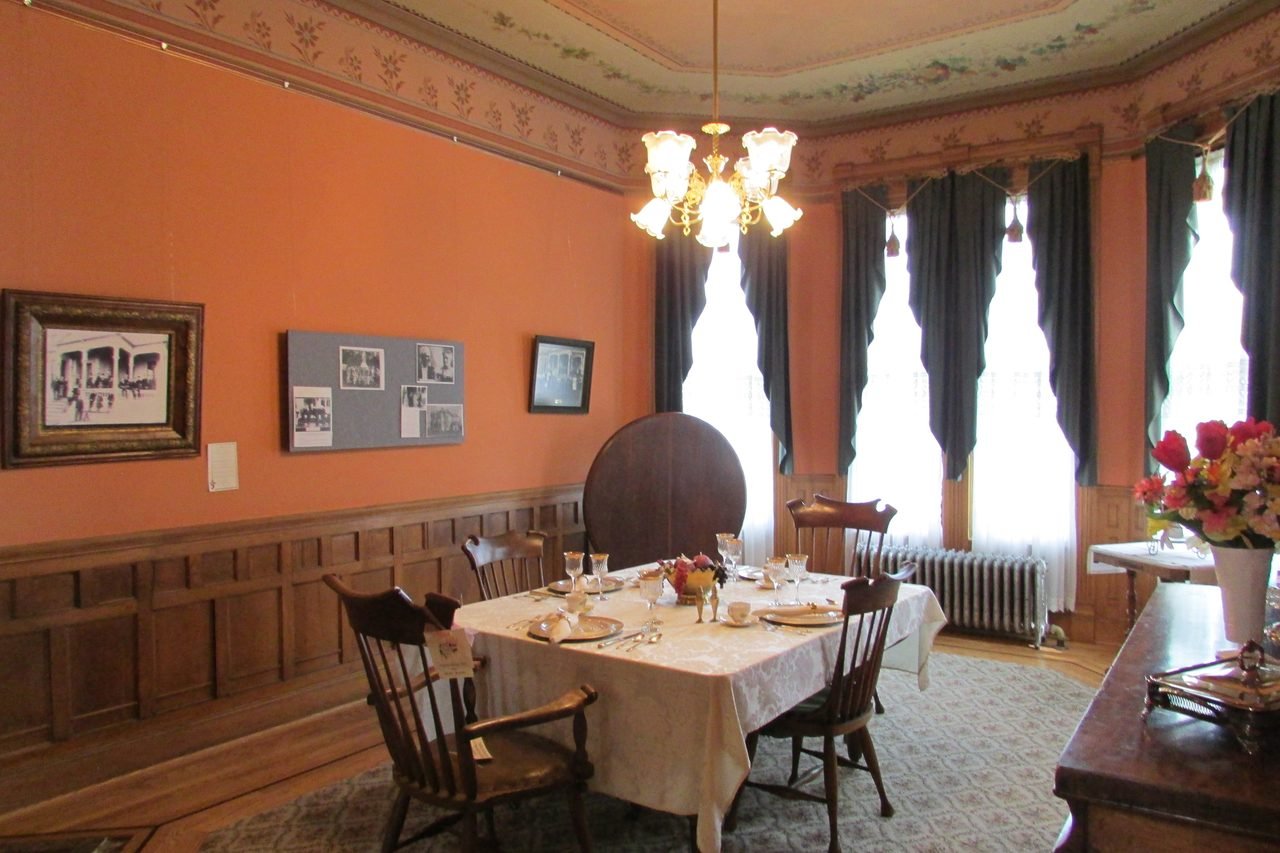
Curtains hung at the window frame’s edge make windows look small; curtains hung high and wide make them look grand. Mount the rod 4 to 6 inches above the frame (or at the ceiling for drama) and extend it 8 to 12 inches past the frame on each side, so the panels cover wall, not glass, when open.
For dining rooms, lined curtains in a mid-weight fabric read dressier and insulate better. Length: kiss the floor or puddle slightly — floating an inch above the floor looks like a measuring error. If your dining room doubles as a homework zone, consider woven shades for daytime privacy with curtains purely for softness.
This one change — same curtains, better placement — transforms more dining rooms than any other single fix I know.
Try it: This weekend, move one existing curtain rod up and out. Compare sides before you commit to the second window.
13. A Sideboard That Earns Its Keep
Every dining room needs a sideboard, buffet, or credenza — the 100-piece dish set has to live somewhere, and this is that somewhere. But don’t let it become a flat dumping ground. Style the top in three zones: something tall on one end (lamp or vase with branches), something low in the middle (stack of coffee-table books or a tray), and something medium on the other end (framed art leaned against the wall or a plant).
Inside, dedicate zones: serving pieces, linens, and the seasonal-swap bin from idea 3. A sideboard with closed storage hides the chaos; open shelving above it displays the pretty stuff. Standard sideboard height is 30 to 36 inches, depth 16 to 20 — deep enough for dinner plates, shallow enough to hug the wall.
In a small dining room, a narrow console (12–14 inches deep) gives you the landing surface without eating floor space.
Try it: Clear your sideboard top completely, then rebuild it in the tall-low-medium pattern. Photograph before and after.
Small Dining Room Decor Ideas
Small dining spaces don’t need less decor — they need smarter decor. These three ideas are built for apartments, corners, and eat-in kitchens.
14. The Round Table Trick
In a tight space, a round table beats a rectangle every time. No corners to bruise hips on, better flow around it, and it seats more people per square foot — a 48-inch round seats six comfortably where a rectangle would need more floor. Pedestal bases are the small-space hero: no corner legs means chairs tuck fully underneath.
Pair it with a round rug (or no rug) and the whole corner feels intentional instead of cramped. Light colors on the table and chairs push the walls visually outward; a glass top nearly disappears.
Measure your clearance: you want 36 inches from table edge to wall for comfortable chair pull-out, 24 inches absolute minimum for squeeze-past.
Try it: If your rectangle table crowds the room, tape out a 48-inch circle on the floor and walk around it. Feel the difference.
15. Bench Seating You Can Tuck Away
A bench on one side of the table instead of chairs saves serious floor space — it slides completely under the table when not in use, and it seats three where two chairs would fit. Backless benches are the most tuckable; ones with a low back are more comfortable for long dinners.
Upholstered benches add the softness small dining rooms often lack, and a bench with hidden storage inside is double duty: linens, placemats, and the seasonal bin live inside the seat. For a cohesive look, match the bench fabric to your curtains or rug.
Mix-and-match seating (bench one side, two chairs the other) also looks more collected and less “dining set showroom” than four identical chairs.
Try it: Measure your table’s underside clearance — you need the bench top to clear it by at least an inch to tuck fully.
Also Read: 22 Easy Dinner Recipes for Busy Weeknights (Tested & Fast)
16. A Bar Cart Corner
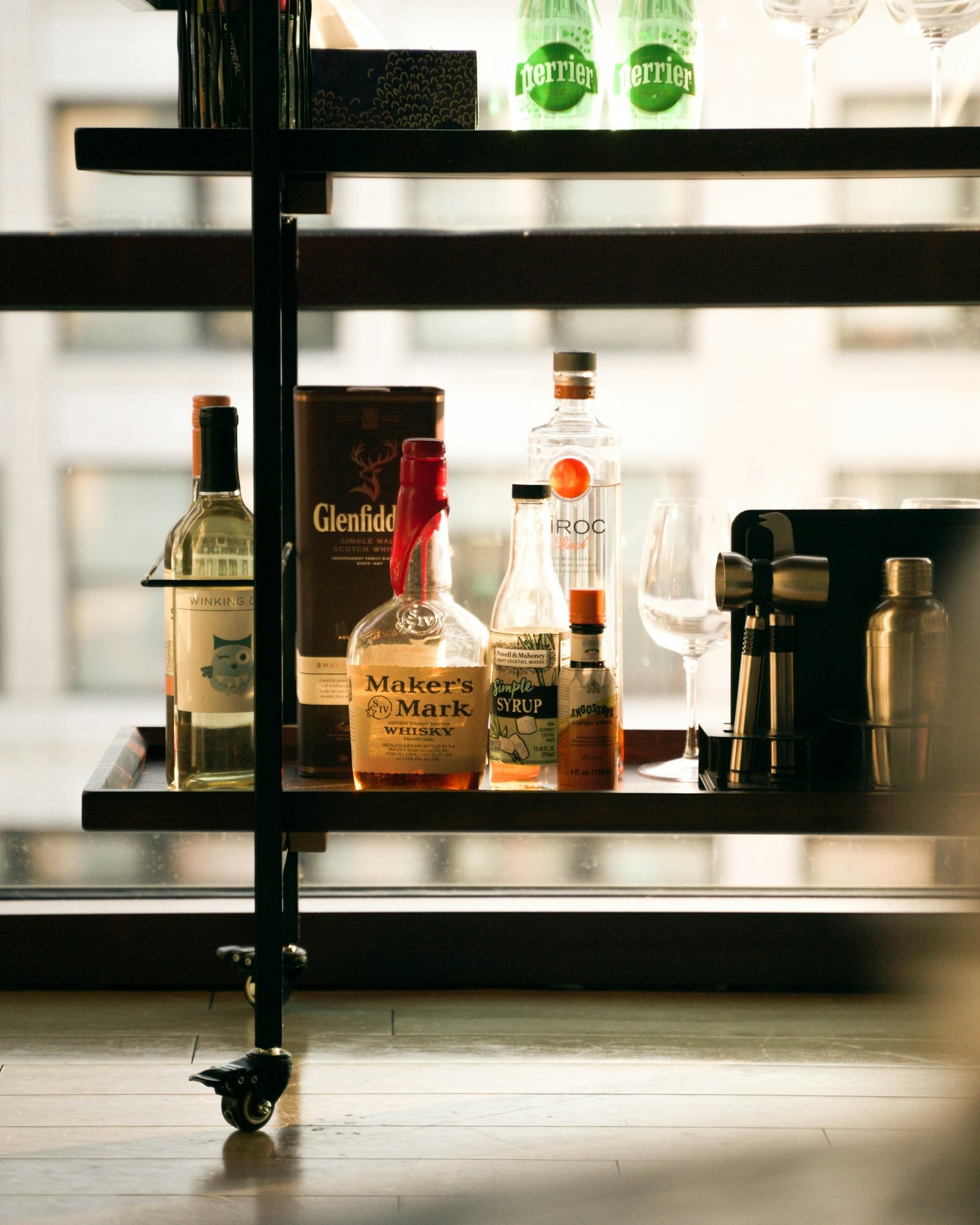
A bar cart is the small dining room’s hardest-working piece: serving station, extra storage, and decor moment in about two square feet. Style it like a tiny still life — decanter and glasses on top, bottles and a small plant below, a framed mini-print leaned on the back rail.
When guests come, it rolls to the table as a serving station; the rest of the time it parks in a corner or against a free wall segment. Styling tip: group items in odd numbers and vary heights, just like the candle rule — the same eye-pleasing math works at every scale.
No alcohol? Make it a coffee cart, a tea station, or a dessert cart. The form works for whatever your household actually enjoys. During the holidays, mine becomes a hot-cocoa station with mugs, marshmallows, and a little framed sign — guests help themselves, and I get to actually sit down.
Try it: Audit one cluttered corner this week — if a 2-foot square is free, that’s your cart spot.
Dining Room Decor Measurements Cheat Sheet
This is the section most dining room guides skip, and it’s the one that prevents expensive mistakes. Tape these numbers inside a cabinet door:
- Chandelier height: bottom of fixture 30–36″ above the tabletop
- Chandelier size: room length + width in feet = diameter in inches (12×14 ft room → ~26″ fixture)
- Rug size: extends 24–30″ beyond the table on every side; chairs stay on the rug when pulled out
- Art height: center at 57″ from floor, or 6–8″ above furniture below
- Art width: about ⅔ the width of furniture beneath it
- Curtain rod: 4–6″ above window frame, 8–12″ wider than frame on each side
- Curtain length: kiss the floor or puddle slightly — never float an inch above
- Centerpiece height: under 14″ so conversation flows across the table
- Table clearance: 36″ from table edge to wall (24″ absolute minimum)
- Sideboard: 30–36″ high, 16–20″ deep; style top in tall–low–medium zones
- Sconces: center 60–66″ from floor, or ~6″ above a sideboard
- Table runner: hangs 6–12″ past each end of the table
Get these twelve numbers right and the room almost styles itself. Everything else is personal taste.
Common Mistakes to Avoid
1. Hanging the chandelier too high. The fix: 30–36 inches above the table, not the ceiling. A floating chandelier disconnects from the table and lights the ceiling instead of dinner.
2. Buying a rug that’s too small. The fix: measure with chairs pulled out, and go 24+ inches beyond the table edge. A postage-stamp rug under a big table looks like an accident.
3. A centerpiece that blocks conversation. The fix: keep it under 14 inches tall, or use a low wide arrangement. If guests are leaning sideways to talk, the flowers have to go.
4. Matching everything. The fix: a dining “set” where every piece matches reads flat and showroom-like. Mix wood tones, add upholstered chairs, vary the metals — cohesion comes from a consistent color palette, not identical finishes.
5. Forgetting dimmers and layers. The fix: one bright overhead light is the enemy of atmosphere. Add a dimmer plus one secondary source — sconces, buffet lamps, or candles — and the room works for every occasion.
6. Pushing all furniture against the walls. The fix: even in a small dining room, pull the table out enough for real chair clearance (36 inches ideally). Furniture hugging walls makes rooms feel smaller, not bigger.
7. Scented candles on the table. The fix: unscented at the table, scented on the sideboard. Your food spent effort tasting like itself — don’t cover it up.
8. Ignoring the ceiling. The fix: the chandelier or pendant IS the ceiling decor. A bare ceiling with a great fixture still works; a great room with a sad flush-mount never quite lands.
9. One overhead light doing all the work. The fix: even with a dimmer, a single source creates flat, shadowy light. Add the second layer — sconces, a buffet lamp, or even just candles — before you declare the lighting “done.”
10. Decorating for photos instead of dinners. The fix: if the styling makes you nervous to actually use the table, scale it back. The best dining room decor survives real life — move the precious objects to the sideboard and keep the table honest.
Where to spend first: if your budget is tight, buy in this order — (1) dimmer or warm bulbs, (2) a washable runner, (3) the right-size rug, (4) one piece of art at the right height, (5) the chandelier upgrade. Lighting and textiles change how the room feels; furniture upgrades can wait.
Dining Room Decor at a Glance
| Idea | What It Does | Budget | Renter-Friendly | Time Needed |
|---|---|---|---|---|
| Three-layer centerpiece | Keeps table styled daily | $0–40 | Yes | 30 min |
| Everyday runner | Anchors table, adds texture | $20–50 | Yes | 10 min |
| Seasonal tablescape swaps | Fresh look each season | $30/season | Yes | 20 min |
| Candles at three heights | Instant ambiance | $15–40 | Yes | 15 min |
| Right-height chandelier | Corrects #1 lighting mistake | $80–300 | Plug-in option | 1–2 hrs |
| Dimmer switch | Two moods, one fixture | ~$15 | Smart-bulb option | 20 min |
| Battery wall sconces | Side glow, no wiring | $40–90/pair | Yes | 30 min |
| One big art piece | Single confident statement | $50–200 | Yes | 1 hr |
| Gallery wall | Personality + story | $40–120 | Yes (strips) | 2–3 hrs |
| Mirror | Doubles light + space | $60–180 | Yes | 30 min |
| Right-size rug | Grounds the whole room | $120–400 | Yes | 30 min |
| High-and-wide curtains | Bigger-looking windows | $40–120 | Yes | 1 hr |
| Styled sideboard | Storage + display | $150–500 | Yes | 1 hr |
| Round table | Better flow in tight rooms | $200–600 | Yes | Delivery day |
| Tuck-away bench | Seats more, stores more | $80–250 | Yes | 30 min |
| Bar cart corner | Serving + style, 2 sq ft | $60–180 | Yes | 30 min |
Dining Room Decor FAQ
How do I decorate my dining room on a budget?
Start with the free moves: rearrange what you own, move the curtain rod up and out, lower the chandelier to the right height, and clear the sideboard to restyle it. Then spend your first dollars on a washable runner, unscented candles, and warm 2700K bulbs — under $75 total for a visible transformation.
What is the 30-36 inch rule for dining rooms?
It’s the chandelier height rule: the bottom of your light fixture should hang 30 to 36 inches above the tabletop. Use 30 inches for standard 8-foot ceilings and up to 36 for taller ceilings. This keeps light on the table (not the ceiling) and keeps the fixture out of sightlines.
What size rug goes under a dining table?
Choose a rug that extends at least 24 inches beyond the table on all sides, so dining chairs stay fully on the rug when pulled out. For a standard 3×6-foot table, that means an 8×10 rug minimum. Measure with the chairs pulled out, not pushed in.
How can I decorate a small dining room?
Use a round pedestal table for better flow, tuck a bench under one side, hang curtains high and wide to enlarge windows, add a mirror to double light, and choose a bar cart over a bulky sideboard. Light colors and one bold art piece keep it airy, not empty.
What should I put in the center of my dining table?
A low arrangement under 14 inches tall: a runner, a shallow bowl or tray, a small vase of greenery, and candles at staggered heights. Keep it low enough for conversation across the table, and build it in layers so the foundation stays put daily.
Are gallery walls still in style for dining rooms?
Yes — dining rooms are one of the best spots for them, because guests actually stop and look. The current approach favors a unifying thread (consistent mats or a color story) over random frames, with 2–3 inches between pieces for a collected, intentional feel.
How do I make my dining room look expensive without spending a lot?
Layer lighting (dimmer + candles + one secondary source), hang curtains high and wide, use one oversized art piece instead of several small ones, repeat a color from your art in your linens, and keep the palette tight — three colors max. Restraint reads as luxury.
What’s the best lighting for a dining room?
A layered scheme: a chandelier or pendant at the correct height (30–36″ above the table) on a dimmer, plus one secondary source like wall sconces, buffet lamps, or candles. Warm 2700K bulbs flatter food and faces; avoid cool daylight bulbs in dining spaces.
Final Thoughts
The best dining room decor doesn’t shout — it invites. Pick three ideas from this list and do them this month: fix your chandelier height, lay a runner, hang one piece of art at the right height. Then live with it, host a dinner, and notice where people gather.
If you want a concrete plan, here’s my three-weekend version: weekend one — lighting (measure and adjust the chandelier, swap to warm bulbs, add a dimmer or smart bulbs). Weekend two — textiles (runner, curtains hung high and wide, rug check with the tape-measure test). Weekend three — walls and table (one art piece at 57 inches center, the three-layer centerpiece, sideboard restyle). Three weekends, and the room is transformed — most of it for less than one new piece of furniture.
I’d love to hear which idea you’re trying first — and if you snap a before-and-after, even better. Now set the table. Dinner’s waiting.

Founder of NestFlavors — sharing tested recipes and honest home ideas, made for real life.