
Your nightstand doesn’t need to be big — it needs to be smart.
I’ve lived in bedrooms where the gap between the bed and the wall was barely wider than a shoebox. A standard nightstand never stood a chance in those rooms — but a small nightstand did. Picked right, it holds everything that matters (lamp, book, phone, water, glasses) in a footprint smaller than a pizza box, and the room still feels open.
This guide is built for tight bedrooms, dorms, studios, and guest rooms: 15 small nightstand ideas covering space-saving types, styles that suit small rooms, storage tricks, and styling that won’t crowd your surface. You’ll also get the exact sizing rules — height, width, and walkway clearances — so the one you buy fits on the first try.
What Counts as a Small Nightstand?
A small nightstand is a compact bedside table — typically 14 to 18 inches wide, 12 to 16 inches deep, and 22 to 28 inches tall — designed to hold a lamp, book, phone, and water within arm’s reach without crowding a tight bedroom. compared to a standard nightstand (usually 20–28 inches wide and 16–18 inches deep), a small nightstand trades surface area for a slimmer footprint, often making up the difference with vertical storage, wall mounting, or open designs that feel lighter.
Size is only half the story. The other half is proportion: a good small nightstand still lands at roughly mattress height so your lamp and phone are a natural reach in the dark. Anything much shorter than your mattress becomes a glorified floor shelf; anything much taller blocks the lamp glow and throws the room’s scale off.
Also Read: 12 Best Mini Lamp Ideas for Small Bedrooms (Buying Guide)
Why You’ll Love These Small Nightstand Ideas
- They fit where standard nightstands can’t. Narrow gaps beside the bed, dorm corners, sloped-ceiling nooks — a 15-inch-wide nightstand slides into spaces a 24-inch one never will.
- They keep a small bedroom feeling open. Slim legs, open frames, and wall-mounted designs show more floor, and visible floor is what makes a tight room breathe.
- They’re renter-friendly by nature. Lighter, easier to move, and cheap enough that you won’t cry over a scuffed corner. Most need no wall anchors at all.
- They enforce better habits. A small surface can’t become a junk drawer with a lamp on it. You’ll keep the essentials and relocate the rest — which is the whole point of a bedroom.
- They cost less and multitask more. Compact pieces run cheaper than full-size furniture, and the same nightstand works as a side table, plant stand, or entryway catch-all when you move.
Space-Saving Small Nightstand Types
These are the formats purpose-built for tight quarters. If your bedroom is under about 120 square feet, start your search here — one of these five will fit where a traditional nightstand won’t.
1. The Floating Wall-Mounted Small Nightstand
The ultimate small-space move: a compact drawer box mounted to the wall at exactly your mattress height, with zero floor footprint. Vacuuming takes seconds, the room looks bigger, and you choose the height instead of accepting whatever the factory decided. Most are 15–18 inches wide with one drawer and an open nook beneath.
Mount into a stud or use heavy-duty anchors rated for at least 40–50 lbs — a nightstand that holds a lamp plus your leaning elbow needs real support. And check your lease first: wall holes are the one renter catch with this style.
Try it: Mount the top 1–2 inches below your mattress line and pair it with a plug-in wall sconce or clip-on lamp so the entire surface stays free.
2. The Narrow Single-Drawer Small Nightstand
The workhorse of small bedrooms: 14–16 inches wide, one drawer, maybe a small open shelf below. It’s the closest thing to a “normal” nightstand that still fits a 16-inch gap between bed and wall. The drawer hides chargers, meds, and glasses; the shelf holds the book you’re actually reading.
When the surface is this narrow, every inch matters — choose a lamp with a slim base (under 6 inches) or a candlestick silhouette so it doesn’t eat the whole top. A drawer that glides smoothly matters more than any style detail at this size.
Try it: Trace the footprint on the floor with painter’s tape before buying, then walk past it. If you brush the tape, the room needs the floating option instead.
3. The Tall Slim Tower Small Nightstand
When floor space is gone but vertical space is free, go up. A tower nightstand — 14–16 inches wide but 28–32 inches tall with three or four stacked drawers — gives you dresser-level storage in the footprint of a dinner plate. It works beside taller beds and in bedrooms where a dresser simply won’t fit.
The trade-off is the height rule: measure your mattress top before committing, because a 32-inch tower next to a low platform bed looks and feels wrong. Tall and narrow also means tipping risk, so this is the style to anchor to the wall.
Try it: Make the top drawer your nightly drawer (phone, glasses, lip balm) and reserve the bottom ones for weekly items — nobody wants to crouch to the floor at midnight.
4. The Corner Small Nightstand
If your bed sits close to a corner, a square table wastes the room’s most useful geometry. A triangular or quarter-round corner nightstand uses 10–15 inches along each wall and leaves the center of the room alone. It mounts or stands at mattress height and holds one lamp plus a catchall dish — which is honestly all a nightstand needs to do.
This is the best fix for the “bed shoved in the corner” layout in kids’ rooms, guest rooms, and studios. A simple solid-wood corner shelf styled with intention looks far better than a too-big square table crammed sideways into the same spot.
Try it: Keep styling minimal — one small lamp and one dish. A corner surface reads cluttered faster than any other shape.
5. The Clamp-On Bedside Shelf Small Nightstand
No floor space at all? Clamp a small shelf directly to the bed frame. These steel or wood platforms project just 8–12 inches from the rail — enough for a phone, a book, and a glass of water — with zero footprint. They’re the go-to beside bunk beds, loft beds, and platform beds pressed against a radiator wall.
Measure your bed rail first, including thickness and any upholstered padding, so the clamp actually grips. Look for a raised edge or lip: phones migrate in the night, and gravity always wins.
Try it: Pair a clamp shelf with a clip-on reading lamp for a complete bedside setup that uses literally zero floor space.
Small Nightstand Styles for Tight Bedrooms
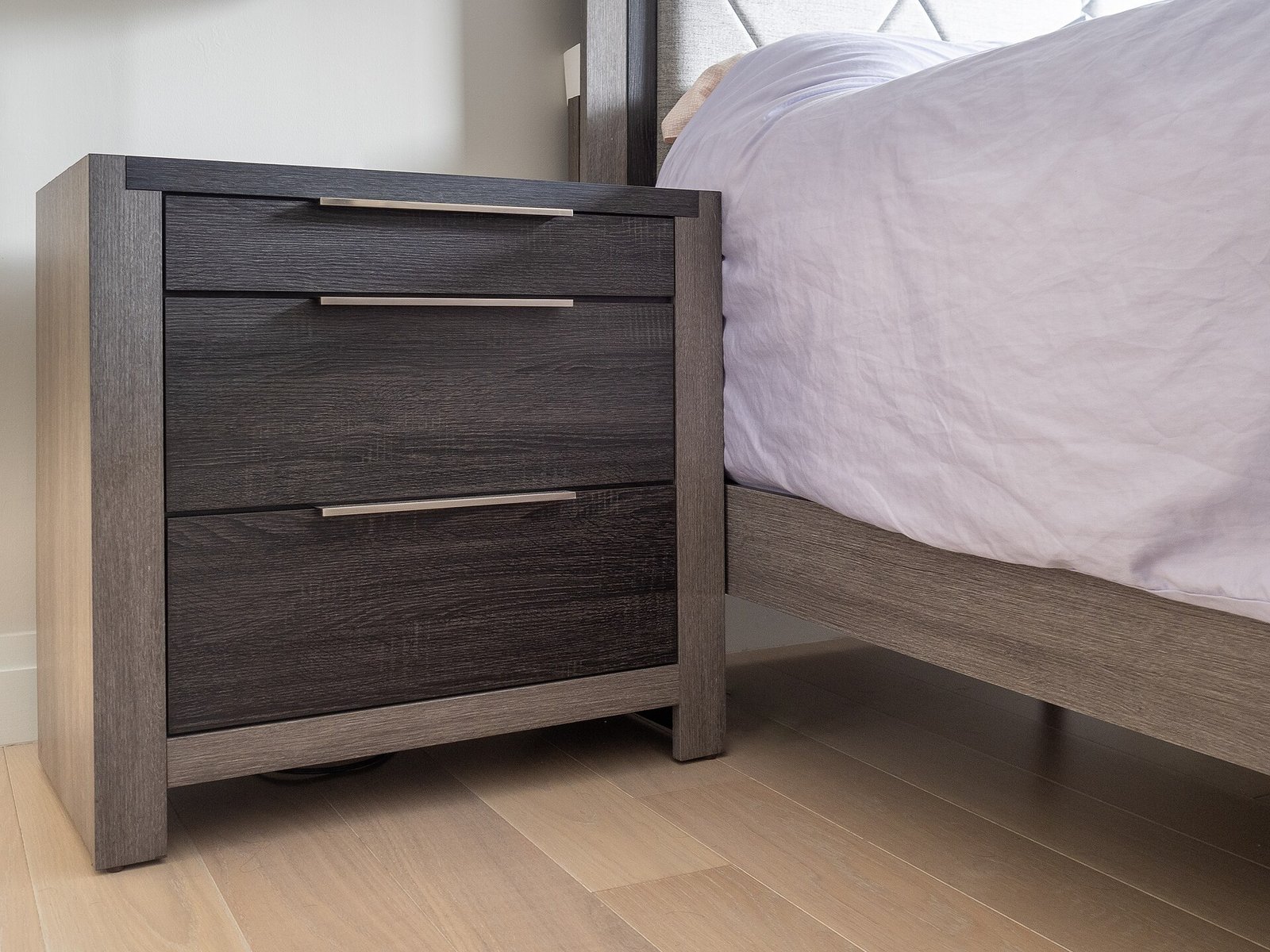
Space-saving is about format; style is about how the piece looks and feels in your room. These five styles are small-room naturals — they stay visually light while doing real work.
6. The Round Drum Small Nightstand
A round nightstand with a 16–20 inch diameter top has no corners to catch your hip at 2 a.m. — a genuine blessing in a walkway-tight bedroom. The circular top is surprisingly usable (lamp, book, water fit fine), and the soft shape breaks up a room full of hard rectangles. Many have one curved drawer or an open drum interior for storage.
Round works best when you keep the top edited: three objects max. A round surface with five things on it looks chaotic in a way a square one doesn’t.
Try it: Use a drum nightstand on the side of the bed nearest the door or walkway — that’s where the corner-free shape pays off most.
7. The Open-Frame Industrial Small Nightstand
Slim black metal frame, one or two open tiers, maybe a wood top — the “I own twelve things” nightstand. At 14–18 inches wide, it’s honest, affordable, and visually airy because you can see straight through it. Perfect for modern and industrial bedrooms, and tough enough to survive moves and teenagers.
Open storage without containment becomes a clutter shelf, so this style needs one rule: everything on the lower tier lives in a single low basket or box. Contained, it looks intentional; loose, it looks like a wire rack of regrets.
Try it: Corral cables and chargers in one small lidded box on the lower shelf — the frame’s open design shows off whatever you leave visible.
8. The Mid-Century Small Nightstand on Legs
Tapered legs lifting a compact case 6–8 inches off the floor — that’s the whole trick. Showing floor underneath makes any small nightstand look lighter and the room feel bigger. The classic version is 16–20 inches wide with one drawer over an open cubby, often in walnut or white.
These sit lower than traditional nightstands (often 22–24 inches tall), which pairs beautifully with low platform beds but can look dwarfed next to a tall pillow-top mattress. Measure first.
Try it: Style the open cubby with one short stack of books and nothing else — cramming it full kills the airy effect the legs are buying you.
9. The Glass-Top Small Nightstand
When a bedroom is small and dark, glass is close to magic. A clear glass top on a slim metal or wood frame visually disappears, so light keeps moving and the piece adds almost no visual weight. It’s the best trick I know for a nightstand that functions without crowding.
The honest trade-offs: glass shows every fingerprint and dust mote, and it needs a soft cloth wipe-down weekly. Skip it in toddler zones, and always confirm the glass is tempered before buying.
Try it: Ground the look with one heavier textured piece nearby — a woven basket underneath or a chunky throw on the bed — so the room doesn’t feel like it’s floating away.
10. The Rustic Wood Stool Small Nightstand
Here’s the permission slip: a sturdy wooden stool, a small log-side table, or a chunky tree-stump accent piece makes a fantastic small nightstand in farmhouse, rustic, and cabin-style bedrooms. No drawers, no assembly, no pretense — just a solid 14–16 inch surface at roughly the right height.
Keep the top sealed or waxed if drinks will land on it daily, and check stability — a three-legged stool on an uneven floor will rock. The charm is the point, but a wobbling water glass is not charming at 3 a.m.
Try it: Tuck a small lidded basket under or beside it for the hidden storage the stool itself doesn’t provide.
Also Read: 15 White Nightstand Ideas: Buyer’s Guide & Styling Tips
Clever Storage Tricks for a Small Nightstand
A small nightstand can’t win on surface area, so it has to win on smarts. These three upgrades multiply what a compact piece can hold.
11. The Built-In Charging Small Nightstand
The overachiever: a compact nightstand (often just 15–16 inches wide) with two outlets and USB ports built into the back or side. It deletes the tangle of chargers and power strips behind the bed — the single ugliest thing in most small bedrooms — with one cord running to the wall.
Check the port mix before buying: older models only have USB-A, and your current phone probably wants USB-C. Confirm the power unit is ETL or UL listed, and make sure the cord is at least 6 feet long so the nightstand can sit where it belongs, not where the outlet dictates.
Try it: Route the nightstand’s single cord behind the bed frame and clip it down — the goal is one invisible cord, not a slightly tidier nest.
12. The Over-Nightstand Wall Shelf
When the nightstand surface is spoken for, go above it. A single 12–16 inch wall shelf mounted 12–18 inches above the nightstand top holds books, a small plant, and the decorative stuff — freeing the actual surface for the lamp, phone, and water. It’s the cheapest square footage you’ll ever add to a bedroom.
Keep the shelf shallow (6–8 inches deep) so it doesn’t loom over the bed, and keep heavy books toward the wall side. For renters, a single shelf means two small holes — easily patched with spackle at move-out.
Try it: Put the pretty-but-rarely-used items up top (framed photo, candle, small plant) and keep nightly essentials on the nightstand itself.
13. The Under-Shelf Basket Small Nightstand
If your nightstand has an open lower shelf or open frame, one low woven basket turns that dead air into a drawer. Chargers, extra reading glasses, hand cream, the TV remote — everything with no business being on display lives in the basket, and the nightstand top stays clean.
Measure the opening before buying the basket; you want about an inch of clearance on each side so it slides in and out without a fight. Lidded baskets hide more; open ones are easier to grab from in the dark.
Try it: Label it mentally as the “bedside junk drawer” and give everything else a different home — one contained basket beats three open shelves of clutter.
Styling a Small Nightstand Without the Clutter
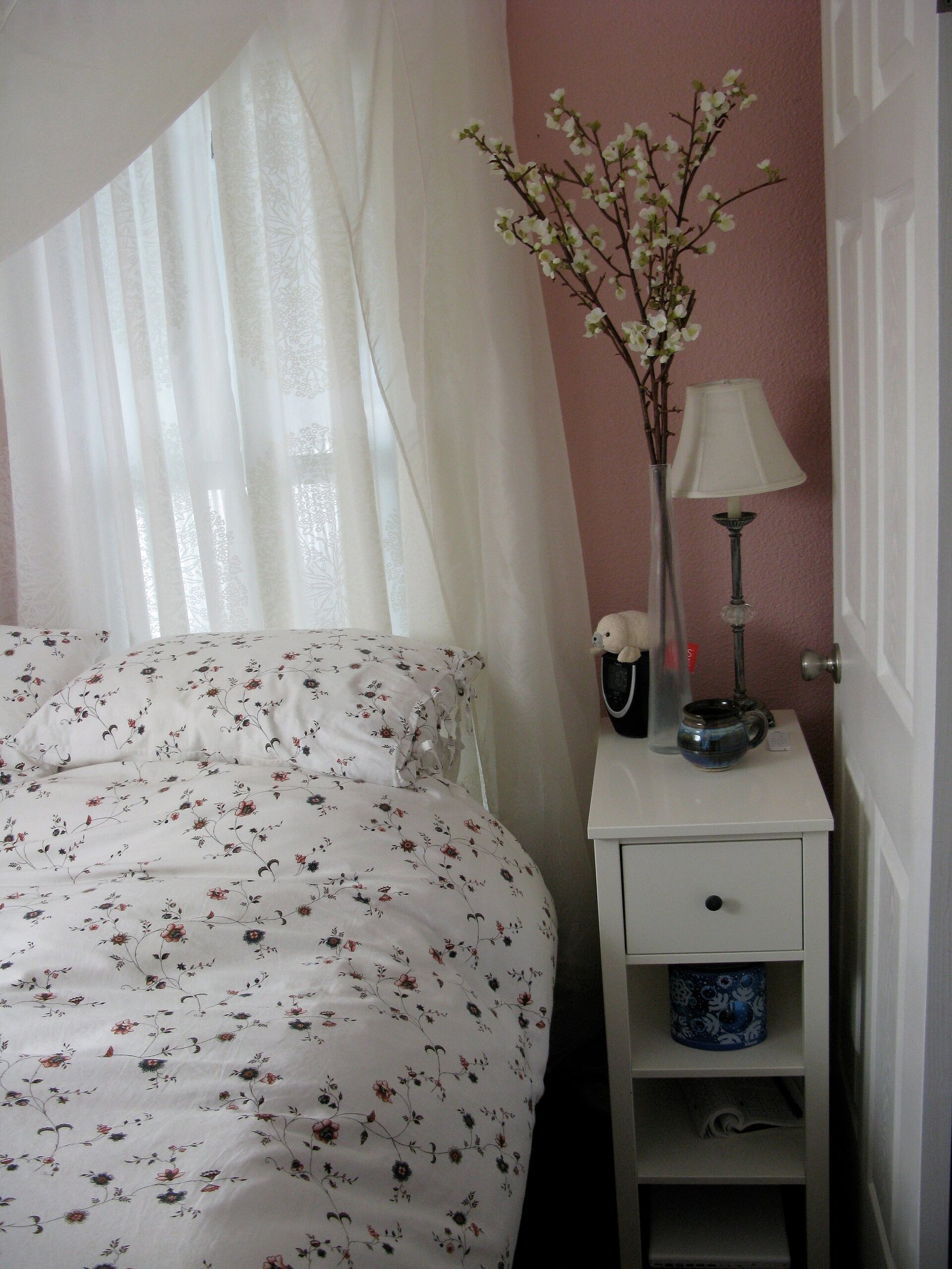
A small surface styled badly looks like a junk drawer with a lamp. Styled well, it looks like a boutique hotel. The difference is restraint — and a lamp that fits.
14. The Mini Lamp Rule for a Small Nightstand
The lamp is the anchor of the whole arrangement, and on a small nightstand the math is strict: choose a lamp whose base is no wider than one-third of the tabletop, and whose shade doesn’t extend past the table’s edge. For a 15-inch nightstand, that means a base under 5 inches and a shade under 10 inches across.
Height matters too: the bottom of the shade should sit roughly at your eye level when you’re sitting up in bed — that’s the sweet spot for reading light without glare. A dimmable bulb or 3-way switch turns the same small lamp into reading light and wind-down light.
Try it: If even a mini lamp eats too much surface, skip the table lamp entirely — a plug-in wall sconce or clip-on reading light gives you the glow with zero footprint.
15. The Rule-of-Three Vignette
Three objects, three heights, done. That’s the whole formula for a styled small nightstand: the lamp (tall), a short stack of two books or a small box (medium), and one small personal object — a candle, a bud vase, a catchall dish (low). Odd numbers and varied heights are what make an arrangement look designed instead of accidental.
Resist the fourth object. On a compact surface, every addition subtracts calm. If it doesn’t earn its place nightly or make you happy daily, it lives on the dresser.
Try it: Photograph your nightstand from the doorway. The camera shows clutter your eyes have learned to ignore — remove whatever looks noisy in the photo.
How to Size a Small Nightstand for Your Bed
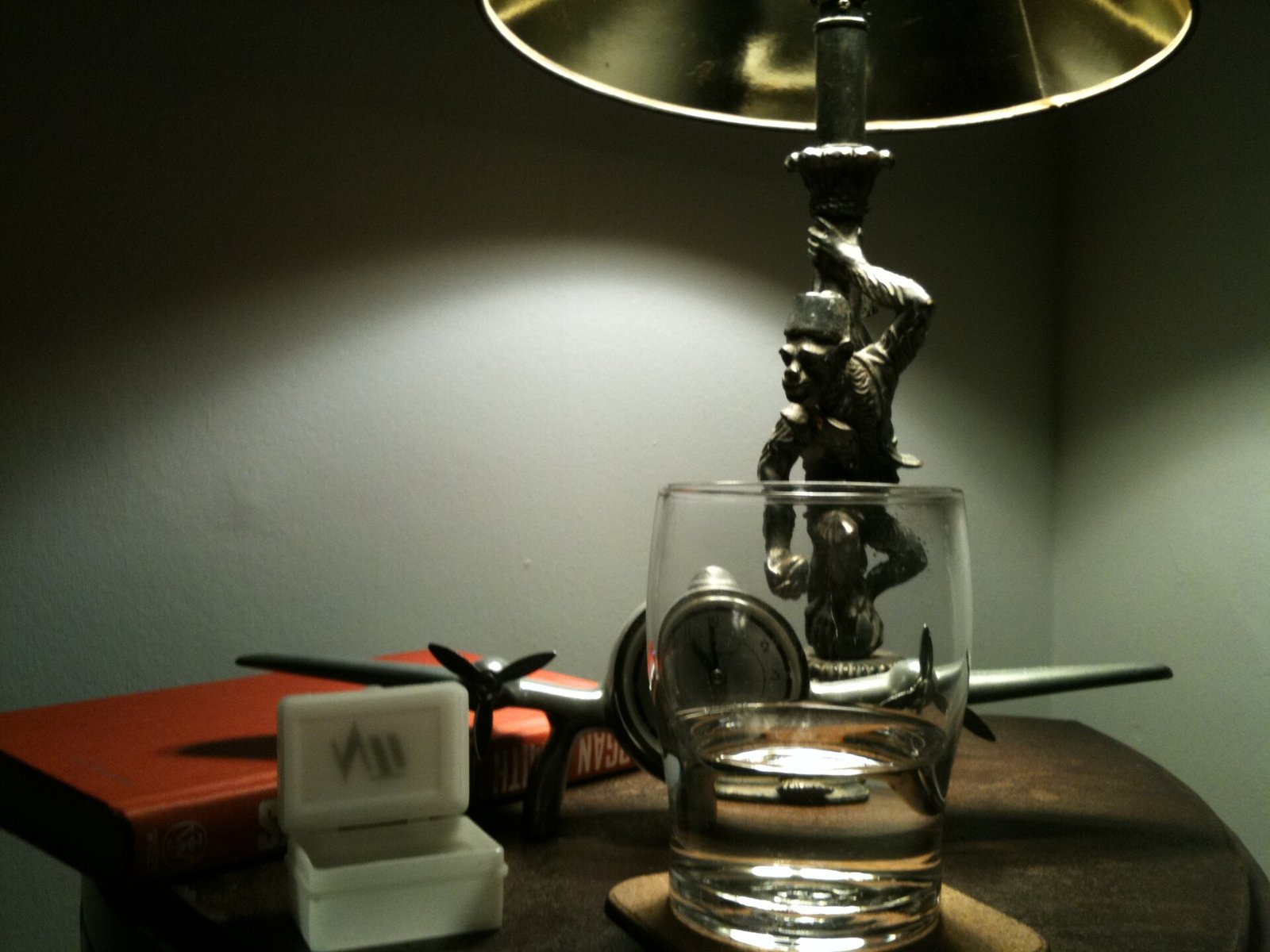
Style is negotiable; measurements aren’t. Get these four numbers right and almost any small nightstand will work.
Height: match your mattress. Measure from the floor to the top of your mattress with the bed fully made. Your nightstand’s top surface should land within 2–4 inches of that number — ideally right at it or just below. Too low and you’ll fumble for your phone in the dark; too high and the lamp sits at eye level when you’re lying down, which is genuinely uncomfortable.
Width: fit the gap, not the catalog. Measure the actual space beside your bed, then subtract 1–2 inches for breathing room. For a twin or daybed, 14–16 inches usually suffices; beside a queen, 16–20 inches feels balanced. In a truly tight spot, the wall-mounted or clamp-on types above beat any freestanding piece.
Depth: protect your walkway. Standard nightstands run 14–18 inches deep, but in a compact bedroom depth matters more than width. Keep at least 24 inches of clear walking path beside the bed — that’s the minimum for getting in and out comfortably and for drawer fronts that don’t smack the wall.
One or two? Be honest about the room. Two nightstands look symmetrical and finished, but in a bedroom under 10 feet wide, one good small nightstand on your side beats two cramped ones that block the walkway. A single nightstand plus a wall shelf on the other side is the compromise that keeps both sleepers happy. If you’re weighing the pair decision, my guide to Nightstand Set of 2: 12 Best Styles, Sizes & Styling Ideas covers the matching-vs-mixing debate in full.
Drawer vs. open: pick by personality. If you’re a “shove it in a drawer” person, buy the drawer — an open shelf will just display your chaos. If you’re disciplined about editing, open shelves keep a tight room feeling airy. Neither is better; the wrong one for your habits is worse.
Common Mistakes to Avoid
- Buying by looks instead of measurements. The prettiest small nightstand in the world is useless if it’s 4 inches taller than your mattress. Fix: measure floor-to-mattress-top and the bedside gap before you browse a single listing.
- Choosing a lamp shade that overhangs the edge. A shade wider than the table looks top-heavy and gets knocked by every passing hip. Fix: keep the shade diameter at least 2 inches narrower than the tabletop, or switch to a wall sconce.
- Treating the top like bonus storage. Piling mail, spare chargers, and three half-read books on a 15-inch surface turns it into a junk station. Fix: enforce the rule of three — lamp, one stack or box, one personal object.
- Skipping the anti-tip anchor on tall pieces. Tower nightstands and top-heavy designs can tip when a drawer is pulled all the way out — dangerous for kids and pets. Fix: use the anti-tip strap that comes in the box (or a $10 kit) and anchor to a stud. The CPSC’s Anchor It! campaign covers exactly this risk for small, light furniture.
- Forcing a matching pair into a room that fits one. Two nightstands crammed into a 9-foot-wide bedroom block walkways and make the room feel smaller, not more finished. Fix: one nightstand on the primary side plus a floating shelf on the other — asymmetric beats cramped every time.
Also Read: Nightstand Set of 2: 12 Best Styles, Sizes & Styling Ideas
Small Nightstands at a Glance
| Category | Best Pick | When to Use It |
|---|---|---|
| Zero footprint | Floating wall-mounted nightstand | Tiny bedrooms where every floor inch counts and the lease allows a few screws |
| Tightest gap | Narrow single-drawer nightstand (14–16″ W) | The classic bedside setup squeezed between bed and wall |
| Maximum storage | Tall slim tower nightstand | No room for a dresser; needs drawer space in a dinner-plate footprint |
| Awkward corner | Corner nightstand or shelf | Bed pushed into a corner where square tables waste space |
| No space at all | Clamp-on bedside shelf | Bunk beds, lofts, dorms, and radiator-wall situations |
| Small + dark room | Glass-top nightstand | Bedrooms that need light to keep moving and visual weight near zero |
| Budget + charm | Wood stool or log side table | Rustic and farmhouse rooms where character beats drawers |
Small Nightstand FAQ
How wide should a small nightstand be?
A small nightstand is typically 14 to 18 inches wide, versus 20–28 inches for a standard one. Measure your actual bedside gap and subtract 1–2 inches for breathing room — in a truly tight spot, 14–15 inches still holds a slim lamp, a phone, and a book.
What is the ideal height for a small nightstand?
The top surface should sit within 2–4 inches of your mattress top, ideally right at it or just below. Measure from the floor to the top of your fully made mattress — that number is your target, and it matters more than any style consideration.
Can I use just one nightstand instead of two?
Absolutely — in a bedroom under about 10 feet wide, one good small nightstand beats two cramped ones. Put it on the primary sleeper’s side and add a small floating shelf on the other side so nobody’s phone ends up on the floor.
What’s the best small nightstand for a dorm room?
A clamp-on bedside shelf or a narrow rolling cart. Dorms often ban wall drilling and offer zero floor space beside lofted beds — a clamp shelf needs neither permission nor footprint, and a slim rolling cart can tuck under the bed by day.
How do I fit a lamp on a very narrow nightstand?
Choose a lamp with a base no wider than one-third of the tabletop and a shade that stays inside the table’s edge. If even that eats too much surface, a plug-in wall sconce or clip-on reading lamp gives you light with zero footprint — and cordless mini lamps work anywhere without an outlet nearby.
Are floating nightstands renter-friendly?
Only if your lease allows small wall holes. Floating nightstands need studs or heavy-duty anchors, which means drilling. If drilling is off-limits, get the look with a narrow console-style table (12–14 inches deep) that stands on the floor and moves with you.
How much should I spend on a small nightstand?
Budget $40–$120 for a solid flat-pack or open-frame piece, $120–$250 for better drawer glides and finishes, and $250+ for solid wood. At any price, check drawer glide quality and stability reviews first — hardware matters more than the price tag suggests.
What can I use instead of a nightstand in a really tiny bedroom?
A wall-mounted shelf, a clamp-on bedside shelf, a sturdy stool, or a stack of two lidded storage boxes. The job is a stable surface at mattress height for a lamp, phone, and water — anything that does that safely counts as a nightstand.
Final Thoughts
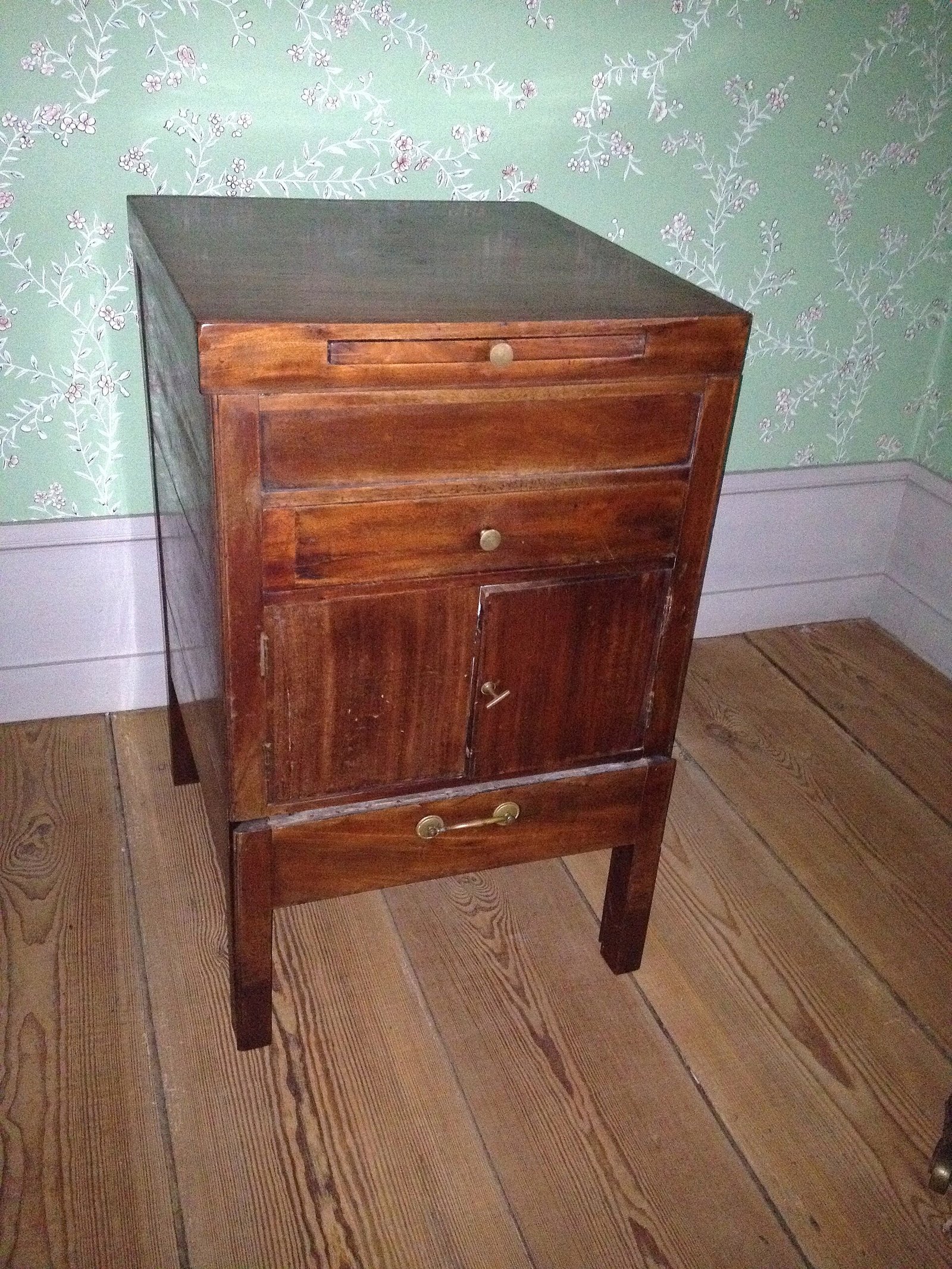
A small nightstand done right is proof that constraints make better design. Measure your space, match your mattress height, pick the format that fits your room’s reality — floating, narrow, tall, or clamped on — and style it with three objects, not thirteen. Your tiny bedroom will feel bigger, calmer, and more intentional than rooms twice its size.
Try it: This weekend, measure your bedside gap and mattress height, then revisit the 15 ideas above with real numbers in hand. The right small nightstand usually picks itself.

Founder of NestFlavors — sharing tested recipes and honest home ideas, made for real life.