
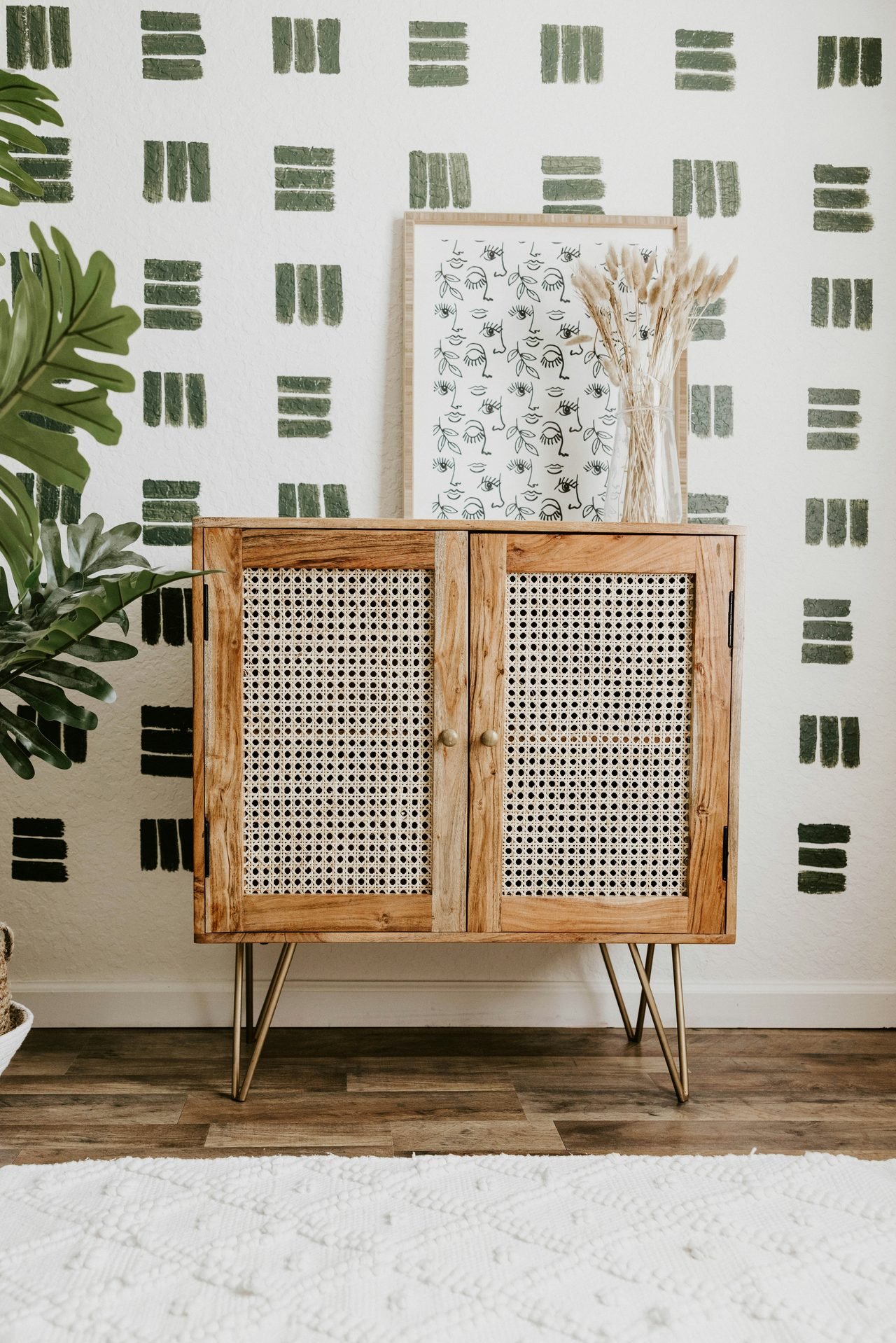
That empty wall isn’t empty — it’s just waiting for the right cabinet.
Accent cabinets are the hardest-working piece of furniture you can buy: they hide the clutter, anchor a bare wall, and give you a styled surface for the pretty stuff. I’ve put one in nearly every room of my own home over the years — entryway, dining room, even a hallway that used to be a dead zone — and each time it felt like the room finally exhaled.
This guide gives you 13 accent cabinets I’d actually buy — ideas organized by style and by room, plus the exact measurements I use to size and place them (so you never buy the wrong one), a plain-English breakdown of materials and what they cost, renter-friendly upgrades, and the styling rules that make the top look intentional instead of random. Let’s find your cabinet.
What Are Accent Cabinets?
An accent cabinet is a freestanding storage cabinet — usually 30 to 60 inches wide — used to add both hidden storage and visual interest to a room. Unlike built-in cabinetry, it’s furniture: you can move it, style it, and take it with you when you move. The "accent" part means it does more than store things — its shape, finish, or color is meant to be seen and to lift the whole room.
You’ll also hear these accent cabinets called storage cabinets, credenzas, buffets, or sideboards. The lines blur (more on that in the FAQ), but the job is the same: close the doors on the mess, style the top, and suddenly the room looks finished.
What counts as an accent cabinet is broader than most people think. A vintage dresser repurposed in the dining room counts. A pair of small nightstand-style cabinets flanking a fireplace counts. Even a bar cart with enclosed storage qualifies in spirit. The defining trait isn’t the shape — it’s the double job: hidden storage plus visible style. If a piece only stores (like a plastic bin) or only decorates (like a sculpture), it’s not an accent cabinet. The magic is in doing both at once, which is exactly why designers reach for them when a room feels "almost done but not quite."
Why You’ll Love These Accent Cabinets
- Clutter disappears behind closed doors. Mail, remotes, chargers, board games, the candle collection — all of it gets a home that isn’t the kitchen counter.
- One piece fills three needs. Storage inside, display on top, and a visual anchor for a blank wall, all in a single footprint.
- They work in literally every room. Entryway, living room, dining room, hallway, bedroom, home office — I’ve yet to find a room that couldn’t use one of these accent cabinets.
- Renters can take them along. No installation, no holes beyond a furniture strap. When the lease ends, the cabinet comes with you.
- Style range is enormous. Rattan boho, mid-century walnut, farmhouse barn-door, mirrored glam — there’s a cabinet for every aesthetic and budget.
- They’re the easiest "finished room" shortcut I know. A bare wall plus a styled cabinet reads as decorated. It really is that simple.
Style-Forward Accent Cabinets
Start with the look you love. These four styles cover the aesthetics most of my readers ask about when shopping for accent cabinets — pick the one that matches your room’s personality, then check the sizing formula later to get the dimensions right.
1. The Arched Rattan Showpiece
The arched cabinet with cane-webbing doors is everywhere right now, and for good reason: the arch softens a room full of rectangles, and the woven texture adds warmth without visual weight. It’s the rare statement piece that doesn’t shout.
The reason this works so well is contrast — the curved top breaks up all the straight lines of sofas, rugs, and frames, while the see-through weave keeps a small room feeling airy. I styled one of these accent cabinets in my living room corner with nothing but a ceramic vase and a stack of two art books, and guests ask about it more than any other piece I own.
Try it: Let the cabinet be the pattern. Keep everything else around it solid and calm — the weave is doing enough visual work already.
2. The Mid-Century Modern 2-Door Classic
Tapered legs, clean lines, warm walnut or teak tones, minimal hardware — the mid-century accent cabinet is the design world’s most reliable workhorse. It’s been "in style" for about seventy years, which tells you everything.
What makes it timeless is restraint: no carving, no fussy details, just good proportions. That simplicity means it slides into modern, transitional, Scandinavian, and even eclectic rooms without a fight. Look for solid wood or wood veneer over engineered wood, dovetail-style drawer boxes if it has drawers, and legs that angle outward slightly — that’s the silhouette that reads as authentic mid-century.
One practical note: mid-century cabinets tend to sit lower than modern ones — many are 28 to 32 inches tall rather than 34 to 36. That’s perfect beside a low-profile sofa, but if you plan to use it as a bar or serving surface, test the height against your own comfort. Bending over a too-low cabinet every time you pour a drink gets old fast. When in doubt, the taller end of the mid-century range (30 inches plus) is the more versatile pick.
Try it: Pair it with a round mirror above and a single sculptural lamp on top. The circle-square-tapered-leg combination is a classic for a reason.
3. The Farmhouse Sliding Barn-Door Cabinet
If your style leans cozy — shiplap, chunky knits, gathered-around-the-table energy — the barn-door accent cabinet is your piece. The sliding doors are the star: they save swing space (great in tight rooms) and add instant farmhouse character.
Beyond looks, the sliding mechanism is genuinely practical in hallways and small dining rooms where a swinging door would bang into furniture. Check that the track hardware feels solid — wobbly barn-door tracks are the number one complaint in reviews. Distressed oak, weathered gray, and warm white are the finishes that age best; skip anything too orange-toned.
Try it: Style the top with a trailing pothos, a wooden tray corralling two candlesticks, and one framed photo. Farmhouse styling should feel collected, not staged.
4. The Industrial Metal-and-Glass Cabinet
Black metal frames, glass doors, maybe a reclaimed-wood top — the industrial accent cabinet brings an urban edge that works beautifully against soft furnishings. It’s the "tough" that makes the "soft" in your room look softer.
The glass doors are the point here: they turn storage into display. That means this cabinet asks a little more of you — what’s inside will be seen, so it’s for the pretty dishes, the barware, the book collection with the nice spines. If your storage needs are more "junk drawer," pick a solid-door style instead. Measure carefully: metal-frame cabinets often run narrower (30 to 42 inches) than wood ones.
Try it: Use it as a bar cabinet. Line up glassware and bottles inside, style the top with a cocktail tray, and you’ve got a home bar that took ten minutes.
Room-by-Room Workhorses
Forget style for a minute and think about the job. These are the placements where accent cabinets earn their keep daily — match the cabinet to the room’s actual needs.
5. The Entryway Catch-All
The entryway is where clutter is born: keys, mail, sunglasses, the bag you swear you’ll put away. A 30- to 42-inch accent cabinet with drawers is the single best fix. Drawers swallow the small stuff; the top holds a tray for keys and a lamp for warmth.
Height matters here — 30 to 36 inches tall is the sweet spot, roughly counter height, so it feels natural to drop things on as you walk in. Hang a mirror or a row of hooks above it and the whole entry reads as intentional. If your entry is a narrow hallway rather than a foyer, go slim: 12 to 14 inches deep is plenty and keeps the walkway clear (see the clearance math below).
A mirror above the entryway cabinet isn’t just pretty — it’s the last-look check before you leave, and it bounces light into what is often the darkest part of the house. A round mirror softens the cabinet’s hard edges; a rectangular one echoes them. Either works, but keep the mirror’s width to about two-thirds the cabinet’s width so the proportions feel related, not random.
Try it: Assign every drawer a job — one for mail, one for keys and sunglasses, one for the dog leash and poop bags. Label them inside if you share the house with optimists who "put things anywhere."
6. The Dining Room Buffet
The dining room cabinet is the classic use case for accent cabinets: table linens, serving pieces, the good placemats, and everything for hosting live inside; the top becomes your serving station during dinner parties. A 48- to 60-inch wide cabinet with a mix of drawers and cupboards is ideal — drawers for flatware and linens, cupboards with adjustable shelves for platters and bowls.
Leave at least 36 inches between the cabinet and the dining table so chairs can pull out and someone can walk behind them. (In a tight dining room, 30 to 42 inches wide still works — just keep that clearance.) Style the top symmetrically for formal rooms — matching lamps or candlesticks flanking a centerpiece — or asymmetrically for a relaxed feel.
Try it: Keep a folded table runner and a set of cloth napkins in the top drawer at all times. Instant "we’re having people over" readiness.
7. The Living Room Media Console Cabinet
Yes, accent cabinets can absolutely be your TV stand — and they look far better than most purpose-built media consoles. The trick is picking one with cord management (look for a cutout or be ready to drill one — it’s a renter-friendly mod if you use a grommet) and interior shelves that fit your components with an inch or two of breathing room for ventilation.
Size it to the TV: the cabinet should be at least as wide as the television, ideally 6 to 12 inches wider on each side. A 65-inch TV is about 57 inches wide, so you’re looking at a 60- to 72-inch cabinet. Height sweet spot is 24 to 30 inches — low enough that the screen sits near eye level from the sofa.
Ventilation is the detail people forget. Game consoles and receivers throw real heat, and a closed cabinet with no airflow will shorten their lives. Look for cabinets with ventilated backs or cord cutouts (heat escapes through the same gaps cables use), leave an inch or two above each component, and if your cabinet is fully sealed, consider drilling a discreet row of holes in the back panel or adding a small USB-powered cabinet fan. Your electronics will thank you by not dying young.
Try it: Put the router and cable box inside with the doors closed and run an IR repeater if the remote struggles. Clean front, no blinking lights.
8. The Hallway Slim Cabinet
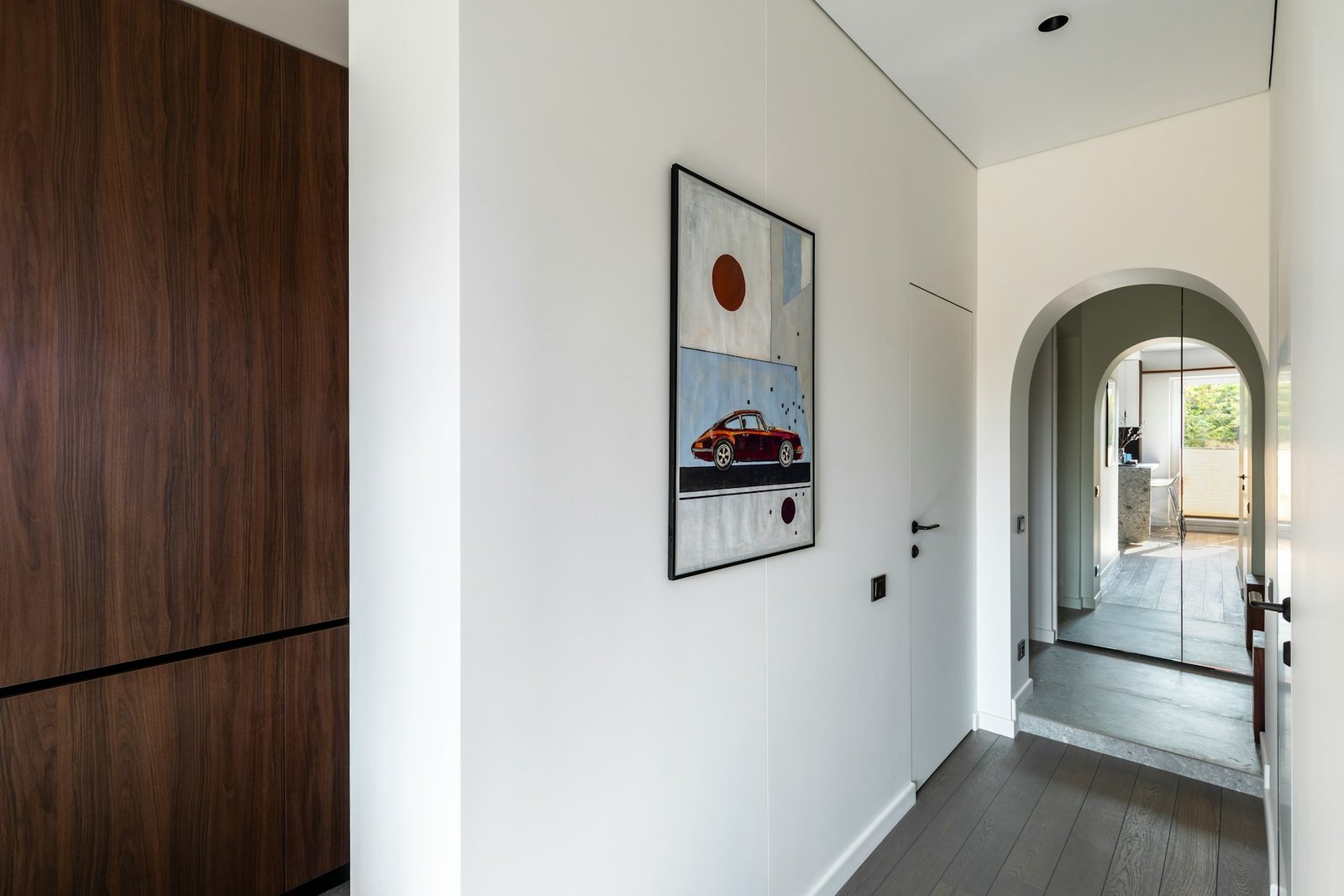
Hallways are the most underused storage real estate in the house, and slim accent cabinets — 10 to 14 inches deep, 30 to 48 inches wide — turn a pass-through into a gallery wall with storage. This is where I keep wrapping paper, vases, and the candles I buy and forget about.
The non-negotiable rule: maintain at least 36 inches of clear walkway in front of it. Measure your hallway width first — a 42-inch hallway can’t take a 14-inch-deep cabinet. In a wide hallway, this is also a gorgeous spot for a long runner rug leading the eye to the cabinet as a focal point.
Try it: Hang a series of three small art prints or family photos above it in a row. The repetition makes a narrow hallway feel designed instead of leftover.
Small-Space and Renter Heroes
Small rooms and rental leases have rules of their own. These four accent cabinets are chosen for tight footprints, visual lightness, and zero-permission-needed setup.
9. The Tall Narrow Corner Cabinet
Corners are dead space in most rooms, and a tall, narrow accent cabinet — 20 to 28 inches wide, 60 to 72 inches tall — wakes them up. It draws the eye upward (making ceilings feel taller) while swallowing a surprising amount: linens, games, craft supplies, cleaning caddies.
In a studio apartment, one of these beside the bed works as a nightstand-plus-wardrobe-overflow. In a bathroom-adjacent hallway, it holds towels and toiletries. Just anchor it — anything over 48 inches tall should be strapped to the wall, and renter-safe furniture straps exist that remove without damage.
Try it: Put the least-attractive necessities on the lower shelves and the pretty things up top. Eye level is prime real estate; the floor shelf is for the iron.
10. The Glass-Door Display Cabinet
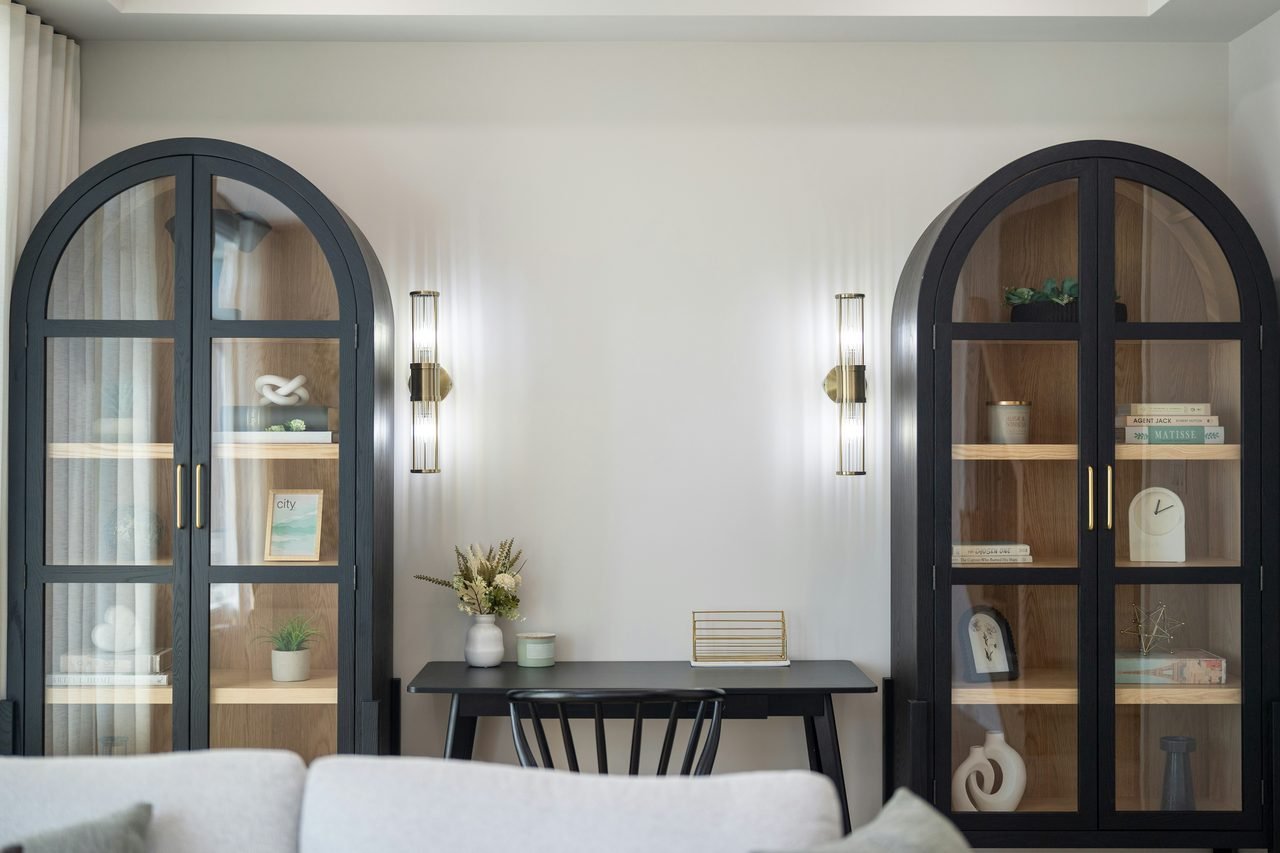
When floor space is tight but you still want the storage, glass doors are a visual trick: these accent cabinets read as lighter and less bulky than solid-door pieces of the same size. A 32- to 40-inch glass-door cabinet holds dishes, books, or a bar setup without visually shrinking the room.
The trade-off is honesty — everything inside is on display. Keep it curated: group like with like, leave breathing room on each shelf, and use matching containers for the unpretty stuff. If minimalism isn’t your lifestyle, this isn’t your cabinet (no judgment — pick number 2 instead).
Try it: Line the back panel with peel-and-stick wallpaper. It takes twenty minutes, costs almost nothing, comes off cleanly when you move, and makes everything inside look custom.
11. The Mirrored Accent Cabinet
A mirrored cabinet does double duty in a small or dark room: storage plus a light bouncer. Placed opposite or adjacent to a window, it throws daylight deeper into the space and makes the room feel nearly twice as big. This is my favorite trick for windowless-adjacent dining nooks and dark entryways.
Maintenance note: mirrored surfaces show fingerprints and dust, so this one asks for a weekly wipe-down. Keep a microfiber cloth in the top drawer and it becomes a ten-second job. Style the top minimally — the cabinet itself is the decoration.
Try it: Angle it slightly toward the room’s main light source rather than placing it flat against the wall. You’ll be surprised how much brighter the corner feels.
12. The Rolling Bar Cabinet
Wheels change everything. A small rolling accent cabinet — 24 to 36 inches wide — can be a bar cart upgrade, a kitchen overflow island, a craft station, or a bedside table, depending on the day. Locking casters are essential; without them it’s just a cabinet that slides away at the worst moment.
For renters, these rolling accent cabinets are gold: no wall, no commitment, and they relocate for parties. Stock it as a coffee bar (mugs up top, beans and filters inside), then roll it to the living room when guests come. Look for one with a raised lip or tray top so things don’t slide off in transit.
Try it: Dedicate it to one ritual — morning coffee, Friday cocktails, Sunday crafting. A cabinet with a job stays organized; a cabinet without one becomes a junk drawer on wheels.
The Statement Maker
13. The Bold Painted Accent Cabinet
Sometimes the right move is a cabinet in a color that makes you happy every time you walk past: deep emerald, navy, terracotta, even a high-gloss black. A painted accent cabinet is the lowest-commitment way to add a bold color to a room — it’s one piece, not four walls.
The key is letting it be the only loud thing. Keep walls, rug, and large furniture neutral, and pull one small echo of the color elsewhere — a throw pillow, a vase, a book spine — so it feels intentional rather than random. Brass or matte black hardware elevates painted finishes enormously; it’s a cheap swap that reads as custom. And if you’re painting a thrifted find yourself, don’t skip the primer — two thin coats of primer plus two of cabinet paint will outlast any single-coat shortcut.
Try it: Not ready to commit? Start with the inside: paint just the interior back panel of a neutral cabinet in your bold color. You get the surprise pop every time you open the doors, with zero risk.
The Right-Size Formula: How to Measure for an Accent Cabinet
This is the section most guides skip, and it’s the one that saves you from the number one regret: buying accent cabinets in the wrong size. Grab a tape measure — this takes five minutes.
Step 1: Measure the wall. Measure the full width of the wall or nook where the cabinet will go. Your cabinet should fill roughly two-thirds of that width — never the whole thing. A 90-inch wall wants a 54- to 60-inch cabinet. A cabinet that spans wall-to-wall looks built-in in a bad way; one that’s too small looks lost.
Step 2: Check your clearances. These are the minimums I never break:
- Walkways: 36 inches of clear floor in front of the cabinet. In a main traffic path, make it 42 to 48.
- Dining rooms: 36 inches between the table edge and the cabinet so chairs pull out and people pass behind them.
- Door swing: open every nearby door and drawer fully — the cabinet can’t block any of them.
- Vents and outlets: don’t seal off a heating vent or cover the only outlet behind a cabinet you can’t move easily.
Step 3: Match the height to its neighbors. A cabinet next to a sofa should sit within about 6 inches of the sofa’s arm height. Under a window, the cabinet top should clear the sill by at least 4 inches — never block the window frame. For the wall above: hang art or a mirror so its center sits at 57 inches from the floor (gallery standard, roughly average eye level), leaving 6 to 12 inches of breathing room between the cabinet top and the bottom of the frame.
Step 4: Size the storage to the stuff. Before you shop, list what will live inside and measure the tallest item — that decanter, the stack of photo albums, the printer. Adjustable shelves solve most problems, but only if the cabinet actually has them. As a rough guide: 30–36 inches wide suits bedrooms and small spaces; 42–48 inches fits living rooms and entryways; 54–60 inches anchors dining rooms; 66 inches and up is for large open spaces.
Renter-friendly upgrades worth doing: line glass-door cabinet backs with peel-and-stick wallpaper; add battery-powered puck lights inside dark cabinets (no wiring, remote-controlled); use adhesive cord channels to hide TV cables; and anchor anything tall with removable furniture straps. Every one of these reverses cleanly on move-out day.
Materials and Finishes: What You’re Actually Paying For
Price tags on accent cabinets range from $120 to well over $1,000, and the difference is almost entirely materials and construction. Here’s how to read a product listing like someone who won’t get burned.
Solid wood (oak, walnut, mango, acacia) is the top tier: heavy, durable, refinishes beautifully, and lasts decades. It’s also the priciest and the heaviest to move — a solid mango 60-inch cabinet can weigh 120 pounds. Worth it for a forever piece; overkill for a first apartment. If you want to compare hardwood species by hardness and grain before you buy, the National Hardwood Lumber Association’s hardwood species guide is the reference I trust most.
Wood veneer over engineered wood is the sweet spot for most buyers. A thin layer of real wood over MDF or plywood gives you the look and feel of solid wood at half the price, and it’s more resistant to warping in humid rooms. Check reviews for "veneer peeling" complaints — that’s the failure mode, and it usually shows up in the first year if it’s going to happen.
MDF/particleboard with laminate or printed finish is the budget tier. Perfectly fine for light-duty use (decorative storage, not daily-abused drawers), but it chips on corners, swells if it gets wet, and can’t be refinished. If you’re buying at this price, choose darker finishes — they hide edge wear far better than white.
Rattan and cane webbing add texture and airiness but need a little care: keep them out of direct blasting sun (the fibers dry and crack) and dust with a soft brush, not a wet cloth. Quality varies wildly — tight, even weaving with no loose strands is what you want.
Metal frames with glass or wood are the most durable for the money and the easiest to clean, but check the welds and make sure glass panels are tempered (it’ll say so in the specs — if it doesn’t say, assume it isn’t).
Hardware is the tell. Soft-close hinges, solid drawer glides, and weighty pulls signal a well-made cabinet at any price. Flimsy plastic handles and doors that don’t quite align signal the opposite. If you’re torn between two similar cabinets, the one with better hardware is almost always the better buy — hardware is what you touch every single day.
Finishes: matte and satin finishes hide dust and fingerprints; high-gloss looks glamorous in photos and shows every smudge in real life. Distressed finishes are forgiving (new scratches blend in); dark espresso shows dust; white shows everything but brightens a room like nothing else. Pick your battle based on your tolerance for wiping things down.
Common Mistakes to Avoid
- Buying before measuring. The classic. That perfect cabinet is 4 inches too wide for the nook, and now it’s a very expensive hallway obstacle. Tape-measure first, credit card second — every time.
- Blocking doors, drawers, and vents. Open everything near the cabinet’s future home before you buy. A cabinet that traps a door or seals a heating vent will annoy you daily.
- Going too small for the wall. A 30-inch cabinet floating alone on a 120-inch wall looks like a mistake. Respect the two-thirds rule, or pair a smaller cabinet with art and a plant to fill the width visually.
- Cramming the top. The surface is not bonus storage — it’s a display. Three to five objects in varying heights beats twelve small things every time. When in doubt, remove one item.
- Ignoring what’s inside the glass doors. A glass-door cabinet full of chaos reads as clutter, not decor. If you can’t keep it curated, buy solid doors and save yourself the stress.
- Matching everything. The cabinet doesn’t need to match your wood tones exactly — contrast is often better. A walnut cabinet against oak floors, a black cabinet in a white room. Match the mood, not the material.
- Skipping the anchor on tall pieces. Anything over 48 inches tall in a house with kids or pets needs a wall strap. Removable furniture straps exist for renters — there’s no excuse anymore.
Accent Cabinets at a Glance
Here’s how all 13 accent cabinets compare on size, price, and style fit — screenshot this before you shop.
| # | Cabinet Type | Best For | Typical Width | Style Fit | Price Range |
|---|---|---|---|---|---|
| 1 | Arched rattan | Living room focal point | 32–48" | Boho, coastal, eclectic | $300–$700 |
| 2 | Mid-century 2-door | Any room, timeless look | 36–60" | Mid-century, Scandi, transitional | $300–$800 |
| 3 | Farmhouse barn-door | Dining room, entryway | 32–54" | Farmhouse, rustic, cottage | $250–$600 |
| 4 | Industrial metal + glass | Home bar, display | 30–48" | Industrial, modern, loft | $200–$600 |
| 5 | Entryway drawer cabinet | Keys, mail, daily grab-and-go | 30–42" | Any | $150–$450 |
| 6 | Dining buffet/server | Hosting, linens, serving pieces | 48–60" | Traditional, transitional | $350–$900 |
| 7 | Media console cabinet | TV stand with hidden tech | 48–72" | Modern, transitional | $250–$800 |
| 8 | Slim hallway cabinet | Narrow pass-throughs | 30–48" | Any | $150–$400 |
| 9 | Tall narrow corner | Dead corners, studios | 20–28" | Modern, minimal | $200–$500 |
| 10 | Glass-door display | Small rooms, dishware, books | 32–40" | Any (keep it curated) | $250–$650 |
| 11 | Mirrored cabinet | Dark rooms, small spaces | 30–42" | Glam, modern, eclectic | $300–$800 |
| 12 | Rolling bar cabinet | Renters, multi-use, parties | 24–36" | Any | $120–$350 |
| 13 | Bold painted cabinet | Color lovers, neutral rooms | 32–54" | Eclectic, maximalist | $200–$600 (or thrift + paint) |
FAQ
What is the difference between an accent cabinet, a sideboard, and a credenza?
Honestly? Mostly marketing. Traditionally a sideboard is a long, low dining-room piece for serving, a credenza is an office or dining piece with sliding doors, and an accent cabinet is the catch-all term for any freestanding decorative storage cabinet. Today retailers use the words interchangeably — shop by dimensions and features, not by the name on the tag.
What size accent cabinet do I need?
Measure your wall and aim for a cabinet about two-thirds its width. For the room: 30–36 inches wide for bedrooms and tight spots, 42–48 for living rooms and entryways, 54–60 for dining rooms, 66-plus for big open spaces. And always keep 36 inches of clear walkway in front.
Where is the best place to put an accent cabinet?
Wherever you have an underused wall and a storage problem at the same time: entryways (daily essentials), dining rooms (hosting supplies), living rooms (media or display), hallways (linens and overflow), and bedrooms (a dresser alternative). The hallway is the most overlooked spot in most homes.
Can I use an accent cabinet as a TV stand?
Yes — it’s one of the best uses. Choose one at least as wide as your TV (ideally 6–12 inches wider per side), 24–30 inches tall, with ventilation space around components and a cord cutout. Many of my readers prefer the look to standard media consoles.
How do I style the top of an accent cabinet?
Use the rule of three to five objects at varying heights: something tall (lamp, vase with branches, or art leaning above), something medium (stack of books, a bowl), something small (candle, small plant). Group in odd numbers, leave breathing room, and step back to check — if your eye doesn’t know where to land, remove one thing.
What should I store inside an accent cabinet?
Match contents to the room: entryway — mail, keys, sunglasses; dining room — linens, serving pieces, candles; living room — media gear, throws, games; hallway — vases, wrapping supplies, cleaning caddies. Put daily-use items at arm height and rarely-used things low or high. And be honest about the "junk drawer" impulse — one designated messy drawer per cabinet is fine; five is a cry for help.
Are accent cabinets out of style?
No — accent cabinets are one of the most consistently useful furniture categories, and current trends (arched rattan, fluted glass, bold painted finishes) are strong. Styles cycle, but a well-proportioned cabinet in a finish you love doesn’t expire. Buy for your home, not for the trend cycle.
How much should I spend on an accent cabinet?
Budget $120–$350 gets you solid engineered-wood pieces that last years; $350–$700 is the sweet spot for better materials and hardware; $700-plus buys solid wood and heirloom build. Thrift stores are genuinely great for accent cabinets — look for dovetail drawers and solid backs, and don’t fear a paint job. My rule: spend more on pieces you’ll touch daily (entryway, media console) and save on the decorative ones.
Final Thoughts
Accent cabinets are the rare purchase that’s practical on day one and prettier every year. Measure the wall, respect the clearances, pick the style that makes you smile — and then enjoy the deeply satisfying feeling of closing those doors on the clutter.
Which room gets your cabinet first? I’m betting the entryway — it’s the ten-minute transformation that changes how your whole home feels.
Quick-start checklist before you buy: measure the wall (cabinet = two-thirds of it), confirm 36 inches of clearance in front, open every nearby door to check the swing, list what will live inside and measure the tallest item, and decide solid vs. glass doors based on how curated you realistically keep things. Five minutes with a tape measure now saves a return trip later — and once your new accent cabinets are in place, style the top with three to five objects at varying heights, step back, and enjoy the room finally feeling finished.

Founder of NestFlavors — sharing tested recipes and honest home ideas, made for real life.