
The fastest way to make dinner feel like an occasion? Change the lamps, not the furniture.
I’ve eaten in dining rooms with $5,000 tables that felt cold, and in tiny rentals with a folding table that felt magical — and every single time, the difference was the lighting. Dining room lamps decide whether your room glows or glares, whether people linger over dessert or reach for their phones.
The good news: you don’t need an electrician or a big budget. In this guide I’m walking through 15 dining room lamps ideas — overhead showstoppers, buffet and table lamps, floor lamps, sconces, and the bulb tricks that tie it all together — with the real measurements designers actually use, so every lamp you pick lands at the right height and the right size.
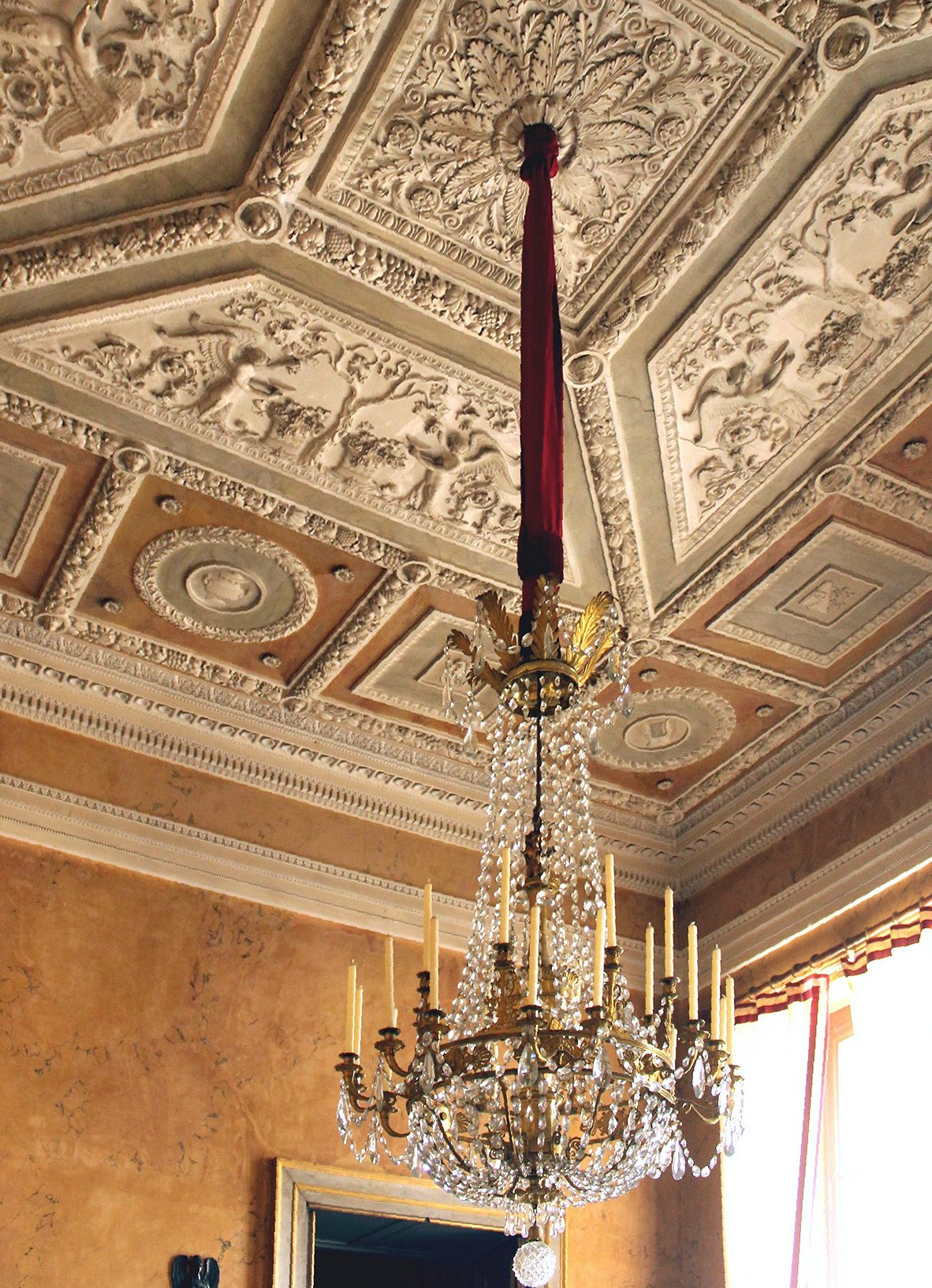
Dguendel, CC BY 4.0 via Wikimedia Commons
What Are Dining Room Lamps?
Dining room lamps are the light fixtures that illuminate your dining space — chandeliers, pendants, buffet table lamps, floor lamps, and wall sconces — layered together to make the table the warm, flattering focal point of the room. The best dining rooms use at least two types: one statement fixture over the table plus smaller lamps around the edges.
Here’s the thing most people miss: your dining room doesn’t have one lighting job, it has three. Bright and functional for homework and weeknight dinners, warm and low for date nights and holidays, and something in between for everything else. The right combination of dining room lamps — on dimmers, always on dimmers — covers all three without you buying a single extra fixture.
Why You’ll Love Layering Dining Room Lamps
- One overhead light is never enough. A single ceiling fixture leaves corners dark and faces shadowed. Layered lamps fill the room evenly so everyone looks good.
- Dimmers change everything. The same chandelier goes from homework-bright to candlelit-dinner with one slider. If your dining room lamps aren’t dimmable, you’re using about 30% of what you paid for.
- Renters can do all of this. Arc floor lamps fake a pendant, plug-in sconces fake hardwired ones, and buffet lamps need nothing but an outlet. No electrician required.
- Warm light flatters food and faces. Bulbs around 2700K make everything — the roast chicken, your guests, the whole room — look richer. Cool white bulbs do the opposite.
- Lamps are the cheapest statement piece. A bold pendant costs less than new chairs and changes the room more. Lighting is the highest-impact, lowest-cost upgrade in a dining room.
- Good lighting makes people stay. Warm, layered light is genuinely relaxing — it’s why restaurants dim the lights. Your dining room can do the same trick.
Overhead Dining Room Lamps
Start here — the fixture over the table is the anchor everything else orbits. Get the size and height right and the rest is easy.

Oleslawlama, CC BY-SA 4.0 via Wikimedia Commons
1. The Single Statement Pendant
One oversized pendant over the table is the modern classic, and it’s nearly foolproof. Choose a shade that’s about half to two-thirds the width of your table and hang it so the bottom sits 30–36 inches above the tabletop — low enough to feel intimate, high enough that nobody’s staring into a bulb.
I love a big drum shade or a woven rattan pendant here because they throw soft, diffused light instead of harsh downlight. The single-pendant look works best over round tables and small square ones, where one centered source covers everything evenly.
Try it: measure your table width, halve it, and shop for pendants in that diameter — then hang at 32 inches and adjust from there.
2. A Row of Mini Pendants
Long rectangular tables beg for a row of two or three mini pendants spaced evenly down the center. It distributes light along the whole table instead of pooling it in the middle, and it looks custom and considered even with inexpensive shades.
Space them about 24–30 inches apart and keep them all at the same height — staggered heights look messy over a dining table, save that trick for stairwells. Clear glass minis keep the look airy; colored glass or metal adds personality.
Try it: for a 6-foot table, hang three mini pendants centered at 18, 36, and 54 inches from one end.
3. The Classic Chandelier
Chandeliers aren’t just for formal dining rooms anymore. A modern chandelier — black metal, mixed materials, even a little sculptural weirdness — over a simple wood table is one of my favorite high-low combinations. The contrast is what makes it interesting: fancy light, unfussy table.
Size it the same way as a pendant (half to two-thirds of table width) and hang it 30–36 inches above the table. If your chandelier has exposed bulbs, put them on a dimmer and choose warm filament-style LEDs — bare cool-white bulbs at eye level are brutal.
Try it: pair a black modern chandelier with a light wood table for instant contrast that works in almost any style.
4. Linear Suspension for Long Tables
A linear suspension — one long fixture instead of several small ones — is the cleanest solution for tables over 7 feet. It follows the table’s geometry, lights every seat evenly, and reads as one intentional piece rather than a cluster you had to arrange.
Look for linear fixtures with diffusers if your table is also a work surface; bare-bulb linear lights can glare on laptops and homework. Hang it at the same 30–36 inch height and center it on the table’s long axis, not the room’s — in open-plan spaces those two centers often differ.
Try it: center a linear pendant on your table (not the ceiling) and check that every chair gets light before you finalize the height.
5. Flush Mounts for Low Ceilings
Eight-foot ceilings and statement pendants don’t mix — but a beautiful semi-flush mount gives you style without the head-bump risk. Choose the widest, shallowest fixture you can find; width gives presence, and staying close to the ceiling keeps sight lines open.
This is the move for apartments and older homes where the ceiling feels low. A sculptural flush mount with a diffuser throws light up and out, which actually makes the ceiling feel higher — the opposite of what a hanging fixture does in the same space.
Try it: swap a builder-grade boob light for a wide semi-flush mount and watch your dining room gain instant character.
Table and Buffet Dining Room Lamps
Overhead light handles the table; these smaller lamps handle the mood. They’re what make the room feel finished instead of just lit.
6. The Matching Buffet Lamp Pair
Two matching table lamps on the sideboard or buffet is the oldest designer trick in the book, and it still works because symmetry reads as intentional. They cast warm pools of light at eye level, which flatters faces in a way overhead light never can.
Keep them 24–30 inches tall including the shade — tall enough to clear most serving dishes, short enough not to tower. White or cream shades glow the warmest; match the lamp bases to your hardware finishes for a pulled-together look.
Try it: put two matching lamps on your sideboard, turn off the overhead, and see how the room instantly feels like a restaurant.
7. One Sculptural Table Lamp
If matching pairs feel too formal, go the opposite direction: one genuinely interesting lamp as a functional sculpture. A ceramic gourd lamp, a mid-century starburst, a chunky brutalist base — something with personality that happens to also light the room.
Place it where it’s visible from the table but not competing with the centerpiece — the end of the sideboard, a corner console, or a bar cart. One rule: the shade should hide the bulb from seated eye level, or you’ll get glare every time you look that way.
Try it: replace a generic lamp on your sideboard with one sculptural piece and let it be the room’s conversation starter.
8. A Mini Lamp on the Bar Cart
Bar carts and drink stations deserve their own light. A small cordless lamp — the rechargeable kind that’s everywhere now — makes the bar area glow like a cocktail lounge without anyone tripping over a cord. Charge it weekly and forget about it.
This is a small move with an outsized payoff at parties. Guests gravitate toward the lit corner, drinks look better in warm light, and the whole setup photographs beautifully. Battery life on most cordless lamps runs 8–12 hours per charge, plenty for an evening.
Try it: add a rechargeable mini lamp to your bar cart before your next gathering and watch where everyone congregates.
9. Lamp Plus Mirror Combo
Put a table lamp in front of a mirror or mirrored tray and you double the light without a second lamp. The reflection bounces warm light deeper into the room and makes the whole corner feel bigger — it’s the oldest small-dining-room trick there is.
A leaning floor mirror behind a console with a lamp on it is my favorite version. The mirror catches the lampshade’s glow and throws it across the room, which means one lamp does the work of two. Lean the mirror securely — art-hanging rules apply.
Try it: move a lamp in front of any mirror in your dining room tonight and notice the difference from the doorway.
Floor Lamps and Wall Sconces
These are the lamps people forget — and they’re what separate a flat, one-source room from one with real depth.
10. The Arc Floor Lamp (Renter’s Pendant)
An arc floor lamp curves right over the dining table and fakes a pendant light with zero installation — no wiring, no ceiling holes, no landlord negotiations. For renters, this is the single best dining room lamp trick I know.
Position the base behind or beside the table and arc the head over the center. Choose one with a dimmer on the cord or a smart bulb so you get the same flexibility as a real pendant. The base needs to be heavy and the arc stable — wobbly arc lamps and dinner parties don’t mix.
Try it: if you can’t hardwire a pendant, arc a floor lamp over your table and put the money you saved toward a dimmer bulb.
11. A Corner Floor Lamp for Dead Zones
Every dining room has a dark corner the overhead light doesn’t reach. A slim floor lamp with a fabric shade fills it with soft, upward-washing light that makes the whole room feel bigger and eliminates that one gloomy spot.
Go slim and tall — torchiere styles that bounce light off the ceiling are ideal because they add ambient light without a visible hot spot. This is also the easiest lamp to move when you rearrange, which in a dining room happens more than you’d think.
Try it: stand in your dining room at night, find the darkest corner, and put the slimmest floor lamp you own there.
12. A Pair of Wall Sconces
Flanking sconces on either side of a sideboard, a window, or a piece of art add jewelry-level detail to a dining room. They wash the wall with light, which adds depth, and at eye level they flatter everyone in the room.
Mount them 60–66 inches from the floor to the center of the shade — roughly eye level for a standing adult, which keeps glare out of seated sight lines. Swing-arm sconces are the overachievers here: pull them out for reading, push them back for dinner.
Try it: flank your largest dining room artwork with two matching sconces and watch the art — and the room — come alive.
13. Plug-In Sconces (No Electrician)
Plug-in wall sconces give you the sconce look with a cord and a wall plug instead of an electrician. Modern ones hide the cord in a fabric sleeve or route it behind furniture, and many are genuinely beautiful — this isn’t a compromise anymore.
They’re perfect for renters and for anyone who wants to test sconce placement before committing to hardwiring. Hang them with a picture hook or a small bracket, drape the cord neatly, and you’ve got layered lighting in an afternoon.
Try it: test-drive sconces with a plug-in pair beside your sideboard before you ever call an electrician.
Bulbs, Dimmers, and Smart Extras
The fixtures get the attention, but these two ideas determine whether your dining room lamps actually perform.
14. Warm Bulbs on Dimmers, Everywhere
This is the highest-ROI move in the entire guide: put every dining room lamp on a dimmer and use 2700K warm-white bulbs. Dimmer switches cost under $20, install in 15 minutes (turn off the breaker first), and instantly give you three rooms in one — bright, medium, and candlelit.
For plug-in lamps, use plug-in dimmers or smart bulbs instead — no wiring needed. And skip “daylight” 5000K bulbs in the dining room entirely; they make food look gray and people look tired. Warm light is the whole game here.
Try it: swap one dining room switch for a dimmer this weekend — it’s the fastest lighting upgrade that exists.
15. Smart Bulbs and Dinner Scenes
Smart bulbs let you save lighting “scenes” — one tap for homework mode, one tap for dinner party, one tap for late-night cleanup — without touching a single switch. Set a warm dim scene for meals and a brighter one for everything else.
You don’t need a whole smart home; even two smart bulbs in your main fixtures change the experience. Group them in the app by room so one command controls the whole dining room, and use the scheduling feature to have the dinner scene fade on automatically at mealtime.
Try it: put smart bulbs in your two most-used dining room lamps and program a “dinner” scene at 30% warm brightness.
Pro Tips for Getting Dining Room Lamps Right
- Memorize the two numbers: fixture width = half to two-thirds of table width; fixture bottom = 30–36 inches above the table. These two rules solve 90% of dining room lamp mistakes.
- Layer at three heights. Overhead (the statement), mid-level (buffet lamps, sconces), and low/floor (corner lamps, candles). Rooms with all three feel designed; rooms with one feel flat.
- Match your metals loosely, not exactly. Brushed brass sconces with a black chandelier look intentional; five identical finishes look like a showroom. Pick two finishes max and repeat them.
- Size for the table, not the room. In open-plan spaces, the dining fixture should relate to the table it hangs over — centering it on the room often puts it in the wrong place.
- Check the bulb from a seated position. Before you finalize any dining room lamp, sit at the table and look toward it. If you see bare bulb, you need a shade, a diffuser, or a lower wattage.
- Don’t forget the switch location. The best-layered lighting fails if the switches are across the room. Smart bulbs or a wireless switch by the table entrance fix this for renters especially.

Judithcomm, CC BY-SA 2.0 via Wikimedia Commons
Common Mistakes to Avoid With Dining Room Lamps
- Hanging the fixture too high. A pendant floating near the ceiling lights the ceiling, not the table, and kills all intimacy. Fix: 30–36 inches above the tabletop, measured to the bottom of the fixture.
- Buying a fixture that’s too small. A tiny pendant over a big table looks lost and under-lights every seat. Fix: half to two-thirds of the table’s width — when in doubt, go bigger.
- Using cool-white bulbs. 5000K “daylight” bulbs make food look unappetizing and skin look washed out. Fix: 2700K warm white everywhere in the dining room, no exceptions.
- Skipping dimmers. A dining room with one brightness setting can’t do both homework and date night. Fix: dimmer switches for hardwired fixtures, plug-in dimmers or smart bulbs for lamps.
- Lighting only the table. One overhead source leaves walls dark and the room feeling like an interrogation. Fix: add at least one mid-level source (buffet lamps or sconces) and one low source.
- Ignoring glare from the seats. Exposed bulbs at eye level ruin the meal for whoever faces them. Fix: shades, diffusers, or frosted bulbs — and always do the seated sight-line check.
Dining Room Lamps at a Glance
| Lamp Type | Best For | Key Measurement |
|---|---|---|
| Single pendant | Round/small tables, modern rooms | ½–⅔ table width; 30–36″ above table |
| Mini pendant row | Long rectangular tables | 24–30″ apart, same height |
| Chandelier | Statement focal point, any style | ½–⅔ table width; 30–36″ above table |
| Linear suspension | Tables over 7 ft, open plans | Centered on table, not room |
| Buffet lamp pair | Sideboards, warm eye-level light | 24–30″ tall total |
| Arc floor lamp | Renters, no-install pendant alternative | Head centered over table |
| Wall sconces | Art, sideboards, wall depth | 60–66″ to shade center |
| Smart bulbs | Scenes, dimming without rewiring | 2700K, grouped by room |
Frequently Asked Questions About Dining Room Lamps
How high should dining room lamps hang above the table?
Hang pendants and chandeliers so the bottom of the fixture sits 30–36 inches above the tabletop. Lower feels intimate but blocks sight lines; higher loses warmth and lights the ceiling instead of the table.
What size chandelier do I need for my dining table?
Choose a chandelier or pendant about half to two-thirds the width of your table. A 48-inch table needs roughly a 24–32 inch fixture. When in doubt between two sizes, the larger one almost always looks better.
What color temperature is best for dining room lamps?
2700K warm white. It flatters both food and faces, making everything look richer. Avoid 4000K+ cool or daylight bulbs in dining rooms — they make food look gray and the room feel clinical.
Can I use a floor lamp instead of a pendant in the dining room?
Yes — an arc floor lamp curving over the table is the best renter-friendly alternative to a hardwired pendant. It needs no installation and, paired with a dimmable warm bulb, gives you nearly the same effect.
Do I need an electrician to add sconces?
Not necessarily. Plug-in wall sconces mount with a simple hook or bracket and plug into a regular outlet, giving you the layered sconce look with zero wiring. They’re ideal for renters or for testing placement first.
How many lamps does a dining room need?
At minimum, two layers: one overhead fixture over the table plus one mid-level source like buffet lamps or sconces. Three layers — adding a floor lamp or candles — is what makes a dining room feel truly designed.
Should dining room lamps match the kitchen lighting?
They should coordinate, not match exactly. In open-plan spaces, repeat one finish or material between the kitchen pendants and dining fixture, but let the dining room lamps be the slightly dressier statement.
Are dimmers worth it for dining room lamps?
Absolutely — dimmers are the single highest-impact lighting upgrade. One $20 dimmer switch gives you bright light for homework, medium for weeknights, and candlelit warmth for dinner parties from the same fixtures.
Final Thoughts
Dining room lamps are where atmosphere lives. Start with the right overhead fixture at the right height, add one warm mid-level source, put everything on dimmers — and your dining room will finally feel the way dinners are supposed to feel. Your guests won’t know why they want to stay longer. You will.
For a deeper look at the history and craftsmanship behind these statement fixtures, Wikipedia’s guide to the chandelier traces their evolution from medieval candle rings to the crystal showpieces still hanging in dining rooms today.

Founder of NestFlavors — sharing tested recipes and honest home ideas, made for real life.