
Your entryway works harder than any room in the house, so give it a plan, not just a rug.
I used to treat my entrance as a pass-through: keys on any surface, shoes by the door, mail in a pile. The fix was not more space. It was giving every daily item one home and making the first thing you see something pleasant. Once that system existed, the whole entrance stayed tidy with almost no effort.
This guide covers 18 entryway ideas that work for grand foyers, narrow halls, and no-entryway apartments alike. You will find storage benches, console tables, mirrors, lighting, and styling tips, plus real measurements and renter-friendly options. These entryway ideas are ordered by the job they do, so you can jump straight to storage, seating, or styling. Pick the three ideas that solve your biggest daily annoyance, and start there.

What Are Entryway Ideas?
Entryway ideas are design and storage solutions for the space where you enter your home, whether that is a formal foyer, a hallway, or just a wall by the front door. They cover furniture, hooks, mirrors, lighting, and decor that make arrivals smoother and departures faster.
A good entryway does two jobs at once. It stores the things you grab daily, like keys, shoes, coats, and bags, and it sets the tone for the rest of the home. The best entryway ideas handle both jobs without adding clutter, which is why storage comes before styling in this guide. When both jobs work, guests feel welcomed and your mornings run calmer.
Why You’ll Love These Entryway Ideas
- They end the daily search. One home for keys, sunglasses, and mail means no more hunting before you leave.
- They tame shoe piles. A bench, tray, or basket keeps footwear contained instead of spread across the floor.
- They make small spaces feel bigger. Mirrors, light colors, and slim furniture open up narrow halls.
- They suit any budget. Hooks, a tray, and a mirror can transform an entrance for very little money.
- They welcome guests properly. A clear, styled entrance says more about your home than any other corner.
- They work in rentals too. Many of these ideas use adhesive hooks, leaning mirrors, and freestanding pieces with no drilling.
Entryway Ideas for Storage and Drop Zones
Storage comes first, because an entrance without it fills with clutter no matter how pretty it looks. These five ideas build the system.
1. Build a Daily Drop Zone
A drop zone is one small spot for the items you carry every day: keys, wallet, sunglasses, and mail. A tray, a lidded box, or a small bowl on a console table does the job. Without a defined spot, those items spread across every flat surface near the door.
Keep the drop zone to one container, not three, and empty it once a week so it never turns into a junk drawer without drawers. Try it: put a single tray by the door tonight and move every pocket item into it for one week to test the habit.
2. Add a Slim Console Table
A console table is the workhorse of most entryways. It gives you a surface for the drop zone, a lamp, and a bit of decor, without blocking the walkway. For narrow halls, look for tables under 12 inches deep so traffic still flows past comfortably.
Drawers hide clutter, while an open shelf below holds baskets for shoes or bags. Try it: measure your walkway first and leave at least 36 inches of clear passage after the table is in place.
3. Use Baskets for Shoes and Gear
Baskets are the simplest shoe storage going. One basket per person, or one large basket for the household, keeps footwear off the floor and out of sight. Woven baskets suit most styles, and they are easy to carry outside for a quick clean.
Label-free baskets work fine if each person has their own, and a boot tray underneath catches wet-weather mess. Try it: place one basket and one tray by the door, and move every pair of daily shoes into them this evening.
4. Mount Hooks at Two Heights
One row of hooks rarely fits a whole household. Mount one row at adult height for coats and bags, and a lower row for kids’ bags, dog leashes, and umbrellas. Space hooks 6 to 8 inches apart so coats do not bunch up and wrinkle each other.
A simple peg rail costs little and holds a surprising amount, and it uses wall space instead of floor space. Try it: count the coats and bags your household actually hangs daily, then add two spare hooks beyond that number.
5. Add Closed Storage for Clutter-Prone Homes
If open baskets and hooks still look messy in your home, closed storage is the honest answer. A narrow cabinet, a bench with a lift-up seat, or a console with doors hides everything behind one clean front. Out of sight really does mean out of mind here.
Closed storage suits homes with kids, pets, or a lot of sports gear. Try it: if your entrance always looks cluttered despite baskets, swap one open piece for a closed cabinet and compare the result after a week.
Entryway Ideas for Mirrors and Walls
Walls do the visual work in an entrance. Mirrors add light and space, while color and art add personality.
6. Hang a Statement Mirror
A large mirror is the single most effective upgrade for a small entrance. It reflects light, doubles the sense of space, and gives you a last look before you leave. Round mirrors soften boxy halls, while arched mirrors add height.
Hang the mirror where it reflects a window or a lamp, not a blank wall or clutter. Try it: hold the mirror in place and check what it reflects from the doorway before you mark any holes.

7. Create a Gallery Wall by the Door
A small gallery wall turns a bare entrance wall into a welcome. Mix framed photos, small art prints, and one textile or woven piece for texture. Keep frames in one or two finishes so the grouping reads intentional rather than random.
Start the grouping at eye level and build outward, leaving 2 to 3 inches between frames. Try it: lay the frames on the floor first and arrange them there, then transfer the layout to the wall one piece at a time.
8. Paint the Door a Bold Color
A painted front door is a low-cost statement that guests notice before anything else. Deep green, navy, black, or a warm red each set a different tone, and the color carries inside when the door stands open. The rest of the entrance can stay neutral and still feel designed.
Test the color in daylight and evening light, since door colors shift a lot with sun. Try it: paint a large swatch on poster board, tape it to the door, and live with it for three days before you commit.
9. Use Peel-and-Stick Wallpaper on One Wall
One wallpapered wall adds pattern and depth to an entrance without a full-room commitment. Peel-and-stick versions suit renters and let you change the look by season. A subtle pattern, like grasscloth texture or a small geometric, adds interest without shrinking the space.
Keep the other walls plain so the pattern stays a feature, not a fight. Try it: wallpaper the wall the door opens against, since that is the wall guests face first.
Entryway Ideas for Seating
Seating turns an entrance from a corridor into a usable room. Even a small bench changes how the space feels.
10. Add a Storage Bench
A storage bench is the best two-in-one entrance piece: a seat for putting on shoes plus hidden storage underneath. Lift-up seats hide shoes and bags, while open cubbies below suit baskets. A 36-inch bench fits most walls, and a 48-inch bench suits wider foyers.
Pick a bench height near 18 inches, which is comfortable for sitting and tying shoes. Try it: sit on the bench in the store or measure your dining chair height, since benches far above or below 18 inches feel awkward fast.
11. Use a Slim Bench for Narrow Halls
Narrow halls still deserve seating, just slimmer. A bench 12 to 14 inches deep gives you a perch without blocking the walkway. Pair it with wall hooks above so the bench, hooks, and a small basket form one compact station.
Skip arms and backs on narrow-hall benches, since they eat space without adding comfort for a quick sit. Try it: tape the bench footprint on the floor first and walk past it with a bag in hand to test the clearance.
12. Add a Stool or Chair as a Landing Spot
When even a slim bench will not fit, a single stool or chair does the job. It holds a bag while you take off shoes, gives guests a perch, and moves easily when you need floor space. A small upholstered stool also adds a soft, welcoming note.
Pick a stool you can lift with one hand so it never becomes an obstacle. Try it: use a stool you already own for a week before you buy one, to confirm the spot actually gets used.
Entryway Ideas for Lighting and Styling
Lighting and styling are what make an entrance feel welcoming rather than merely organized. The entryway ideas in this section cost little and change the mood fast, especially the lighting layer, which most homes skip entirely.
13. Layer Overhead and Accent Lighting
Entrances often get one harsh overhead light and nothing else. Add a table lamp on the console, a pair of sconces flanking the mirror, or a small pendant over the bench for warmth. Warm bulbs near 2700K flatter skin tones and make guests feel welcomed.
If wiring is limited, a battery sconce or a plug-in lamp solves the problem without an electrician. Try it: turn off the overhead light one evening and see how much warmer the entrance feels on lamps alone.
14. Style the Console in Threes
Console styling works best in small groups. A lamp, a vase of stems, and a small stack of books or a tray reads styled without effort. Vary heights so the eye moves across the surface, and leave one stretch of empty surface so the grouping can breathe.
Rotate one piece by season to keep the entrance feeling fresh without a full restyle. Try it: remove everything from the console, then add back only three pieces and live with that for a week.
15. Ground the Space With a Rug or Runner
A rug defines the entrance zone, catches dirt before it spreads, and adds warmth underfoot. A washable runner suits long halls, while a round or rectangular rug suits square foyers. Darker patterns hide dirt between washes, which matters in a high-traffic spot.
Size the rug to the zone, not the room: it should sit fully under the bench or console area without curling into the walkway. Try it: pick a washable rug first, since entrance rugs need cleaning more often than any other rug in the house.
Small-Space and Renter Entryway Ideas
No foyer? No problem. These last three ideas create an entrance where none was built in.
16. Carve an Entrance From a Blank Wall
A blank wall by the door can become a full entrance station. Mount a peg rail, add a small floating shelf for keys, place a basket below for shoes, and hang a mirror above. The whole station can be under 36 inches wide and still hold everything a household needs daily.
Keep the station shallow so it never blocks the door swing or the walkway. Try it: mark the station’s outline on the wall with painter’s tape and live with the footprint for a few days before you mount anything.
17. Go No-Drill With Adhesive Hooks and Leaning Pieces
Renters can build a full entrance without a single hole. Heavy-duty adhesive hooks hold coats and bags, a leaning mirror needs no mounting, and a freestanding bench or narrow cabinet needs no wall fixing at all. Check the hook weight rating and the wall surface first, since textured walls hold adhesive less well.
Remove adhesive hooks slowly with heat, following the maker’s steps, to protect the paint. Try it: start with two adhesive hooks rated above your heaviest bag, and test them for a week before you hang the rest.
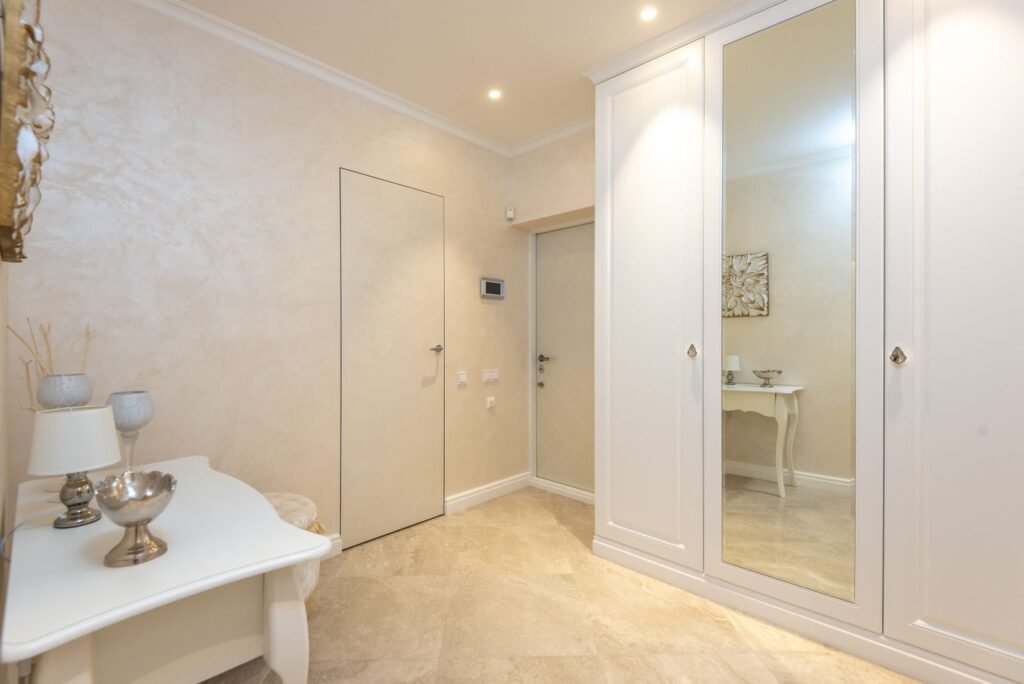
18. Set a Seasonal Swap Routine
Entrances collect seasonal clutter: winter coats, summer hats, holiday decor. A twice-yearly swap keeps the station sized for the season. Store off-season gear in a labeled bin elsewhere, and rotate the entrance pieces, like swapping a heavy mat for a light runner in spring.
The swap takes under an hour and stops the entrance from slowly filling with things nobody uses. Try it: set the swap for the same weekends you change clocks, so it becomes a habit rather than a chore you keep putting off.
Common Mistakes to Avoid
Most entryway ideas fail for the same few reasons, and all of them are fixable without buying new furniture. Check your entrance against this list before you spend anything.
- Blocking the walkway. Deep furniture in a narrow hall turns every arrival into a squeeze. Fix: keep tables under 12 inches deep in narrow halls and leave 36 inches of clear passage.
- Skipping a home for keys and mail. Without a drop zone, small items colonize every surface. Fix: one tray or bowl by the door, emptied weekly.
- Hanging the mirror where it reflects clutter. A mirror doubles whatever it faces, good or bad. Fix: aim it at a window, lamp, or styled wall.
- Overcrowding a small entrance. Too much furniture and decor makes a tiny space feel like storage. Fix: pick one storage piece, one mirror, and one light, then stop.
- Ignoring lighting. A single cold overhead bulb makes even a styled entrance feel unwelcoming. Fix: add a warm lamp or sconce and use 2700K bulbs.
- Using a rug you cannot wash. Entrance rugs take the most dirt in the house. Fix: buy washable rugs and runners, and shake them out weekly.
Entryway Ideas at a Glance
| Idea | Best For | Effort | Key Tip |
|---|---|---|---|
| Daily drop zone | Every home | Low | One tray, emptied weekly |
| Slim console table | Narrow halls | Low | Under 12 inches deep |
| Baskets for shoes | Shoe piles | Low | One basket per person |
| Hooks at two heights | Families | Low | 6–8 inches apart |
| Closed storage | Clutter-prone homes | Medium | Hide it behind doors |
| Statement mirror | Small entrances | Low | Reflect a window or lamp |
| Gallery wall | Bare walls | Medium | Arrange on the floor first |
| Bold door color | Instant impact | Medium | Test on poster board first |
| Peel-and-stick wallpaper | Renters | Low | One wall only |
| Storage bench | Shoe changing | Medium | About 18 inches high |
| Slim bench | Narrow halls | Low | 12–14 inches deep |
| Stool landing spot | Tiny spaces | Low | Light enough to move |
| Layered lighting | Dark entrances | Low | 2700K warm bulbs |
| Console styled in threes | Styled look | Low | Vary heights, leave gaps |
| Rug or runner | High-traffic doors | Low | Washable only |
| Blank-wall station | No-foyer homes | Medium | Under 36 inches wide |
| No-drill setup | Renters | Low | Check weight ratings |
| Seasonal swap | Year-round tidiness | Low | Tie it to clock changes |
Frequently Asked Questions
What should every entryway have?
At minimum, an entryway needs a home for keys, a spot for shoes, hooks for coats, and a light source. A mirror and a rug round out the basics. If space is tight, a peg rail, a basket, a tray, and a leaning mirror cover all four needs in under three feet of wall.
How do I decorate a small entryway?
Keep furniture slim, colors light, and pieces few. A narrow console or floating shelf, one mirror, and one rug can carry the whole look. Avoid deep furniture and heavy decor, and use the wall for hooks and art instead of the floor for extra pieces.
What size console table fits a narrow entryway?
Look for tables 10 to 12 inches deep and leave at least 36 inches of clear walkway after placement. A 36- to 48-inch-wide table suits most halls. Measure the walkway with the table’s footprint taped on the floor before you buy, since published depths often exclude handles and trim.
How do I keep my entryway organized?
Give every daily item one home, and keep the homes few: one tray for keys, one basket per person for shoes, one hook row for coats. Empty the drop zone weekly and run a seasonal swap twice a year. Systems fail when they have too many containers, so fewer, larger homes work better than many small ones.
Should I put a mirror in my entryway?
Yes, in most homes. A mirror bounces light, makes small entrances feel larger, and gives you a last look before leaving. Hang it where it reflects a window or lamp, and size it to the wall: a mirror about two-thirds the width of the console below it usually looks balanced.
What is the best rug for an entryway?
A washable, low-pile rug or runner in a darker pattern is the practical pick. Low pile handles foot traffic and door clearance, washable fabric survives mud season, and a pattern hides dirt between washes. Add a non-slip pad underneath so the rug stays put on smooth floors.
How can renters decorate an entryway without drilling?
Use adhesive hooks rated for your heaviest bag, a leaning mirror, a freestanding bench, and peel-and-stick wallpaper on one wall. A narrow cabinet or console needs no wall fixing at all. Check adhesive ratings and wall texture first, and remove hooks slowly with heat to protect paint.
What color should I paint my entryway?
Light neutrals like warm white, pale greige, or soft sage keep small entrances bright and flexible. If you want a statement, paint the front door a bold color and keep the walls neutral, or wallpaper one wall and leave the rest plain. The entrance should preview your home’s palette, not introduce a competing one.
Final Thoughts
The best entryway is the one that makes leaving and coming home easier. Start with storage: a drop zone, shoe homes, and hooks. Then add the mirror, the light, and one styled surface. These entryway ideas work in that order for a reason, because decor on top of clutter just looks like prettier clutter.
For more inspiration, see Better Homes and Gardens Real Estate’s entryway ideas alongside this guide. Then pick your three biggest annoyances, match them to ideas above, and set the system up this weekend. Your future self, keys in hand and shoes already put away, will be glad you did.

Founder of NestFlavors — sharing tested recipes and honest home ideas, made for real life.