

One well-placed wall mirror does the work of a new window, a bigger room, and a lighting upgrade — for the price of a dinner out.
I used to think a wall mirror was just the thing you checked your teeth in. Then I hung a big round one opposite the only window in my dark hallway, and the hallway genuinely felt twice as wide. Guests asked if I’d repainted. I hadn’t. I’d just added glass.
A wall mirror is the hardest-working piece of decor you can own. It bounces natural light into dark corners, doubles the visual size of small rooms, and fills empty wall space with something that changes all day long as the light shifts. Below are 15 wall mirror ideas — classic shapes, statement styles, and functional picks — plus the exact sizing rules, hanging heights, and renter-friendly tricks I wish someone had told me before I put three nail holes in the wrong spot.
What Is a Wall Mirror?
A wall mirror is a mirror designed to be mounted on a wall, used both as a functional reflective surface and as decor that adds light, depth, and visual interest to a room. Unlike a leaning floor mirror or a vanity tray mirror, a wall mirror hangs at a fixed height and becomes part of the room’s architecture — above a console table, over a fireplace mantel, or as the focal point of an empty wall.
Why You’ll Love a Wall Mirror
- It fakes square footage. A wall mirror visually doubles whatever it faces, so small rooms, narrow hallways, and tiny entryways feel noticeably larger.
- It multiplies your light. Placed opposite or beside a window, a mirror bounces daylight deep into rooms that never get direct sun. It’s the cheapest lighting upgrade there is.
- It finishes a wall in one move. One right-sized mirror above a console or sofa solves the “something’s missing” feeling faster than a whole gallery wall.
- It works in every single room. Entryway, living room, bedroom, bathroom, dining room, hallway — there is no room where a well-chosen wall mirror looks wrong.
- It’s renter-proof decor. Lean it, hang it on two nails, or use removable strips — a wall mirror comes down cleanly when the lease ends.
- It changes all day. Morning light, lamplight, candlelight — a mirror looks different every hour, which keeps a room feeling alive.
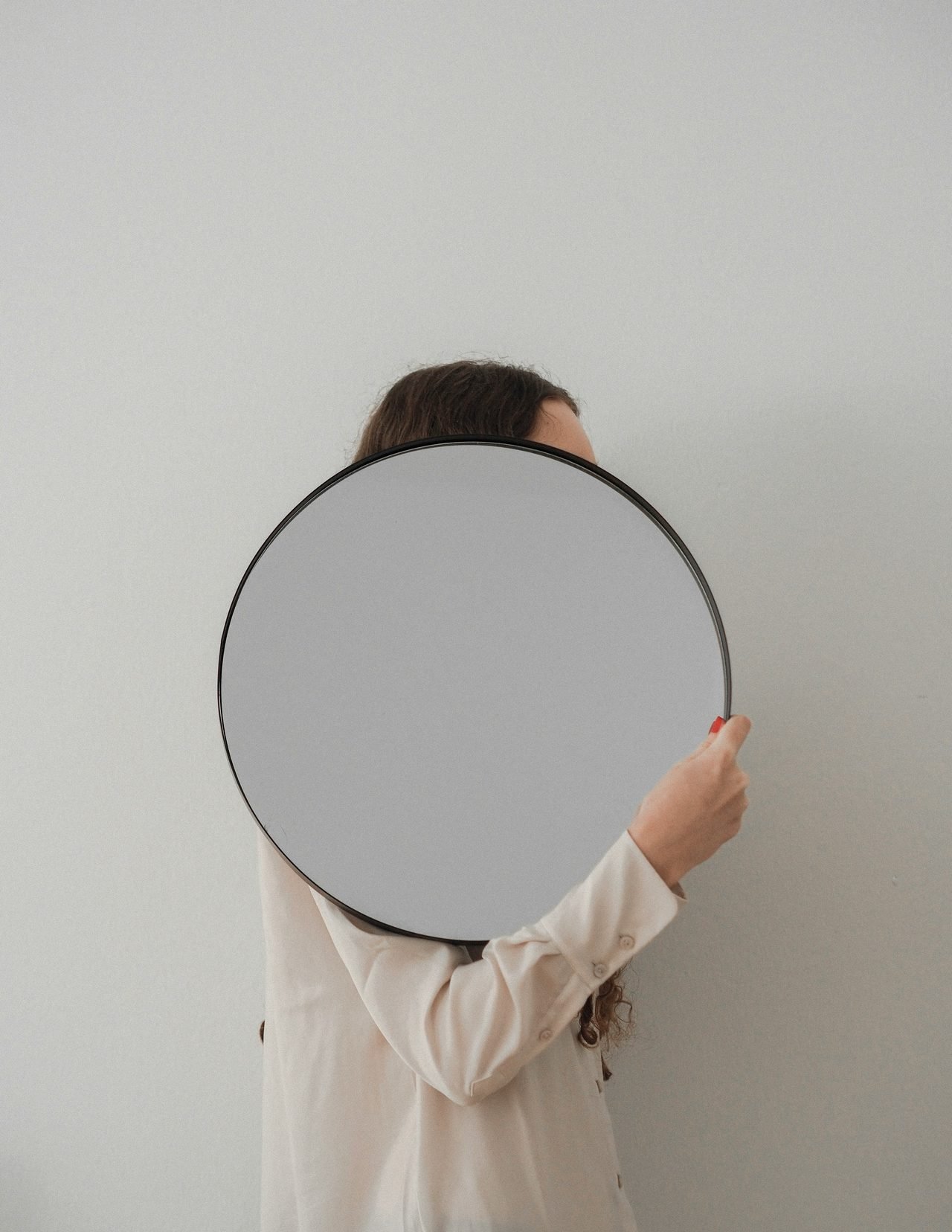
Classic Mirror Shapes That Never Miss
These five shapes are the jeans-and-white-tee of wall mirrors. They work with every style, they never look dated in photos, and if you buy one blind, you won’t regret it.
1. The Round Mirror (The Safest Bet in Decor)
If you only ever buy one wall mirror, make it round. A round mirror softens all the hard rectangles in a room — the sofa, the TV, the doorframes — and it works over literally any piece of furniture. I have a 30-inch round mirror over my entryway console, and it’s the single most complimented thing in my apartment.
Sizing: go 24 to 36 inches in diameter for most spots. Over a console table or dresser, pick a diameter about two-thirds the width of the furniture below it. A 36-inch round over a 54-inch console is the sweet spot.
Hang height: center the mirror at eye level — about 57 to 60 inches from the floor to the mirror’s center. Above furniture, leave 6 to 8 inches between the top of the furniture and the bottom of the mirror.
Try it: a round mirror with a thin matte black or brushed gold frame over a wooden console is the entryway formula that never fails.
2. The Arched Mirror (Soft Architecture, Zero Renovation)
The arch is having a moment, and honestly, it earned it. An arched wall mirror adds the curve of a beautiful doorway without any construction — it brings a soft, elegant line to rooms full of boxy furniture. It reads slightly traditional but plays perfectly with modern minimalism too.
Sizing: 20×30 inches is the classic entryway and bathroom size; go 30×48 or larger if it’s anchoring a living room wall. Arches look best with some breathing room around them, so don’t crowd the sides.
Hang height: same eye-level rule — center around 57 to 60 inches. In a bathroom over a vanity, hang it so the bottom sits 4 to 6 inches above the faucet line, and keep the mirror no wider than the vanity (2 to 4 inches narrower than the vanity width is ideal).
Try it: pair an arched mirror with a small vase of eucalyptus on the console below — the arch plus greenery is a combination designers use on repeat.
3. The Clean Rectangle (Modern, Tailored, Grown-Up)
A rectangular wall mirror hung horizontally is the most architectural choice — it stretches a wall visually and looks intentional over long furniture like sofas, sideboards, and mantels. Hung vertically, the same mirror elongates a narrow hallway or makes a low ceiling feel taller.
Sizing: over a sofa or mantel, choose a width 25% to 50% narrower than the furniture below. For an 84-inch sofa, that means a mirror 42 to 63 inches wide. On a blank wall with nothing below it, you can go bigger — the mirror becomes the art.
Hang height: 6 to 8 inches above the furniture top, center at eye level on empty walls. In dining rooms, hang it a touch lower than you think — seated eye level is what matters there.
Try it: a horizontal rectangle over a fireplace mantel, flanked by two matching sconces, is the most polished living room move I know.
4. The Oval and Pill Mirror (Round’s Interesting Cousin)
Oval mirrors do everything round mirrors do, with a little more elegance — the elongated shape feels slightly more formal and works beautifully in bathrooms and bedrooms. The “pill” or capsule shape (a rectangle with fully rounded ends) is the modern version: soft, minimal, and very current.
Sizing: ovals shine at 24×36 inches over a dresser or vanity. Pill mirrors look best oversized — 30×60 hung vertically in a bedroom corner reads almost like a full-length mirror.
Hang height: follow the eye-level center rule. In a bedroom, a vertical pill mirror hung so its center sits at 60 inches doubles as your outfit check.
Try it: two matching oval mirrors over a double vanity instead of one wide mirror — it’s the tailored, high-end look for the price of two small mirrors.
5. The Frameless Beveled Mirror (Quiet Luxury)
No frame, just glass with a beveled edge that catches the light. Frameless wall mirrors disappear into the wall in the best way — all reflection, no visual weight. They’re perfect for bathrooms, minimalist spaces, and anywhere you want the mirror to feel built-in rather than decorated.
Sizing: frameless mirrors can go bigger without overwhelming a room, since there’s no frame adding visual bulk. A 36×48 frameless over a vanity feels lighter than a framed 30×40.
Hang height: same rules apply. In bathrooms, mount with mirror clips or adhesive — frameless mirrors often ship with their own mounting hardware.
Try it: a frameless beveled mirror in a small bathroom makes the room feel twice as big because there’s no frame line stopping your eye.
Statement Styles With Real Personality
Classics are safe. These five are the ones guests actually ask about. A statement wall mirror works as wall art that happens to reflect — buy it for the shape first and the reflection second.
6. The Sunburst Mirror (Instant Glam)
The sunburst — rays of wood, metal, or rattan radiating around a round center mirror — is pure mid-century glamour. It’s less about seeing yourself and more about the sculpture it makes on the wall. One sunburst over a mantel or in an entryway reads as confident and finished.
Sizing: sunbursts are measured tip to tip, and the rays make them look bigger than they are. A 30 to 40-inch sunburst holds its own on a large wall; go smaller (20 to 24 inches) in a gallery arrangement.
Hang height: center at eye level like any mirror. Sunbursts look best with empty space around them — give the rays at least 6 inches of clearance on every side.
Try it: a gold sunburst mirror on a dark-painted accent wall is the highest-drama, lowest-cost focal point I know.
7. The Irregular and Organic Mirror (Art-First)
Asymmetrical, blob-shaped, “organic” mirrors are the current designer favorite — they read as sculpture first and mirror second. If your style leans modern, Japandi, or boho, an irregular wall mirror adds the one unexpected shape that makes a room feel designed rather than decorated.
Sizing: these are accent pieces, not workhorses. Think 20 to 32 inches at the widest point. They shine in pairs or trios, or solo above a small dresser or bar cart.
Hang height: eye-level center still applies, but don’t overthink it — organic shapes are forgiving because there’s no “straight” to get crooked.
Try it: hang two different-sized organic mirrors slightly off-center above a console instead of one centered piece. The asymmetry is the whole point.
8. The Windowpane Mirror (Architecture You Can Hang)
A mirror divided into panes like a window — usually with a black or bronze metal grid — gives you the look of an extra window without the contractor. It’s the single best wall mirror trick for dark rooms, because your brain reads the grid as “window” and expects light.
Sizing: windowpane mirrors need scale to sell the illusion — 30×40 inches minimum, bigger if the wall allows. Small windowpane mirrors just look like decor; large ones look like architecture.
Hang height: hang it where a real window would go — and ideally where it catches actual light from across the room. Opposite or adjacent to a real window is the power position.
Try it: a large black windowpane mirror in a windowless hallway or home office fakes daylight better than any lamp.
9. The Rattan and Woven Mirror (Warm Texture)
A round mirror wrapped in rattan, seagrass, or woven cane brings warmth and texture that glass alone can’t. It’s the boho-coastal answer to the metal-framed mirror, and it softens modern rooms the way a jute rug softens a hardwood floor.
Sizing: the woven frame adds 3 to 6 inches beyond the glass, so measure the full outside dimension. A 30-inch rattan mirror has about 24 inches of actual mirror — size up if reflection matters to you.
Hang height: standard eye-level rules. These look especially good hung slightly lower in relaxed spaces — a rattan mirror over a low rattan bench in an entryway feels collected, not staged.
Try it: pair a rattan mirror with a plant and a woven basket in the same corner and you have an instant boho vignette for under $150.
10. The Vintage and Antique-Style Mirror (Soul Included)
Gold baroque frames, foxed antique glass, ornate carving — a vintage-style wall mirror brings the patina and character that new furniture can’t fake. Real antique mirrors have softly spotted, smoky glass; new “antique finish” mirrors copy the frame look with perfect glass.
Sizing: ornate frames eat wall space visually, so give them room. One large vintage mirror beats three small ones — a 36-inch gold mirror over a dark dresser is a whole mood.
Hang height: center the glass at eye level, not the frame — with deep ornate frames, the visual center sits higher than you’d guess. Step back and check.
Try it: thrift stores and estate sales are full of heavy gold mirrors for $30 to $80. A $5 can of matte black spray paint turns an ugly gold frame into a modern matte-black one in an afternoon.
Functional Mirrors That Earn Their Keep
Pretty is nice. Pretty and useful is better. These five wall mirror ideas solve real problems — getting dressed, getting out the door, surviving a small bathroom.
11. The Full-Length Leaning Mirror (The Renter’s Best Friend)
Technically it leans rather than hangs, but a full-length mirror against the wall is the most useful mirror most people will ever own — outfit checks, small-room expansion, and light bouncing, all with zero holes in the wall. Lean it at a slight angle in a bedroom corner, entryway, or behind a door.
Sizing: you need at least 48 inches of height to see most of yourself; 60×20 or 65×22 inches is the sweet spot. Narrower than 18 inches wide feels like a sliver.
Placement: lean it where it catches window light, and anchor the top to the wall with a removable adhesive strip or furniture strap if you have kids, pets, or earthquakes. A leaning mirror that slides is a broken mirror.
Try it: lean a full-length mirror in the darkest corner of your bedroom — it throws light into the corner and the corner stops feeling like a cave.
12. The Bathroom Vanity Mirror (Get the Light Right)
The bathroom wall mirror is the one mirror where function beats style — this is where you do makeup, shave, and check your face every morning. Backlit and LED mirrors with anti-fog are worth it here: even, shadowless light on your face changes your whole routine.
Sizing: the mirror should be no wider than the vanity, ideally 2 to 4 inches narrower on each side. For a 48-inch vanity, a 40 to 44-inch mirror (or two 20-inch rounds over a double vanity) is correct.
Hang height: bottom of the mirror 4 to 6 inches above the faucet; the center should sit at the eye level of the people using it — around 60 to 65 inches for most adults.
Try it: if your bathroom has one sad overhead light, a backlit LED mirror is a bigger upgrade than new tile. Look for 3000K to 4000K color temperature — warm enough to be flattering, cool enough to be accurate.
13. The Entryway Mirror (Last Look Before You Leave)
An entryway mirror over a console table is the hardest-working 10 square feet in your home: last-minute outfit check, light for a dark foyer, and a finished first impression for guests. Round or arched mirrors are the classic pick here because they soften the boxy console-shoe-bench lineup.
Sizing: the mirror should be two-thirds to three-quarters the width of the console table below it. For a 48-inch console, a 32 to 36-inch mirror is balanced.
Hang height: 6 to 8 inches above the console surface, center at eye level. If your console holds tall decor (a big vase, stacked books), hang the mirror a touch higher so they don’t collide visually.
Try it: the entryway formula — mirror, one lamp or vase with stems, a small tray for keys, done. Four objects, finished foyer.
14. The Over-Mantel and Over-Sofa Anchor (The Big Statement)
A large wall mirror over a fireplace mantel or sofa is the classic “big empty wall” solution. It anchors the furniture, reflects the room’s best side (usually the windows opposite), and costs a fraction of large-scale art.
Sizing: go big here — this is where small mirrors fail. Aim for two-thirds the width of the mantel or sofa at minimum. Over an 84-inch sofa, that’s a 56-inch-wide mirror. On a tall mantel wall, a vertical rectangle or arch fills the height better than a wide horizontal piece.
Hang height: 6 to 8 inches above the mantel shelf. Over a sofa, the same — and keep the bottom of the mirror above head-bump height for anyone sitting down.
Try it: before you buy, tape the outline on the wall with painter’s tape and live with it for two days. Oversized mirrors feel shocking in the store and perfect at home — the tape test proves it.
15. The Mirror Gallery Wall (Curated, Not Cluttered)
A cluster of small mirrors — mixed shapes, one unifying finish — gives you the collected feel of a gallery wall with the light-bouncing bonus of mirrors. This is the answer for narrow hallways and stairwells where one big mirror won’t fit.
Sizing and spacing: keep 2 to 4 inches between frames, and unify with one element — all brass, all black, or all round. Start with the largest mirror slightly off-center and build outward.
Hang height: treat the whole arrangement as one piece — its center should sit at eye level, 57 to 60 inches.
Try it: mix 3 mirrors with 2 small art prints in matching frames. The art keeps it from feeling like a funhouse, and the mirrors keep the art wall from feeling flat.
The Reflection Audit: What Your Mirror Will Double
Here’s the step almost everyone skips, and it’s the difference between a mirror that transforms a room and one that just hangs there. A wall mirror doubles whatever it faces. Before you hang it, stand where the mirror will go and look at the opposite wall. That’s what you’re about to get twice as much of.
Walk through this 60-second audit:
- Face it toward a window and you double your daylight. This is the single highest-value placement in any home.
- Face it toward a beautiful view, a plant, or a styled shelf and you double the prettiest thing in the room.
- Face it toward clutter, a blank wall, or a dark corner and you double the clutter, the blankness, the darkness. A mirror facing a pile of laundry doesn’t make the room bigger — it makes the laundry bigger.
- Check the sightlines. Sit on the sofa, stand at the stove, lie in bed — what will you actually see in the mirror from the spots where you spend time? That’s the real test, not how it looks standing in front of it.
- Watch for glare. A mirror catching direct afternoon sun can throw a blinding beam across the room. Angle it slightly or choose a spot that gets indirect light.
I learned this the embarrassing way: I hung a gorgeous arched mirror in my dining room, stepped back proudly, and realized it perfectly framed… the trash can. Moved it six feet to face the window instead, and suddenly the whole room glowed.
Renter-Friendly Ways to Hang a Wall Mirror
You don’t need to drill into a landlord’s wall to enjoy a wall mirror. Here’s the full spectrum, from zero-commitment to “two tiny holes”:
- Lean it. Full-length and oversized mirrors look intentional leaning against the wall — it’s a legitimate styling choice, not a compromise. Add a non-slip pad behind the bottom edge.
- Adhesive strips (light mirrors only). Large-format removable strips hold up to 16 pounds per set on smooth, clean walls. Use two sets for anything over 10 pounds, press firmly for 30 seconds, and wait an hour before hanging. They do NOT work on textured, brick, or wallpapered walls.
- Over-the-door hooks. The back of a bedroom or closet door is prime mirror real estate that needs zero wall contact.
- Monkey hooks / Hercules hooks. These push a thin wire through drywall and hold up to 50 pounds with a hole the size of a pinhead — most landlords will never notice, and one dab of spackle erases it.
- French cleats. For heavy mirrors (30+ pounds), a French cleat screwed into studs is the professional choice — it distributes weight across the wall instead of hanging it from one point. If you must drill, this is the safest way.
- Picture rail molding. Some older apartments have it — S-hooks hang mirrors with literally zero wall damage.
The weight rule that matters: drywall alone holds about 20 pounds on a standard nail. Anything heavier needs a stud, a toggle bolt, or a molly bolt — never trust a heavy mirror to a plain nail in drywall. When a mirror falls, it doesn’t just break; 30 pounds of glass is genuinely dangerous.
How to Judge Mirror Quality Before You Buy
All mirrors are not equal, and the difference shows up in your face every morning. Here’s what to check — most of it is on the product listing if you know where to look:
- Glass thickness. 5mm glass is the quality standard for wall mirrors; 3-4mm is fine for small accent pieces but can warp slightly at large sizes. Thicker glass = flatter, truer reflection.
- The distortion test. Stand in front of it and slowly move side to side. If your reflection ripples or wobbles, the glass is thin or poorly backed — pass, no matter how pretty the frame is.
- Silver backing, copper-free. Quality mirrors use a silver nitrate coating with copper-free, anti-rust treatment. Cheap mirrors use aluminum backing that clouds and develops black spots at the edges within a couple of years — especially in bathrooms.
- Safety film on the back. An explosion-proof or shatterproof membrane means broken glass stays in the frame instead of showering the floor. Non-negotiable for households with kids or pets, and smart for any large mirror.
- Hangers that make sense. D-ring hangers (two of them, so the mirror hangs level) beat a single wire for anything over 15 pounds. If the listing shows only a flimsy wire on a 40-inch mirror, keep scrolling.
- Edge sealing. Sealed edges resist the moisture that causes black edge creep in bathrooms. If it’s going in a bathroom, this matters more than the frame style.
Common Mistakes to Avoid
- Hanging it too high. The number one wall mirror mistake. If you have to tilt your chin up to see your face, it’s too high. Center at 57 to 60 inches — gallery eye level — and stop second-guessing.
- Buying too small for the wall. A 20-inch mirror floating alone on a 10-foot wall looks like an afterthought, not decor. When in doubt, go one size bigger than feels safe. The painter’s-tape outline trick never lies.
- Skipping the reflection audit. Hanging a mirror without checking what it faces is how you end up doubling the clutter instead of the light. Always check from the spots where you actually sit and stand.
- Ignoring the two-thirds rule. A mirror that’s way narrower than the furniture below it looks disconnected; one that’s wider looks top-heavy. Two-thirds to three-quarters of the furniture width, every time.
- Trusting heavy mirrors to plain nails. Drywall is not a structural material. A 35-pound mirror on a finishing nail is a accident waiting for a slammed door. Studs, toggle bolts, or molly bolts for anything over 20 pounds.
- Facing it at a blank wall. A mirror that reflects nothing interesting is just an expensive gray rectangle. If there’s no window or pretty view to face, hang art instead — or angle the mirror to catch light from the side.
- Mixing frame finishes randomly. A black mirror, gold sconces, and silver frames in one sightline reads as chaos. Pick one metal (or one wood tone) per room and repeat it. Consistency is what makes it look designed.
- Spraying cleaner directly on the glass. Liquid seeps behind the frame and rots the silver backing from the edges in — that’s where black spots come from. Spray the cloth, not the mirror, and never use ammonia-based cleaners on antique or foxed glass.
Wall Mirror at a Glance
| # | Mirror Style | Best Room | Ideal Size | Budget Range | Key Placement Rule |
|---|---|---|---|---|---|
| 1 | Round | Entryway, living room | 24–36″ diameter | $40–$200 | ⅔ of furniture width below |
| 2 | Arched | Entryway, bathroom | 20×30″ to 30×48″ | $60–$300 | No wider than the vanity |
| 3 | Rectangle | Living room, dining room | 42–63″ over standard sofa | $50–$400 | 25–50% narrower than furniture |
| 4 | Oval / Pill | Bathroom, bedroom | 24×36″ | $50–$250 | Two over a double vanity |
| 5 | Frameless beveled | Bathroom, minimalist rooms | 36×48″ | $40–$150 | Can go bigger — no visual bulk |
| 6 | Sunburst | Mantel, entryway | 30–40″ tip to tip | $50–$250 | 6″ clearance around rays |
| 7 | Irregular / organic | Bedroom, bar cart wall | 20–32″ wide | $60–$300 | Pairs look better than singles |
| 8 | Windowpane | Hallway, dark office | 30×40″+ | $80–$350 | Face it toward real light |
| 9 | Rattan / woven | Boho living room, entry | 30″ overall (24″ glass) | $40–$150 | Size up — frame eats glass |
| 10 | Vintage / antique | Dining room, bedroom | 36″+ for impact | $30–$80 thrifted | Center the glass, not the frame |
| 11 | Full-length leaning | Bedroom, entryway | 60×20″ minimum | $60–$250 | Anchor the top — always |
| 12 | Vanity / LED backlit | Bathroom | 2–4″ narrower than vanity | $80–$400 | Bottom 4–6″ above faucet |
| 13 | Entryway console | Foyer | ⅔–¾ of console width | $40–$200 | 6–8″ above console top |
| 14 | Over-mantel / sofa | Living room | ⅔ of sofa/mantel width | $100–$500 | Tape outline before buying |
| 15 | Gallery cluster | Hallway, stairwell | Mixed smalls, 2–4″ gaps | $60–$200 total | One unifying finish |
FAQ
Are wall mirrors still in style?
Absolutely. Wall mirrors are one of the few decor items that never really leave — while shapes and finishes trend (right now it’s arches, organic shapes, and brushed brass), the mirror itself is timeless. A simple round or rectangular mirror has looked right in every decade for the last hundred years.
What size wall mirror do I need?
Use the two-thirds rule: choose a mirror about two-thirds to three-quarters as wide as the furniture below it. Over a 48-inch console, that’s a 32 to 36-inch mirror. On an empty wall with no furniture, go bigger than feels comfortable — most people buy mirrors that are too small, not too big.
How high should I hang a wall mirror?
Center the mirror at eye level — about 57 to 60 inches from the floor to the mirror’s center. When hanging above furniture, leave 6 to 8 inches between the top of the furniture and the bottom of the mirror. In dining rooms, hang slightly lower since people view it seated.
Do wall mirrors really make a room look bigger?
Yes, but placement is everything. A mirror facing a window or a light, open part of the room visually doubles that space and bounces daylight deeper into the room. A mirror facing a blank wall or clutter does almost nothing — always do the reflection audit before you hang.
Where should I not hang a wall mirror?
Don’t hang one where it reflects clutter, a messy area, or an unflattering angle — it doubles the mess. Many people also avoid mirrors directly facing the bed, which can feel unsettling at night. And skip spots where direct sun will throw harsh glare across the room.
How do I hang a heavy wall mirror on drywall?
Anything over 20 pounds needs more than a nail. Hit a stud with a long screw, or use toggle bolts or molly bolts rated for the weight — these spread the load behind the drywall. For the most secure hang, use a French cleat. Never trust a heavy mirror to a plain nail or a single wire.
Can I hang a wall mirror without drilling? I’m renting.
Yes. Lean full-length mirrors against the wall, use large-format removable adhesive strips for mirrors under 16 pounds on smooth walls, or hang on the back of a door with over-door hooks. Pinhead-size monkey hooks hold up to 50 pounds and leave a nearly invisible hole.
What’s the difference between beveled and frameless mirrors?
They’re related but not the same. Frameless means no frame — just glass mounted with clips or adhesive. Beveled refers to the edge: the glass edge is cut at an angle so it catches light and creates a subtle prism effect. You can have a frameless mirror with a beveled edge (very common), or a framed mirror with a beveled edge inside the frame.
Final Thoughts
A wall mirror is the rare purchase that’s equal parts practical and pretty. Start with the reflection audit, follow the two-thirds rule, hang it at eye level — and don’t buy the tiny one. Your future self, getting ready in a brighter room, will thank you.
Which wall mirror are you hanging first — and more importantly, what will it reflect? Tell me in the comments.

Founder of NestFlavors — sharing tested recipes and honest home ideas, made for real life.