
A glass vase full of flowers is the fastest room makeover I know — no paint, no furniture, no commitment.
I’ve created glass vase floral arrangements for every kind of space: tiny rental kitchens, moody dining rooms, bright entryways that needed exactly one thing. What I’ve learned is that the vase matters as much as the flowers. The wrong shape makes even gorgeous blooms look awkward. The right one makes grocery-store carnations look like a florist did them.
This guide covers the whole glass vase floral world: the classic shapes and which flowers belong in each, arrangement techniques that actually work in clear glass, styling ideas room by room, and the mistakes I see everywhere. Let’s get into it.
A quick note on what “glass vase floral” means: when you search this term, you’ll see two kinds of results. Most are clear glass vases meant for holding flowers — that’s the main focus of this guide. But you’ll also see decorative glass vases with floral designs painted, etched, or cut into the glass itself (hand-painted botanical vases, vintage Bohemian enamel pieces, cut-crystal floral patterns). I cover those too, in their own section below, because they’re a legitimate part of this keyword’s world — just a different purchase.
What Is a Glass Vase Floral?
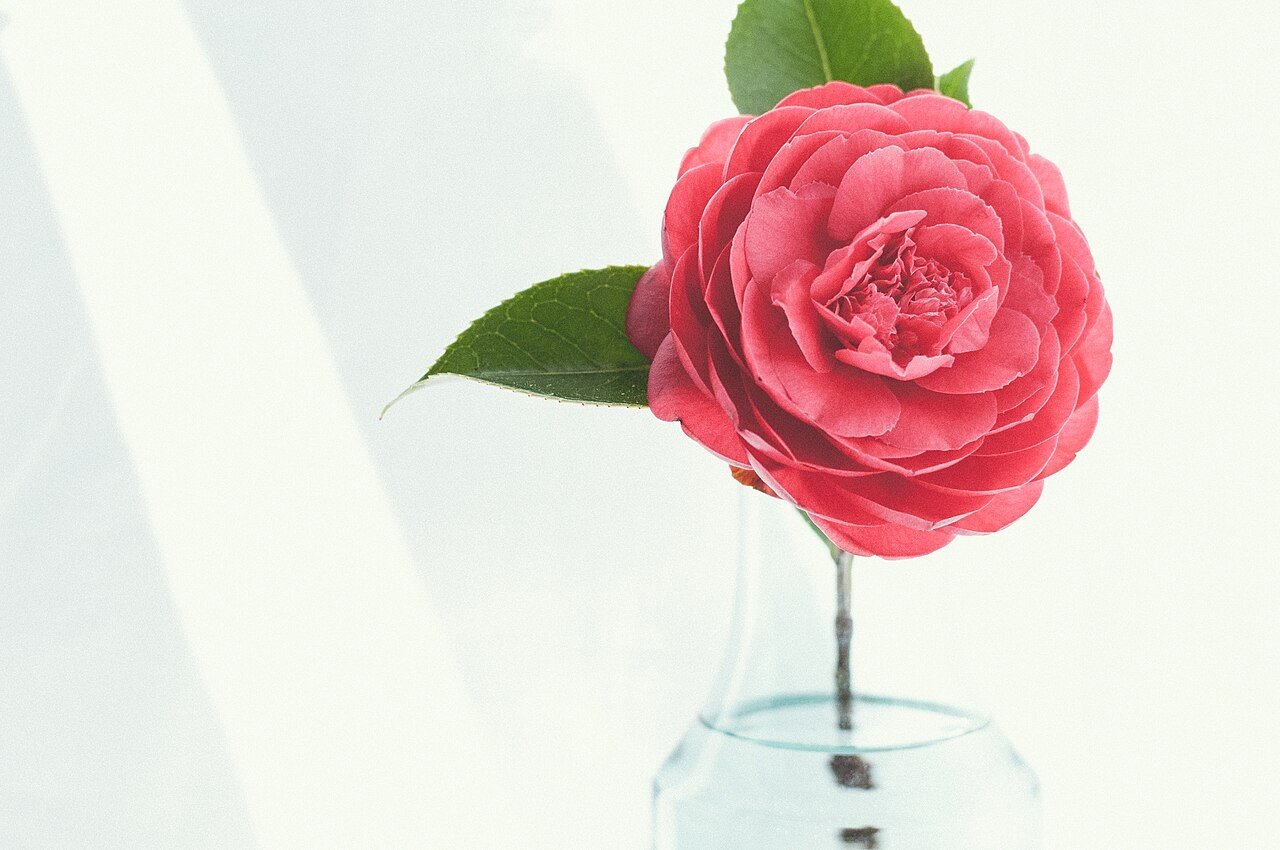
A glass vase floral is any floral arrangement or styling built around a glass vase — from a single stem in a bud vase to a full garden-style arrangement in a clear cylinder. The term covers both the vases themselves (including hand-painted and cut-glass floral designs) and the art of arranging flowers in transparent vessels, where the stems, water, and mechanics are all part of the look.
Why You’ll Love Styling Glass Vases with Florals
- Instant impact, tiny budget. A $6 glass vase and a $10 grocery bouquet can change a whole room.
- Endlessly changeable. Swap the flowers with the seasons and the same vase looks brand new.
- Works in every style. Modern, farmhouse, traditional, boho — clear glass goes with all of it.
- Renter-friendly. No holes, no paint, no landlord negotiations. Just set it down.
- The transparency is the point. You see the stems, the water, the whole living process — it’s honest decor.
- One vase, five rooms. Move it from the kitchen to the bedroom to the bathroom and it works everywhere.
Classic Glass Vase Shapes for Floral Arrangements
The shape of your glass vase decides which flowers will look good in it. This is the part most people skip, and it’s why so many arrangements look “off” without anyone knowing why. Here are the four shapes worth owning.
1. The Cylinder Vase
The workhorse. A straight-sided clear glass cylinder — usually 6 to 12 inches tall — is the most forgiving vase shape for floral arranging. The vertical sides hold stems upright without any mechanics, and the clean lines suit everything from roses to branches.
Why it works: The narrow, uniform opening clusters stems naturally, so even a loose handful of flowers looks intentional. Tall cylinders (10-12 inches) are made for long-stemmed flowers like gladiolus, delphinium, and curly willow branches. Shorter ones (6-8 inches) suit roses, tulips, and mixed grocery bouquets.
Try it: Fill a 10-inch cylinder two-thirds with water, trim 7-9 roses to staggered heights, and let them lean naturally against the glass. It takes three minutes and looks like you tried for thirty.
2. The Bud Vase
Small vase, single flower, big charm. A bud vase is any small glass vessel — usually 4 to 8 inches tall — with a narrow neck designed to hold one to three stems. They come in every shape: tiny cylinders, little trumpet flares, apothecary-style bottles.
Why it works: Bud vases remove all the pressure. You don’t need arranging skills — one perfect stem does the job. They’re also the cheapest way to spread flowers through a house: one grocery bouquet divided across five bud vases styles five surfaces.
Try it: Line up three matching bud vases on a windowsill or bathroom shelf, each with a single stem at a different height — a rose, a sprig of eucalyptus, a ranunculus. Odd numbers and varied heights are the whole trick.
3. The Trumpet Vase
Wide flared mouth, narrow base — the trumpet (or flared) vase is the drama shape. The opening fans outward, which lets flowers splay into a full, generous dome. This is the shape for hydrangeas, peonies, garden roses, and any bloom with a big, lush head.
Why it works: Heavy-headed flowers need room to spread. In a narrow vase they bunch up and crush each other; in a trumpet they open into the shape they were meant to be. The flare also means you need fewer stems to look full — 5-7 hydrangea stems fill a trumpet that would need 15 roses in a cylinder.
Try it: Place 5 white hydrangea stems in a trumpet vase, trimmed so the blooms sit just above the rim. Tuck in 3 stems of seeded eucalyptus around the edges. Done — that’s a wedding-centerpiece look for under $25.
4. The Fishbowl Vase
Round, squat, wide-mouthed — the fishbowl is the casual shape. It’s perfect for short, full arrangements: floating flower heads, low mounds of blooms, succulents, or a tangle of greenery. The wide opening means stems don’t need to stand tall, which makes it the easiest vase for beginners.
Why it works: Anything with a short stem works here. The bowl shape cradles the flowers so they can’t flop, and the low profile keeps sightlines open across a table — ideal for dinner parties where people actually need to see each other.
Try it: Fill a fishbowl halfway with water and float 5-7 gardenia or rose heads on the surface with a few camellia leaves tucked between them. It lasts for days and looks impossibly elegant for the effort involved.
Floral Styles That Shine in Clear Glass
Once you have the right vase shape, the next question is what to put in it. These four glass vase floral styles are the ones I reach for again and again — they all play to glass’s strengths.
5. The Single-Stem Minimal Look
One stem. One vase. Nothing else. This is the most modern way to style a glass vase floral, and it works because clear glass turns a single flower into a sculpture — you see the stem, the leaves, the water line, the whole living thing.
Why it works: Restraint reads as confidence. A single king protea, an orchid stem, or one perfect peony in a tall cylinder looks deliberate in a way that a crowded arrangement sometimes doesn’t. It also lasts longer — one stem means less competition for water.
Try it: Put a single bird of paradise stem in a tall, narrow cylinder on a console table with nothing else around it. Give it space and it becomes art.
6. The Lush Garden Mix
The opposite of minimal: a generous, just-gathered mix of blooms, greenery, and texture. Think roses, ranunculus, lisianthus, astilbe, and trailing greenery all together — the kind of arrangement that looks like someone raided a cottage garden.
Why it works: Clear glass keeps a big mix from looking heavy. In an opaque vase, a dense arrangement can feel like a blob; in glass, you see the architecture of the stems and the whole thing breathes. The transparency adds lightness that balances the abundance.
Try it: Start with greenery (eucalyptus or ruscus) to build the shape, add your largest blooms (roses or peonies) at three different heights, then fill gaps with small textured flowers like waxflower or astilbe. Step back, turn the vase, and fill any holes you see.
7. Dried Flowers and Pampas Grass
No water needed. Dried florals — pampas grass, dried lavender, bunny tails, preserved eucalyptus, dried palm fronds — are the lowest-maintenance glass vase floral there is, and they last for months or even years.
Why it works: Glass and dried florals are a natural pair because there’s no water to go cloudy and no stems rotting below the surface. Tall dried grasses in a floor-standing glass cylinder make a stunning corner statement, and small dried bundles in bud vases are perfect for shelves.
Try it: Put 5-7 stems of pampas grass in a tall glass cylinder in an empty corner. Fluff the plumes by gently shaking them upside down first. Keep it out of direct sun so the color doesn’t fade — and away from radiators, since dried grasses are flammable.
8. The Monochrome Statement
One flower, one color, many stems. A glass vase packed with 15 white tulips, or 20 red roses, or a cloud of pink cherry blossom branches — the single-color mass is one of the most striking looks in floral styling.
Why it works: Color repetition is powerful. Twenty stems of the same bloom in the same shade create a visual punch that a mixed arrangement can’t match, and clear glass keeps it crisp and modern instead of fussy. This is the florist’s secret for event decor.
Try it: Buy two bunches of the same tulips (about 20 stems), trim them to the same height, and pack them tightly into a medium cylinder. Tulips keep growing in the vase and will arc outward over a few days — that’s part of the charm, not a flaw.
Styling and Placement Ideas for Every Room
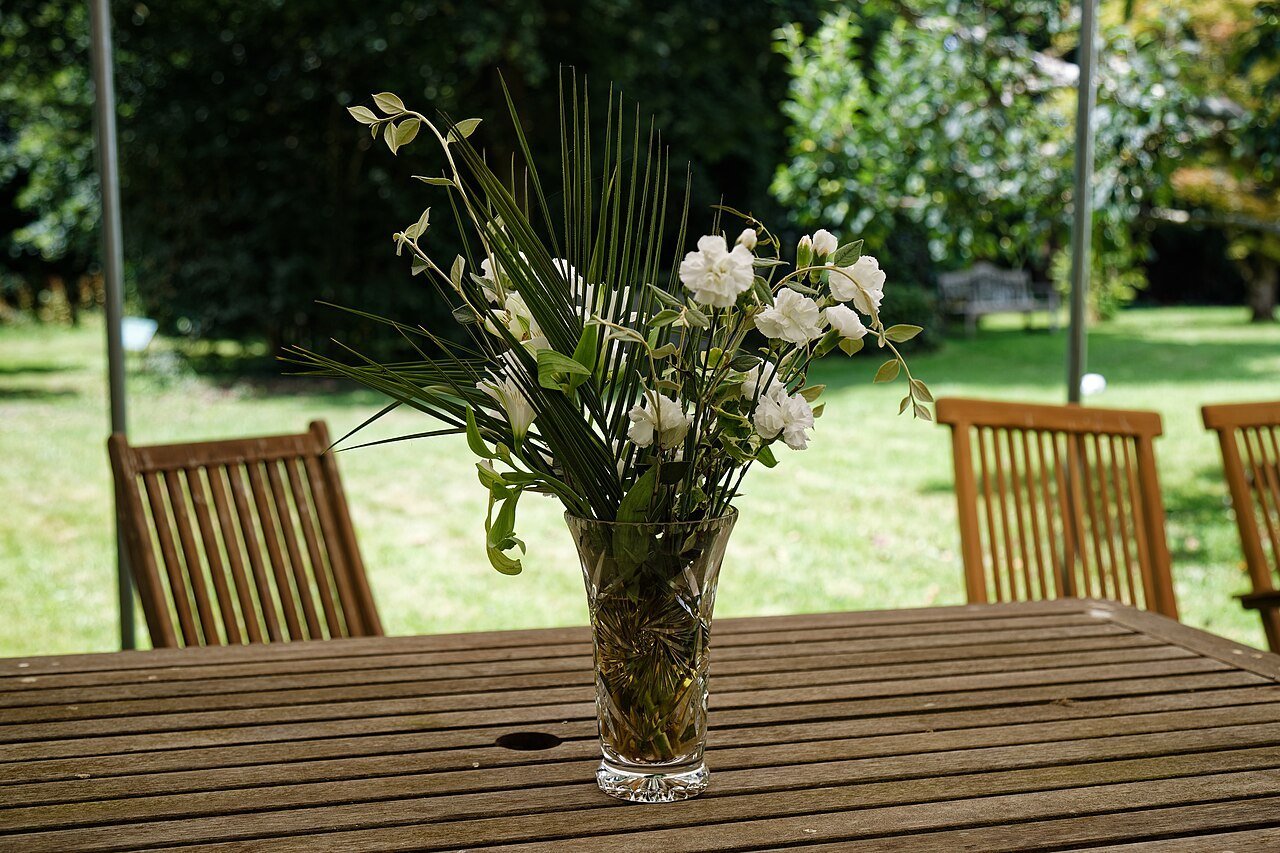
The flowers are only half the story. Where you put the vase — and what you put around it — decides whether it looks styled or just… placed there. These are my four most-used glass vase floral placements.
9. The Dining Table Centerpiece
The classic. A glass vase floral on the dining table anchors the whole room, but there’s one rule that matters more than any other: keep it low or keep it tall — never in the eyeline. A centerpiece that blocks conversation is a failed centerpiece.
Why it works: Glass is ideal for table centerpieces because it’s visually light. A big ceramic vase can feel like a wall across the table; a clear glass vase with flowers lets light and sightlines pass through. For everyday dining, a low fishbowl or trio of bud vases is perfect. For dinner parties, go tall and dramatic with branches.
Try it: For a dinner party, put tall branches (cherry blossom, curly willow, or forsythia) in a large cylinder. The height adds drama without blocking faces, since branches are airy. For everyday, keep a small bud vase trio on the table and refresh one stem a week.
10. The Entryway Welcome
The entryway is the first thing guests see, so it’s the highest-impact spot in the house for a glass vase floral. A console table with a vase of fresh flowers tells people this home is cared for before they’ve taken off their shoes.
Why it works: Entryways are usually narrow and need vertical interest. A medium-to-tall glass vase with flowers draws the eye up and makes a small space feel considered. Clear glass is practical here too — it won’t visually crowd a tight hallway the way a solid vase would.
Try it: Style a 10-inch cylinder on your entryway console with 5-7 stems of something architectural — gladiolus, snapdragons, or tall alstroemeria. Add a small tray and a candle beside it. That’s a complete entryway vignette in under five minutes.
11. The Bathroom Refresh
Bathrooms are the most underrated spot for flowers. A small glass vase with a single stem on the vanity or the back of the toilet makes a bathroom feel like a spa, and the humidity actually helps fresh flowers last longer.
Why it works: Bathrooms are small, so a little goes a long way. A bud vase with one rose or a sprig of eucalyptus is enough. Eucalyptus is the bathroom champion — the steam releases its scent, so your shower smells like a spa every morning.
Try it: Tie a small bundle of fresh eucalyptus to your showerhead with twine (not in a vase at all) and put a bud vase with a single bloom on the vanity. Two floral touches, zero counter space sacrificed.
12. The Shelf Trio
Bookshelves and open shelving come alive with small glass vases tucked between books and objects. A trio of bud vases at different heights, each with a different stem, adds life to a shelf without overwhelming it.
Why it works: Shelves need the organic shapes of flowers to balance all the rectangles of books and boxes. Small glass vases are perfect because they add greenery without visual weight — the shelf still looks airy. Vary the heights and the contents for a collected, not decorated, feel.
Try it: On one shelf, place a 6-inch bud vase with a ranunculus, a 4-inch one with a sprig of fern, and a tiny 3-inch bottle with a single daisy. Cluster them at one end of the shelf, not spread out — grouping reads as intentional.
The Vase-Shape-to-Flower Matching System
Here’s the content gap I promised: nobody in the search results teaches this as a system. Most guides list vase shapes and list flowers separately. But the magic is in the pairing. This is the framework I use every time I buy flowers for a glass vase floral arrangement.
The rule is simple: match the flower’s natural growth habit to the vase’s mouth.
- Narrow-mouth vases (bud vases, bottle necks) → flowers with strong straight stems that stand on their own: roses, tulips, ranunculus, single orchid stems, calla lilies. The narrow neck does the arranging for you.
- Medium-mouth vases (cylinders, 3-4 inch openings) → mixed bouquets and medium-headed blooms: roses, carnations, alstroemeria, lisianthus, stock. The opening is wide enough for variety but snug enough to hold stems upright.
- Wide-mouth vases (trumpets, fishbowls, 5+ inch openings) → big-headed or sprawling flowers that need room: hydrangeas, peonies, garden roses, dahlias, sunflowers. Wide mouths let heavy blooms spread instead of crushing.
- Tall narrow vases (10+ inches, slim profile) → linear, architectural flowers: gladiolus, delphinium, snapdragons, branches, pampas grass. Height-matched stems look intentional; short flowers in a tall vase look lost.
- Low wide vases (fishbowls, compotes) → short-stemmed or floating flowers: rose heads, gardenias, camellias, succulents, short zinnias. Anything you’d have to cut down to fit a tall vase belongs here.
The stem-length formula: trim your flowers so the total arrangement is 1.5 to 2 times the height of the vase. A 10-inch vase wants a 15 to 20-inch arrangement. Shorter looks stubby; taller looks unstable (and topples over — I’ve learned this the expensive way).
How to Make Stems Look Good in Clear Glass
This is the question nobody answers about glass vase floral styling: in a clear vase, you see the stems. Ugly brown stems, cloudy water, and rotting leaves below the waterline can ruin the whole look. Here’s how to keep the inside of the glass as pretty as the flowers.
Strip every leaf below the waterline. Leaves in water rot within days, and rotting leaves are what turn water cloudy and slimy. Strip the lower third of every stem before it goes in the vase. This single step doubles the life of most arrangements.
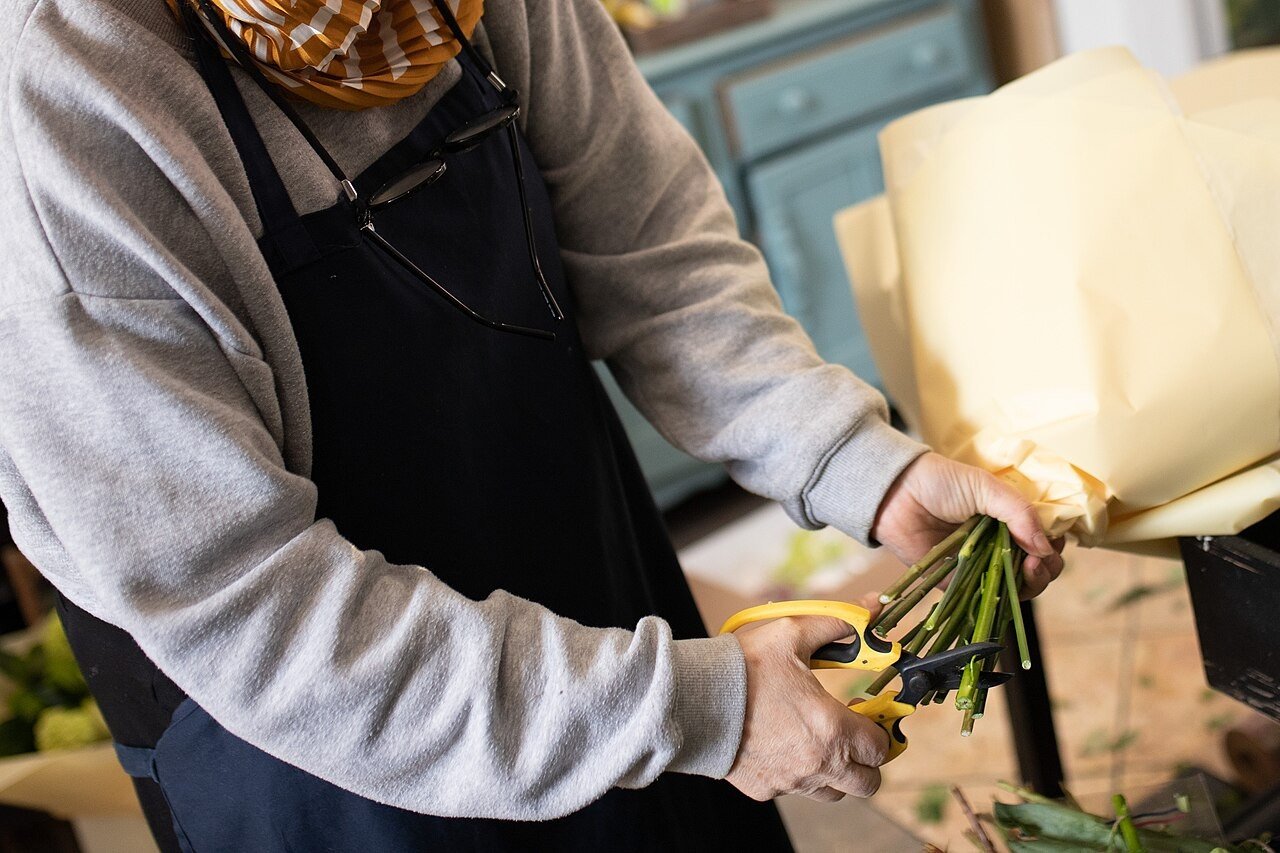
Cut stems at a 45-degree angle. An angled cut exposes more surface area for water uptake than a flat cut, and it keeps the stem from sitting flat against the bottom of the vase and sealing itself off. Re-trim every few days when you change the water.
Use lukewarm water, not cold. Most flowers absorb lukewarm water faster than cold. The exception is tulips and other bulb flowers, which prefer cold water. If your bouquet came with a flower-food packet, use it — it feeds the blooms and has a biocide that keeps water clear. Curious what’s inside those packets? This cut flowers guide explains how preservatives extend vase life.
Make the stems part of the design. Instead of hiding stems, style them: wrap the bouquet with twine or ribbon at the waterline, add a layer of pebbles or glass beads at the bottom of the vase, or float lemon or lime slices against the glass (they look gorgeous and keep water fresh a bit longer). A flower frog — a small metal pin holder that sits at the bottom — keeps stems exactly where you want them in wide-mouth vases.
Change the water every 2-3 days. No way around this one. Fresh water is the difference between a week of beautiful flowers and four days of sad ones. When you change it, rinse the vase, re-trim the stems, and remove any spent blooms.
Pick your mechanics: frog, tape grid, or pebbles. For wide-mouth glass vases where stems flop, you need something to hold them. A flower frog (a small weighted metal base with pins) is the professional choice — drop it in the bottom and impale each stem. A tape grid (strips of clear floral tape across the mouth in a grid) is the cheap DIY version and works just as well. A 2-inch layer of pebbles, marbles, or glass beads looks the prettiest in clear glass and doubles as decor. I use pebbles for everyday arrangements and the frog when I’m doing something precise.
Mind the waterline as a design element. In clear glass, the waterline is visible, so treat it deliberately. Fill to about two-thirds for most arrangements — high enough to feed the stems, low enough that the water doesn’t dominate. If your stems are short, don’t fill the vase to the top to compensate; instead add pebbles to raise the effective floor, or switch to a shorter vase.
One Vase, Five Looks: The Budget Styling Rotation
Here’s another gap none of the product-page competitors touch: you don’t need twelve vases to enjoy endless glass vase floral variety. One good medium glass cylinder can produce five completely different looks across a month if you rotate what goes in it and where it sits. This is the system I use in my own home.
Look 1 — Fresh market bouquet (week 1). Buy whatever looks good at the grocery store, trim to the 1.5x rule, and put the vase on the dining table. Total cost: one bouquet.
Look 2 — Single variety, single color (week 2). When the first bouquet fades, buy one bunch of a single flower — tulips, carnations, whatever’s cheap — and pack them in tight for the monochrome statement. Move the vase to the entryway console for a fresh context.
Look 3 — Foraged branches (week 3). Skip the flower shop entirely. Cut branches from your yard or a park (where allowed): flowering quince in spring, eucalyptus anytime, bare curly willow in winter. Branches last 2-3 weeks and cost nothing. Put the vase on a sideboard or mantel where the height shows.
Look 4 — Dried and done (week 4). Rinse the vase, let it dry completely, and fill it with dried grasses or preserved stems. No water, no maintenance. This look can stay up for months — move it to a bedroom corner or bathroom shelf.
Look 5 — The empty sculptural moment. Some glass vases are beautiful enough to stand alone. A hand-blown or textured glass vase with nothing in it, placed where light hits it, is a legitimate styling choice — especially in minimal or modern rooms. Don’t be afraid of the empty vase.
The economics: one $8-15 glass cylinder plus roughly $30-40 of flowers across a month gives you five distinct styled looks in multiple rooms. Compare that to buying five different decor objects, and the glass vase floral wins on every metric: cost, flexibility, and the fact that it’s alive.
Starter shopping list if you’re starting from zero: one 10-inch clear glass cylinder ($8-12), three small bud vases in mixed heights ($10-15 for the set), a pair of flower scissors or sharp kitchen shears ($10), one packet of flower food (usually free with bouquets), and a small flower frog ($8) for wide-mouth vases. That’s everything you need to execute every idea in this guide, for under $50 total. Buy the vases once; the flowers are the only recurring cost, and even those are optional half the time thanks to branches and dried stems.
Decorative Floral Glass Vases: The Other Meaning
If your search for “glass vase floral” turned up hand-painted wisteria vases, antique Bohemian enamel pieces, or cut-crystal vases with floral patterns — that’s the other half of the glass vase floral keyword. These are glass vases where the floral design is part of the vase itself, and they play by slightly different rules.
The three types you’ll see: hand-painted glass vases (botanical artwork fired onto clear glass — each piece is unique), enamel-decorated vintage glass (Bohemian and Czech pieces from the early 1900s with raised floral enamel, now collectibles), and cut or etched crystal (floral sprays cut into lead crystal, like American Brilliant Period pieces). New hand-painted vases run $30-120; genuine antiques start in the hundreds.
How to style them: a decorated vase is already busy, so keep the flowers simple. Single-color blooms or plain greenery let the vase’s artwork show. A hand-painted floral vase stuffed with a mixed bouquet looks cluttered — the patterns fight each other. And many decorative vases look best empty, styled as sculptural objects on a shelf or mantel.
What to check before buying: hold it up to light and look for cracks, especially around the base and rim. For vintage enamel pieces, check that the enamel isn’t flaking. Hand-painted vases should be hand-wash only — dishwashers destroy the finish. If a deal on an “antique” seems too good, it probably is; reproductions of Bohemian enamel glass are everywhere.
Try it: style a hand-painted floral vase empty on a bookshelf between books, or with three stems of white stock — one color, quiet flowers, loud vase.
Common Mistakes to Avoid
Avoid these seven mistakes and your glass vase floral arrangements will look better and last longer.
- Choosing the vase after buying the flowers. Buy the vase first, or at least know your vase’s shape before you shop. Bringing home long-stemmed gladiolus for a short fishbowl is a recipe for frustration.
- Leaving leaves below the waterline. This is the number one cause of cloudy water and short-lived arrangements. Strip them every time.
- Cutting all stems to the same height. Uniform height looks stiff and artificial. Vary stem lengths by 1-2 inches, tallest in the middle, shorter around the edges, for a natural dome shape.
- Overfilling the vase. More flowers is not always better. A vase crammed so full the stems can’t breathe looks crowded, not lush. If you can’t see any glass between the stems at the neck, take a few out.
- Putting the arrangement in direct sun or next to fruit. Heat shortens flower life dramatically, and ripening fruit releases ethylene gas that makes blooms fade faster. Keep arrangements in bright indirect light, away from the fruit bowl and heating vents.
- Using a vase that’s the wrong scale for the spot. A tiny bud vase disappears on a big dining table; a huge floor vase overwhelms a small nightstand. Match the vase to the surface: the arrangement should be roughly one-third to one-half the width of the surface it sits on.
- Forgetting the water level. In clear glass, a half-empty vase looks neglected. Top up the water every day or two — flowers drink more than you think, especially in the first 48 hours.
Glass Vase Floral at a Glance
| # | Idea | Best Vase Shape | Best Flowers | Difficulty |
|---|---|---|---|---|
| 1 | The Cylinder Vase | Straight cylinder, 6-12″ | Roses, tulips, mixed bouquets | Easy |
| 2 | The Bud Vase | Small, narrow neck, 4-8″ | Single rose, ranunculus, orchid stem | Easiest |
| 3 | The Trumpet Vase | Flared mouth | Hydrangeas, peonies, garden roses | Easy |
| 4 | The Fishbowl Vase | Round, low, wide mouth | Floating heads, short zinnias, succulents | Easiest |
| 5 | Single-Stem Minimal | Tall narrow cylinder | Protea, orchid, bird of paradise | Easiest |
| 6 | Lush Garden Mix | Medium cylinder | Roses, ranunculus, lisianthus + greenery | Medium |
| 7 | Dried Flowers & Pampas | Tall cylinder or floor vase | Pampas grass, dried lavender, bunny tails | Easiest |
| 8 | Monochrome Statement | Medium cylinder | 15-20 stems, one variety, one color | Easy |
| 9 | Dining Table Centerpiece | Low fishbowl or tall cylinder | Branches, low mixed arrangement | Easy |
| 10 | Entryway Welcome | Medium-tall cylinder or trumpet | Gladiolus, snapdragons, alstroemeria | Easy |
| 11 | Bathroom Refresh | Bud vase | Single rose, eucalyptus sprig | Easiest |
| 12 | The Shelf Trio | 3 bud vases, varied heights | Ranunculus, fern, daisy | Easiest |
FAQ
What flowers look best in a glass vase floral arrangement?
Roses, tulips, hydrangeas, peonies, and ranunculus are the most reliable choices — they have strong stems, beautiful blooms, and they suit the most common glass vase shapes. For a foolproof option, choose one variety in a single color and let the glass keep it modern.
How do you keep water clear in a glass vase floral display?
Strip all leaves below the waterline, use the flower-food packet if one came with your bouquet, and change the water every 2-3 days. Cloudy water is almost always caused by rotting leaves or bacteria — both are preventable with clean stems and fresh water.
What is the rule for flower height in a vase?
Trim your arrangement so its total height is 1.5 to 2 times the height of the vase. A 10-inch vase wants a 15 to 20-inch arrangement. This proportion looks balanced to the eye and keeps the arrangement physically stable.
Can you put dried flowers in a glass vase?
Absolutely — glass and dried flowers are a perfect pair since there’s no water to go cloudy. Pampas grass, dried lavender, bunny tails, and preserved eucalyptus all look beautiful in clear glass. Keep dried arrangements out of direct sun to prevent fading.
How many flowers should you put in a vase?
For a medium cylinder vase (8-10 inches), 7-12 stems make a full arrangement; for a lush look, 15-20. Bud vases need just 1-3 stems. The real test: if you can’t see any glass between the stems at the neck, it’s overfilled — remove a few.
What’s the difference between a glass vase and a floral vase?
There’s no real difference — “floral vase” just means a vase intended for flowers. The search term “glass vase floral” covers both decorative glass vases with floral designs (hand-painted, cut, or etched) and plain clear glass vases used for floral arrangements.
How do you arrange flowers in a wide-mouth glass vase?
Wide mouths are the hardest because stems flop. Use a flower frog (metal pin holder) at the bottom, or create a grid across the mouth with clear floral tape, or crisscross the stems as you add them so they lock each other in place. Start with greenery to build structure first.
Where should you put a glass vase with flowers?
Anywhere with indirect light and stable temperature: dining tables, entryway consoles, nightstands, bathroom vanities, and shelves all work. Avoid direct sun (fades blooms), heating vents (dries them out), and spots next to ripening fruit (ethylene gas shortens flower life).
Final Thoughts
A glass vase floral is the rare decor move that’s cheap, fast, renter-friendly, and genuinely joyful. Start with one good cylinder vase and a grocery bouquet, learn the stem-length rule, and you’ll never have a bare table again.
Which idea are you trying first? My money’s on the shelf trio — three bud vases, three stems, five minutes, and suddenly your bookshelf looks styled.

Founder of NestFlavors — sharing tested recipes and honest home ideas, made for real life.