
I used to think I knew how to style a coffee table. I would set down a candle, stack two books, add a small plant, and step back expecting the room to look finished. It never did. The table either looked bare, like I had forgotten it, or it looked crowded, like everything I owned had drifted to the middle of the room. My living room felt close, but the table kept letting it down.
The change came when I stopped treating the table as a display shelf and started treating it as a working surface that also needs to look good. A coffee table holds drinks, books, remotes, and reading glasses. It also sits in the middle of the room, so everyone sees it. Learning how to style a coffee table well means holding both jobs at once: useful enough for daily life, calm enough to look at.
This guide walks through the exact method I use now, from clearing the table to placing the last item. You do not need to buy anything new to start. If you have ever searched for how to style a coffee table and ended up more confused than before, you are not alone. Most advice shows a finished photo and skips the choices behind it. Most of the time, the pieces you already own will work once they have a clear job and a clear spot.
Clear the Table and Decide What It Is For
When you learn how to style a coffee table, start with an empty surface. Take everything off, wipe it down, and look at the room from the sofa. Notice the colors already in the room, the height of the sofa seat, and how much walking space sits around the table. That quick look tells you more than any shopping trip will.
Next, answer one honest question: what does this table do in your house? In my home, it holds coffee in the morning, a book in the evening, and board games on weekends. In a house with small kids, it might hold coloring books and snack cups. In a formal sitting room, it might hold almost nothing. There is no wrong answer, but the answer changes what belongs on top. That is the first real lesson in how to style a coffee table for daily life rather than for a photo. A table that works hard needs open space. A table that mostly gets looked at can carry more decoration.
Write down, or just keep in mind, the three or four things that must live on the table every day. Remotes, coasters, a candle, and a book are a normal list. Everything else has to earn its place. If an item has no job and you do not love looking at it, it belongs somewhere else. This one rule clears half the clutter I see in living rooms, including my own before I learned it.
Also think about who uses the room. If you have toddlers, skip sharp corners at eye level, heavy stone objects on high stacks, and anything that breaks into small pieces. If you have a dog with a wagging tail, low candles and tall thin vases will not last long. Good styling fits the household, not just the photo.
The Step-by-Step Method
This is how to style a coffee table in a way that holds up after the first day. Work in order, and stop when the table looks done rather than adding one more thing because the surface still has room.
Step 1: Start With a Tray or a Base
A tray is the easiest way to make a group of small things look planned. It gathers the items, protects the table surface, and gives you one piece to lift when you need the whole table for a puzzle or a meal. Pick a tray that leaves open space around it. On a rectangular table, a long tray works well. On a round table, a round tray echoes the shape. If you do not have a tray, a large book or a flat basket can do the same job.
The tray also sets a boundary. Items inside it belong to the display. Items outside it are the working part of the table, like coasters and the remote. That split keeps the table from turning into a single crowded island. A base-first approach is the core of how to style a coffee table that stays tidy after the first day.
Step 2: Add Height in One Place
Flat tables look flat. You need one taller item to pull the eye up, but only one main tall piece. A vase with a few stems, a tall candle holder, or a small stack of books topped with a short object all work. Keep the tall piece off to one side rather than dead center, so people can still see each other across the table and talk without leaning around a vase.
Height should stay below eye level when you sit down. If you have to duck to see the person across from you, the piece is too tall. I learned this the hard way with a branch arrangement I loved and nobody could talk past.
Step 3: Stack Books With a Purpose
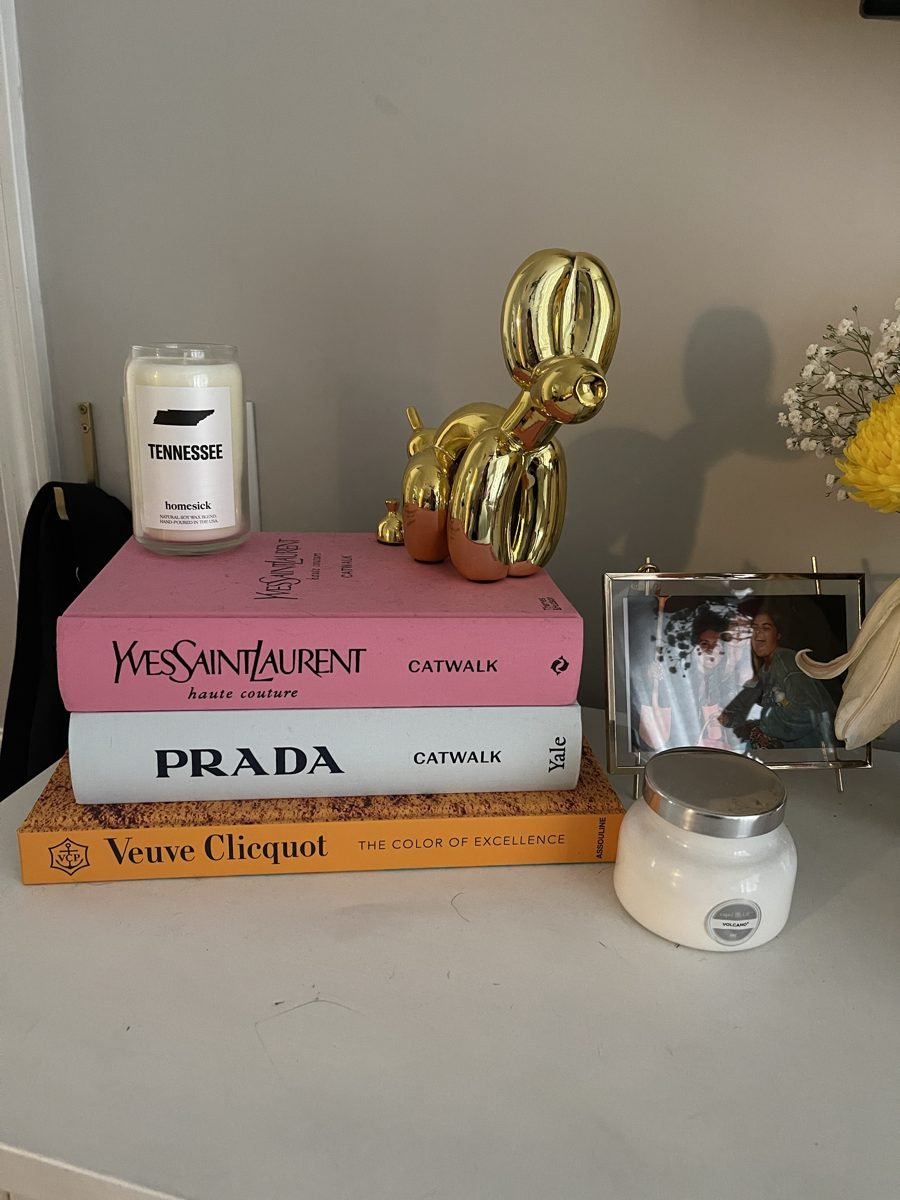
Books are the workhorse of coffee table styling. Stack two or three with the largest on the bottom, and turn them slightly so the stack does not look like a brick. Pick books you actually like, with covers that fit your room colors. A stack of books also gives smaller items a base, so a candle or a small bowl sits higher and reads as part of the group instead of getting lost.
Leave the top book free of clutter if you want the stack to look calm. One small object on top is plenty. Two or three small objects on top of a book stack start to look like a pile, and the books stop looking like books.
Step 4: Add Something Living or Natural
A plant, a bowl of lemons, a small wooden bowl, or a few fresh stems softens the hard lines of a table. You do not need a large arrangement. A single potted plant or a short vase of grocery store flowers does the job. If real plants do not survive in your house, a good-looking faux stem is better than a dead plant, but keep it simple and dust it now and then.
Natural texture matters here. Wood, stone, woven fibers, and leaves break up glass and lacquer. If your table is glass, a wooden tray or a woven basket underneath adds warmth. If your table is dark wood, a light ceramic vase keeps the top from looking heavy.
Step 5: Leave Open Space on Purpose
This is the step most people skip, and it is the one that makes the biggest difference. Anyone learning how to style a coffee table should practice leaving space before adding one more pretty thing. Leave at least a third of the table surface clear. That open space is where cups go, where you set down a book, and where the table can breathe. A table covered edge to edge looks busy even when every item on it is pretty.
To test it, set down a mug and a book where you would normally use them. If you have to move three things first, the table is overstyled. Take one group off and live with it for a day. Most of the time, you will not miss what you removed.
Step 6: Repeat One Color or Material
A styled table looks calm when something repeats. That can be the wood tone of the tray matching the table legs, black frames matching a black lamp base, or a cream candle matching cream sofa pillows. You do not need a perfect match. You need a sense that the table belongs to the room rather than being a separate collection of unrelated objects.
Pick one repeat and stop there. If everything matches exactly, the table looks like a store display. If nothing repeats, it looks random. One or two links to the room are enough.
Step 7: Step Back, Sit Down, and Edit
Stand in the doorway and look at the table as a guest would. Then sit on the sofa and look at it as you will every day. Check three things: can you see across it, can you reach a coaster without moving anything, and does one item draw your eye first in a good way? Remove the weakest item if the answer to any of those is no.
Live with the result for a week before changing it again. That final check is a quiet part of how to style a coffee table well, since use over a week shows what the first-day view hides. Tables settle. You will notice which items you actually use and which ones only collect dust, and that tells you what to keep.
How the Method Changes by Table Shape
Knowing how to style a coffee table changes a little with the shape you own, because each shape gives you a different surface to work with.
A rectangular table suits zones. Put a tray at one end, a book stack at the other, and leave the middle open. This zone layout is my default answer when friends ask how to style a coffee table in a long living room. That layout reads as balanced without being stiff, and it leaves room for snacks when friends come over.
A round table suits one central group. A round tray with a candle and a small plant, plus one short stack of books beside it, fills the circle without fighting it. Avoid lining items up in a row on a round table, since rows fight the curve and look awkward.
A square table suits corners. Place one group slightly off center and leave the rest open, or put a small group in each of two opposite corners for a calm, even look. Four groups, one per corner, is too many and turns the table into a grid.
An ottoman used as a coffee table needs a hard tray before anything else, since soft tops wobble. The tray holds the books and the candle steady, and you can lift the whole tray off when the ottoman needs to be a footrest again.
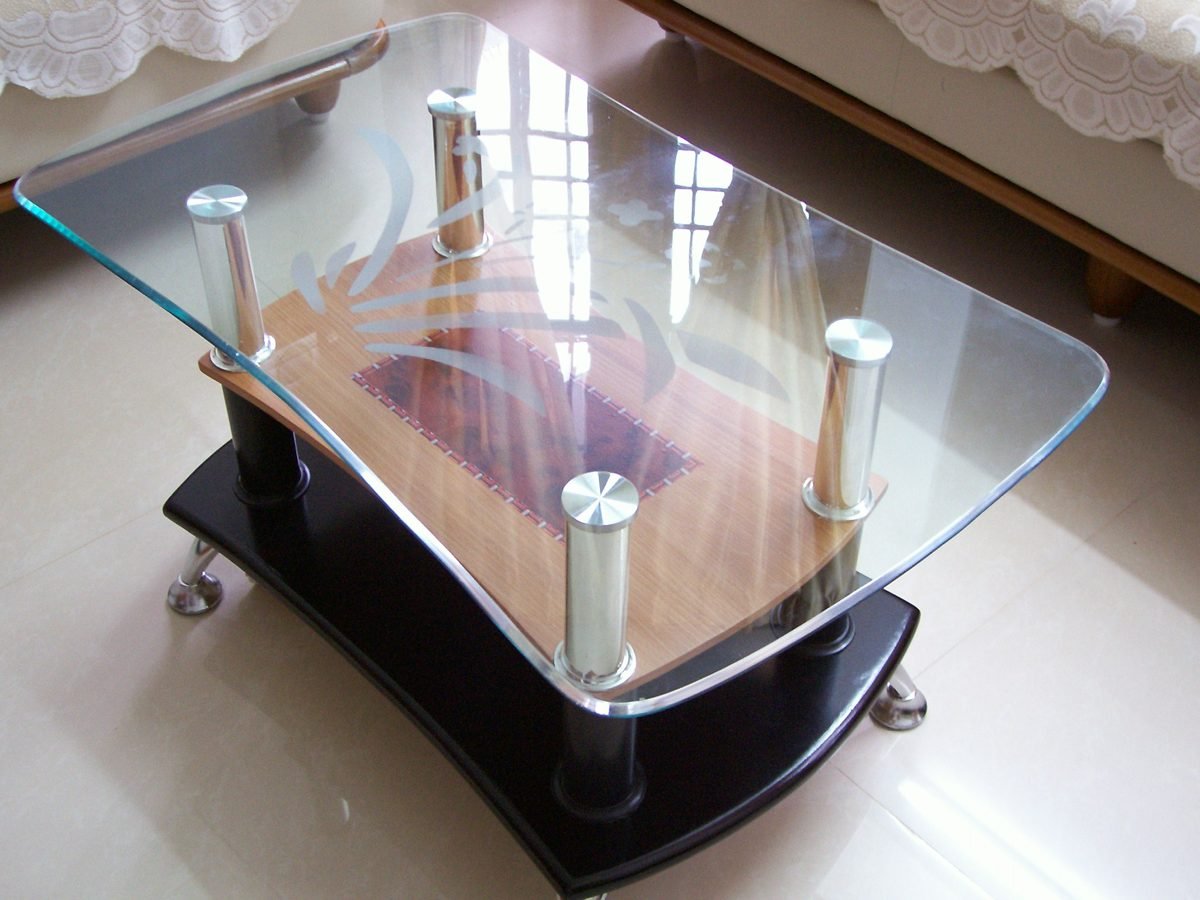
A glass table needs fewer, larger items, because you see through it to the rug and the floor. Small items scattered on glass look messy fast. One tray, one book stack, and one plant are usually enough.
Nesting tables follow the same rules in miniature. Style the large table and leave the small one mostly clear, so you can pull it out when you need it. If both tables are fully styled, neither one can do its job.
Styling for Different Room Styles
The same method bends to fit the room around the table. How to style a coffee table for a modern room is not the same as for a farmhouse room, even though the steps stay the same. In a modern room, I keep lines clean: a black or wood tray, one sculptural object, and a short stack of books with plain covers. Color comes from one item, not from five.
In a farmhouse room, texture does the work. A woven tray, a wood bead garland, a candle in a glass hurricane, and a small green plant feel right, because the materials match the rest of the room. Keep the palette warm and soft.
In a traditional room, symmetry helps. A pair of candlesticks or matching boxes on either side of a central tray looks settled and formal. Books with cloth covers and a small brass object add warmth without breaking the mood.
In a boho room, mixing is the point. A rattan tray, a patterned book, a ceramic vase, and a plant with trailing leaves can all live together, as long as the colors stay in the same warm family. The rule about open space still holds, even in a room that loves layers.
In a minimal room, less is the whole idea. One tray, one book, and one object are enough, and the empty surface is part of the look. Resist the urge to fill the table just because it looks bare in a photo. In a minimal room, bare is the style.
What to Put on a Coffee Table
If you are staring at an empty table wondering where to start, these are the pieces I reach for most often, in the order I reach for them. When people ask how to style a coffee table from scratch, I tell them to start with this order and stop when the table looks done.
Trays come first because they organize everything else. Wood trays warm up a cold room, metal trays sharpen a soft room, and woven trays add texture. A tray with handles is easy to lift, which matters when the table needs to clear fast. That practical detail is easy to miss in advice on how to style a coffee table, but you notice it the first time you need the table clear in a hurry.
Books come second. Coffee table books are made for this, but any book you love works. I keep one book I am reading on the stack and the rest as display, so the stack looks lived-in rather than staged.
Candles come third, and one is enough. A candle adds scent and a soft glow in the evening, and the jar itself adds color and shape during the day. Keep the wick trimmed and never leave a lit candle alone, and keep it away from curtains and trailing plants.
Plants and flowers come fourth. A small potted plant survives longer than cut stems and costs less over time. If your room is dark, a faux plant in a real pot is a fair trade, but skip plastic-looking leaves that shine under the lights.
Personal items come last, and one is plenty. A framed photo, a souvenir from a trip, or a handmade bowl makes the table yours. Two or three personal items start to look like a shelf, and the table loses its calm.
Everyday items also need a home. A remote holder, a small basket, or one corner of the tray keeps remotes and chargers from spreading. When everyday items have a spot, the styled part of the table stays styled.
Common Mistakes
Most guides on how to style a coffee table show the finished look and skip the errors, so here are the ones I see most. The first mistake is covering the whole surface. A table with no open space cannot do its job, and it reads as clutter no matter how nice the items are. Take one group off before you add anything new.
The second mistake is using too many small items. Ten tiny objects look like clutter, while three larger ones look like a plan. Group small things on a tray or in a bowl, or swap several small pieces for one medium piece.
The third mistake is matching everything. A table where the tray, the books, the candle, and the vase are all the same color and material looks flat. Let one or two pieces contrast so the eye has somewhere to land.
The fourth mistake is styling only for photos. A tall branch arrangement might photograph well, but if it blocks conversation or falls over when someone reaches for a drink, it fails in real life. Style for the seat, not the camera.
The fifth mistake is forgetting safety in a house with kids. Keep heavy items low, skip glass objects at toddler height, and keep candles out of reach. For larger furniture in the room, the CPSC guidance on anchoring heavy furniture is worth a read before you rearrange a room around a new table.
The sixth mistake is never editing. Tables collect things: mail, chargers, toys, and cups that never made it to the kitchen. A quick reset once a week, putting each item back in its spot or removing it, keeps the styling you worked on from slowly disappearing.
Quick Summary Table
| Part of the Table | What Works | What to Avoid |
|---|---|---|
| Base | One tray or large book to ground the group | Items scattered with no base |
| Height | One taller piece, below seated eye level | Several tall pieces blocking conversation |
| Books | Two or three stacked, largest on the bottom | Tall, wobbly stacks that topple |
| Greenery | One plant or a short vase of stems | Large arrangements that shed or block views |
| Open space | About a third of the surface left clear | Edge-to-edge coverage with no room for cups |
| Personal touch | One item that means something to you | A row of souvenirs that looks like a shelf |
Frequently Asked Questions
How do I start if my table is a mess right now?
Take everything off and clean the surface. Put back only the daily essentials first, then add one styled group, like a tray with a candle and a book. Live with that for a few days before adding more. Starting empty is faster than trying to rearrange a pile.
How many items should be on a coffee table?
Three groups is a good target: a tray group, a book stack, and one plant or candle. That usually means five to seven single items in total. If you count more than ten items, you likely have clutter, not styling. Learning how to style a coffee table is mostly learning when to stop.
What looks good on a round coffee table?
One round tray with a candle and a small plant, plus a short stack of books beside it, fits the shape well. Keep the group near the center but slightly off to one side, and leave the rest of the circle open for cups. It is a common question in how to style a coffee table that is round, and one central group answers it best.
Can I style a coffee table without buying anything?
Yes. Shop your own house first. Books from a shelf, a candle from the kitchen, a plant from another room, and a tray or board from the kitchen usually cover the whole method. New purchases should fill a gap you found, not start the project.
How do I keep a styled table looking good with kids?
Use a sturdy tray, keep breakables off the table, and give kids their own basket for toys that lives nearby. Choose items that can survive a bump, and keep the open space generous so there is less to knock over. A styled table in a family home should bend, not break.
Should the coffee table match the sofa?
It should relate to the sofa, not match it exactly. Repeat one color or material from the sofa or the rug, and let the rest contrast. A wood table with a fabric sofa, or a glass table with a leather sofa, looks better than a room where every surface is the same.
How often should I change the styling?
A light refresh each season is plenty, and a quick weekly reset keeps it tidy. Swap the stems, change the top book, or trade the candle scent. You do not need a full restyle every month. Small changes keep the table feeling fresh without turning it into a chore.
What if my table is very small?
Keep it to one group: a small tray with a candle and a tiny plant, or a single stack of two books. Leave most of the surface clear, since a small table fills up fast. One good group on a small table looks far better than three squeezed groups.
Final Thoughts
Knowing how to style a coffee table comes down to a few habits: start empty, give items a base, add one tall piece, leave open space, and edit. My table still collects clutter during the week, and the weekly reset is part of the routine now, not a sign that the styling failed. A table that works for real life will always need a little upkeep, and that is fine.
Start with what you own, change one thing today, and sit down to look at the result from the sofa. Once you know how to style a coffee table this way, restyling it takes minutes instead of a whole afternoon. That view is the one that matters, and it is the one you will enjoy every day.

Founder of NestFlavors — sharing tested recipes and honest home ideas, made for real life.