
My basement has one tiny window the size of a shoebox, and my hallway has none at all. When I hung my first big, beautiful mirror in that hallway, I stood back expecting magic — and got a large, expensive rectangle of gloom. That was the day I learned the rule nobody tells you about wall mirrors: they don’t make light, they move it. In a dark room with no windows, a mirror hung the usual way doesn’t brighten anything. It just gives you a second view of the darkness.
But here’s the good news I wish someone had told me sooner: wall mirrors can absolutely rescue a dark room — basements, interior bathrooms, windowless hallways, home offices, north-facing bedrooms that never see real sun. You just have to stop treating the mirror like a window and start treating it like a lighting partner. Every idea below pairs a mirror with light on purpose, because in a room with no windows, the mirror is only half the solution.
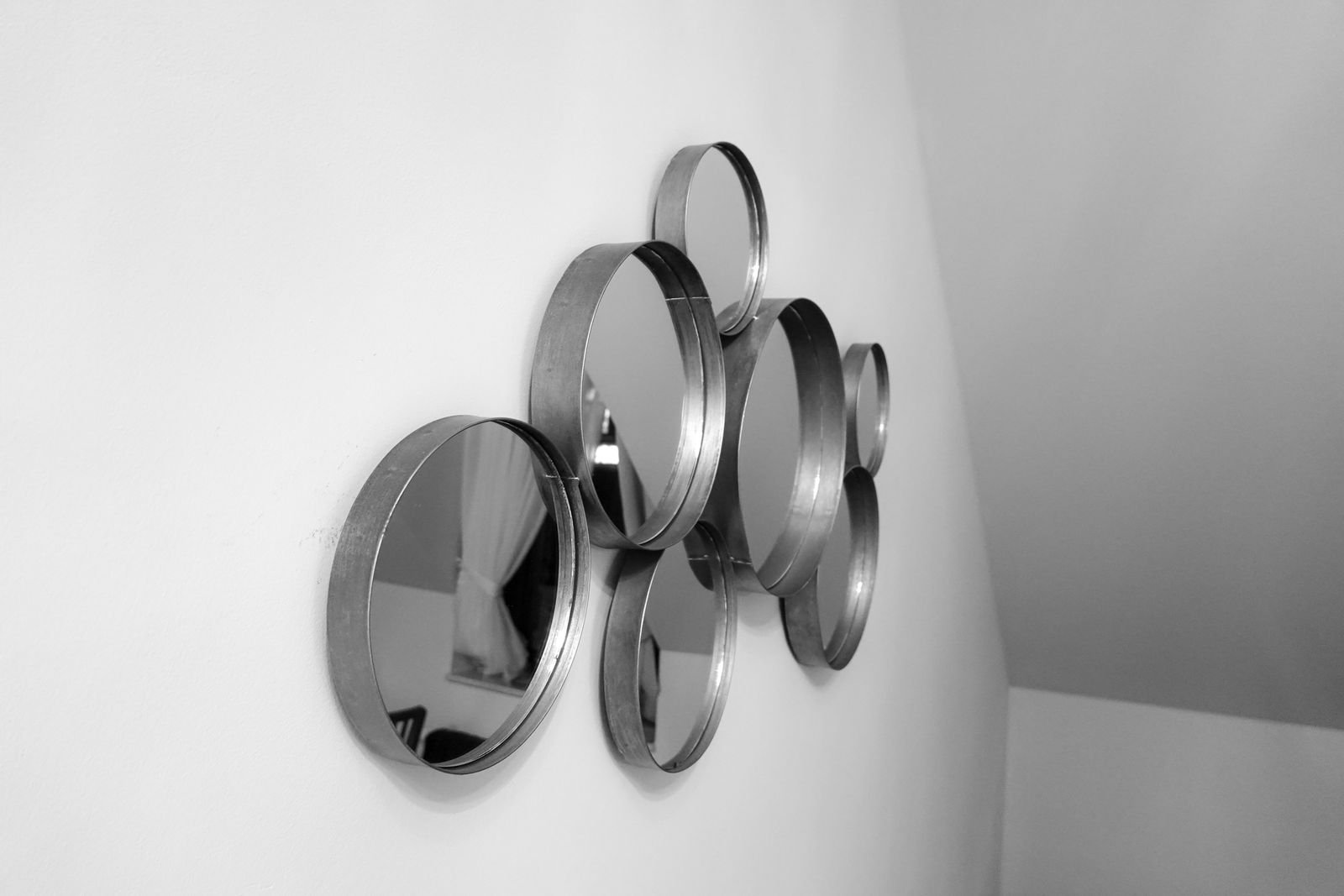
Why Mirrors Fail in Dark Rooms (The Windowless Reflection Audit)
A mirror is a reflection machine, not a lamp. Hang one opposite a sunny window and it doubles your daylight — that’s the trick everyone knows. But hang one in a room with no window and no plan, and it doubles whatever dim, flat nothing it faces. I’ve seen it happen in my own home: a gorgeous arched mirror facing a blank beige wall just gave me two blank beige walls and a vague feeling I’d wasted money.
So before you buy anything, run what I call the windowless reflection audit. Stand exactly where the mirror will hang, turn around, and really look at the opposite side of the room. That view — the door, the wall, the corner — is what your mirror will show you, doubled, every single day. If it’s a blank wall, the mirror will fail. If it’s a lit doorway, a glowing lamp, a lit bookshelf, or a piece of art with a picture light on it, the mirror will succeed.
In a room with no windows, you have to give the mirror something worth reflecting. That means the mirror and the light get planned together, as a pair. A big mirror facing a dark void doesn’t just fail to help — it can read as a black hole on the wall, a dark rectangle that makes the room feel even more closed in. The audit takes sixty seconds, and it prevents every mistake in this guide.
Pairing Mirrors With Artificial Light (The Real Trick)
Here’s the sentence that changed how I decorate dark rooms: every mirror in a windowless room needs its own light source. Not the room’s light — the mirror’s light. Once I started planning them as pairs, my dark hallway finally started to glow.
Flank it with sconces. A mirror with a sconce on each side is the highest-impact move in a dark room. The light washes across the glass, the mirror throws it back, and you effectively get four light sources from two fixtures. Plug-in sconces mean no electrician and no holes beyond two small anchors.
Let the mirror be the light. LED-backlit mirrors build the light into the frame — a soft halo glows from behind the glass. In an interior bathroom with zero windows, a backlit mirror does the job of both mirror and vanity light. Look for a warm halo, not a cold blue one.
Put a picture light on top. A slim LED picture light mounted above a mirror sends a bar of light washing down the glass. It works on arched mirrors, rectangles, even gallery clusters, and it turns the mirror into a glowing panel on the wall.
Set a lamp beside the mirror, never in front of it. A table or floor lamp placed two to three feet to the side of a mirror gets doubled — one lamp reads as two. Put the lamp directly in front of the mirror and you get a blinding hotspot of glare instead. Side, not front. Always.
Mind your bulb temperature. This matters more in front of a mirror than anywhere else, because the mirror shows you the light twice. Use warm white bulbs, 2700K to 3000K. Cool “daylight” bulbs around 5000K look clinical in a mirror’s reflection — slightly green, slightly harsh. And make every visible bulb in the room match; mixed temperatures look accidental when they’re doubled.
Layer, then dim. One light source is never enough in a truly dark room, mirror or not. Give the mirror at least two light points — say, a sconce pair, or one lamp plus a backlit mirror — and put them on a dimmer if you can. Dimmed warm light bouncing in a mirror is what makes a windowless room feel expensive instead of flat.
15 Wall Mirrors for Dark Rooms Without Windows
Every idea below is a mirror-plus-light pairing built for rooms where the sun never reaches. Pick the one that matches your darkest space.
1. The Windowpane Mirror as a Fake Window
A windowpane mirror — the kind divided into panes like a grid — is the closest thing to faking a window where none exists. Hang it where a window should be, at window height, and mount a slim picture light above it. At a glance, the grid reads as a window; the light gives the “glass” something to show. In a windowless hallway, this single move can end the tunnel feeling.
2. The LED-Backlit Round Mirror
In an interior bathroom with no window, this is the whole lighting plan in one purchase. The halo behind the glass casts a soft, shadowless glow that’s flattering for faces and enough to navigate by. Choose warm white (3000K or below) and size it a couple of inches narrower than the vanity on each side.
3. The Big Leaning Mirror Beside a Floor Lamp
Lean a full-length mirror in the darkest corner of a north-facing bedroom, then put a torchiere or arc floor lamp right beside it — not in front. The mirror catches the lamplight and throws it across the room, and the leaning angle bounces light toward the ceiling, which is exactly where dark rooms need it.
4. The Hallway Gallery Cluster
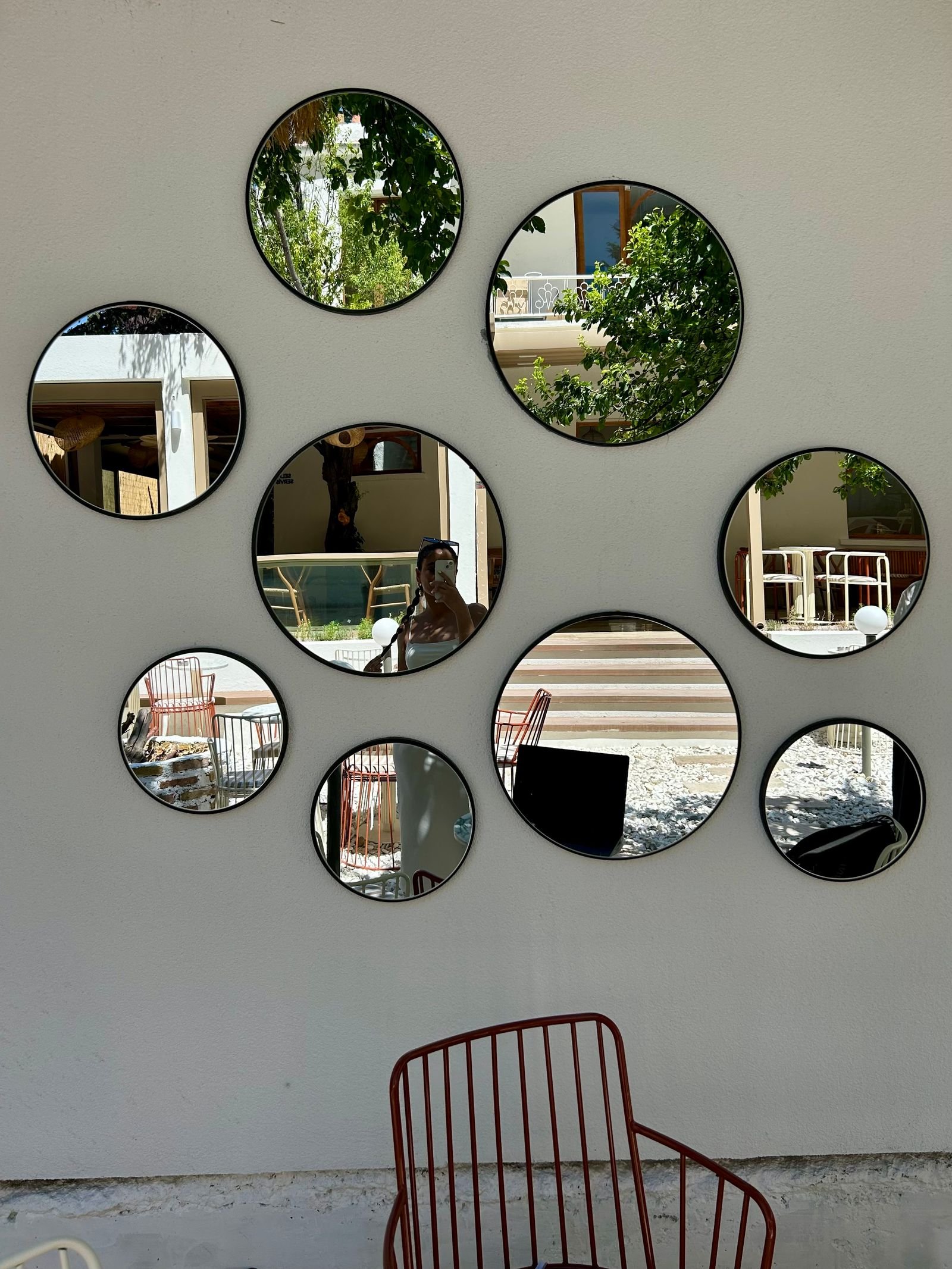
One mirror in a long, windowless hallway looks lonely. Five to seven small mirrors — mixed shapes, one unifying finish — with a pair of plug-in sconces or a lit console below, breaks the tunnel into a gallery. Space them two to four inches apart and treat the whole arrangement as one piece, centered at eye level.
5. The Arched Mirror With a Picture Light
An arched mirror softens a dark room’s hard corners, and a slim LED picture light mounted just above the arch washes light down the curve. The arch catches the light differently than a flat top — you get a gentle gradient instead of a hard line. This is my favorite pairing for a dark foyer.
6. The Sunburst Mirror Near a Table Lamp
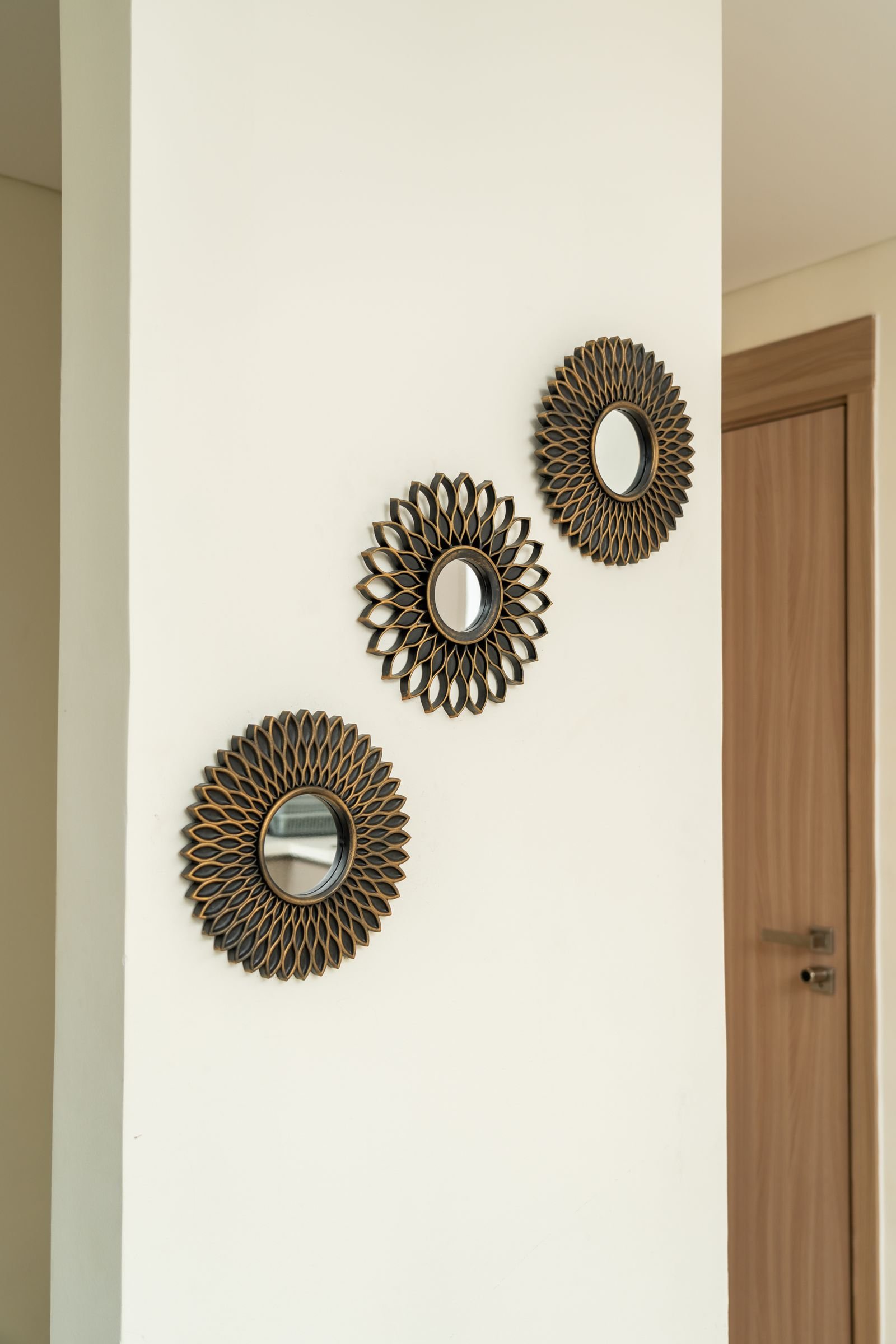
Sunburst mirrors — rays radiating around a center mirror — were made for lamplight. The metallic or wood rays catch a nearby table lamp’s glow and scatter it in every direction. The catch: the lamp needs to be within a few feet. A sunburst hung alone in a dark room is just dark spikes; give it a lamp and it earns its keep.
7. The Basement Mirror Wall
For the darkest room in the house, stop thinking single mirror. Hang two or three large panels — frameless or thin-framed — on the basement’s darkest wall, and aim track or recessed lights at the glass. Multiple panels multiply every light source in the room, and the repetition fakes architectural depth where there is none.
8. The Console Pairing for a Dark Foyer
Mirror over the console, table lamp on the console off to one side. It’s the oldest entryway formula there is, and in a windowless foyer it’s the whole ballgame: the lamp gives the mirror something to double, the mirror gives the lamp twice the presence. Add a small tray or vase so the reflection has texture.
9. The Round Mirror Between Two Sconces
If you do exactly one thing from this list, do this. A round mirror centered between two sconces — plug-in if you rent — is the single best fix for a windowless hallway or a dark stairwell landing. Symmetric, simple, and it quadruples your light: two real sconces plus two reflected ones.
10. The Mirror Opposite an Open Doorway
No window? Borrow someone else’s light. Hang the mirror so it faces an open doorway to a brighter room, angled to catch the lit opening rather than the dark wall beside it. In a windowless home office, a mirror facing the hall doorway pulls in every bit of light the hallway has.
11. The Pill-Shaped LED Mirror in a North-Facing Bedroom
North-facing bedrooms get the dimmest, flattest daylight of any room — and in winter, barely that. A tall pill-shaped LED mirror gives you a vertical column of soft light that doubles as a full-length mirror. Hang it where it catches both the window wall’s ambient light and a bedside lamp’s glow.
12. The Frameless Beveled Mirror Under a Picture Light in a Dark Office
Home offices carved out of windowless rooms need light without clutter. A frameless beveled mirror keeps the wall visually quiet, and the beveled edge catches a picture light’s bar and throws a bright line across the glass. Hang it beside — not behind — your monitor to avoid screen glare.
13. The Stairwell Mirror Run
Dark stairwells are where mirrors do quiet hero work. Run three to five small mirrors up the stairwell wall, following the angle of the stairs, and pair them with a pendant or a wall-washer light. The mirrors catch the light at every step and guide the eye upward instead of into the gloom.
14. The Mirrored Alcove With a Puck Light
Got a dark niche, alcove, or the back of a built-in bookcase? Line the back with a cut-to-size mirror and add a small puck or strip light at the top. The alcove stops being a dark hole and starts being a glowing display — the mirror multiplies a light source that cost a few dollars.
15. The Over-Mantel Mirror With Flanking Sconces in a Basement Lounge
A big mirror over the mantel is the classic large-wall solution, but in a basement lounge it only works as a trio: mirror in the middle, a sconce on each side. Firelight or lamplight doubles in the glass, and the mantel arrangement gives the reflection a warm, lived-in scene instead of an empty wall.
Placement Room by Room for Dark Spaces
Basements: go big or go home. One large mirror beats five small ones in a basement — small mirrors disappear into the dark. Pair with track or recessed lights aimed at the glass, and never face the mirror at the dark underside of the stairs or an unfinished wall.
Interior bathrooms: this is backlit-LED territory. Size the mirror a couple of inches narrower than the vanity on each side, and add one warm overhead so your face isn’t lit by halo alone — halo-only lighting casts odd shadows. A 3000K halo plus a warm ceiling light is the flattering combo.
Windowless hallways and offices: think in runs, not singles — a gallery cluster, a round mirror between sconces, or a mirror facing a lit doorway. In a windowless office, keep the mirror to the side of your monitor, not behind it; a mirror behind a screen throws glare straight into your eyes.
North-facing bedrooms: the “brightest dark” room — you have flat, cool ambient light but no sun. Lean a large mirror to catch both the window wall and a floor lamp, and keep every bulb warm at 2700K. The mirror will warm up the room’s whole color cast by doubling the lamplight instead of the gray daylight.
Sizing and Hanging, the Short Version
The mechanics don’t change in the dark — only the stakes do. Center the mirror at eye level, roughly 57 to 60 inches from the floor to the middle of the glass. Above furniture, leave about 6 to 8 inches between the furniture top and the mirror’s bottom edge. Size the mirror to what sits below it: about two-thirds the width of the console, mantel, or dresser. And on an empty dark wall, go bigger than your instincts say — a small mirror in a dark room reads as a dark postage stamp, while a large one reads as a window of light.
Mistakes That Only Happen in Dark Rooms
1. Facing a blank wall. The number-one dark-room mirror mistake. A mirror facing a blank wall in a room with no window doubles the blankness — you’ve installed a second blank wall. Run the reflection audit first.
2. Putting the lamp directly in front of the mirror. In a bright room this is a minor issue; in a dark room the single lamp becomes a blinding hotspot doubled in the glass. Move every lamp two to three feet to the side of the mirror.
3. Buying too small. That 16-inch mirror that looked fine in the store vanishes on a dark hallway wall. In rooms with no windows, scale up one size from what you’d pick for a bright room.
4. Choosing heavy, dark frames. A thick black or espresso frame in a lightless room absorbs the little glow you’ve worked to create. Pick slim, light, or metallic frames that bounce light instead of swallowing it.
5. Using cool-white bulbs. A 5000K “daylight” bulb looks merely crisp in a bright room; doubled in a mirror in a dark room it looks clinical, even greenish. Stay at 2700K to 3000K and match every bulb the mirror can see.
6. Letting it reflect clutter. In a dark room, the eye goes straight to the brightest thing — which is now your mirror. If the mirror doubles a messy shelf or a pile of laundry, that’s all anyone will see. Aim it at light and order.
7. Stopping at one light source. A mirror plus a single bulb still leaves every corner dead. Dark rooms need layers: give the mirror at least two light points and put them on dimmers if you can.
Wall Mirrors for Dark Rooms at a Glance
| # | Dark-room mirror | Best dark space | Light to pair | The rule in one line |
|---|---|---|---|---|
| 1 | Windowpane as fake window | Windowless hallway | Picture light above | Hang at window height where a window should be |
| 2 | LED-backlit round | Interior bathroom | Built-in halo plus warm overhead | Size it just narrower than the vanity |
| 3 | Big leaning mirror | North-facing bedroom | Floor lamp beside it | Lean it to bounce light toward the ceiling |
| 4 | Hallway gallery cluster | Windowless hallway | Plug-in sconces or lit console | Unify with one finish, 2 to 4 inch gaps |
| 5 | Arched plus picture light | Dark foyer | Slim LED picture light | Light washes down the arch’s curve |
| 6 | Sunburst near lamp | Dark living corner | Table lamp within a few feet | Rays need a nearby glow to scatter |
| 7 | Basement mirror wall | Basement | Track or recessed lights aimed at glass | Multiple panels fake architectural depth |
| 8 | Console pairing | Dark foyer | Table lamp on the console, off to one side | Lamp to the side, never in front |
| 9 | Round between two sconces | Hallway or stairwell landing | Two sconces (plug-in is fine) | The single highest-impact move on this list |
| 10 | Mirror opposite doorway | Windowless office | The brighter room’s light | Angle it at the lit opening, not the dark wall |
| 11 | Pill-shaped LED | North-facing bedroom | Built-in glow plus bedside lamp | Vertical light flatters and elongates |
| 12 | Frameless beveled | Dark home office | Picture light above | Keep it beside the monitor, not behind it |
| 13 | Stairwell mirror run | Dark stairwell | Pendant or wall-washer | Follow the stairs’ angle upward |
| 14 | Mirrored alcove | Dark niche or built-in | Puck or strip light on top | Turns a dark hole into a glowing display |
| 15 | Over-mantel plus sconces | Basement lounge | Two flanking sconces | Mirror plus two lights or don’t bother |
Dark-Room Wall Mirror FAQs
Can a mirror really brighten a room with no windows?
Yes — but only as part of a pair. A mirror doesn’t create light; it multiplies the light you give it. In a windowless room, pair the mirror with a lamp, sconces, or a backlit mirror, and it will genuinely lift the room. Hang it alone facing a dark wall and it does nothing.
Where should I hang a mirror in a windowless hallway?
Either centered between two sconces (the best single move) or as a gallery cluster above a lit console. If the hall has a lit doorway at the end, angle the mirror to catch it. Center the arrangement at eye level, about 57 to 60 inches to the middle of the glass.
What kind of mirror is best for a dark bathroom?
An LED-backlit round or pill mirror in warm white (3000K or below). It acts as both mirror and vanity light, which matters when there’s no window. Size it a couple of inches narrower than the vanity on each side, and add a warm overhead so your face isn’t lit by the halo alone.
Should the mirror face a lamp or sit beside it?
Beside it — two to three feet to the side. A lamp directly in front of a mirror creates a blinding hotspot of glare in the glass. Off to the side, the mirror doubles the lamp’s glow and spreads it across the room with no glare.
Do LED-backlit mirrors actually help in dark rooms?
They’re one of the best tools for the job. The halo behind the glass turns the mirror into a light source of its own, which is exactly what a windowless room needs. Choose warm white, and in a bathroom pair it with a warm overhead for shadowless light.
What bulb color works best with mirrors?
Warm white, 2700K to 3000K. Cool “daylight” bulbs around 5000K look harsh and slightly green when doubled in a mirror. Match every bulb the mirror can see — mixed temperatures look accidental once they’re reflected.
Will a big mirror make my dark basement feel bigger?
It will feel deeper and less closed-in, which reads as bigger — but only if the mirror has light to work with. Aim track or recessed lights at the glass, or flank it with lamps. A big mirror facing a dark basement wall just gives you a bigger dark rectangle.
What should a mirror never face in a dark room?
A blank wall, a cluttered shelf, or the dark underside of stairs. In a dark room the mirror becomes the brightest thing in sight, so whatever it faces becomes the room’s focal point. Face it at a lamp, a lit doorway, a glowing piece of art, or a lit bookcase instead.
Final Thoughts
A dark room doesn’t need a window — it needs a plan. The plan is always the same: a wall mirror plus its own light source, placed so the mirror has something worth doubling. Start with the single highest-impact move: a round mirror between two sconces in your darkest hallway. Then walk through the house with the reflection audit and give every dim corner the same treatment.
Which dark room are you rescuing first — and what light will your mirror get to double? Tell me in the comments.
If you are swapping bulbs as part of the plan, ENERGY STAR’s guide to LED lighting is a solid primer on how LEDs work, how long they last, and where they shine brightest — handy context before you pair wall mirrors with new sconces, picture lights, or backlit frames.
Also Read: 15 Wall Mirror Ideas That Make Any Room Look Bigger and Brighter
Also Read: 14 Bedroom Curtain Ideas for Deeper Sleep and a Better-Looking Room
Also Read: 21 Living Room Lamps That Instantly Warm Your Space

Founder of NestFlavors — sharing tested recipes and honest home ideas, made for real life.